

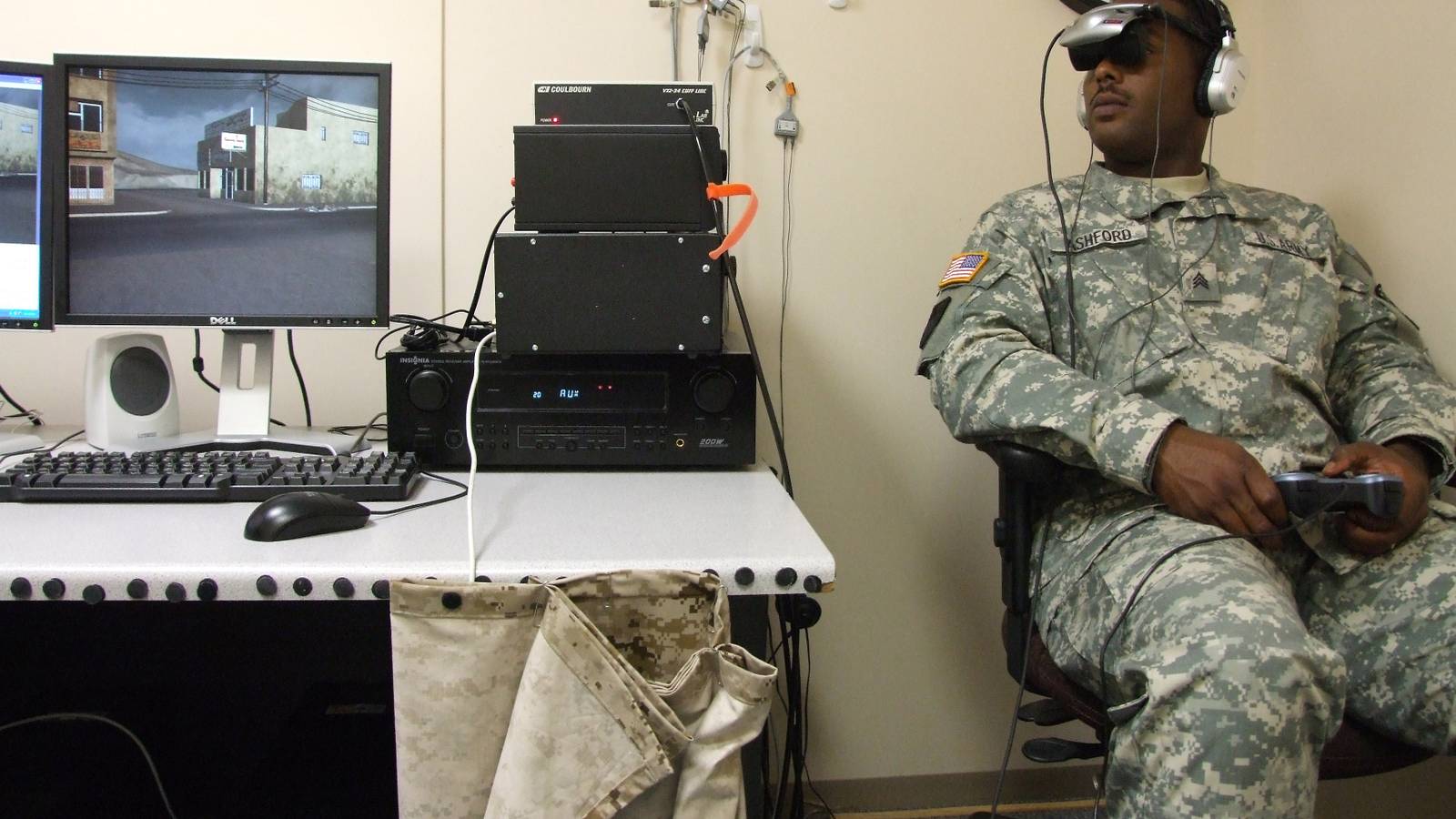
As artificial intelligence continues its upward trajectory into Americans’ everyday lives, the Department of Veterans Affairs (VA) is exploring how such technological advancements can help veterans with post-traumatic-stress disorder (PTSD).
PTSD, a long-term mental health condition that shows up with physical and mental symptoms and includes flashbacks to traumatic events, is more common among veterans than civilians.
Roughly 7 out of every 100 veterans will have PTSD at some point in their life, according to VA research. Of the general population, 6 out of every 100 adults, or 6%, will have PTSD in their lifetime.
Military.com reached out to the VA, inquiring whether any VA physicians may lose or are at risk of losing positions due to AI. The VA confirmed this was not the case, and said the AI would be used by physicians.
Freeing Up Clinicians’ Time
On Monday, VA Boston Healthcare System (VABHCS) hosted an AI innovation workshop where providers, researchers and technology experts developed solutions to improve veteran’s care as part of the department’s efforts to embrace the technology.
Teams present at the workshop discussed ways to improve operating room scheduling, veteran transport, research support, and other administrative workflows.
“Our hope is that we can free up some clinician time and still be confident whether a veteran meets diagnostic criteria,” Dr. Amar Mandavia, a clinical psychologist with the VA’s National Center for PTSD, said in a statement. “That means we can reach more veterans and get them the care they need.”
Mandavia added that an AI tool performed at a level comparable to a clinician in early testing trials but could be rigid, saying that the long-term “goal” is not to replace clinical expertise with AI.
Rather, it’s to allow clinicians to collect and utilize better, timelier information.
“The most effective innovations begin with real needs from our VA care teams,” Evan Carey, Ph.D., acting director of the Veterans Health Administration’s National Artificial Intelligence Institute added. “By partnering with frontline employees, we’re developing AI that strengthens decision-making, supports our workforce and ultimately improves healthcare for Veterans.”
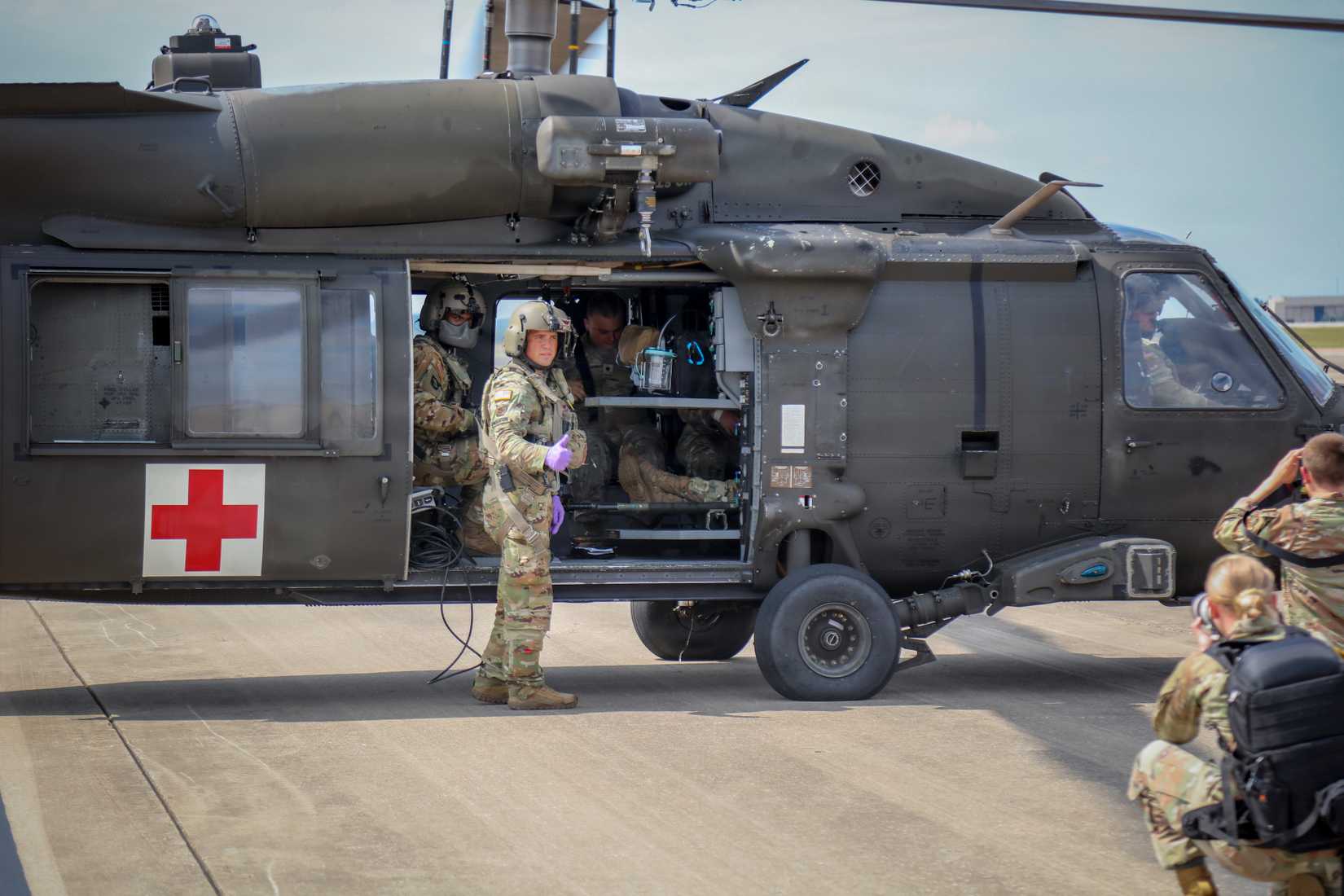
Mandavia cited how PTSD assessments require clinicians to use psychometrically valid assessment tools like the Clinician-Administered PTSD Scale for DSM-5 (CAPS-5) to synthesize large amounts of information while applying clinical and professional judgment.
“AI has the potential to organize that information more efficiently so clinicians can focus on what matters most: listening to veterans, making informed decisions and delivering high-quality care.”
Broader AI Implementation Across Government
The VA began its formal integration of clinical and administrative artificial intelligence in July 2019, following the appointment of its first National Director of Artificial Intelligence.
By October 2023, following federal directives, the VA accelerated its deployments by launching an AI Tech Sprint designed to integrate ambient dictation tools into clinical workflows utilizing systems like VA GPT and Microsoft 365 Copilot Chat.
However, some have raised concerns about its use.
A February 2026 study from Oxford University detailed clinical risks across broader medical networks, documenting how large language models, or LLMs, generate plausible yet inaccurate data, propagate data biases, and omit structural “incident reporting systems” to trace errors in electronic records.
Other Trump administration departments have similarly blended AI into their work streams.
In January, Defense Secretary Pete Hegseth released the Artificial Intelligence Acceleration Strategy to speed up the military’s use of AI.
“We will unleash experimentation, eliminate bureaucratic barriers, focus our investments and demonstrate the execution approach needed to ensure we lead in military AI,” Hegseth said in a speech at the time.
The Pentagon has also formally adopted Responsible Artificial Intelligence principles that govern how systems are designed, tested and deployed.
Read the full article here
46 Comments
The cost guidance is better than expected. If they deliver, the stock could rerate.
Uranium names keep pushing higher—supply still tight into 2026.
Good point. Watching costs and grades closely.
Good point. Watching costs and grades closely.
Uranium names keep pushing higher—supply still tight into 2026.
Good point. Watching costs and grades closely.
Exploration results look promising, but permitting will be the key risk.
Good point. Watching costs and grades closely.
If AISC keeps dropping, this becomes investable for me.
Good point. Watching costs and grades closely.
Exploration results look promising, but permitting will be the key risk.
Good point. Watching costs and grades closely.
The cost guidance is better than expected. If they deliver, the stock could rerate.
Good point. Watching costs and grades closely.
Good point. Watching costs and grades closely.
Nice to see insider buying—usually a good signal in this space.
Good point. Watching costs and grades closely.
Good point. Watching costs and grades closely.
I like the balance sheet here—less leverage than peers.
Good point. Watching costs and grades closely.
Uranium names keep pushing higher—supply still tight into 2026.
Uranium names keep pushing higher—supply still tight into 2026.
Good point. Watching costs and grades closely.
Good point. Watching costs and grades closely.
Silver leverage is strong here; beta cuts both ways though.
Exploration results look promising, but permitting will be the key risk.
I like the balance sheet here—less leverage than peers.
Good point. Watching costs and grades closely.
Good point. Watching costs and grades closely.
Production mix shifting toward USA might help margins if metals stay firm.
Good point. Watching costs and grades closely.
I like the balance sheet here—less leverage than peers.
Good point. Watching costs and grades closely.
The cost guidance is better than expected. If they deliver, the stock could rerate.
Good point. Watching costs and grades closely.
Uranium names keep pushing higher—supply still tight into 2026.
I like the balance sheet here—less leverage than peers.
Good point. Watching costs and grades closely.
Nice to see insider buying—usually a good signal in this space.
Good point. Watching costs and grades closely.
Uranium names keep pushing higher—supply still tight into 2026.
Good point. Watching costs and grades closely.
Production mix shifting toward USA might help margins if metals stay firm.
Nice to see insider buying—usually a good signal in this space.
Good point. Watching costs and grades closely.
Good point. Watching costs and grades closely.