

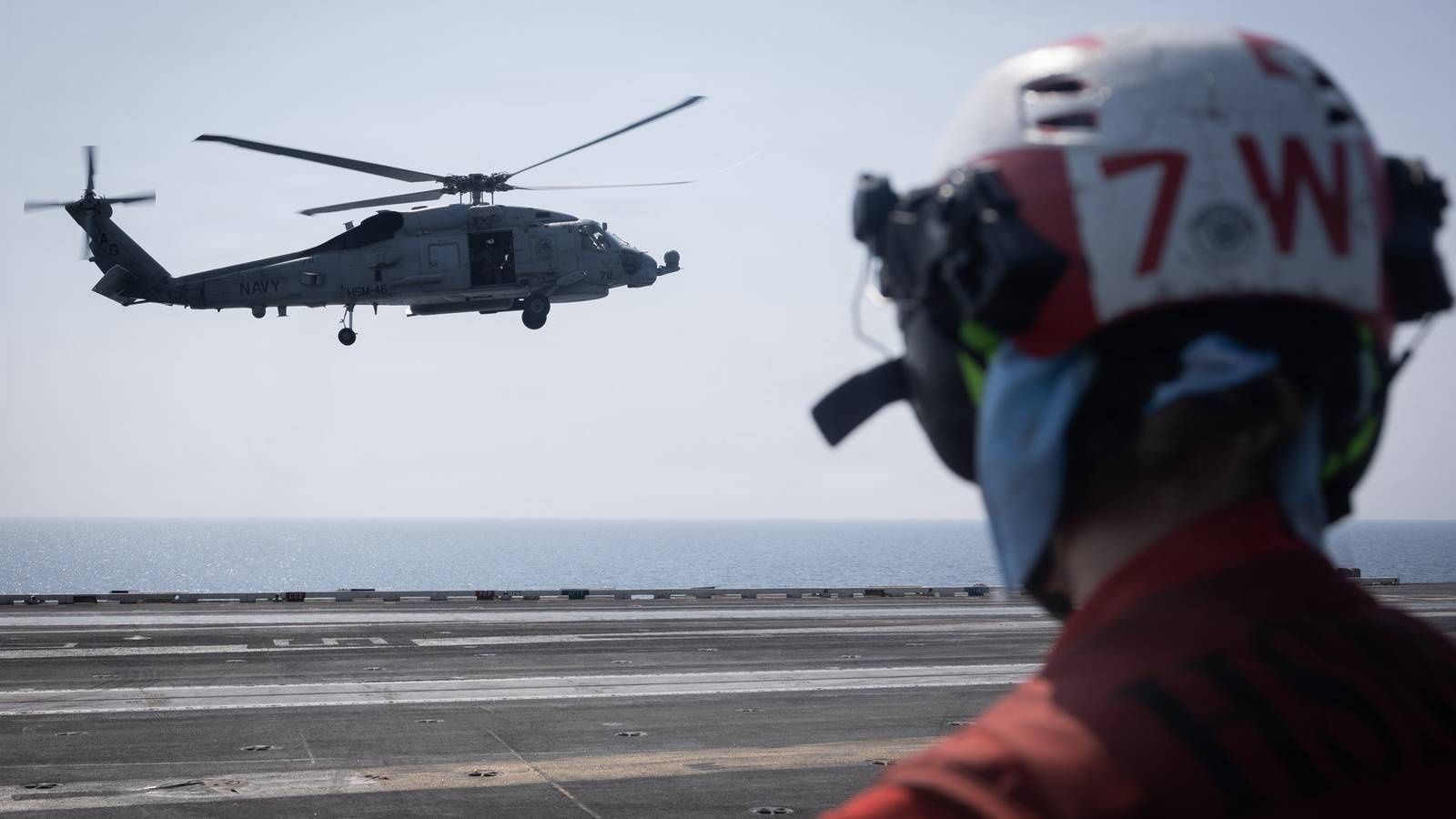
The Pentagon is denying further financial support for Navy families who the U.S. Army evacuated from Bahrain earlier this year, according to a report.
After the U.S. war with Iran began on Feb. 28, the military evacuated roughly 1,300 Navy families and civilian dependents from Naval Support Activity Bahrain because of drone strikes in the area which damaged multiple buildings and prompted last-minute evacuation notices through March. They provided them with financial support.
According to town hall audio reportedly obtained by MS Now, Navy leaders told military families who lived on the base that Department of Defense (DOD) financial and logistical support they have been receiving because of the evacuation will lapse on Nov. 30.
“The department has disbursed approximately $10 million so far in tax-exempt safe haven allowances to military families between February and October 2026,” a Pentagon official told Military.com.
As of Oct. 22, 2026, 153 of 160 Navy Service members have submitted their paperwork to move to a designated place, according to the official. Of those requests, 146 are complete with scheduled pack-out dates.
“Currently, teams are completing 14 to 20 pack-outs every day,” they added. “Additionally, as of Oct. 23, 2026, there are 112 active outbound household goods shipments that have shipped during the month of October.
“The Department of War remains committed to ensuring the stability and well-being of our personnel and will continue to provide resources, clear guidance, and direct coordination for safe and successful relocations.”
Navy and Pentagon’s Financial Support for Evacuees
Naval Support Activity Bahrain is the premier U.S. naval base in the Middle East. It serves as the vital command center for the U.S. Navy’s 5th Fleet and Naval Forces Central Command.
The installation is highly critical for safeguarding international shipping lanes, projecting maritime power, and managing regional military logistics.

The leaders said they had asked the Pentagon to extend the funding, but that senior leaders at the Pentagon denied the request. The Pentagon allegedly said that each evacuee would have to request an extension individually and that Acting Navy Secretary of the Navy Hung Cao would have to approve each request individually.
“We realize that there’s a lot of miscommunication between us and D.C.,” said Capt. Matthew Smidt, chief of staff for U.S. Naval Forces Central Command. “We were originally pushing for just a blanket ETP, but we’re going to have to do it on an individual basis.
“So, that is something different. That is something different than what we’ve heard in the past.”
John Hazlett, director of manpower and personnel for NAVCENT, said Navy leaders asked DOD to continue payments until families received their household goods which they left behind in Bahrain and are scheduled to be delivered to them. But Hazlett claimed the Pentagon refused this request.
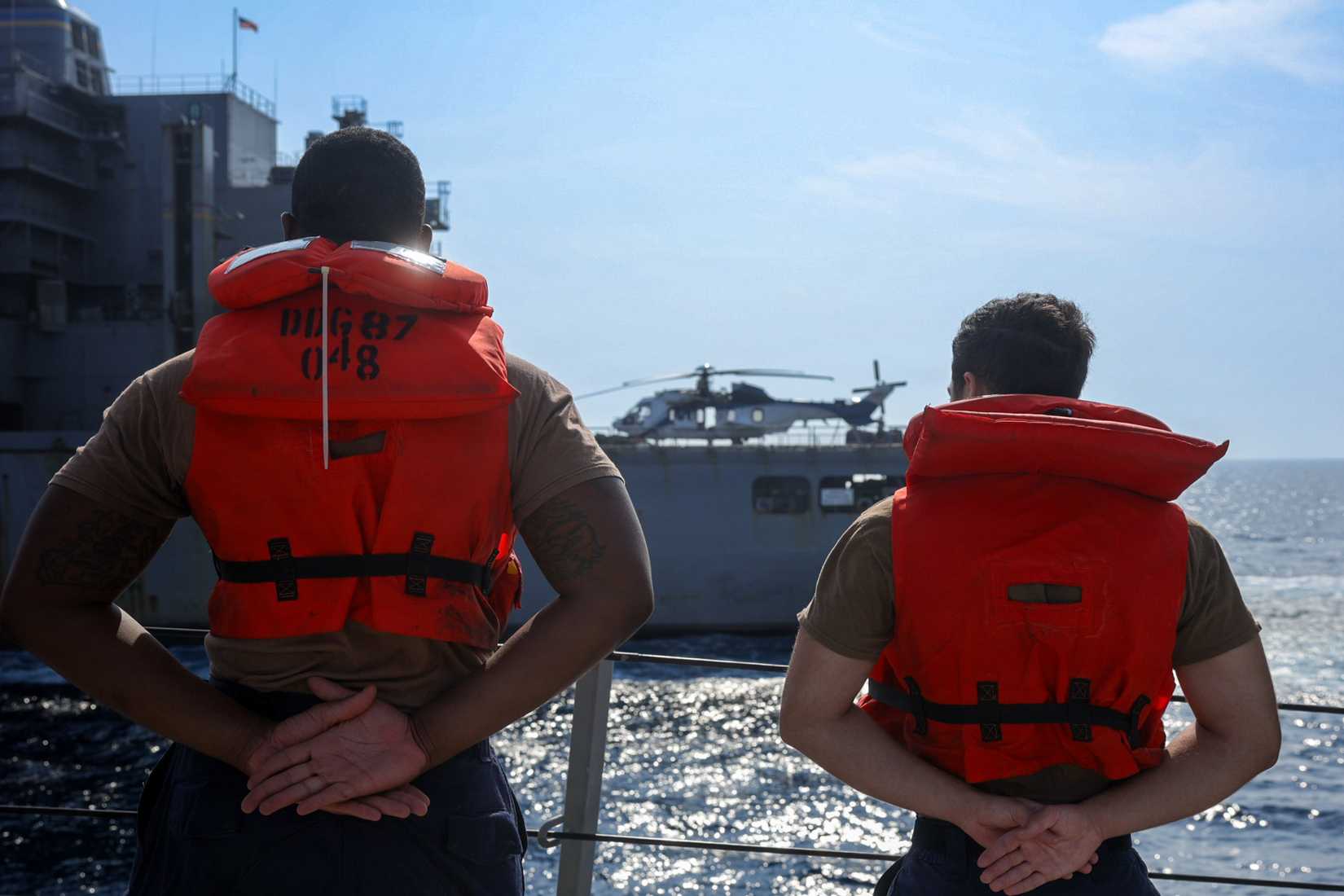
The Navy leaders also told the families, many of whom have been living in short-term rentals or hotels since their evacuation, that it is too dangerous to return to the base and that ships in the area are still being hit by drones and missiles.
“There is violence every day right now in the region and the Strait of Hormuz,” said Smidt, according to the recording. “Another three ships got hit by missiles or drones last night. There are people dying every day or being wounded every day in the Strait of Hormuz and the surrounding areas. It is very, very violent. It is very, very dynamic still.”
Security talks recently began between officials from Iran, Pakistan, Saudi Arabia and Turkey to de-escalate regional threats.
The diplomacy follows an Oct. 23 warning from U.S. President Donald Trump regarding imminent military strikes, alongside intelligence reports that Iranian forces have prepared detailed plans to target critical undersea Gulf communications cables.
Read the full article here
31 Comments
The cost guidance is better than expected. If they deliver, the stock could rerate.
If AISC keeps dropping, this becomes investable for me.
Good point. Watching costs and grades closely.
Good point. Watching costs and grades closely.
The cost guidance is better than expected. If they deliver, the stock could rerate.
Good point. Watching costs and grades closely.
The cost guidance is better than expected. If they deliver, the stock could rerate.
Good point. Watching costs and grades closely.
Good point. Watching costs and grades closely.
Nice to see insider buying—usually a good signal in this space.
Interesting update on Pentagon Denied More Financial Support for Navy Families Evacuated from Middle East Base, Audio Suggests. Curious how the grades will trend next quarter.
Silver leverage is strong here; beta cuts both ways though.
Good point. Watching costs and grades closely.
I like the balance sheet here—less leverage than peers.
I like the balance sheet here—less leverage than peers.
Exploration results look promising, but permitting will be the key risk.
Good point. Watching costs and grades closely.
Uranium names keep pushing higher—supply still tight into 2026.
Good point. Watching costs and grades closely.
Nice to see insider buying—usually a good signal in this space.
Good point. Watching costs and grades closely.
Good point. Watching costs and grades closely.
Nice to see insider buying—usually a good signal in this space.
Good point. Watching costs and grades closely.
Uranium names keep pushing higher—supply still tight into 2026.
Good point. Watching costs and grades closely.
I like the balance sheet here—less leverage than peers.
The cost guidance is better than expected. If they deliver, the stock could rerate.
Good point. Watching costs and grades closely.
Silver leverage is strong here; beta cuts both ways though.
Good point. Watching costs and grades closely.