

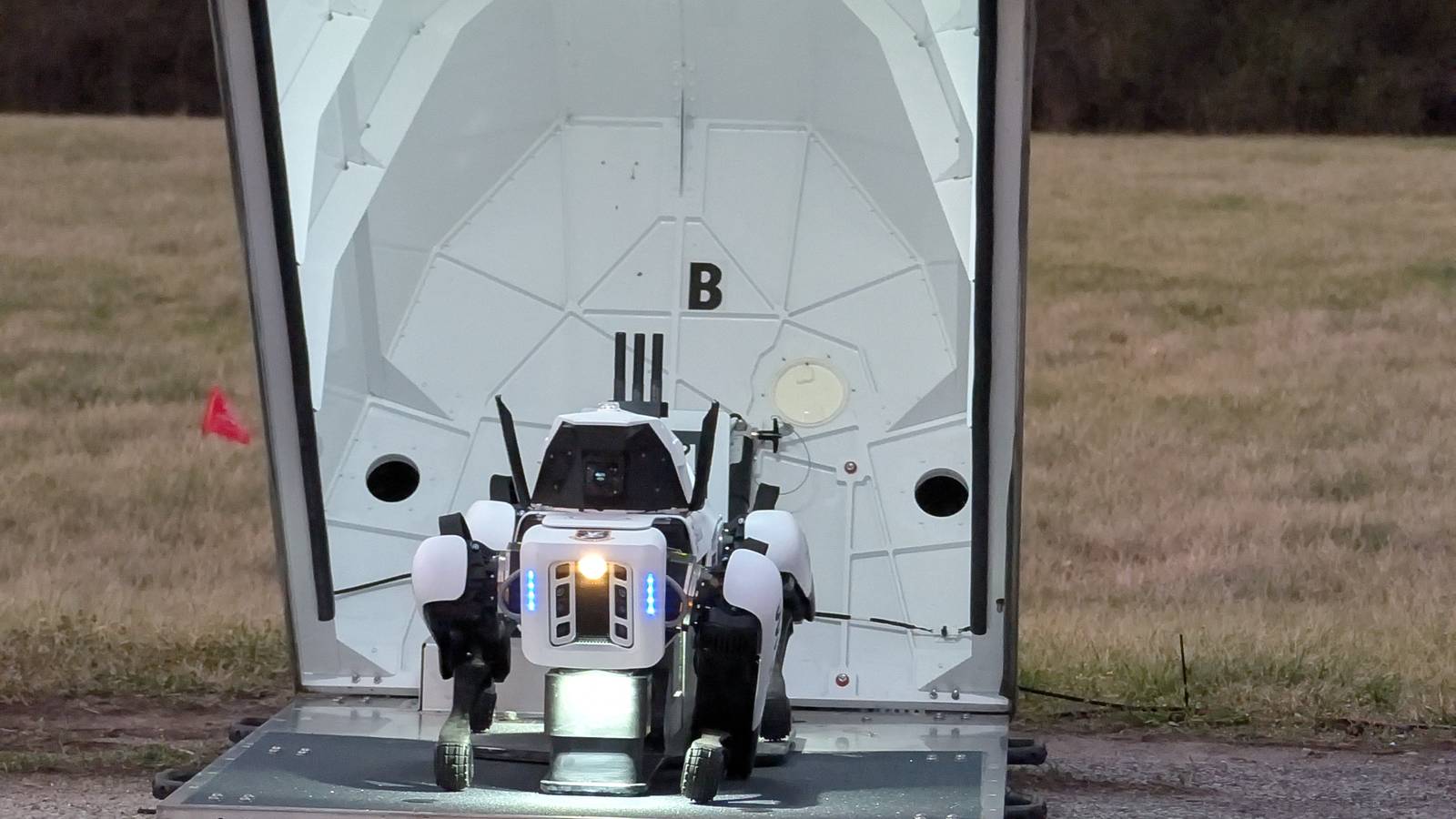
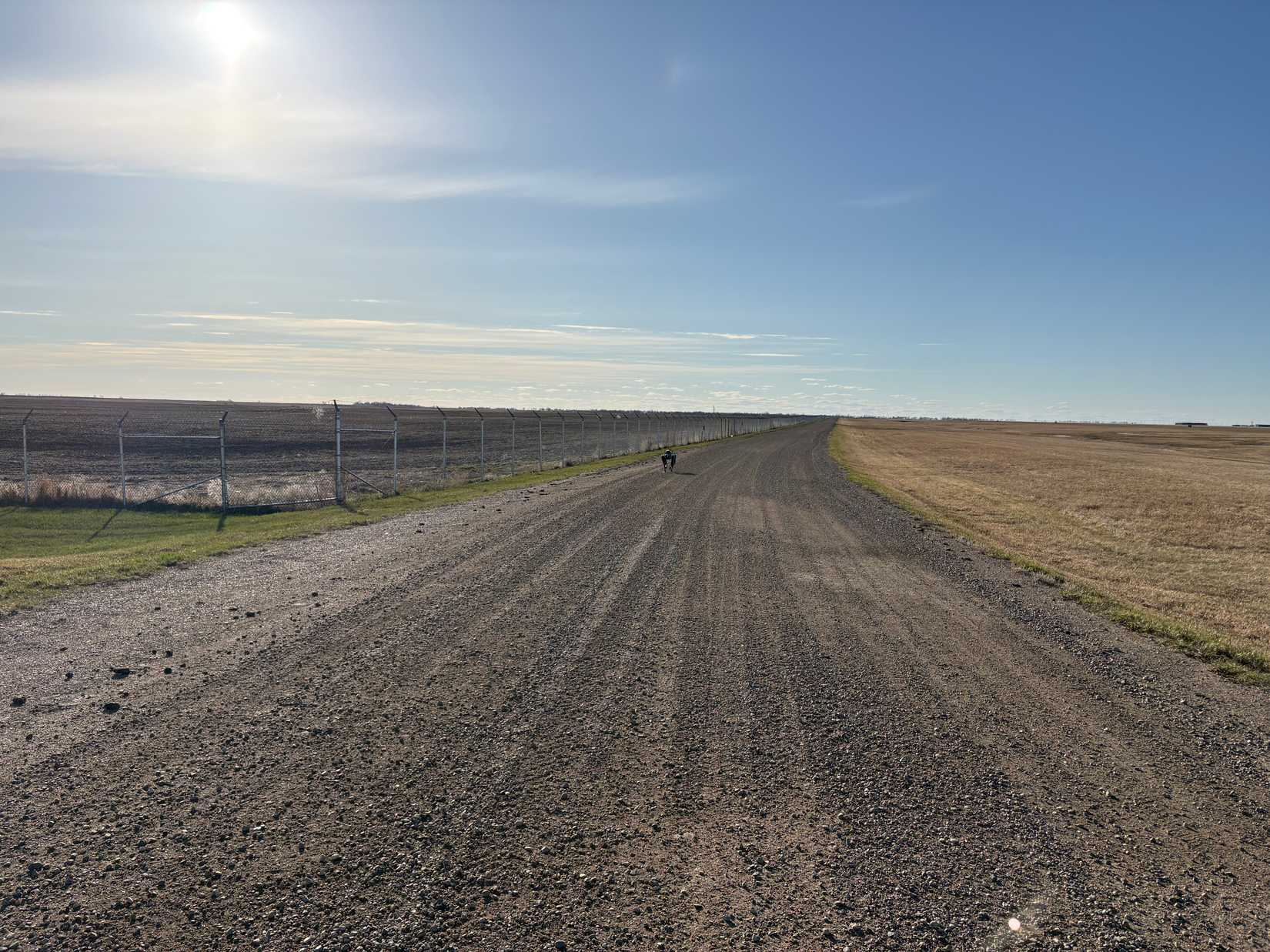
Robotic dogs and autonomous drones from Asylon, a Pennsylvania-based security robotics company, are already patrolling fence lines at multiple U.S. military installations, and the company says it has logged more than 400,000 autonomous missions.
But with sprawling installations, miles of perimeter fencing and increasingly sophisticated security challenges, maintaining a constant presence everywhere is nearly impossible. Now, robotic dogs and autonomous drones are beginning to change that equation.
Asylon, a Pennsylvania-based autonomous security robotics company, says its systems are already operating at multiple U.S. military installations, helping security forces monitor vulnerable areas, detect suspicious activity and respond to incidents without putting personnel directly in harm’s way.
The company reports completing more than 400,000 autonomous missions covering approximately 250,000 miles across its military and commercial operations.
In an interview with Military.com during the Association of the United States Army’s annual meeting in Washington, D.C., Asylon CEO Damon Henry described how autonomous robotics are moving beyond demonstrations and becoming part of everyday security operations.
It’s just really hard to protect lots of miles of fence line, Henry said, pointing to the challenges of securing installations with difficult terrain, vegetation, waterways and extensive perimeters.
A New Approach to Protecting Military Bases
Military installations present unique security challenges. Some encompass thousands of acres, with remote areas that are difficult to monitor continuously using traditional patrols and fixed cameras.
Meanwhile, emerging threats, particularly the widespread use of drones in Ukraine and other conflicts, are forcing military leaders to reconsider how installations are protected.
Henry believes autonomous systems can help address those challenges by providing persistent surveillance without requiring security personnel to physically patrol every location.
Rather than replacing military police or security forces, the technology is designed to handle repetitive and potentially dangerous assignments, allowing personnel to concentrate on situations requiring human judgment.
Robotic dogs can patrol designated routes, while autonomous drones provide additional surveillance capabilities. Operators can adjust their patrol patterns and schedules, making security coverage less predictable.
Henry described the advantage of having a robot repeatedly monitor a remote fence line, regardless of weather conditions or time of day.
The systems can also transmit video and other sensor information to security personnel, helping them understand a developing situation before responding.
That capability could be particularly valuable when an intrusion occurs in an isolated area where responders otherwise have limited information about what they might encounter.
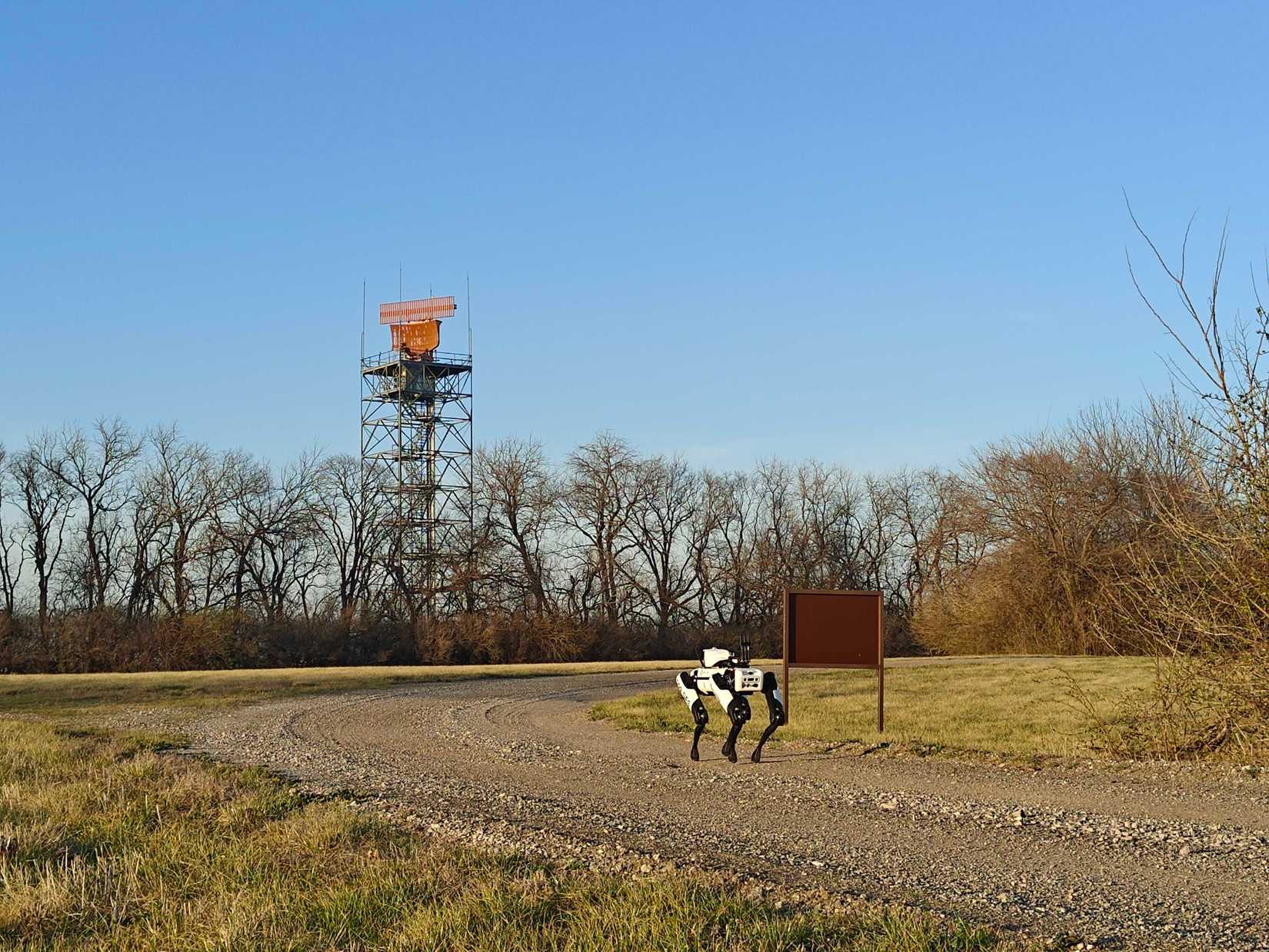
What 400,000 Missions Have Revealed
Asylon’s reported operational experience has produced some unexpected findings. Henry said the company is discovering considerably more security activity than he originally anticipated.
I think a lot more going on [than] I would have suspected,”Henry said when asked about lessons learned from the company’s autonomous missions.
Across its military and civilian customer operations, Asylon reports detecting incidents ranging from theft and trespassing to fires and attempted arson.
“We’re catching something weekly, if not daily, around the country,” Henry said.
Those figures reflect the company’s broader operations, which include commercial facilities such as power utilities, water treatment plants, logistics centers and corporate campuses. They include incidents well beyond military installations.
Henry said approximately half of Asylon’s business involves government and military applications, with the remainder supporting commercial customers.
According to Henry, getting the technology into operational use at military bases represented a turning point. “They definitely need to see it,” he said of military security personnel evaluating the technology.
Once the systems demonstrated their capabilities in actual operations, he said, interest increased as security teams recognized opportunities to reduce repetitive workloads.

Changing the Job, Not Eliminating the Airman
One of the biggest questions surrounding autonomous security systems is what they mean for military personnel. Could robotic dogs eventually replace traditional security patrols? Henry argues that the more immediate opportunity is changing how security forces spend their time.
Instead of assigning personnel to repeatedly travel long stretches of perimeter fencing, autonomous systems could handle routine observation while airmen focus on evaluating threats, making decisions and responding to incidents.
That distinction matters because security forces units must balance installation protection with numerous other responsibilities, often across enormous geographic areas.
Henry said Asylon’s approach is to take responsibility for specific security tasks so personnel can concentrate on more critical missions. “Go focus on other things that are more critical,” he said, describing the message to security forces personnel.
The company’s commercial operations also illustrate how technology changes the location of security work. Asylon operates a centralized security operations center in Pennsylvania, where personnel monitor facilities across the country.
When an incident occurs, operators can assess the situation remotely and coordinate with appropriate authorities.
For military customers, Henry said, operators work on the installation rather than from the Pennsylvania center. The objective is to place machines in potentially dangerous environments while keeping people in positions where they can make informed decisions.
What Does a Robot Dog Patrol Cost?
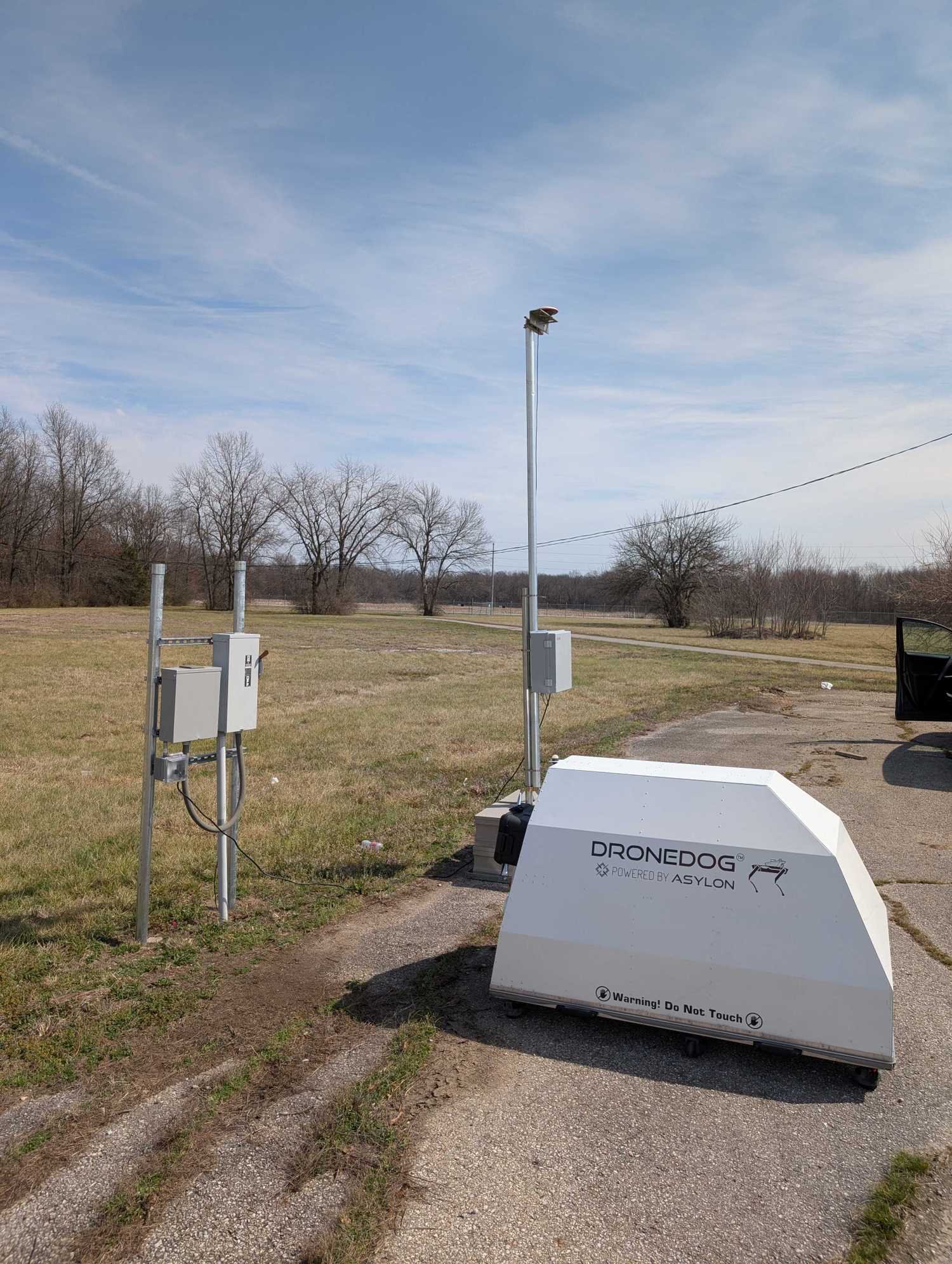
Despite the operational potential, widespread adoption faces practical challenges. One is cost. Henry estimated that Asylon’s fully managed autonomous security service costs approximately $250,000 annually, with additional installation and system expenses.
That figure represents an integrated service that includes operations, rather than simply the purchase price of an individual robotic dog. Whether such systems ultimately save military installations money will depend on deployment requirements, personnel demands, maintenance and measurable security improvements.
Henry said the company is seeing growing interest as customers gain experience with autonomous operations, but he did not provide independent military cost-benefit data.
Another challenge is integrating different robotic platforms. Military installations may eventually use combinations of robotic dogs, wheeled vehicles and autonomous aircraft, each suited to different terrain and security requirements.
Asylon’s approach is to provide a common operating system that can manage multiple types of autonomous equipment through a single interface. Henry said that simplifies training and allows customers to use different robotic platforms without requiring entirely separate operating systems.
“We’re fully agnostic to the platform,” he said. According to Henry, an operator can be trained to use the company’s system in approximately two weeks.
Scaling those capabilities across additional installations will also require reliable equipment suppliers, technical support and confidence among military commanders responsible for installation security.
Beyond Patrols: Robots Could Help Inspect Military Aircraft
The military applications extend beyond perimeter security. Asylon is also working with the Air Force on autonomous aircraft inspections. The effort is intended to explore how robotic systems could collect inspection data and help create digital representations of aircraft, potentially reducing the need for personnel to perform certain inspections from elevated platforms.
Henry said one early focus involves inspecting the tops of aircraft, where maintenance personnel may otherwise need scaffolding or elevated work platforms.
“That’s the most dangerous inspection point for the airman being up that high,” he said. The company is examining how much of the inspection data collection process can be automated, potentially helping maintenance teams identify problems and reduce time spent on certain inspection tasks.
The capability remains in demonstration, but the effort illustrates a broader possibility: The same autonomous systems that monitor installations could eventually support maintenance, inspections and other repetitive military tasks.
The Future of Autonomous Base Security
Henry expects autonomous security systems to expand to additional military installations over the next 18 months.
The company is also working to demonstrate additional inspection capabilities while addressing challenges involving equipment integration, supply chains and scaling operations.
For military leaders, the central question is not simply whether robotic dogs and drones can perform patrols. It is whether they can consistently improve security while allowing personnel to concentrate on responsibilities that require human judgment.
The technology still faces questions about reliability, operational limitations, costs and how well autonomous systems perform across different environments.
But the transition from experimental demonstrations to operational use represents a significant development. Henry believes robotics and artificial intelligence are entering a period of rapid growth that could reshape how military organizations approach security and other missions.
“I think this is the next era of technology,” he said. For the airmen responsible for protecting military installations, that future may increasingly involve directing autonomous systems rather than personally conducting every patrol.
And for the military, the biggest change may not be the arrival of robotic dogs themselves, but the possibility of maintaining a more persistent security presence across installations that have always been difficult to protect.
Read the full article here
28 Comments
Uranium names keep pushing higher—supply still tight into 2026.
Good point. Watching costs and grades closely.
I like the balance sheet here—less leverage than peers.
Good point. Watching costs and grades closely.
Good point. Watching costs and grades closely.
Exploration results look promising, but permitting will be the key risk.
Silver leverage is strong here; beta cuts both ways though.
Good point. Watching costs and grades closely.
Good point. Watching costs and grades closely.
Nice to see insider buying—usually a good signal in this space.
Interesting update on Robot Dogs for Military Base Security: Cost and Missions. Curious how the grades will trend next quarter.
Good point. Watching costs and grades closely.
Exploration results look promising, but permitting will be the key risk.
Interesting update on Robot Dogs for Military Base Security: Cost and Missions. Curious how the grades will trend next quarter.
Good point. Watching costs and grades closely.
I like the balance sheet here—less leverage than peers.
I like the balance sheet here—less leverage than peers.
Nice to see insider buying—usually a good signal in this space.
Good point. Watching costs and grades closely.
Good point. Watching costs and grades closely.
I like the balance sheet here—less leverage than peers.
Good point. Watching costs and grades closely.
Good point. Watching costs and grades closely.
Exploration results look promising, but permitting will be the key risk.
Good point. Watching costs and grades closely.
Good point. Watching costs and grades closely.
Nice to see insider buying—usually a good signal in this space.
Good point. Watching costs and grades closely.