

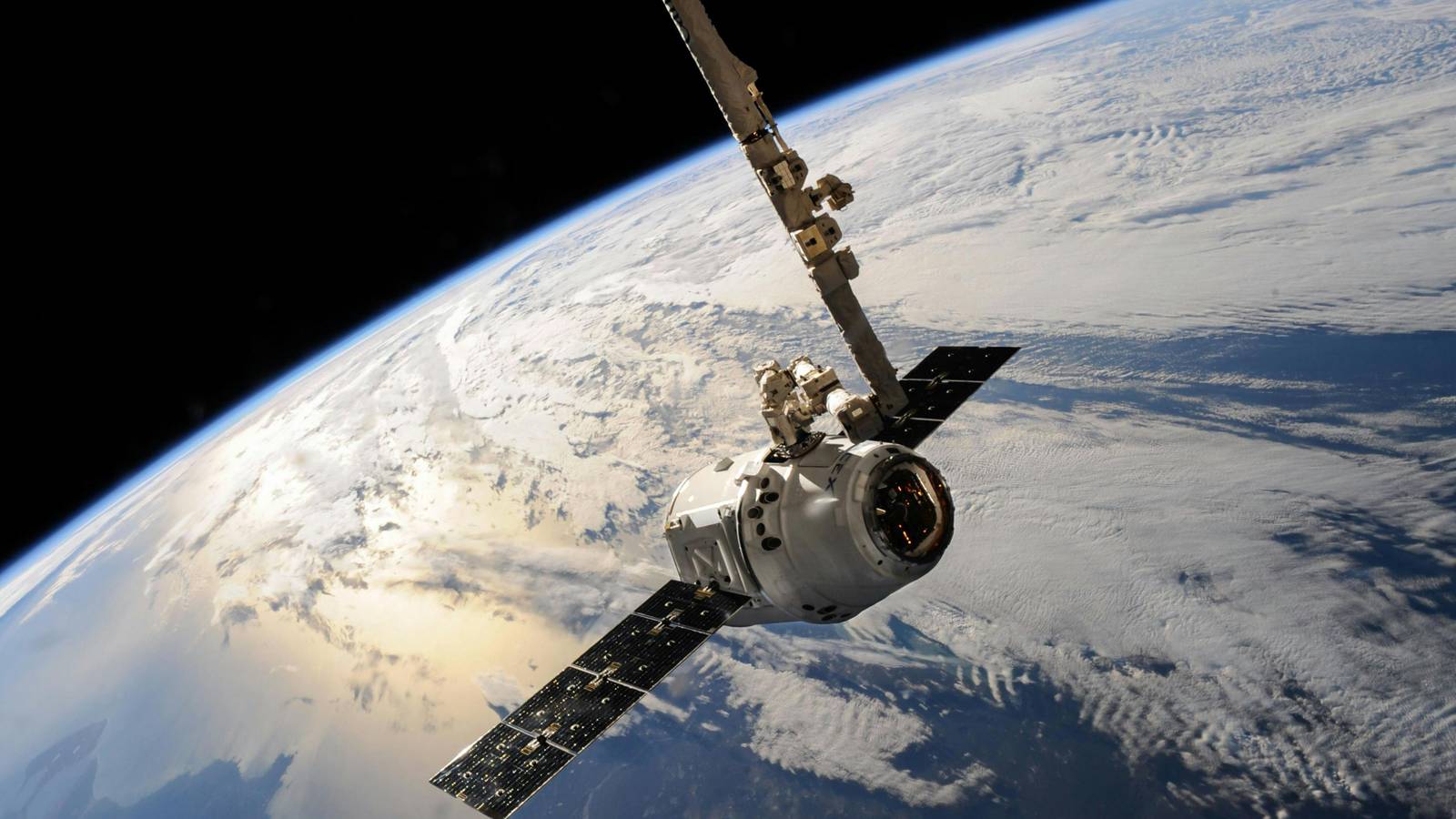
The United States told a United Nations committee on Oct. 21 that a Russian military satellite’s maneuvers near a commercial spacecraft appeared “consistent with an on-orbit weapons operation.”
The spacecraft Russia approached in October was ICEYE-X36, a U.S.-registered radar imaging satellite operated by ICEYE US, a subsidiary of Finland-based ICEYE. The company also supplies radar imagery to Ukraine’s military.
The October encounter is the subject of a report published this month and circulating on social media. It accuses SpaceX and Elon Musk of helping the Russian satellite.
In early November, Reuters reported that two related Russian satellites were becoming better positioned to approach a second U.S.-registered spacecraft, ICEYE-X37, though a tracking company told Military.com it sees no sign of an intentional approach.
Russia’s Cosmos 2612 spent about 24 hours within 2 kilometers, or 1.2 miles, of ICEYE-X36 between Oct. 16 and 18, the space-tracking firm COMSPOC estimated.
No damage has been publicly reported and Russia’s purpose remains unclear. A separate online report alleges that SpaceX helped the Russian satellite by using a collision warning to keep ICEYE-X36 from maneuvering.
However, the Federal Communications Commission authorization cited in that report requires ICEYE to assess collision risks and mitigate them if necessary. It does not require ICEYE to hold its orbit or obtain SpaceX’s permission to maneuver, a Military.com review found.
Military.com reached out for comment to SpaceX, the FCC, COMSPOC, the Space Force, the State Department and U.S. Space Command.
What the US Told the United Nations
Brian Hardesty, a senior adviser to the U.S. delegation to the Conference on Disarmament, delivered the statement Oct. 21 during a U.N. General Assembly First Committee debate on outer space.
“Just last weekend, Russia’s Ministry of Defense satellite COSMOS 2612 exhibited threatening behavior by intentionally maneuvering dangerously close to a commercial satellite,” Hardesty said. “These behaviors appear consistent with an on-orbit weapons operation.”
He called the decision “deliberately reckless,” saying it “violated long-established safety thresholds in low Earth orbit.”
“We call on Russia to be transparent about what this satellite was doing in orbit,” he added.
Hardesty did not identify the commercial satellite, its operator or its country of registration.
Russia’s Defense Ministry did not respond to questions from Reuters, which has reported that Moscow previously warned Western commercial satellites supporting Ukraine could become legitimate targets for retaliation.
Russia rejected the accusation during the same U.N. debate. A Russian representative described the U.S. and Finnish statements as unfounded and said Russia’s space activities—including those involving Cosmos 2612—were peaceful and complied with its international obligations.
‘Slow walk-past, not a fly-by’
Russia launched Cosmos 2612 and five sister satellites in April.
About a month later, five of the spacecraft maneuvered to align their orbital planes with that of ICEYE-X36, according to the Center for Strategic and International Studies.
Cosmos 2612 began a new series of maneuvers Sept. 30, according to CSIS. By Oct. 16 it was at the American satellite’s altitude and in nearly the same orbital plane. COMSPOC estimated that it made three close passes between Oct. 16 and 18.
COMSPOC’s model put the closest pass at about 60 meters, or 200 feet. But the firm reported a maximum uncertainty of about 950 meters, or 3,100 feet.
Separately, tracking company LeoLabs has high confidence the satellites came within about 500 meters, or 1,640 feet, of each other and is “not deviating from that estimate,” Victoria Heath, director of marketing and communications, told Military.com.
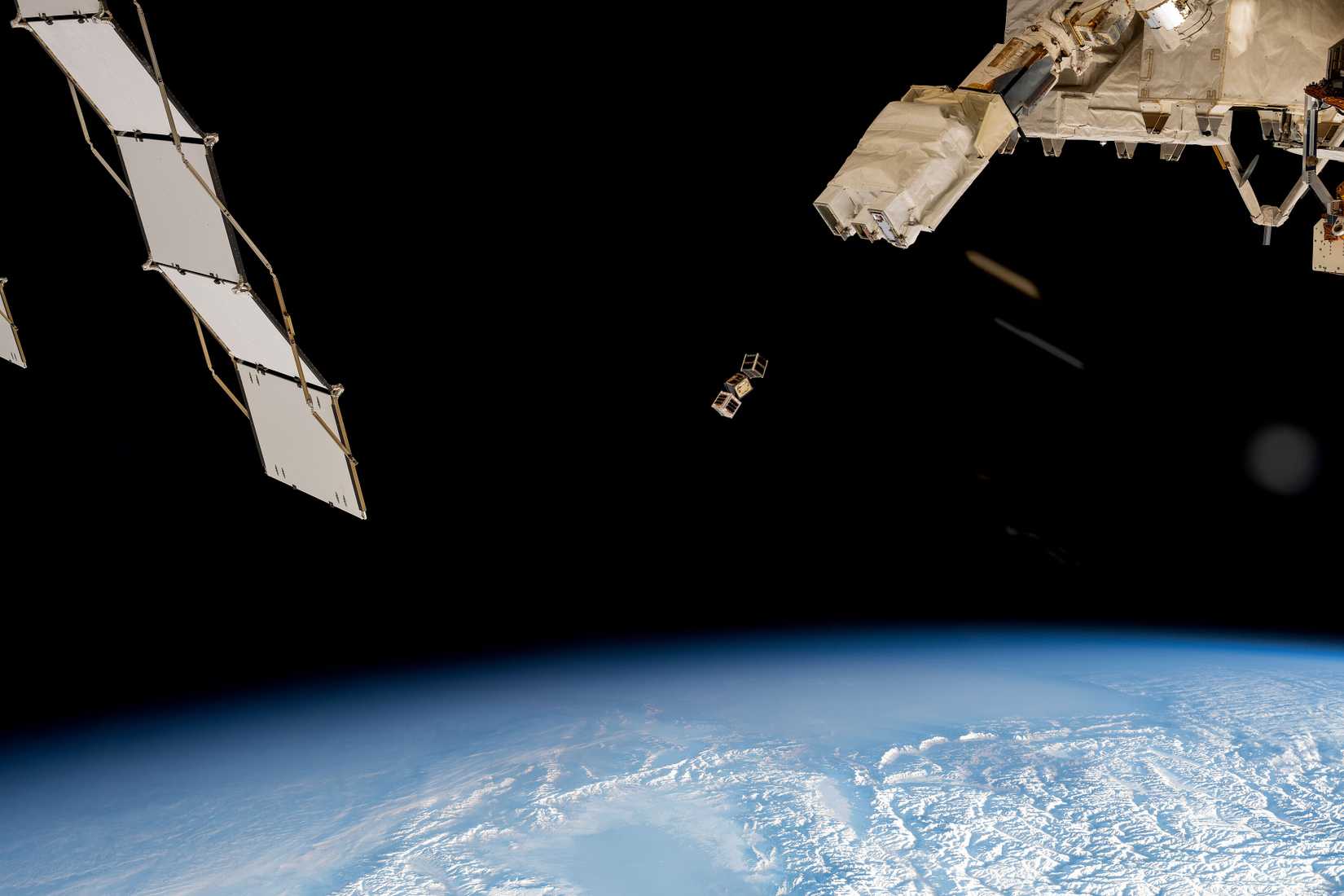
At the closest points, the satellites moved relative to each other at less than 1 meter per second, or roughly 2 mph or slower, in what COMSPOC called a “slow walk-past, not a fly-by.”
Cosmos 2612 maneuvered away Oct. 18 and braked the next day, leaving it about 480 kilometers, or 300 miles, from ICEYE-X36 in the same orbit, COMSPOC reported.
Greg Gillinger, a former U.S. Air Force intelligence officer and senior space analyst at Integrity ISR, told Reuters the encounter “looks like an attack rehearsal.”
German space commander Maj. Gen. Michael Traut told Reuters that such maneuvers could be used for inspection, observation or interference, depending on what the spacecraft was equipped to do.
The Satellite Did Not Move
“ICEYE-X36 did not maneuver,” COMSPOC wrote in its reconstruction of the October encounter. LeoLabs saw the same thing.
We have no indications that the ICEYE satellite maneuvered as a result of this event – Heath to Military.com.
ICEYE had responded differently to earlier Russian activity. In September, ICEYE Chief Executive Rafal Modrzewski told Reuters that the company had moved its satellite, prompting further Russian maneuvers.
They declined to give Air & Space Forces Magazine a detailed response in October. “We are aware of the situation and tracking it closely,” a spokesperson told the publication.
Ann Stevens, who heads ICEYE’s U.S. operations, told Reuters in November that X36 “has been and will continue to be a productive satellite.”
Asked by Military.com why the satellite did not maneuver, the company did not say.
“X36 is a U.S.-operated, U.S.-licensed satellite. It has been operating normally and continues to be a productive part of our constellation,” said an ICEYE US spokesperson. “As with most private companies, we do not discuss operational or business processes publicly.”
The spokesperson added that “questions about U.S. government operations are best directed to the U.S. government.”
SpaceX Claim and What the Record Shows
A report dated November 2026 by Craig Pirrong, an economist who writes the Streetwise Professor blog and a co-author credited as “R.A.B.,” alleges that SpaceX and Musk coordinated with Russia.
It says a publicly listed prediction that a Starlink satellite would pass within 401 meters, about 1,300 feet, of X36, combined with a Federal Communications Commission license condition, kept ICEYE from moving X36 out of the way.
The report describes the condition as “legally forcing ICEYE US to subordinate its maneuvers and hand over its trajectory plans to SpaceX.”
Nothing in the condition’s text bars a maneuver. It appears in a 2023 FCC order authorizing up to eight ICEYE satellites, and it says that on receiving a collision warning, the company “must review and take all possible steps to assess the collision risk, and mitigate collision risk if necessary.”
The possible steps it lists include contacting the other operator, sharing orbital data and “modifying spacecraft attitude and/or operations.” It does not give SpaceX authority to approve ICEYE’s maneuvers.
SpaceX did take part in that proceeding. It asked the FCC in an April 2023 letter to apply conditions like those on its own Starlink license, and the agency granted the request in part, the order shows.
The 401-meter figure exists as well. It appears on the tracking site Space Mapper in a forecast of a pass between ICEYE-X36 and Starlink-35856 late on Oct. 16, UTC. The entry does not identify SpaceX as the source of the forecast.
The report treats that forecast and the Russian approach as parts of one coordinated event, but they were different in kind. Space Mapper predicted that the two satellites would pass each other at a relative speed of more than 33,000 mph, while Cosmos 2612 lingered near X36 at walking pace for hours.
The report presents no record of communications between SpaceX and Russian satellite operators documenting coordination. Its final appendix lists logs and filings the authors say would be needed to test their conclusions.
Whether SpaceX sent ICEYE any warning is something the public record does not show. ICEYE did not answer questions from Military.com about whether it received a warning involving the Starlink satellite.
In a separate matter, Ukrainian officials reported restrictions on military Starshield service in mid-October, as well as in November leading up to the Ukrainian attack on the Crimean Bridge. Who authorized those restrictions is disputed.
Democratic Sens. Jeanne Shaheen of New Hampshire and Chris Coons of Delaware asked Musk on Nov. 13 to preserve records related to Ukraine’s Starlink and Starshield access. Their letter does not mention the ICEYE encounter.
Who Protects a Commercial Satellite?
In 2023, Army Gen. James Dickinson, then the head of Space Command, said the command does not automatically protect commercial systems the military relies on.
Those responsibilities “have to be directed to me by my boss and my boss’ boss,” he said at the Aspen Security Forum, according to the trade publication Via Satellite.
Whether that remains the policy is among the questions Military.com asked the command.
Days after the encounter, the Space Force announced the first six tracking contracts under its Commercial Augmentation Space Reserve. Those contracts did not address whether the Pentagon would reimburse companies for satellites lost in a conflict, Breaking Defense reported.
Clayton Swope, of the Center for Strategic and International Studies, said at a panel on the encounter that no internationally recognized standard defines when a maneuver like Russia’s is hostile, according to Defense News.
He said the approach was a way for Russia to send a message: The West couldn’t stop it.
Two More Satellites Drifting Closer
Two of Cosmos 2612’s sister satellites were in orbits that could be adjusted to match that of ICEYE-X37, COMSPOC reported Nov. 13.
The firm estimated that Cosmos 2611 needed only small changes in altitude and orbital plane to match X37’s orbit. It had detected no engine burns by either Cosmos 2611 or Cosmos 2613 since Nov. 5 and noted that “any move doesn’t have to come today.”
LeoLabs offered a more cautious reading. Cosmos 2613 and Cosmos 2611 are “passively drifting towards ICEYE-X37,” Heath told Military.com, but the company has not observed large maneuvers or other behavior “that would indicate an intentional alignment/ingress is set to occur.”
Cosmos 2613 is about 9,580 kilometers, or 5,950 miles, from X37, and is drifting about 400 kilometers a day and has not maneuvered since July 6, according to LeoLabs.
Cosmos 2611 is about 10,212 kilometers, or 6,350 miles, away, drifting about 125 kilometers a day and has not maneuvered since May 20. The satellites have periodically crossed paths without incident since launching, Heath said.
Both Russian satellites “likely have the ability to perform” a close approach, she added, but “we do not have any indications that they are maneuvering to do so” with X37 at this time.
The U.S. statement at the United Nations asked Russia to explain the first approach.
Read the full article here
23 Comments
Uranium names keep pushing higher—supply still tight into 2026.
Good point. Watching costs and grades closely.
Production mix shifting toward USA might help margins if metals stay firm.
Good point. Watching costs and grades closely.
The cost guidance is better than expected. If they deliver, the stock could rerate.
Uranium names keep pushing higher—supply still tight into 2026.
Good point. Watching costs and grades closely.
Good point. Watching costs and grades closely.
I like the balance sheet here—less leverage than peers.
Silver leverage is strong here; beta cuts both ways though.
Good point. Watching costs and grades closely.
Nice to see insider buying—usually a good signal in this space.
Good point. Watching costs and grades closely.
I like the balance sheet here—less leverage than peers.
Good point. Watching costs and grades closely.
I like the balance sheet here—less leverage than peers.
Interesting update on Russian Military Satellite’s Approach to American Spacecraft Looked Like a Weapons Operation, US Says. Curious how the grades will trend next quarter.
Good point. Watching costs and grades closely.
Nice to see insider buying—usually a good signal in this space.
Interesting update on Russian Military Satellite’s Approach to American Spacecraft Looked Like a Weapons Operation, US Says. Curious how the grades will trend next quarter.
Uranium names keep pushing higher—supply still tight into 2026.
Good point. Watching costs and grades closely.
Interesting update on Russian Military Satellite’s Approach to American Spacecraft Looked Like a Weapons Operation, US Says. Curious how the grades will trend next quarter.