

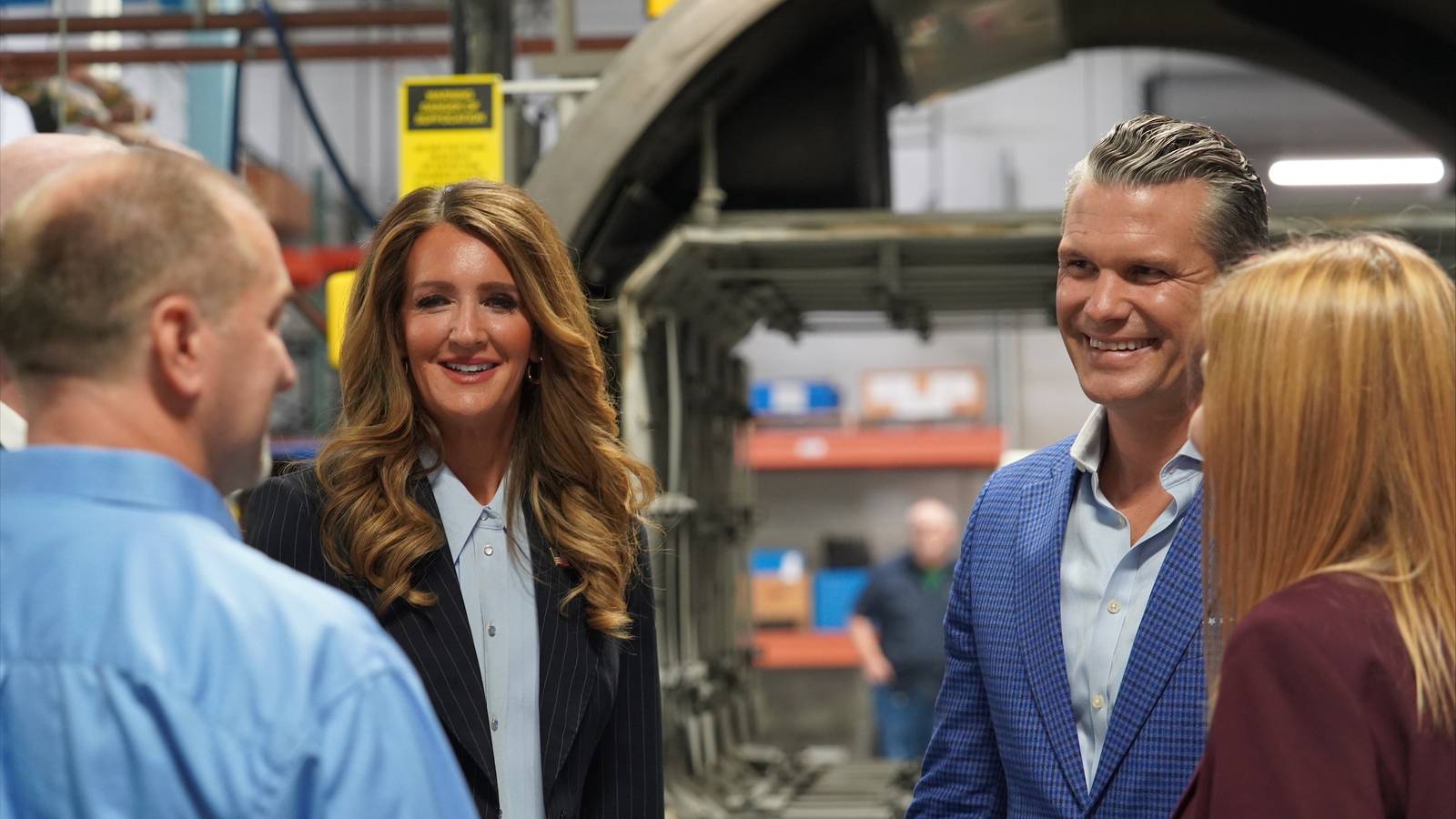
America’s ability to build the weapons, aircraft, ships and advanced technologies its military depends on rests heavily on companies most Americans have never heard of.
They are small manufacturers producing everything from precision-machined components and electronics to specialized materials used in some of the military’s most advanced weapons systems.
And they represent a far larger portion of American manufacturing than many people realize.
Most people don’t think of manufacturing as a small business concern, Small Business Administration Administrator Kelly Loeffler told Military.com during an interview Wednesday. But 98% of America’s manufacturers meet the small business definition.
Loeffler sat down with Military.com to discuss the newly established Smaller War Plants Commission, a partnership between the SBA and the Pentagon aimed at rebuilding American manufacturing capacity and strengthening the nation’s defense industrial base.
Small businesses account for more than 70% of that defense industrial base, according to the SBA, making them essential to the production of everything from conventional weapons to advanced military technologies.
The initiative aims to help those companies secure financing, expand production, strengthen domestic supply chains and prepare for the military’s future needs.
Rebuilding America’s Manufacturing Strength
For Loeffler, the initiative represents more than a new federal partnership. It is also a return to the SBA’s historical origins.
“This gets SBA back to our roots as an agency,” she said.
The SBA traces its institutional history to federal efforts during and after World War II to mobilize smaller manufacturers in support of military production. The Smaller War Plants Corporation, established during the war, helped smaller companies participate in defense manufacturing at a time when the country needed to dramatically increase its industrial output.
The commission, formally established in August, draws its name from that earlier effort. Loeffler sees parallels between that period and the challenges facing American manufacturing today.
She argued that decades of shifting manufacturing overseas have weakened domestic industrial capacity and created vulnerabilities in critical supply chains.
Nowhere is it more clear than in our defense industrial base that to have the strength of the supply chain is mission critical to deterrence and to strengthening our warfighter, Loeffler said.
The challenge extends beyond the nation’s largest defense contractors.
Companies such as Lockheed Martin, Boeing, RTX and General Dynamics depend on extensive networks of smaller manufacturers that produce the parts, materials and specialized components required for complex military systems.
Loeffler pointed to SIG Sauer, which she said works with approximately 1,200 small suppliers, as an example of how interconnected modern defense manufacturing has become.
A disruption affecting even a relatively small supplier can have consequences throughout the production process.
“This is a fundamental rebuilding of our supply chains in America,” she said, emphasizing the importance of the smaller manufacturers that contribute to those networks.

Bringing Capital to Smaller Manufacturers
One of the commission’s central objectives is improving access to financing for manufacturers that have the technical expertise and production capabilities needed by the military but lack the resources to expand.
Manufacturing growth often requires substantial upfront investment in facilities, specialized equipment, skilled employees and materials.
For smaller businesses, obtaining that financing can be difficult, particularly when production must increase rapidly to meet changing defense requirements.
The SBA and Pentagon signed a new agreement Oct. 12 intended to address some of those challenges by combining the SBA’s financial expertise with the Defense Department’s strategic investment priorities.
Loeffler said the agreement will allow SBA personnel to support the Pentagon’s Economic Defense Unit with financial analysis, due diligence and investment reviews.We’re now supporting the efforts of the Economic Defense Unit at the Department of War, almost through an investment banking relationship, she explained.Under the agreement, the Pentagon can pursue strategic equity investments in businesses considered important to national security, while the SBA provides financial expertise and support. The Pentagon retains responsibility for investment decisions.
The SBA will draw on experience developed through its Small Business Investment Company program, which Loeffler said has an investment portfolio of approximately $60 billion.
The arrangement is intended to help the Pentagon identify promising manufacturing businesses and evaluate opportunities to expand strategically important production capabilities.
Eligible manufacturers may also benefit from the SBA’s Made in America Loan Guarantee, which provides a 90% federal guarantee through the International Trade Loan program to help finance equipment, facility improvements and domestic production expansion.
The initiative also reflects an effort to coordinate federal resources rather than having agencies work independently.
Loeffler described the SBA’s role as a “force multiplier” for existing Pentagon efforts to strengthen domestic defense manufacturing.
Finding the Gaps Before They Become Problems
Beyond financing, the commission is intended to help the federal government develop a clearer understanding of where American manufacturing capacity exists and where critical vulnerabilities remain.
Loeffler highlighted the Civil Reserve Manufacturing Network, part of the commission’s broader industrial mapping effort, as an important element of that approach.
The network is intended to map manufacturing capabilities across the country, identify potential gaps and help determine where additional production capacity may be needed.
The objective is to give the government a better understanding of the nation’s industrial capabilities before a crisis emerges.
The need extends across established defense industries such as shipbuilding and munitions production, as well as emerging technologies including drones, hypersonic systems and advanced computing.
If we aren’t prepared to supply the materials, the components, chips, minerals, then competing with drones, hypersonics, quantum computing is going to be impossible, Loeffler said.
For military planners, the ability to identify and expand domestic manufacturing capacity could become increasingly important as the Pentagon prepares for potential conflicts requiring sustained production and rapid replacement of equipment.
The commission is also examining regulatory and compliance requirements that can complicate participation in defense manufacturing.
Loeffler cited an ongoing review of the Cybersecurity Maturity Model Certification compliance process as one example of efforts involving the SBA and Pentagon.
The Workers Behind America’s Military Technology
While access to capital and supply-chain planning are central to the initiative, Loeffler said another challenge consistently emerges during her visits to manufacturing facilities: finding enough skilled workers.
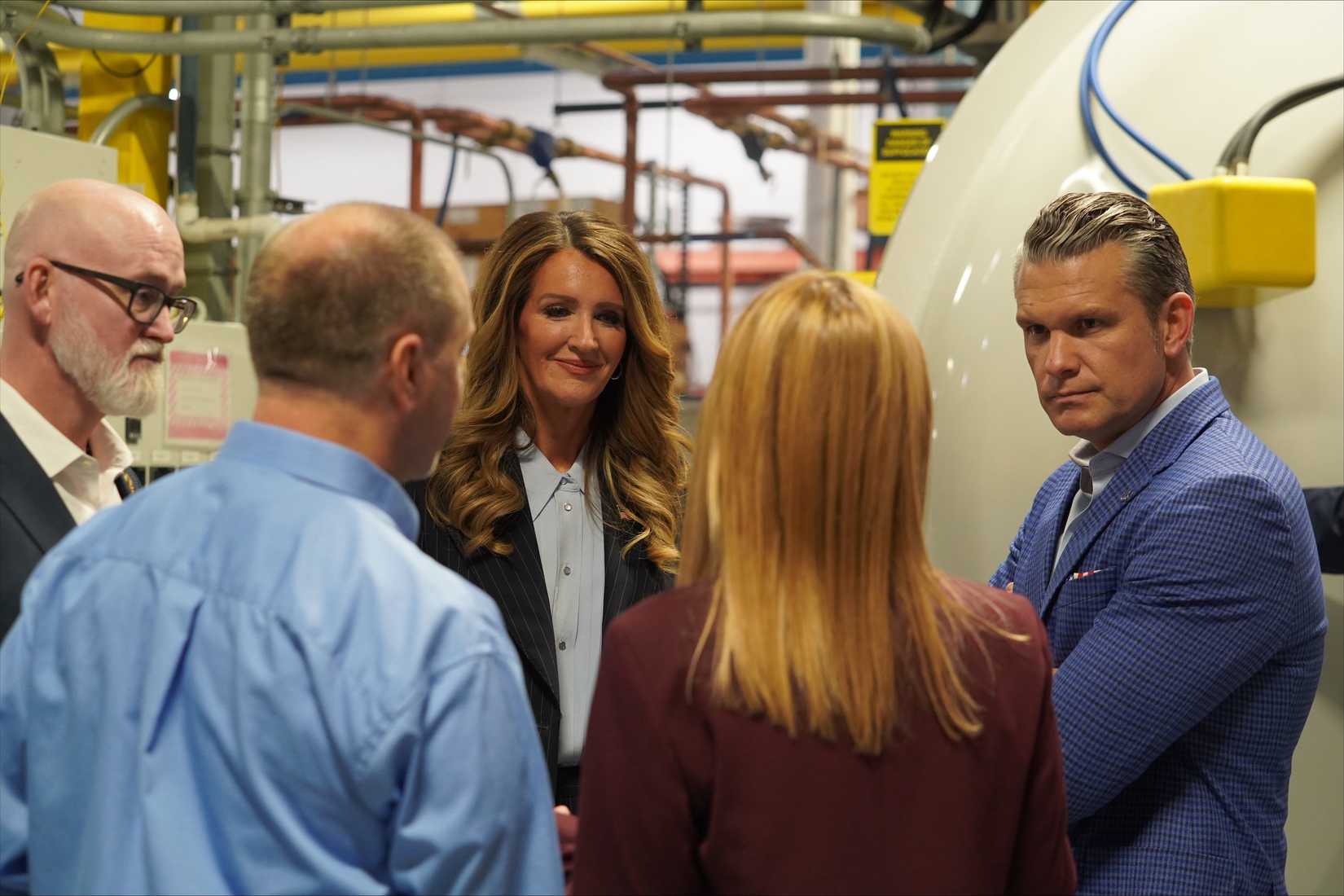
She recently visited Riverside Manufacturing Machining and Engineering in Eau Claire, Wisconsin, alongside Defense Secretary Pete Hegseth. The approximately 200-person operation manufactures specialized components supporting military systems, including the F-35, according to Loeffler.
During the visit, she said she met workers whose contributions to national defense are rarely visible outside the manufacturing industry.
“These workers are the unsung heroes of strengthening that defense industrial base,” she said.
The experience also reinforced what she sees as a significant opportunity for military veterans.
Loeffler said veterans bring valuable technical experience, leadership skills and an understanding of military requirements to manufacturing careers.
As she and Hegseth spoke with employees at the Wisconsin facility, several volunteered information about their military service.
They understood that their work in manufacturing represented another way to support the military, she said.
We were so grateful to be able to thank them for not just their service, but continuing it through this manufacturing ecosystem that supports the warfighter today.
Loeffler believes expanding manufacturing will require greater attention to skilled trades, technical education and career pathways for younger Americans and veterans alike.
She also sees opportunities for experienced workers to eventually establish their own manufacturing businesses.
Building for the Next Generation of Warfare
The Smaller War Plants Commission arrives as the Pentagon places increasing emphasis on expanding production capacity, strengthening domestic supply chains and accelerating the development of emerging military technologies.
For the SBA, the initiative represents an opportunity to use its financial expertise and small-business relationships in direct support of national defense priorities.
For manufacturers, the potential benefits include greater access to capital, stronger connections to defense requirements and opportunities to expand their operations.
But the commission’s ultimate impact will depend on how effectively those efforts translate into additional production capacity, stronger suppliers and a more resilient industrial base.
The agreement is still in its early stages, and specific increases in manufacturing output resulting from the initiative have not yet been established.
Loeffler emphasized that the effort is intended to prepare American industry for challenges extending well beyond today’s defense requirements.
Rather than focusing solely on the manufacturing capacity the country has lost over previous decades, she said the government must also consider what the military will need in the decades ahead.
That means investing not only in the largest defense contractors, but also in the thousands of smaller American businesses whose employees manufacture the components that make modern military capabilities possible.
Read the full article here
40 Comments
Exploration results look promising, but permitting will be the key risk.
The cost guidance is better than expected. If they deliver, the stock could rerate.
Good point. Watching costs and grades closely.
If AISC keeps dropping, this becomes investable for me.
Good point. Watching costs and grades closely.
Good point. Watching costs and grades closely.
The cost guidance is better than expected. If they deliver, the stock could rerate.
Good point. Watching costs and grades closely.
Good point. Watching costs and grades closely.
The cost guidance is better than expected. If they deliver, the stock could rerate.
Good point. Watching costs and grades closely.
If AISC keeps dropping, this becomes investable for me.
If AISC keeps dropping, this becomes investable for me.
Good point. Watching costs and grades closely.
Good point. Watching costs and grades closely.
Uranium names keep pushing higher—supply still tight into 2026.
Uranium names keep pushing higher—supply still tight into 2026.
Interesting update on SBA, Pentagon Partner to Strengthen Defense Manufacturing. Curious how the grades will trend next quarter.
Nice to see insider buying—usually a good signal in this space.
Good point. Watching costs and grades closely.
Good point. Watching costs and grades closely.
If AISC keeps dropping, this becomes investable for me.
I like the balance sheet here—less leverage than peers.
Good point. Watching costs and grades closely.
Good point. Watching costs and grades closely.
The cost guidance is better than expected. If they deliver, the stock could rerate.
Good point. Watching costs and grades closely.
Good point. Watching costs and grades closely.
Interesting update on SBA, Pentagon Partner to Strengthen Defense Manufacturing. Curious how the grades will trend next quarter.
Uranium names keep pushing higher—supply still tight into 2026.
Good point. Watching costs and grades closely.
Good point. Watching costs and grades closely.
Exploration results look promising, but permitting will be the key risk.
I like the balance sheet here—less leverage than peers.
I like the balance sheet here—less leverage than peers.
If AISC keeps dropping, this becomes investable for me.
Good point. Watching costs and grades closely.
Nice to see insider buying—usually a good signal in this space.
Good point. Watching costs and grades closely.
Good point. Watching costs and grades closely.