

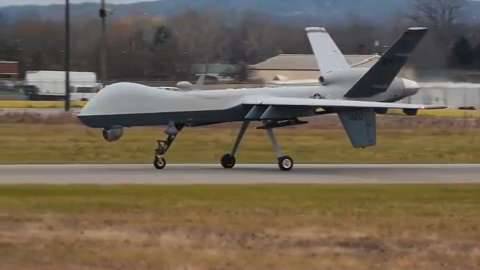
Most electric drones eventually encounter the same limit: the battery.
Ascent Solar Technologies has developed ultralight solar modules that produce power in flight and could extend some fixed-wing drones’ endurance by roughly 12% to 25%.
In an interview with Military.com, company President and CEO Paul Warley, a former Army captain, explained how the panels supplement onboard batteries on fixed-wing drones.
The technology will not make every aircraft fly indefinitely, but it could give surveillance and communications platforms more time over an area without adding much weight.
A Solar Skin Instead of a Rooftop Panel
Ascent makes thin-film photovoltaic modules from copper indium gallium diselenide, or CIGS. Like any solar cell, the material absorbs light and converts part of its energy into direct-current electricity. Thin-film cells use extremely thin semiconductor layers deposited on a supporting material such as glass, metal or plastic.
Ascent deposits its CIGS layer on flexible plastic and manufactures interconnected cells in a roll-to-roll process. The resulting material can bend, roll up and conform to a surface such as a wing or fuselage. A power management system can send its electricity to the motors and onboard equipment or use it to recharge the aircraft’s battery.
The company’s 2025 annual report said its cell reached 15.7% efficiency, meaning it converted 15.7% of incoming light into electricity. Warley said completed products generally operate around 12.5% to 13.5%.
For a fixed-wing drone with a roughly 2-meter wingspan, Warley estimated that a customized installation might produce 35 to 70 watts per drone, depending on the available area and aircraft design.
That output would supplement the battery rather than replace it.
Why Weight Changes the Equation
Efficiency tells only part of the story aboard an aircraft. Conventional silicon panels can produce more electricity from a given area, while high-performance multijunction cells used on spacecraft can achieve higher efficiencies.
Aircraft designers must also calculate specific power, or watts produced per kilogram. A lighter, less efficient panel can prove more useful if it produces energy without forcing the aircraft to burn more of that same energy by carrying extra weight.
The same tradeoff limits the value of simply adding batteries. “You could technically load in 10 batteries, but then it would be so heavy you couldn’t get it very high off the ground,” Warley said. More battery capacity adds energy, but it also adds mass, increases the power required for flight and can reduce speed or payload. Warley estimated that Ascent’s complete installations, including wiring and protective material, provide approximately 375 to 750 watts per kilogram.
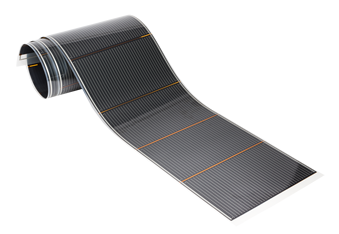
The design may also tolerate localized damage better than a rigid glass module. Warley said Marines once fired into one of the company’s panels and found that it continued producing power. “The only thing that would lose power would be the specifically affected cells,” he said.
That does not make the entire installation bulletproof: connectors, wiring, encapsulation and structural attachment remain vulnerable.
Where Solar Helps and Where It Does Not
Solar works best on efficient fixed-wing aircraft, airships and high-altitude platforms because they offer broad surfaces for cells and require less continuous power than a hovering aircraft. Small quadcopters combine limited panel area with motors that must constantly generate lift, leaving little opportunity for practical solar augmentation.
Military interest in the concept is not new. Airbus tested its solar-powered Zephyr aircraft with the U.S. Army and the U.K. Ministry of Defence, using solar energy during the day and rechargeable batteries at night while researchers pursued flights lasting days or weeks.
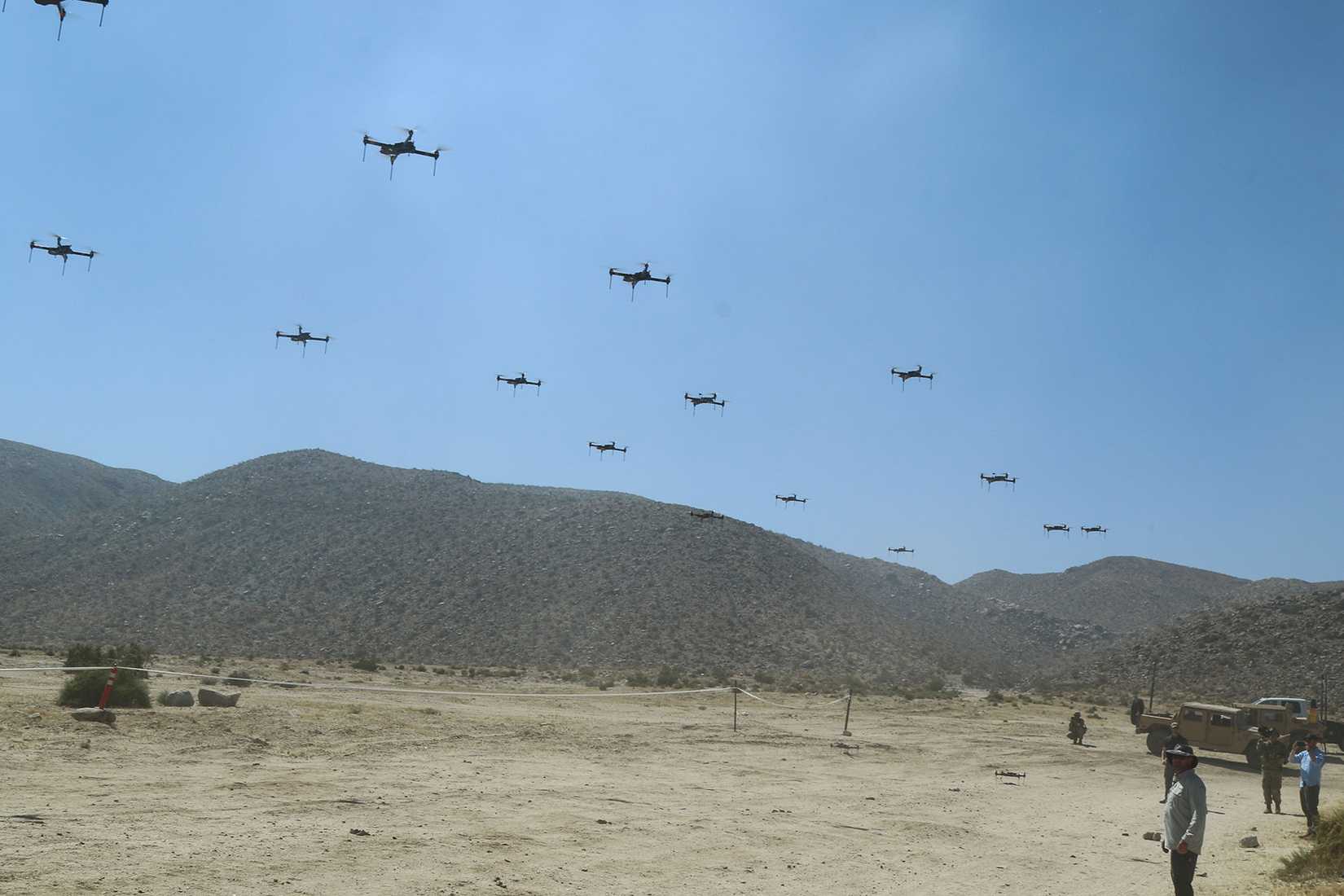
Sun angle, clouds, dust and latitude all change the available power. Solar therefore fits some missions better than others.
It could extend daylight surveillance, communications relay or mapping sorties, but it cannot guarantee the same endurance at night or in severe weather.
Beyond Sunlight: Lasers and Satellites
Ascent also participated in the Defense Advanced Research Projects Agency’s Stand-off Ubiquitous Power/Energy Replenishment program, which explored aiming a ground-based laser at specially tuned photovoltaic material on a Silent Falcon drone to recharge it in flight. That differs from collecting sunlight on the wing: the laser supplies concentrated energy generated elsewhere.
Under its Persistent Optical Wireless Energy Relay program, DARPA later delivered more than 800 watts across 8.6 kilometers during a 2025 ground-to-ground laser test in New Mexico. The result demonstrated wireless energy transmission, not free power generation, because another source still had to produce the electricity that operated the laser.
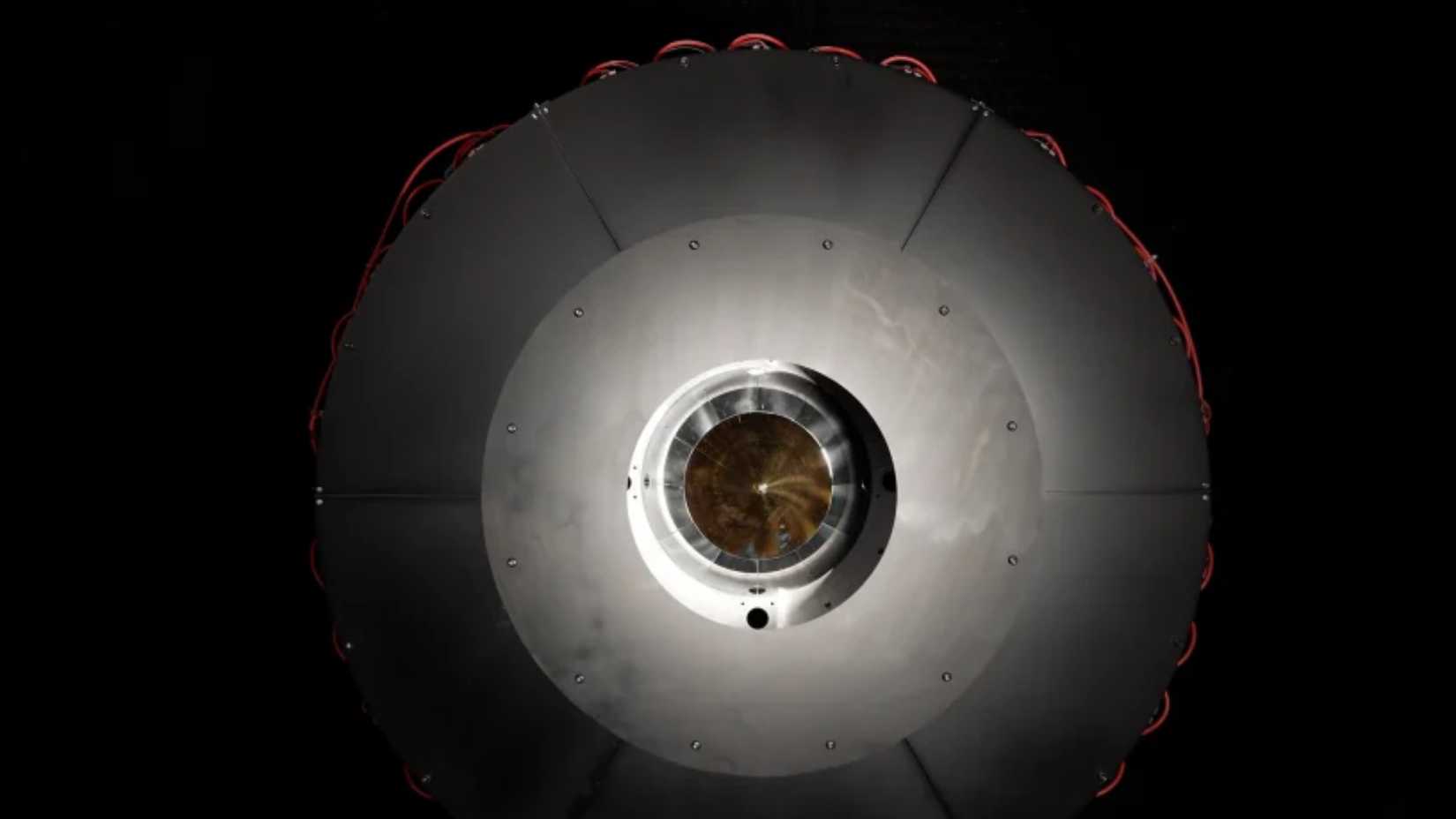
The weight advantage also interests satellite builders, who pay heavily to launch every additional kilogram. Flexible modules can pack into smaller volumes, but spacecraft still must survive launch vibration, radiation, extreme temperature cycles and the orbital environment. Ascent identifies satellites, high-altitude aircraft and fixed-wing military drones as its principal markets.
Warley expects military drone designs to keep evolving rapidly:
“Drone designs change at warp speed.”
Ultralight solar will not replace batteries, fuel cells or engines across the force. For the right fixed-wing aircraft, however, it could turn unused surface area into additional range, loiter time and electrical capacity without imposing the weight of another large battery.
Read the full article here
50 Comments
Uranium names keep pushing higher—supply still tight into 2026.
Good point. Watching costs and grades closely.
Good point. Watching costs and grades closely.
Silver leverage is strong here; beta cuts both ways though.
Good point. Watching costs and grades closely.
The cost guidance is better than expected. If they deliver, the stock could rerate.
Good point. Watching costs and grades closely.
Interesting update on Ultralight Solar Skins Could Keep Military Drones Aloft Up to 25% Longer. Curious how the grades will trend next quarter.
Good point. Watching costs and grades closely.
Good point. Watching costs and grades closely.
If AISC keeps dropping, this becomes investable for me.
Silver leverage is strong here; beta cuts both ways though.
The cost guidance is better than expected. If they deliver, the stock could rerate.
Silver leverage is strong here; beta cuts both ways though.
Good point. Watching costs and grades closely.
I like the balance sheet here—less leverage than peers.
Good point. Watching costs and grades closely.
Good point. Watching costs and grades closely.
Silver leverage is strong here; beta cuts both ways though.
Good point. Watching costs and grades closely.
Exploration results look promising, but permitting will be the key risk.
Good point. Watching costs and grades closely.
Uranium names keep pushing higher—supply still tight into 2026.
Good point. Watching costs and grades closely.
Good point. Watching costs and grades closely.
Production mix shifting toward USA might help margins if metals stay firm.
Interesting update on Ultralight Solar Skins Could Keep Military Drones Aloft Up to 25% Longer. Curious how the grades will trend next quarter.
Good point. Watching costs and grades closely.
Nice to see insider buying—usually a good signal in this space.
Good point. Watching costs and grades closely.
Nice to see insider buying—usually a good signal in this space.
Good point. Watching costs and grades closely.
Good point. Watching costs and grades closely.
Exploration results look promising, but permitting will be the key risk.
Good point. Watching costs and grades closely.
Good point. Watching costs and grades closely.
Silver leverage is strong here; beta cuts both ways though.
Exploration results look promising, but permitting will be the key risk.
Good point. Watching costs and grades closely.
If AISC keeps dropping, this becomes investable for me.
Good point. Watching costs and grades closely.
I like the balance sheet here—less leverage than peers.
Good point. Watching costs and grades closely.
Good point. Watching costs and grades closely.
Production mix shifting toward USA might help margins if metals stay firm.
Exploration results look promising, but permitting will be the key risk.
Good point. Watching costs and grades closely.
Interesting update on Ultralight Solar Skins Could Keep Military Drones Aloft Up to 25% Longer. Curious how the grades will trend next quarter.
Good point. Watching costs and grades closely.
Good point. Watching costs and grades closely.