
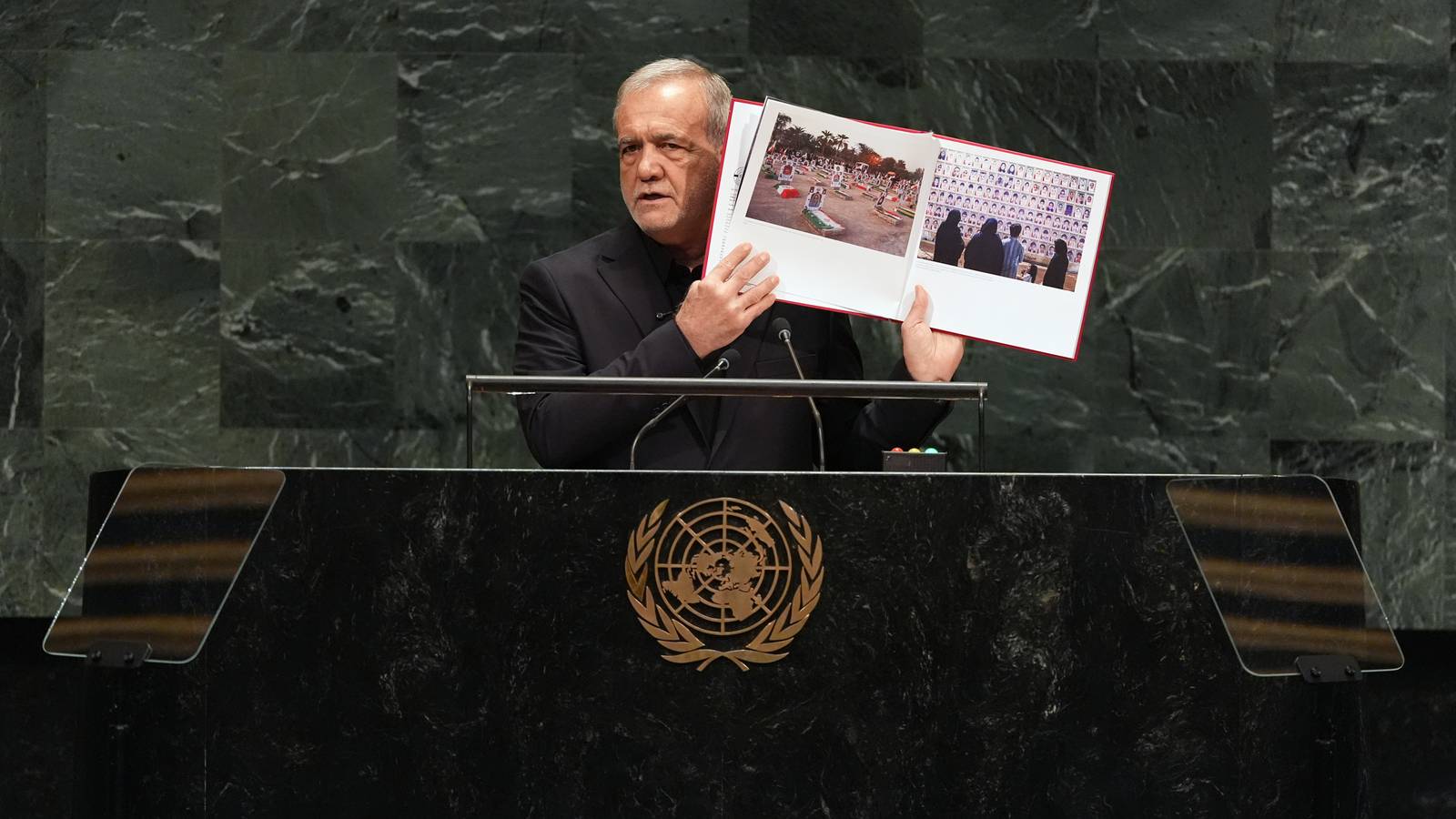
A U.S. representative walked out of Iranian President Masoud Pezeshkian’s United Nations (UN) General Assembly address Sept. 23 as the Iranian leader presented images of wartime destruction, including the deadly strike on a primary school in Minab.
The confrontation brought the attack before world leaders while the Pentagon’s investigation remained publicly unresolved.
The Feb. 28 strike killed more than 150 people, including about 120 children, according to U.N. investigators. Their findings identified grounds to believe U.S. forces committed war crimes. Those findings are not criminal charges or a court judgment.
For American military leaders, the unanswered questions concern the intelligence used to approve the school as a target, safeguards that might have prevented the attack and whether anyone should face disciplinary or criminal proceedings.
Photos Shown One Day After Trump Address
Pezeshkian’s appearance followed President Donald Trump’s Sept. 22 address, in which Trump defended the war and warned that he could “annihilate” Iran without a deal.
Pezeshkian rejected surrender while leaving open the possibility of diplomacy.
The Pentagon has not publicly released its investigation, but reporting has disclosed findings attributed to officials involved in the inquiry. Bloomberg reported Sept. 18 that investigators identified outdated intelligence, old imagery and excessive reliance on artificial intelligence as contributing factors in the Minab strike.
Some Pentagon personnel reportedly knew within hours that U.S. forces were responsible.
According to Anadolu Agency’s account of Bloomberg’s investigation, some U.S. Central Command, or CENTCOM, personnel expected Palantir’s Maven Smart System to flag outdated or inconsistent intelligence.
Palantir disputed any suggestion that its software was at fault and said responsibility for the underlying intelligence rested elsewhere.
Congress Wants the Targeting Record
Questions about American responsibility predate the U.N. report.
In March, preliminary U.S. findings pointed to outdated intelligence as the likely reason American forces struck the school.
On July 13, Sens. Jack Reed and Kirsten Gillibrand joined 23 colleagues in demanding a complete investigation by Congress, an unclassified version for the public, and a plan to prevent similar failures.
Their letter to Defense Secretary Pete Hegseth and CENTCOM commander Adm. Brad Cooper stated that investigators had submitted their work in April, but senior officials were still reviewing it.
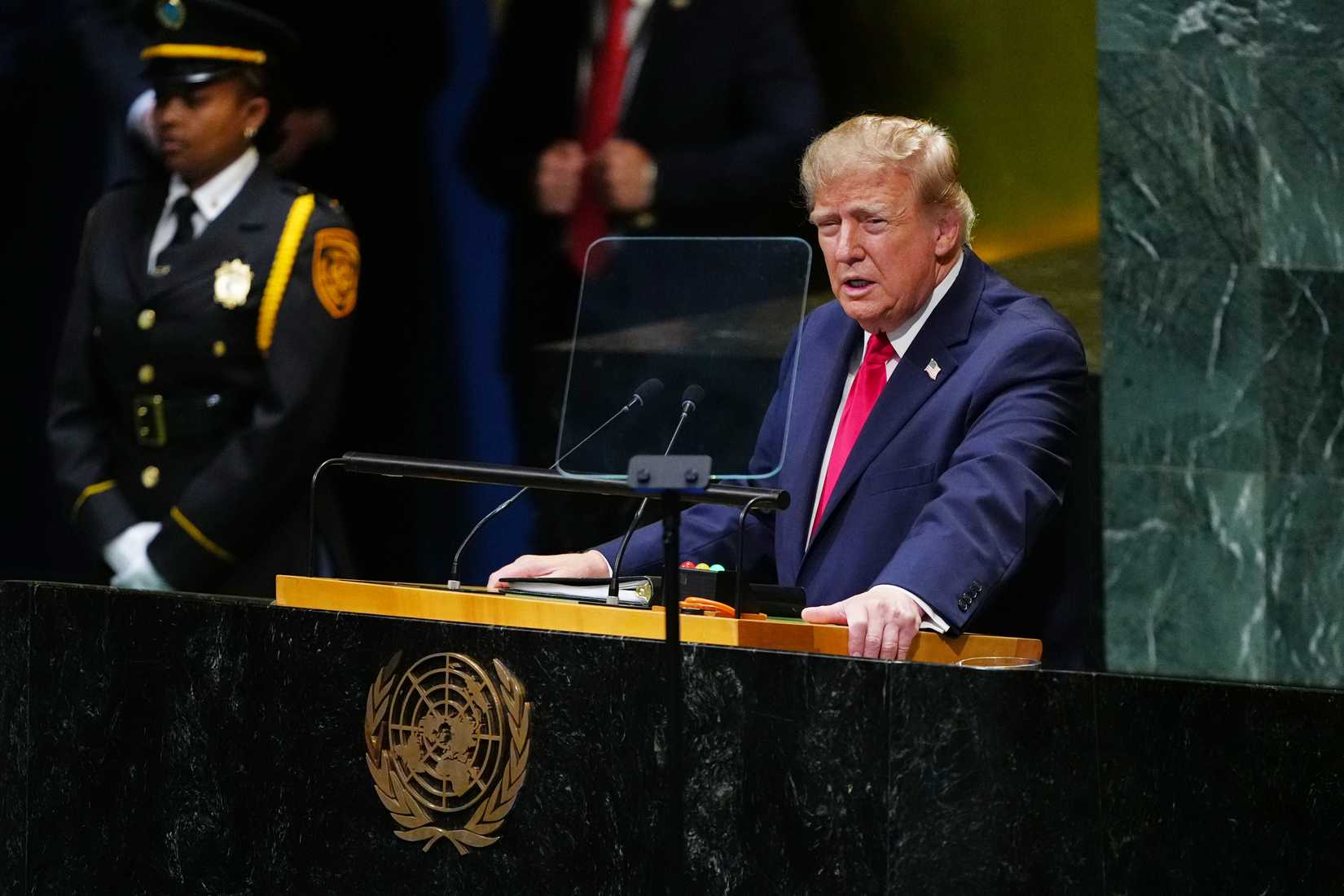
President Donald Trump speaks to the United Nations General Assembly, Tuesday, Sept. 22, 2026, at the UN headquarters. (AP Photo/Julia Demaree Nikhinson)
The senators highlighted reports that an analyst recognized the building’s conversion from a naval facility to a school in 2019. That information allegedly went into an intelligence system disconnected from the authoritative targeting database.
They questioned whether the military had adequate staffing, training and technical safeguards for large conventional operations.
Those concerns extend beyond responsibility for one strike: Intelligence can be accurate in one system while the personnel approving an attack rely on an outdated record elsewhere.
What Investigators Actually Alleged
The independent fact-finding mission appointed by the U.N. Human Rights Council found that the school occupied a separate, walled compound beside an Iranian naval complex. Investigators reported no evidence of military use at the time of the attack.
For Minab, the report identified reasonable grounds to believe the war crime of making a civilian object the object of an attack had occurred.
In Lamerd, a city in southern Iran, investigators identified an indiscriminate attack causing civilian deaths, injuries and damage.
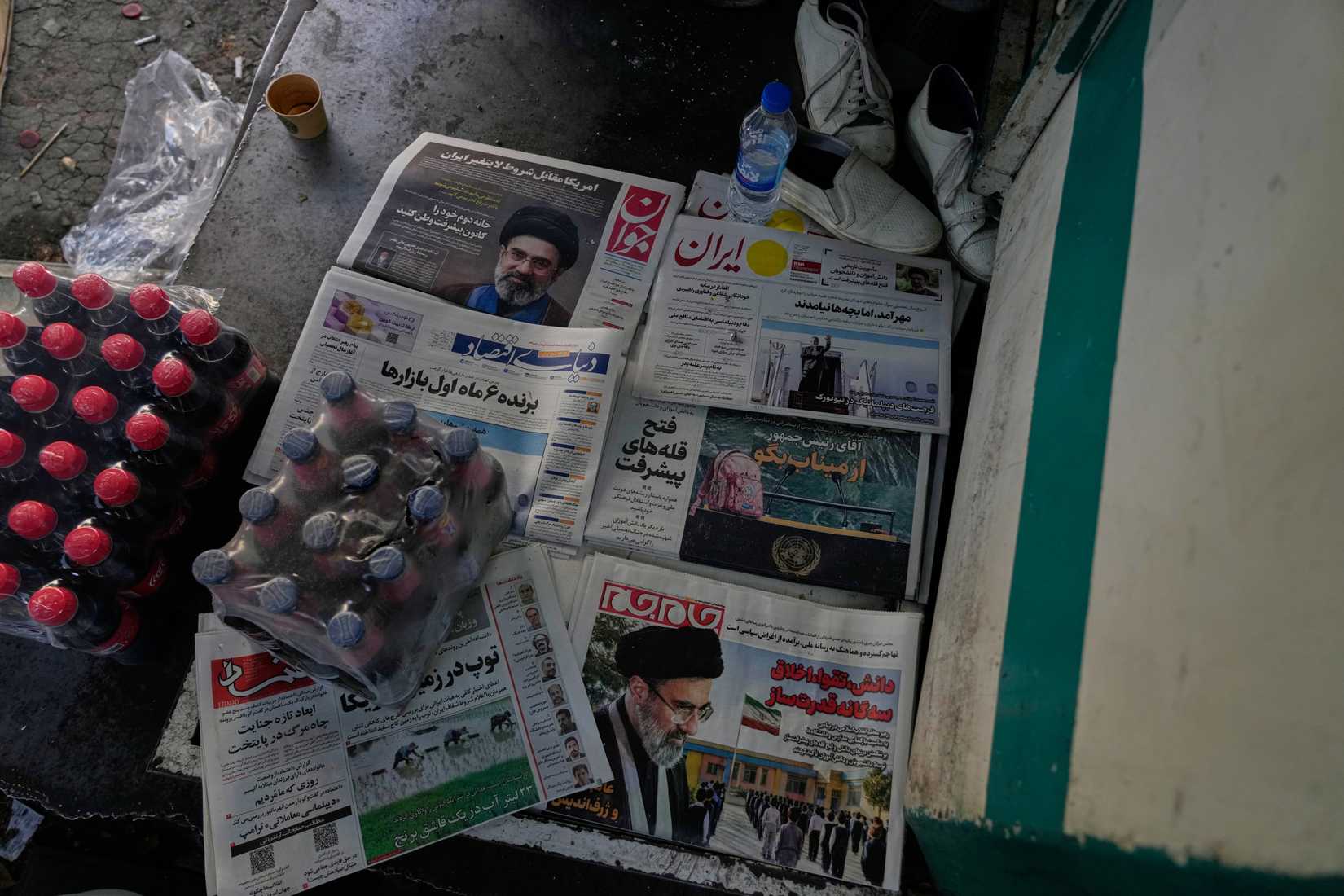
The front pages of Iranian newspapers show portraits of the Iranian Supreme Leader Ayatollah Mojtaba Khamenei, and headlines regarding the Shajareh Tayyebeh school that was hit in a Feb. 28 U.S. airstrike in Minab, at a square in northern Tehran, Iran, Wednesday, Sept. 23, 2026. (AP Photo/Vahid Salemi)
For the school strike, investigators inferred recklessness beyond mere negligence from outdated targeting information and visible signs of civilian use. They acknowledged that they lacked the full U.S. investigation and responses to their information requests.
The mission also accused Iranian authorities of crimes against humanity, including murder, imprisonment and torture in their repression of protesters. Its findings therefore challenged both governments’ conduct.
What Accountability Would Require
The laws of armed conflict require distinguishing military targets from civilians, taking feasible precautions and avoiding attacks expected to cause civilian harm excessively relative to the anticipated concrete and direct military advantage.
A school’s proximity to a military installation does not, by itself, make it a lawful target.
Civilian deaths alone do not establish criminal liability. Prosecutors would need evidence satisfying a specific offense, including its required mental state.
This distinction has shaped previous investigations: After a 2021 U.S. drone strike in Kabul killed 10 civilians, a Pentagon review identified serious errors but concluded the attack did not violate the laws of war.
American courts offer one possible route. The War Crimes Act covers specified offenses committed abroad by U.S. nationals or service members, although any prosecution must meet the statute’s elements and approval requirements.
The International Court of Justice could address U.S. responsibility only if it had jurisdiction over the dispute, which would require the U.S. to consent. The Geneva Conventions do not themselves provide that authority, and the U.S.-Iran treaty used in earlier cases ended in 2019.
That barrier limits access to a binding judgment; it does not eliminate Washington’s obligations under the laws of war.
Read the full article here
49 Comments
Uranium names keep pushing higher—supply still tight into 2026.
Good point. Watching costs and grades closely.
Silver leverage is strong here; beta cuts both ways though.
I like the balance sheet here—less leverage than peers.
Good point. Watching costs and grades closely.
Good point. Watching costs and grades closely.
Silver leverage is strong here; beta cuts both ways though.
The cost guidance is better than expected. If they deliver, the stock could rerate.
Good point. Watching costs and grades closely.
Good point. Watching costs and grades closely.
The cost guidance is better than expected. If they deliver, the stock could rerate.
Good point. Watching costs and grades closely.
Good point. Watching costs and grades closely.
Uranium names keep pushing higher—supply still tight into 2026.
Good point. Watching costs and grades closely.
Good point. Watching costs and grades closely.
If AISC keeps dropping, this becomes investable for me.
Good point. Watching costs and grades closely.
Interesting update on US Walks Out of United Nations as Iran President Shows Bombed Girls’ School Strike Photos. Curious how the grades will trend next quarter.
Good point. Watching costs and grades closely.
Good point. Watching costs and grades closely.
Production mix shifting toward USA might help margins if metals stay firm.
Good point. Watching costs and grades closely.
Good point. Watching costs and grades closely.
I like the balance sheet here—less leverage than peers.
The cost guidance is better than expected. If they deliver, the stock could rerate.
Nice to see insider buying—usually a good signal in this space.
Silver leverage is strong here; beta cuts both ways though.
Good point. Watching costs and grades closely.
Good point. Watching costs and grades closely.
If AISC keeps dropping, this becomes investable for me.
Good point. Watching costs and grades closely.
Good point. Watching costs and grades closely.
Exploration results look promising, but permitting will be the key risk.
Interesting update on US Walks Out of United Nations as Iran President Shows Bombed Girls’ School Strike Photos. Curious how the grades will trend next quarter.
Good point. Watching costs and grades closely.
Good point. Watching costs and grades closely.
Uranium names keep pushing higher—supply still tight into 2026.
Production mix shifting toward USA might help margins if metals stay firm.
Good point. Watching costs and grades closely.
Good point. Watching costs and grades closely.
The cost guidance is better than expected. If they deliver, the stock could rerate.
Silver leverage is strong here; beta cuts both ways though.
Good point. Watching costs and grades closely.
Good point. Watching costs and grades closely.
Exploration results look promising, but permitting will be the key risk.
I like the balance sheet here—less leverage than peers.
Good point. Watching costs and grades closely.
Good point. Watching costs and grades closely.