

Leaving the military can mean losing something service members may not fully recognize until it’s gone. The mission. The structure. The people alongside you when things go wrong.
In the military, there is almost always someone there who understands. A battle buddy. A team. People experiencing many of the same frustrations, hardships and everyday pressures. Then you leave.
When you get out into civilian life and you have those day-to-day stressors, you don’t have anybody to share that suffering with, anybody to bounce things off of, Army reservist and military media personality Ronnie Adkins said.
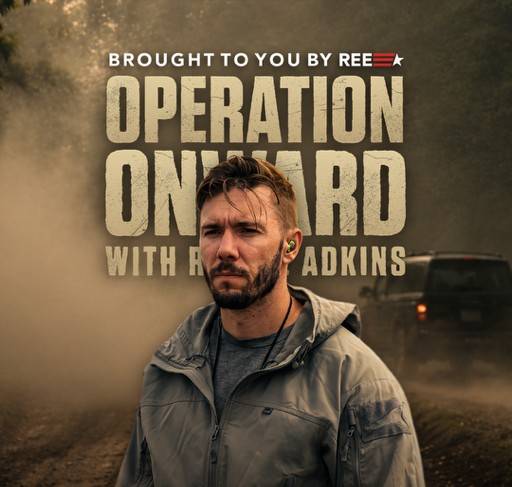
Adkins recently sat down with Military.com to discuss Operation Onward, a new series that follows veterans as they build lives after military service, and what he has learned from listening to their stories.
The series is sponsored by REE Medical, a company that helps veterans navigate the medical evidence and documentation process associated with VA disability claims.
One theme, he said, keeps coming up.
“The anxiety of post-service transition is something that is just recurrent,” Adkins said. “It’s a recurring theme with everybody that I’ve spoken to.”
And it isn’t simply anxiety about finding the next job. Adkins said veterans can find themselves trying to replace a community, rediscover purpose and determine what success even looks like when the military is no longer defining it for them.
“The feeling of isolation,” he said. “You’re feeling alone.” But that’s only half the story Adkins says he’s finding.
The veterans he meets aren’t necessarily broken or waiting for someone to fix them. They’re building something new, sometimes in places they never imagined while they were serving. That’s the idea at the heart of Operation Onward.
‘What Are You Building Now?’
Adkins describes himself not as the expert on the series but as “a student in every episode.”
The premise puts him alongside veterans who have taken dramatically different paths after leaving military service. He participates in what they do and tries to understand how they got there.
One veteran served during the early years of the Iraq War, was badly injured and dealt with post-traumatic stress before taking a college pottery class. He loved it. Eventually, he began teaching and opened a pottery shop.
Another veteran featured in the series went from working as a diesel mechanic to driving race cars.
Those stories interest Adkins precisely because there isn’t an obvious connection between what someone did in uniform and what ultimately gave that person purpose afterward.
“There’s so many different options that you have available to you,” Adkins said.
Service members can spend years or decades operating within a system that provides rank, responsibilities, standards and a relatively clear definition of what success looks like.
Then they leave. Suddenly, much of that has to be defined for themselves.
Adkins said the veterans featured on the series have spent part of their lives serving something larger than themselves. What interests him now is what happens afterward.
“They spent their whole life serving, and now it’s like, OK, what are you building now to just continue to live?” he said.
For Adkins, that realization connects with a line from a song that has stayed with him: “I think it’s great that you used to be great.”
The point isn’t to dismiss what someone accomplished in uniform. It’s to avoid treating it as the only period of life in which they can do something meaningful.
Was yesterday great for me, or can I make tomorrow a great day that I want it to be? Adkins said. I don’t have to recall past greatness to strive for new greatness. I don’t have to live there.
‘Don’t Call Us Broken’
That also shapes the way Adkins thinks veterans should be portrayed.
Veterans can struggle after service. They can need help. They can deal with physical injuries, post-traumatic stress, isolation and difficulty navigating the Department of Veterans Affairs.
But Adkins rejects the idea that those challenges make veterans collectively “broken.”
“I actually don’t know anybody in my inner or outer circle that would appreciate being called broken,” he said.
Adkins joked that he’s free to describe himself that way, pointing to his own injuries. But that’s different, he said, from someone else deciding that military veterans as a group need to be fixed.
We spent our lives sharpening to be the pointy end of a stick, Adkins said. That capability doesn’t simply disappear when someone takes off the uniform.
“I’ve still got an edge,” he said. “Sure, I might need to polish the edge a little bit more at this point, but the edge is still there.”
Then he put it more directly. “Don’t call me broken. Don’t call us broken.”
Adkins was equally clear that rejecting that description doesn’t mean veterans shouldn’t seek assistance. “There is help that we need sometimes,” he said.

Using the Benefits Veterans Earned
One area where Adkins believes veterans can do more for themselves is understanding and using the benefits available to them.
He said veterans sometimes move through mandatory transition training focused primarily on getting out the door rather than absorbing information they may need months or years later.
Some also hesitate to use benefits because they mistakenly believe doing so will leave more resources for another veteran.
If I don’t get it, if I don’t use it, it’ll be more available to somebody else, Adkins said, describing that thinking. That’s not how it works at all.
For Adkins, learning to use those resources is another part of taking responsibility for life after service.
The issue is woven into Operation Onward, where conversations about post-military careers and new experiences sit alongside discussions about benefits and navigating the VA system.
The series deliberately moves between the highs and lows of post-service life.
One moment can involve driving a BMW around a racetrack; another can involve talking about difficulties navigating the VA. “We’re not staying in the highs,” Adkins said. “And we’re not dwelling in the lows.”
He sees that contrast as familiar to anyone who has served. Military life can swing quickly between good days and bad ones, accomplishment and frustration, camaraderie and hardship.
Adkins wants the series to show that life afterward can contain the same complexity.
Finding a New Definition of ‘Great’
What Operation Onward doesn’t offer is a single definition of a successful military transition. That’s intentional.
Adkins said seeing someone else successfully make the transition can provide “justification of a possibility” for a veteran who hasn’t figured out what comes next.
The point isn’t that veterans should open pottery shops, race cars or follow any particular career path. It’s that the possibilities after military service can be much broader than they imagined while wearing the uniform.
For some veterans, success may mean a new career. For others, it could be a new skill, community or sense of purpose.
And what looks successful from the outside doesn’t necessarily determine whether it feels successful to the person living it.
Success is so much different for everyone, Adkins said. And even if success on the exterior looks the same with two people, how they process that success is entirely different.
Adkins often signs off his live shows with three words: “Go be great.”
But his fuller version may better capture what he’s hearing from veterans trying to figure out life after the military.
“Go be whatever great means to you,” he said.
Read the full article here
26 Comments
The cost guidance is better than expected. If they deliver, the stock could rerate.
Good point. Watching costs and grades closely.
Good point. Watching costs and grades closely.
Nice to see insider buying—usually a good signal in this space.
Good point. Watching costs and grades closely.
Good point. Watching costs and grades closely.
Interesting update on Veterans Finding Purpose After Military Service. Curious how the grades will trend next quarter.
Good point. Watching costs and grades closely.
Good point. Watching costs and grades closely.
If AISC keeps dropping, this becomes investable for me.
Nice to see insider buying—usually a good signal in this space.
Good point. Watching costs and grades closely.
I like the balance sheet here—less leverage than peers.
Good point. Watching costs and grades closely.
Good point. Watching costs and grades closely.
Exploration results look promising, but permitting will be the key risk.
Good point. Watching costs and grades closely.
Good point. Watching costs and grades closely.
Interesting update on Veterans Finding Purpose After Military Service. Curious how the grades will trend next quarter.
Good point. Watching costs and grades closely.
Production mix shifting toward USA might help margins if metals stay firm.
Good point. Watching costs and grades closely.
I like the balance sheet here—less leverage than peers.
Good point. Watching costs and grades closely.
Interesting update on Veterans Finding Purpose After Military Service. Curious how the grades will trend next quarter.
Good point. Watching costs and grades closely.