


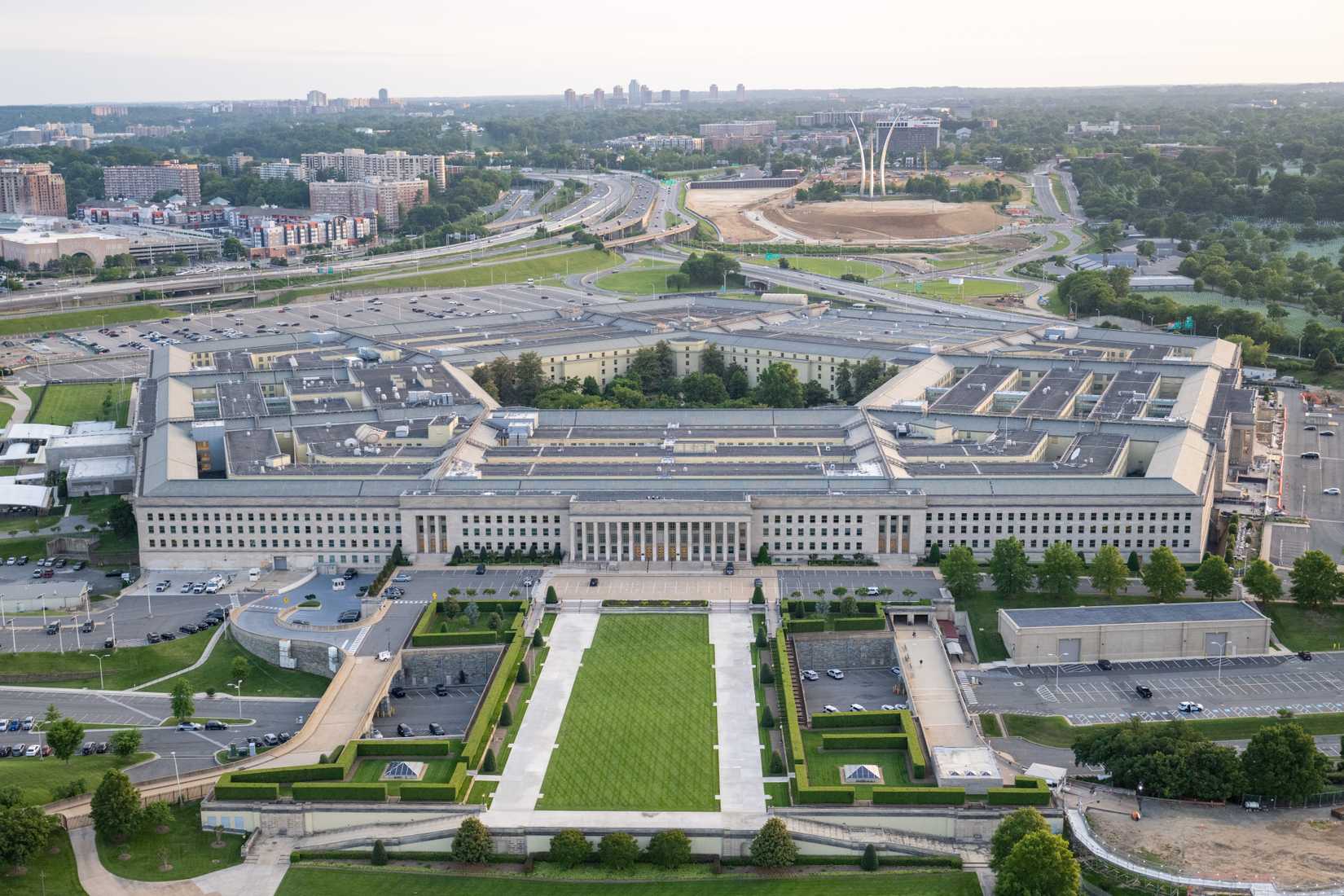
A growing number of senior Trump administration officials have relocated from private homes to military installations around Washington, D.C., living in housing traditionally reserved for military personnel. The arrangements, driven largely by security concerns, are raising questions about the use of defense resources, housing availability and the legal authority governing civilian occupancy.
Among the latest to move is Treasury Secretary Scott Bessent, who relocated to a military base in early November — a move first reported Nov. 10 by The New York Times and later confirmed by Bessent — after U.S. officials said threats attributed to Iran intensified and an aerial photograph published by The Wall Street Journal enabled his Georgetown home to be geolocated. Officials have not publicly disclosed the exact date he moved, which installation he occupies or the terms of his arrangement.
Attorney General Todd Blanche has also occupied military housing since early 2026, according to NewsNation and Fox News Digital. The FBI, which provides his protective detail, declined to comment to NewsNation, and officials have not publicly identified a specific threat that prompted Blanche’s relocation.
Who Is Living on Military Bases?
Defense Secretary Pete Hegseth and Secretary of State Marco Rubio are among the senior officials residing at Fort McNair in Washington, D.C., according to The Atlantic, which first detailed the wave of Cabinet relocations last year.
Hegseth and Rubio occupy properties along the installation’s historic Generals’ Row, residences traditionally associated with senior military officers. White House chief of staff Stephen Miller also moved into Washington-area military housing in September 2025 after he and his wife reported protests, sidewalk chalk messages and flyers displaying their address near their Virginia residence.
Other officials have used military accommodations under different circumstances. Former Homeland Security Secretary Kristi Noem occupied a Coast Guard residence at Joint Base Anacostia-Bolling according to The Atlantic.
Former Attorney General Pam Bondi relocated after receiving threats, while former Navy Secretary John Phelan also moved into military housing following a fire at his Washington home, The New York Times reported.
The expanding list has complicated access to a limited inventory of residences intended primarily for uniformed personnel. However, there has been no public accounting establishing that specific service members were displaced to accommodate the officials.
Security Threats Extend Beyond Political Protests
The relocations reflect heightened concerns over both physical targeting and digital vulnerabilities across critical infrastructure, underscored by a string of high-profile technology disruptions in mid-November — including a Nov.12–13 Microsoft outage, a Nov. 13 Federal Aviation Administration nationwide ground stop and Nov. 16 online banking interruptions at JPMorgan Chase.
During a Nov. 18 House Homeland Security Committee hearing, Director of National Intelligence Jay Clayton and Homeland Security Secretary Markwayne Mullin testified that those outages stemmed from technical maintenance issues rather than cyberattacks, though Clayton warned that artificial intelligence is accelerating cyber operations against critical systems.
Bessent’s move also comes amid a broader confrontation with Iran, including American military operations and an economic pressure campaign involving financial sanctions and restrictions on international trade.
A senior administration official told Fox News Digital that threats against Bessent had reached “more than an advanced stage,” without elaborating, and the administration has not publicly provided supporting intelligence. A Treasury Department spokesperson defended the secretary’s continued involvement in the campaign.
“The secretary will not be deterred by the Iranian regime’s threats,” a Treasury Department spokesperson said in a statement, reaffirming Bessent’s commitment to Operation Economic Outcast and the administration’s blockade against Iran.
An Oct. 23 memorandum from Director of National Intelligence Jay Clayton to Rubio warned that Iran had “substantially increased efforts to target U.S. personnel” overseas, CBS News reported, and Clayton reiterated Nov. 18 that Iranian plotting had escalated.
Secure installations offer controlled access, established protective infrastructure and proximity to government facilities. Those advantages could reduce the expense and logistical burden of securing multiple private residences.
President Donald Trump, however, previously expressed uncertainty about whether all the relocations were necessary. Asked about officials living on military installations during an April 2026 interview with CBS’s “60 Minutes,” Trump said they had chosen to do so and questioned whether they needed the accommodations.
What Federal Law Allows
Congress has expressly authorized military housing for the secretary of defense. Under 10 U.S.C. § 2838, a military department may lease National Capital Region military family housing to the defense secretary. The law requires rent equivalent to 105% of the monthly basic allowance for housing assigned to a four-star officer with dependents at that installation.
The military department deposits rental proceeds into an account available for maintaining and improving military housing at the installation. The provision was enacted in 2008, establishing a formal framework for an arrangement previously used by Defense Secretary Robert Gates. Other civilian officials do not automatically qualify under that statute. Separate authority must support their occupancy.
One potentially relevant provision, 5 U.S.C. § 5911, permits federal agencies to provide housing to employees when employment conditions or housing availability warrant it. Generally, rental charges must reflect the reasonable value of the accommodations.

Defense and Army officials told reporters at the time that the work was necessary for a century-old property that had been vacant for approximately a year, and that Hegseth had not personally requested the renovations.
Congress Seeks an Accounting
The House Armed Services Committee has already addressed the growing civilian presence in its fiscal 2027 defense authorization report.
A committee directive calls for the defense secretary to submit a report by May 1, 2027, identifying political appointees who occupied military housing between Jan. 1, 2025, and Dec. 31, 2026. The requested information includes each occupant’s security justification, credible threats, length of residency, legal authority and rental terms. The committee also seeks historical costs for protecting officials at private residences.
The directive does not itself prohibit civilian occupancy. It would provide Congress with information necessary to evaluate whether the arrangements are legally justified and financially reasonable. The scrutiny comes amid longstanding concerns about military housing availability and maintenance.
An October 2024 Government Accountability Office review, “Military Housing: DOD Should Address Critical Supply and Affordability Challenges for Service Members,” found that the Pentagon lacked comprehensive information about installations where housing shortages and affordability problems were most severe. Service members described long commutes, family separations and financial difficulties resulting from inadequate housing options.
Military housing has also faced maintenance and safety scrutiny, although those broader problems do not establish that civilian appointees caused or worsened shortages at Fort McNair.
The distinction between available executive housing and residences needed by military families remains important. A vacant senior officer’s residence is not necessarily interchangeable with enlisted family housing or barracks accommodations.
Whether the administration’s arrangements ultimately withstand scrutiny will depend on information that remains largely unavailable: the threats involved, the authority supporting each occupancy and the costs borne by the government.
Until those details are disclosed, Congress cannot fully assess whether relocating officials onto military installations represents a necessary security measure, a cost-effective alternative to private protection or an expanding use of military resources for civilian leadership.
Read the full article here
44 Comments
I like the balance sheet here—less leverage than peers.
Good point. Watching costs and grades closely.
Exploration results look promising, but permitting will be the key risk.
Good point. Watching costs and grades closely.
Exploration results look promising, but permitting will be the key risk.
Good point. Watching costs and grades closely.
Good point. Watching costs and grades closely.
Silver leverage is strong here; beta cuts both ways though.
Good point. Watching costs and grades closely.
Exploration results look promising, but permitting will be the key risk.
Good point. Watching costs and grades closely.
Good point. Watching costs and grades closely.
Exploration results look promising, but permitting will be the key risk.
Good point. Watching costs and grades closely.
Production mix shifting toward USA might help margins if metals stay firm.
I like the balance sheet here—less leverage than peers.
Silver leverage is strong here; beta cuts both ways though.
Good point. Watching costs and grades closely.
Good point. Watching costs and grades closely.
Exploration results look promising, but permitting will be the key risk.
Uranium names keep pushing higher—supply still tight into 2026.
Good point. Watching costs and grades closely.
Interesting update on Why Hegseth, Rubio and Other Trump Officials Are Moving Onto Military Bases. Curious how the grades will trend next quarter.
Good point. Watching costs and grades closely.
Good point. Watching costs and grades closely.
If AISC keeps dropping, this becomes investable for me.
Good point. Watching costs and grades closely.
Good point. Watching costs and grades closely.
If AISC keeps dropping, this becomes investable for me.
Good point. Watching costs and grades closely.
Good point. Watching costs and grades closely.
Nice to see insider buying—usually a good signal in this space.
Good point. Watching costs and grades closely.
Good point. Watching costs and grades closely.
Nice to see insider buying—usually a good signal in this space.
Good point. Watching costs and grades closely.
Good point. Watching costs and grades closely.
Exploration results look promising, but permitting will be the key risk.
Good point. Watching costs and grades closely.
Good point. Watching costs and grades closely.
Nice to see insider buying—usually a good signal in this space.
Nice to see insider buying—usually a good signal in this space.
Good point. Watching costs and grades closely.
Good point. Watching costs and grades closely.