

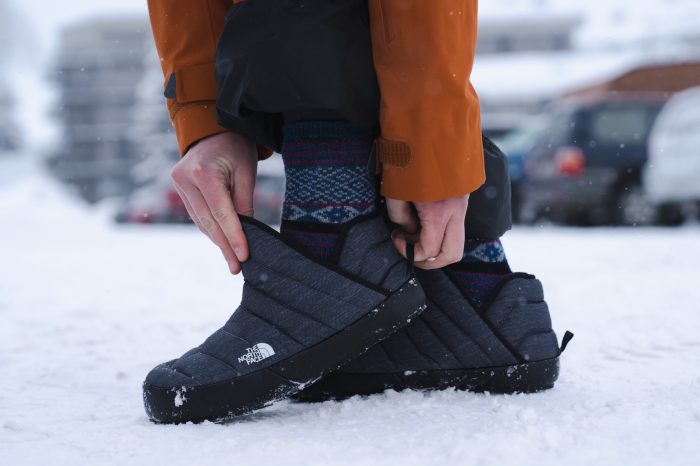
The mercury drops, and suddenly your regular slippers feel like a bad joke. A frozen cabin, a snowy parking lot where you’re peeling off ski boots, a hardwood floor that might as well be a skating rink: this is where a good pair of down booties earns its keep. They deliver warmth and packability that normal footwear just can’t touch.
Expert gear writers Meghan LaHatte and Chris Kassar have tested down booties all winter long from alpine huts to gravel lots to find the ones that keep feet toasty when temperatures drop below freezing. While natural down fill is the gold standard for warmth-to-weight, modern synthetics shrug off moisture better and cost less.
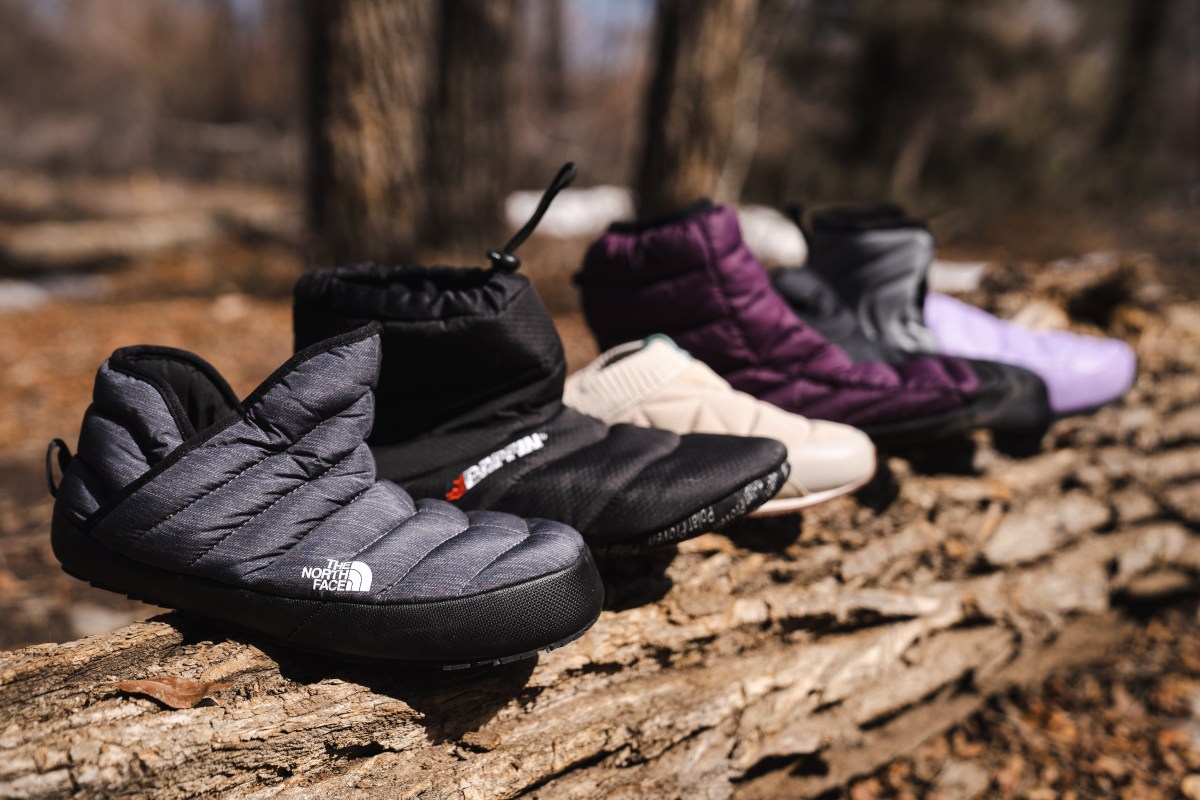
Among our favorites, the North Face ThermoBall Traction Booties offer traction for trips outside. Packable designs, like the Baffin CUSH, easily compress. For sleeping bag duty, the GooseFeet Gear Down Socks weigh only 2 ounces and pack down to the size of a pocket.
Editor’s Note: We updated this guide on November 16, 2026, with a revised introduction, refreshed reviews with signposts and bottom-line summaries, a new comparison chart, and a new Packable award to the GooseFeet Gear Down Socks.
The Best Down Booties of 2026
Best Overall Down Booties
The North Face ThermoBall Traction Booties
Best Budget Down Booties
Baffin Cush Booty
Warmest Down Booties
Western Mountaineering Expedition Booties
Best Down Booties for Winter Camping
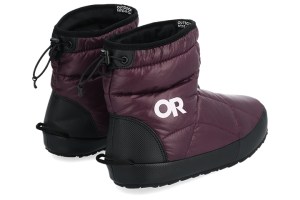
Outdoor Research Tundra Trax Booties
Best Camp Slippers
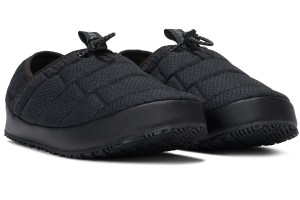
Xero Shoes Pagosa Fireside
Best Lightweight Booties
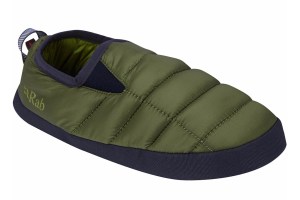
Rab Cirrus Hut Slippers
Most Packable Down Booties
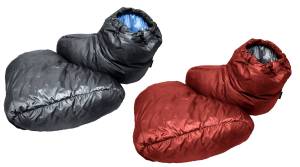
GooseFeet Gear Down Socks
See more picks
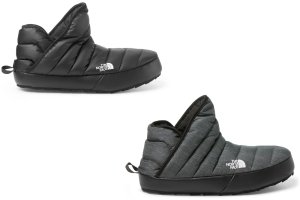
The North Face ThermoBall Traction Booties
-

-
We tested the best down booties for outdoor and indoor use; (photo/Meghan LaHatte)
-


Specifications
Pros & Cons
Pros
- Tread allows for heavy outdoor use
- Durable in terms of structure and quality
- ThermoBall Eco technology allows for warmth to be retained even if wet
- Mostly made of recycled materials
Cons
- Not as packable or light as the other down bootie options
- More exposure to the ankle area due to low-profile design
Bottom Line: The ThermoBall Traction Booties are the structured, treaded pick for anyone who wants to wear down booties outside. They’re warm, sustainably made, and easy to slip on, but too bulky for a sleeping bag or a pack.
If you’re looking for down booties with a little more structure and tread, look no further than The North Face ThermoBall Traction Booties ($75). These street-style booties are perfect for walking outside in a couple of inches of snow or bussing up to the ski resort on a chilly morning. There are women’s specific models, too. For all of those reasons, and the design’s sustainability focus, these booties are the peak of our list.
The Tech: The booties are topped off with the brand’s ThermoBall Eco insulation, a 100% recycled down alternative. The sole is made of recycled rubber with added tread. They only run in whole sizes, so we recommend sizing down if you’re in between.
What We Like: The synthetic fill keeps your feet toasty, even after exposure to snow or water. They’re great for someone looking to get a lot of mileage without sacrificing warmth, and the slip-on style is quick and easy. They’re built for outdoor use, but they’re also super comfortable indoors.
What We Don’t: The recycled rubber sole means less insulation for the soles of your feet, and with the tread, they aren’t ideal for wearing in a sleeping bag. They’re also not the most packable option. If you want a pair for backpacking or ski hut trips, check out the above-ankle Baffin CUSH Booty.
Should You Buy It? These are a strong pick if you want one pair that works for snowy walks, resort commutes, and lounging at home. If you plan to wear your booties mostly inside a tent or sleeping bag, one of the more packable options will serve you better.
Baffin Cush Booty


Specifications
Pros & Cons
Pros
- Sticky sole adds slip-resistance for walking around smooth surfaces
- Excellent loft
- Closing the ankle cinch helps keep warmth in
- Water-resistant
Cons
- A bit bulky when on your feet
- Wide fit might not be ideal for everyone
- Not super for extended outdoor use due to lack of underfoot structure
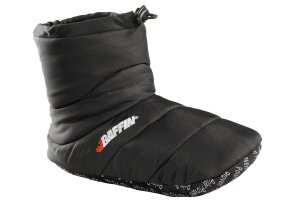
Bottom Line: The CUSH Booty is a cozy, midweight, breathable bootie that keeps your feet warm and dry around the house, on a plane, or by the campfire. It’s built for indoor use and runs a little wide, but it’s a budget-friendly way to stay warm.
One top-notch midweight and ultra-cozy option is the Baffin CUSH Booty ($60). Perfect for hanging around the house or relaxing on those long, chilly plane rides, these booties will keep your feet extra warm.
The Tech: A PolyWool footbed allows for breathable warmth, and Baffin’s B-Tek Dry treatment makes the booties water-resistant. The newly added HexFlex, a reinforced hexagonal nylon upper, provides increased durability and longevity. They run true to size, so simply refer to Baffin’s size chart; they run slightly wide.
What We Like: The footbed keeps your feet from getting swampy. Even after wearing these for a few hours indoors, our feet were still dry when we took them off. The durable upper makes them great for year-round use. Once they’re on, they don’t feel bulky or cumbersome, and they’re great for getting chores done around the house or sitting by the campfire.
What We Don’t: Because of the fluff, the booties look rather large on your feet. They’re also made for indoor use and don’t offer foot protection against uneven terrain.
Should You Buy It? Anyone who wants to maintain warmth in their feet without going to the upper price tier should have these on their short list. They’re comfortable enough for long days at home or on the road. If you plan to wear your booties outside much, look at one with more tread, like the North Face ThermoBall Traction Booties.
Western Mountaineering Expedition Booties

Specifications
Pros & Cons
Pros
- Extremely warm
- Durable, wind-resistant shell
- Structured sole & high snow-proof gaiters
Cons
- Pricey
- Overkill for many trips
- Bulkier than ultralight options
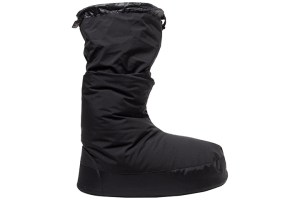
Bottom Line: The Expedition Booties are the warmest, most weatherproof booties in our lineup, built for winter mountaineering and multi-day ski traverses. They’re also the most expensive, but when you can’t compromise on warm toes, nothing else compares.
The Western Mountaineering Expedition Booties ($170) are designed for a higher caliber of adventure. We heard about these mobile foot ovens from grizzled Denali mountain guides, who found them the only real solution to keeping toes warm above 17,000 feet. Now, with a few seasons of use on our own feet, we can confirm the hype, if only at a slightly lower elevation.
The Tech: The big deal on these booties is the high, snow-proof gaiters made from GORE Windstopper fabric, with an elastic closure at the top to seal out spindrift. The shells are mated to a Toughtek outer sole, a rugged outer that protects the foam insole. In typical Western Mountaineering fashion, no expense was spared in the down department, with an average of 2 ounces of 800-fill European goose down in each pair.
What We Like: The gaiters mean you can posthole in thigh-deep powder on your romp out to the privy, and we’ve yet to wet them out when walking in dry snow. The shell and sole combo has kept our feet warm and dry on multi-day ski traverses in the North Cascades.
What We Don’t: At $170, they’re the most expensive booties in our lineup by a long shot.
Should You Buy It? When you can’t compromise on warmth, these are the ones. We’re bringing the Expedition Booties every time — they’re our SHTF down booties. If you want a more custom option, consider the GooseFeet Gear Down Socks with the optional Waterproof Over-booties. They won’t be as warm straight off the shelf (you’ll need to opt for overfill), but the combo is $25 cheaper even with the upgrade.
Outdoor Research Tundra Trax Booties

Specifications
Pros & Cons
Pros
- Warm and weather-resistant
- Grippy sole for outdoor use
- Structured and durable
- Good value for cold camps
Cons
- Bulkier than down booties
- Not for extreme cold
- Cinch cord loosens over time
Bottom Line: The Tundra Trax Booties are a practical middle-ground bootie with synthetic insulation, grippy tread, and weather resistance. They won’t match premium down for warmth or packability, but they’re a solid, durable choice for winter camping and hut trips.
The Outdoor Research Tundra Trax Booties ($99) deliver solid warmth and durability for winter camping, hut trips, and snowy base camps. They offer a reliable mix of insulation, grip, and weather resistance without jumping to full expedition weight or price. We used them during cold nights in the Tetons and on a multi-day yurt trip in Colorado.
The Tech: The booties use synthetic insulation and a water-resistant shell. A structured sole with grippy tread adds traction, and a drawcord cuff seals in heat and keeps snow out.
What We Like: The synthetic insulation stayed warm even when damp, and the water-resistant shell effectively shed snow. They held up well in single-digit temps with a thick sock. The structured sole and tread made it easy to walk on icy ground and packed snow without slipping. Compared to the Baffin CUSH Booty, the Tundra Trax feel more structured and durable underfoot, with better traction and weather resistance, while the CUSH prioritizes packability and lightweight indoor comfort.
What We Don’t: They don’t match the loft or warmth of premium down booties. They’re bulkier than ultralight down models, though they fit fine in a duffel or sled. The drawcord cuff loosened slightly after repeated use.
Should You Buy It? Campers and backcountry travelers who want warmth, durability, and traction without overcomplicating things will find a practical middle ground here. If you need serious cold-weather insulation or maximum packability, step up to a premium down model or an ultralight option.
Xero Shoes Pagosa Fireside

Specifications
Pros & Cons
Pros
- Warm for its weight
- Wide toe box
- Convertible slide or shoe wear
- Grippy outsole
Cons
- Minimal underfoot insulation
- Not built for long walks
- Very minimal structure
Bottom Line: The Pagosa Fireside is a light, minimalist slipper that moves easily from the hut to the hot springs, with a convertible heel and enough warmth for short outings. It’s not built for extended walks or deep-cold insulation.
The Xero Shoes Pagosa Fireside ($95) is a minimalist slipper designed to blur the line between indoor comfort and light outdoor use. It delivers reliable warmth for camp hangouts, après-ski lounging, and quick errands outside. During testing, these slippers were perfect for moving from tub to tub at local hot springs, short dog walks, and hut trips in the Tetons, where they handled outhouse runs and camp chores with ease.
The Tech: The Pagosa Fireside has a nylon puffy upper, 200 g insulation, and a full rubber outsole. The insulation rating refers to warmth, not weight. A step-down heel lets you wear it two ways, and a draw cord closure helps seal in warmth and fine-tune the fit. Built around Xero Shoes’ barefoot design principles, it has a wide, foot-shaped toebox and a zero-drop platform. A protective rand adds durability, and the sole is backed by a 5,000-mile warranty. It weighs just 4.8 ounces in size 7.
What We Like: The slipper remains impressively light on foot. Step on the heel and wear it like a slide for easy on and off comfort, or pull the heel up for a more secure fit when heading outside. The thin, flexible sole provides good traction on decks, snow, and dirt and gives the shoe a natural feel. It’s easy to pack and travel with, and the draw cords let you bundle the pair together.
What We Don’t: Insulation and structure underfoot are minimal, making these best for short walks rather than extended outings.
Should You Buy It? If you want a lightweight, minimalist slipper that works for camp, hot springs, and quick trips outside, the Pagosa Fireside is a good fit. It also suits anyone who likes a barefoot-style shoe. If you need real warmth or support for longer walks, look at a more structured bootie like the Outdoor Research Tundra Trax Booties.
Rab Cirrus Hut Slippers

Specifications
Pros & Cons
Pros
- Warm for the weight
- Extremely packable
- Comfortable footbed
Cons
- Limited traction
- Minimal underfoot insulation
Bottom Line: The Cirrus Hut Slippers are an ultralight, packable camp slipper that gives tired feet immediate comfort after a long day in boots. They have limited traction and minimal underfoot insulation, so keep them to huts and camp.
After long days in mountaineering boots, climbing shoes, or ski boots, the Rab Cirrus Hut Slippers ($65) provide immediate comfort for tired feet. Built as a lightweight, packable camp slipper, they’re well suited for mountain huts and cold evenings at camp or at home.
The Tech: The slippers weigh just 172 g per pair in a size medium. They use PrimaLoft Silver Insulation Luxe, a 100% recycled synthetic fill. An elastic entry with stretch inserts creates a snug fit, and a rear pull loop helps you get them on. A cushioned EVA foam footbed adds comfort, and the sole is flexible and non-slip. A reinforced lower edge and a recycled Pertex Quantum outer improve durability.
What We Like: The slippers compress easily and disappear into a backpack, making them an easy add-on for hut trips and travel. The insulation delivers dependable warmth while remaining breathable. The stretch entry makes them an easy slip-on, and the pull loop makes them quick to put on when your hands are cold. The footbed adds comfort underfoot, and the non-slip sole works well on cabin floors and around camp.
What We Don’t: The trade-off for the ultralight design is limited traction and minimal insulation underfoot. They aren’t suited for extended outdoor walking or wet, snowy conditions.
Should You Buy It? Toss these in your pack if you spend your evenings in huts and want a slipper that weighs next to nothing. They’re a smart add-on for hut trips and travel. If you need a bootie that can handle snowy walks or real traction, look at something sturdier like the Outdoor Research Tundra Trax Booties ($99).
GooseFeet Gear Down Socks

Specifications
Pros & Cons
Pros
- Customized warmth, durability, and look
- Size run includes XS to 2XL
Cons
- Husky aesthetic
- Long turnaround to process and ship
- The down socks alone are not ideal for outdoor use (but the Waterproof Over Booties should do the trick)
Bottom Line: The GooseFeet Gear Down Socks are the best we’ve tested for keeping cold feet warm while camping. You can customize the fill, fabrics, and colors, and the warmth is tunable from chilly nights to below zero.
Ever noticed your feet getting cold when camping? Even with wool socks, liner socks, or multiple pairs on, the air temperatures sometimes win. Enter down socks, the solution to your eternal cold feet woes. They’re light, fluffy foot layers full of insulation and designed to keep your toes and feet warm no matter the temps outside. The best ones we’ve tested are the GooseFeet Gear Down Socks ($69-97).
The Tech: You can fully customize these puppies. The standard fill is 850-fill, and you can add 25%, 50%, 75%, or even 100% more overfill. You can also customize the shell fabric and liner fabric deniers (fabric thickness) and the colors.
What We Like: If you’re only venturing down to 20-30 degrees F, the standard 850-fill is the way to go. For more extreme temps, below 20 or even dipping below zero, the overfill keeps your feet and toes extra toasty. The Down Socks also have the most color options we’ve seen, so there’s plenty of room for customized style. Compared to the Western Mountaineering Expedition Booties, the Down Socks won’t be as warm straight off the shelf (you’ll need to opt for overfill), but the combo with the Waterproof Over Booties is $25 cheaper even with the upgrade.
What We Don’t: The socks aren’t waterproof on their own. If you’re planning to wear them around camp or in the elements, you’ll want to add a pair of Waterproof Over Booties ($49) for extra protection
.
Should You Buy It? Campers who run cold and like to dial in their gear will love these. Choose your fill for your expected temperatures, then pick your fabric and colors. If you want something you can walk around in without extra pieces, look at a bootie with a built-in sole.
More Down Booties We Tested & Love
Stio Colter Mountain Slip
-
-
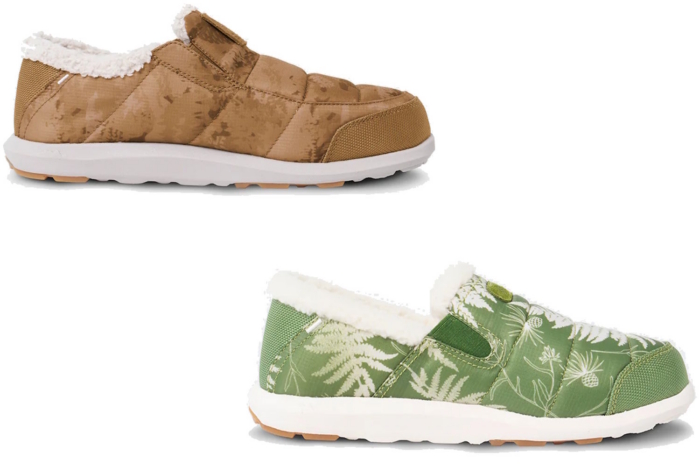
The Stio Colter Mountain Slip isn't ideal for lugging into the backcountry, but it's an excellent car-camping shoe
-
-
Chilling around the campfire in our Stio Colter Slips; (photo/Elk Raven Photography)


Specifications
Pros & Cons
Pros
- Warm and weather-resistant
- Grippy sole with good structure
- Easy slip-on design
- Stylish enough for town wear
Cons
- Less warm than full down booties
- Bulky for backpacking
- Not ideal for extended walks or deep snow
Bottom Line: The Colter Mountain Slip is a warm, grippy, mountain-town slipper that handles everything from coffee runs to snowy cabin decks. It’s not built for extended walks or winter hikes.
The Stio Colter Mountain Slip ($89) combines the cozy feel of an insulated slipper with the durable construction of a winter-ready camp shoe. Designed for mountain town living and shoulder-season transitions, it handles everything from coffee runs to snow-covered cabin decks with impressive versatility. We wore it during snowy ski trips in Jackson and on cold mornings during summer camping trips in the Tetons.
The Tech: The slipper uses PrimaLoft synthetic insulation and a DWR-treated ripstop upper. A step-in design makes it easy to put on and take off, and a snug heel helps it keep its shape. A high-traction sole and structured midsole distinguish it from a typical house slipper.
What We Like: The insulation kept our feet warm even in sub-freezing temperatures, and the upper easily shed snow and slush. The heel maintained its shape better than most collapsible options. We felt confident walking across icy driveways and hard-packed trails. Compared to the Teva ReEMBER, the Colter feels more stable underfoot and better suited for cold, snowy conditions, while the ReEMBER is more casual and travel-friendly.
What We Don’t: We wouldn’t recommend the Colter for extended walks or full winter hikes.
Should You Buy It? If you want a camp-to-town slipper with genuine insulation and a mountain vibe, the Colter Mountain Slip offers comfort, style, and grip in a winter-ready package. If you’d rather have something more casual or easy to pack for travel, the ReEMBER is the better call.
L.L.Bean Mountain Classic Quilted Ankle Boots II
-
-
The Mountain Classic Booties are available in women’s and men’s versions; (photo/Meghan LaHatte)
-
Even on multi-mile walks in snow, the rubber tread on these down booties held up well; (photo/Meghan LaHatte)
-
(Photo/Meghan LaHatte)


Specifications
Pros & Cons
Pros
- Easy to throw on
- Durable tread for outdoor use
- Extremely comfortable and cushioned
- Ideal amount of insulation for indoor and outdoor use
- Cool aesthetic
Cons
- Not waterproof
- Only offered in whole sizes
- Lack of heel closure can cause moisture to penetrate
Read Previous Version Review: Retro Looks Meet All-Day Comfort: L.L.Bean Women’s Mountain Classic Quilted Booties Review
Bottom Line: The Mountain Classic Quilted Ankle Boots II are comfortable, grippy, and affordable, and they’re easy to throw on for a quick trip into town or around camp. They’re not waterproof, and they aren’t as warm as the previous version.
Sometimes, you just need a pair of warm shoes like the L.L.Bean Mountain Classic Quilted Ankle Boots II ($110) that are easy to throw on for a quick jaunt to the grocery store or around camp. We tested the previous, now discontinued version for a full winter, and after a few weeks with the new ones, we’re pleased with the upgrades. These are staples in our closets for their comfort, durability, and unique aesthetic.
The Tech: The updated booties come in both men’s and women’s styles and replace the synthetic insulation of the previous version with foam quilt insulation. The VertiGrip rubber sole is made of 25% recycled material. An extra-thick removable footbed adds cushioning.
What We Like: The new insulation makes them a three-season performer instead of just a winter staple. They still keep our feet cozy on snowy walks in the desert and chilly dog walks around town, and they stay at just the right temperature on warmer days or while we’re inside. The sole is even better on this version, with ample traction on dirt, concrete, and somewhat icy surfaces. After wearing them in the chilly Colorado Rockies, we found the footbed molded to our feet for a perfect fit, with extra cushioning and, therefore, recovery for tired feet. The updated version is even easier to pull on and off, and you can put them on in less than a second after yanking off stiff ski boots. Even after walking outside for a few hours, our feet stayed surprisingly warm and dry. Compared to the Stio Colter Mountain Slip, the Mountain Classic offers more ankle coverage and a cushier footbed, while the Colter’s DWR-treated upper is better at shedding snow and slush.
What We Don’t: The new version isn’t as warm as the last one. The boots aren’t waterproof, and we wish the ankles were cinchable to help prevent snow from falling in.
Should You Buy It? Folks shopping on a budget who need plenty of grip for outdoor and urban use should take a look. They add style and practicality for winter without a big price tag. If you want a bootie that sheds moisture, look at the Colter instead.
Outdoor Research Tundra Aerogel Sock

Specifications
Pros & Cons
Pros
- Taller cut
- Synthetic insulation provides warmth even when wet or damp
- Ankle cinch tops
Cons
- Down fill sets the bar for warmth
Bottom Line: The Tundra Aerogel Sock is a warm, comfortable, above-the-ankle bootie with a sole that stands up to wear, and it’s our top pick for durability. It’s synthetic rather than down, but it’s a proper bootie for cold-weather travel and camping.
The Outdoor Research Tundra Aerogel Sock ($75) is an above-the-ankle slip-on bootie that will surely retain its warmth when you step outside onto the deck to look at the stars or pull them on in the ski area parking lot, thanks to that synthetic fill. This is a proper bootie, built for cold-weather travel and camping.
The Tech: The Tundra Aerogel Sock uses 100% polyester PrimaLoft synthetic fill and weighs 5.5 ounces. It’s an above-the-ankle, slip-on design.
What We Like: A few people on our staff gave this warm bootie a standing ovation. It delivers warmth, a cozy but not-too-snug fit, and durability in the soles. It was also our top choice for durability. Compared to the Western Mountaineering Expedition Booties, the Tundra Aerogel Sock doesn’t have the same snow-proof gaiters, but it costs less than half as much.
What We Don’t: It isn’t insulated with down. There aren’t that many down bootie options on the market, which is why we included several down alternatives like this one.
Should You Buy It? If you want a bootie with a sole that can handle some wear, the Tundra Aerogel Sock should make your list. It’s a good fit for campers and travelers who want dependable warmth in a synthetic package.
Teva ReEMBER


Specifications
Pros & Cons
Pros
- Can convert from a shoe to slipper
- Tread allows for multi terrain use
- Wide array of versions and colors
Cons
- Not super breathable
- Only available in whole sizes
Bottom Line: The Teva ReEMBER is a comfortable, lightweight, sustainably made slip-on that converts from a slipper to a slide, and it’s among our favorites for year-round use. It’s great for coffee runs and camp, but not for hiking in snow.
Not only are they comfortable and versatile, but the Teva ReEMBER ($80) quilted slip-ons are among our favorite picks for year-round use. There’s a lot to love about these slippers, but our favorite aspect is the collapsible heel that converts them into slide-on shoes.
The Tech: The ReEMBER has a vegan quilted upper insulation and treaded soles. Sustainability is a big focus, with a 100% recycled upper, collar, and liner, a 50% recycled polyester heel, and webbing made from recycled plastic. The midsole and outsole are a regrind blend of recycled and new materials. A peppermint-based anti-odor treatment tops it off. If you’re in between sizes, we recommend going up for a slightly roomier fit that can be worn with or without socks.
What We Like: The insulation keeps your feet warm while doing chores around the house or hanging out by the bonfire at camp. The treaded soles are sturdy, allowing for extended outdoor use and mileage, and they’re perfect for that morning stroll to the local coffee house. They’re lightweight enough to throw into a bag or suitcase, which makes the versatile ReEMBER an ideal travel companion. With a wide array of styles and colors, they can be dressed up or down depending on the occasion, too.
What We Don’t: We wouldn’t want to hike in the snow with these on. The North Face ThermoBall Traction Booties have a thicker rubber sole with added tread, making them a better fit for trudging through snow.
Should You Buy It? If you want one comfortable slip-on that works around the house, at camp, and on the road, the ReEMBER is a strong choice. Skip it if your main goal is trudging through snow, where a more aggressive bootie will serve you better.
Oboz All Gender Whakatā Puffy Mid

Specifications
Pros & Cons
Pros
- Comfortable footbed suitable for standard to wide feet
- Ultra-lightweight design
- Environmentally friendly
- Tread is perfect for use outdoors and in
Cons
- Whole sizes only
- Not as lofty as a standard down booty
Bottom Line: The Whakatā Puffy Mid is an easy-to-wear, sustainably made bootie that’s warmer than it looks, with an elastic cuff that keeps snow out and supportive footbeds. It’s a lightweight design, so don’t expect expedition-level warmth.
Hailing from Montana, the Oboz All Gender Whakatā Puffy Mid ($110) is perfect for the après at the hut after a long day of ski-touring or for catching up on a novel fireside. Your post-ski-boot toes will seriously thank you after popping these well-insulated, easy-to-wear puppies on. Whakatā, pronounced fah-cah-TAAH, quite literally means “to catch breath, rest, have a break” in the indigenous Māori language from New Zealand, and these booties certainly live up to their etymology.
The Tech: The Whakatā Puffy Mid has a DWR-treated, quilted upper and an elastic cuff. It uses a 100% recycled knit elastic band and a 50% recycled polyester upper textile material. Oboz is a certified B Corp, which means they meet strict environmental standards to reduce waste, standardize social accountability, and create ethical work environments. They also plant a tree for every pair of shoes sold, which is over 6 million.
What We Like: The booties are easy to slip on and plenty comfortable for hanging around the house or cruising across town. At first glance, they don’t seem to boast a ton of warmth, but they kept our feet insulated despite the lightweight design. Even while walking in 6+ inches of snow on a frigid Colorado morning, the elastic cuff performed well by sealing our ankles away from any encroaching snow and moisture, and the upper did well in repelling water. After months of testing all winter, we found the supportive footbeds ideal for folks with wide toe boxes and higher arches. Compared to the Teva ReEMBER, another sustainability-minded pick, the Whakatā’s elastic cuff sealed out snow on our winter walks, while the ReEMBER’s collapsible heel makes it the easier slide-on for travel and casual use.
What We Don’t: The lightweight design means they won’t deliver expedition-level warmth, and the rubber outsole makes them significantly less packable than other options.
Should You Buy It? If you’re looking for an environmentally friendly, mid-priced bootie, definitely give the Whakatā Puffy Mid a shot. It’s an especially good fit if you have wide toe boxes or higher arches and want a pair that works from the hut to the coffee shop.
Down Booties Comparison Chart

The North Face ThermoBall Traction Booties |
Baffin Cush Booty |
Western Mountaineering Expedition Booties |
Outdoor Research Tundra Trax Booties |
Xero Shoes Pagosa Fireside |
Rab Cirrus Hut Slippers |
GooseFeet Gear Down Socks |
Stio Colter Mountain Slip |
L.L.Bean Mountain Classic Quilted Ankle Boots II |
Outdoor Research Tundra Aerogel Sock |
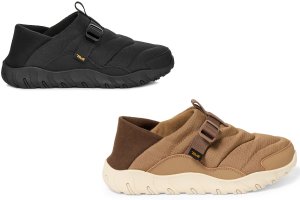
Teva ReEMBER |
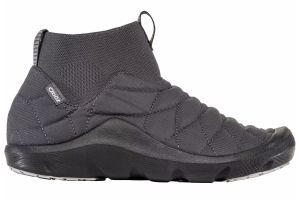
Oboz All Gender Whakatā Puffy Mid |
|
|---|---|---|---|---|---|---|---|---|---|---|---|---|
|
Compare |
|
|
|
|
|
|
|
|
|
|
|
|
|
Price |
$75 |
$60 |
$170 |
$99 |
$95 |
$65 |
$69-97 |
$89 |
$110 |
$75 |
$80 |
$110 |
|
Insulation |
600-fill ThermoBall Eco Insulation |
Fixed PolyWool. Nylon filled with wadding, cotton, and a PolyWool footbed insulation |
800-fill goose down |
Polyester Primaloft Gold Insulation With Cross Core Technology 200 G/M² |
Polyester Synthetic |
PrimaLoft Silver |
Premium goose down, 850-fill (standard) and up to 1,700-fill (custom) |
PrimaLoft, fleece |
Foam quilt insulation |
200 g 100% polyester Primaloft Alternative PrimaLoft Aerogel |
100% synthetic Vegan down alternative |
Freeze Guard 100g insulation (100% post consumer recycled polyester) |
|
Weight |
482 g |
312 g |
226 g |
456 g |
272 g |
6.1 oz. |
58 g |
7.2 oz. |
481 g |
156 g |
213 g |
309 g |
|
Tread |
Yes, recycled rubber sole |
Sticky rubber soft sole |
Non-slip Toughtek |
Synthetic rubber sole |
— |
— |
None |
— |
Yes, VertiGrip rubber outsole (25% recycled) |
None, soft and grippy sole |
Yes, 50% recycled rubber outsole |
rubber compound |
|
Waterproof |
No — water-resistant with DWR |
No. B-Tek Dry water-resistant |
Yes. Gore Windstopper Shell |
No. 100% recycled Pertex Quantum Eco water-resistant upper |
— |
— |
No, but waterproof overbooties can be added |
— |
No |
No, water resistant |
Water resistant |
No, water-resistant with DWR-treated upper |
|
Best use |
Daily outdoor use on snow and trail |
Indoor use on hardwood floors |
Extreme cold, winter camping, expeditions, mountaineering basecamps |
Winter camping, hut trips, cold-weather basecamp wear |
— |
— |
Winter camping inside a sleeping bag |
— |
Car camping, strolls around town |
Mostly indoor with minimal outdoor |
All-season outdoor and indoor |
Casual wear around camp and town |
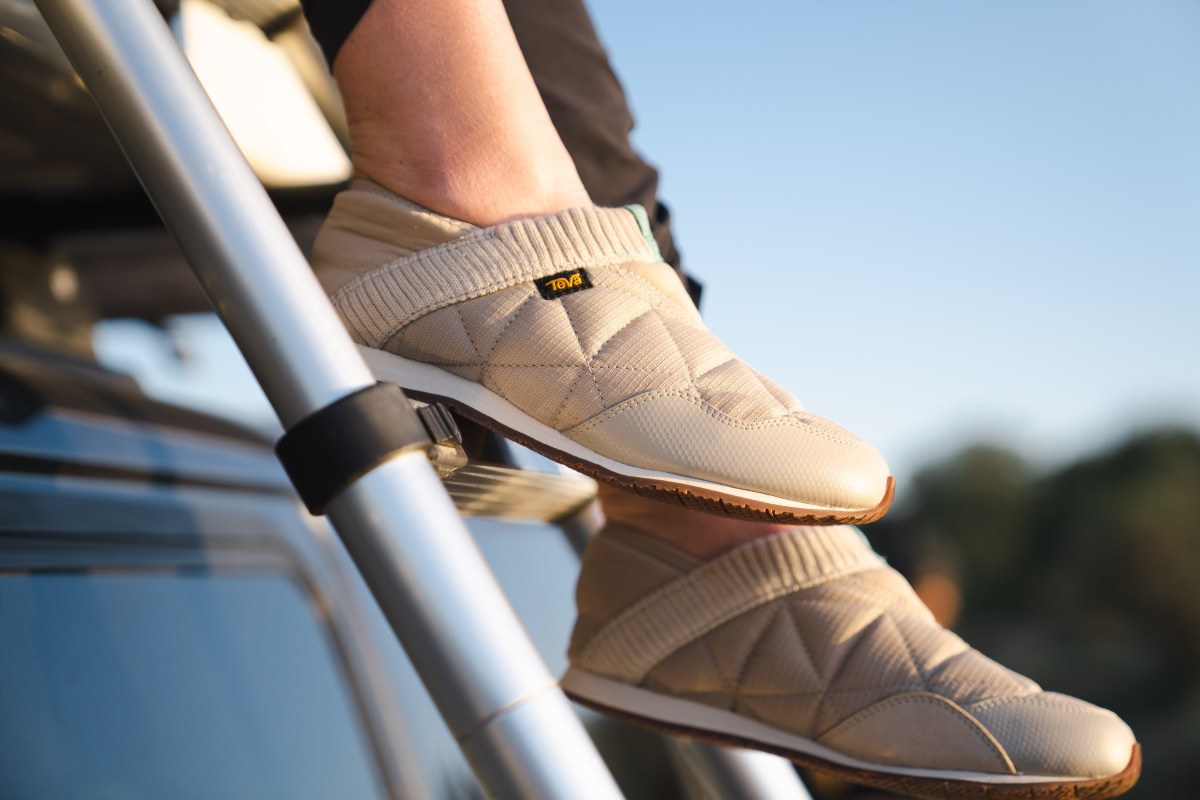
How We Tested Down Booties
The GearJunkie squad uses down and synthetic-fill booties and socks on outdoor adventures year-round. We use them camping and backpacking, on ski hut trips, ski resort commutes, and for everyday use in our chilly — sometimes freezing — mountain-based offices and homes.
Our Expert Testers
Leading the testing squad for down booties is GearJunkie contributor Meghan LaHatte. On average, LaHatte wore each pair of down booties for at least 20 hours, including 1.5-mile daily outdoor walks to examine the tread. During testing, temperatures ranged from 15 to 55 degrees Fahrenheit. While she mostly walked on pavement, she also tested the more rugged designs on snow, ice, and the occasional patch of mud to check their waterproofness. For example, in the L.L.Bean Women’s Mountain Classic Quilted Booties, LaHatte walked nearly two miles in powdery snow. She found herself in a mixed bag of snow, wind, rain, and sleet — you name it!
Other testers include SnowSports Senior Editor Morgan Tilton and veteran gear tester Chris Kassar.
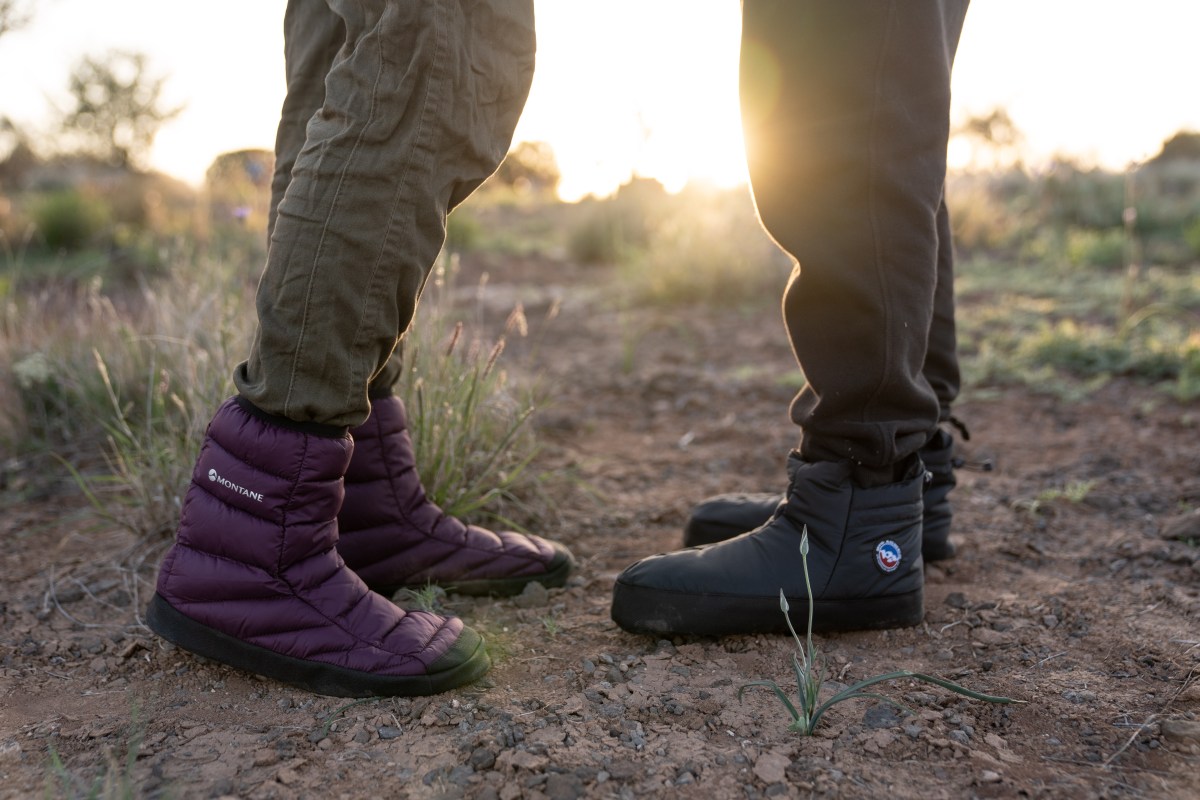
Our Testing Grounds
Having lived in one of the coldest regions of Colorado for the past 5 years, LaHatte is no stranger to cold feet. After suffering from a chronic foot injury due to a nasty case of frostnip, she understands the importance of keeping her feet well-insulated both indoors and out. LaHatte tested these down booties on frigid dog walks, working in her home office, camping in the desert, and transitioning into her ski boots before and after deep powder days.
Our Testing Process
Our team tested down and down-alternative booties and socks from the early fall to late winter in temps from -10 to 40 degrees. We also used them for fall and winter camping, après skiing, around the house, and more.
Throughout our field tests and personal experience, we determined the best down booties and down socks based on a variety of metrics including insulation, value, warmth, durability, comfort, overall fit, cuff height, cuff closure, adjustability, traction, tread and outsole, midsole support, anti-odor treatment, heel tab, style, and quality.
Beyond our tests, we also considered the most popular, award-worthy, innovative, sustainable, and legacy designs. These down booties serve a range of feet, applications, and budgets.
How We Rated Down Booties
Overall
The overall score is not a simple average of the individual ratings. Instead, it reflects how well each bootie performs for its intended purpose, weighing warmth, comfort, traction, and packability based on how and where the bootie is meant to be used.
Warmth
Higher-rated booties provide serious insulation suitable for sleeping in freezing temperatures, such as Western Mountaineering booties. Mid-range scores reflect casual warmth for short trips outside, cool camps, or mild indoor drafts.
Traction
Booties that score higher feature full rubber outsoles that feel secure on asphalt, gravel, and around camp, similar to models from Teva or Oboz. Lower-rated options use delicate fabric soles intended for sleeping bags, huts, or clean tents only, like GooseFeet Gear.
Packability
Highly packable booties compress down to about the size of an apple and disappear into a pack. Lower-scoring booties are bulkier and take up roughly the same space as a standard pair of shoes.
Comfort
Higher-rated booties offer a true “walking on a cloud” feel with soft materials and minimal pressure points. Lower-rated models tend to feel more structured and shoe-like, with firmer materials and less give.

Buyer’s Guide: How to Choose Down Booties
Down Booties vs. Down Socks
Differences
There are only a few slight differences between down booties and down socks. Down booties are a type of shoe with an insulated body, insulated sole, and some sort of closure at the top to seal in warmth. They can be ankle-height to mid-calf-height to insulate your whole foot.
Fully insulated down socks may or may not have a sole and usually don’t have snaps, closures, or other features. They’re purely for providing warmth. Made of lighter, lower-denier fabrics, down socks are perfect for use inside sleeping bags rather than walking around a house or cabin.
Uses
Down booties are the most common way of insulating your feet in winter and are usually more versatile and durable, though we did include a few down socks on this list as well. If you plan on wearing your down booties outside and adding some mileage to them, we suggest buying a pair like the Western Mountaineering Expedition Booties with a thicker sole and grippy tread for traction.
When you’re shopping for down footwear, think about where you’ll be wearing the booties and how much durability you might want. Do you want an insulating slipper with a sturdy sole? Or do you want something with fewer shoe features, maybe to wear inside your sleeping bag? Or, do you want a stylish bootie like the Stio Colter Mountain Slip that will move easily from camp to town.
Do you want a taller-height bootie or more of a slipper style? Wear down booties with or without socks, but we suggest a thinner and breathable sock if you choose to go that route. The booties themselves are typically warm enough that there is no need to pull on a thick or 100% wool sock.
Materials
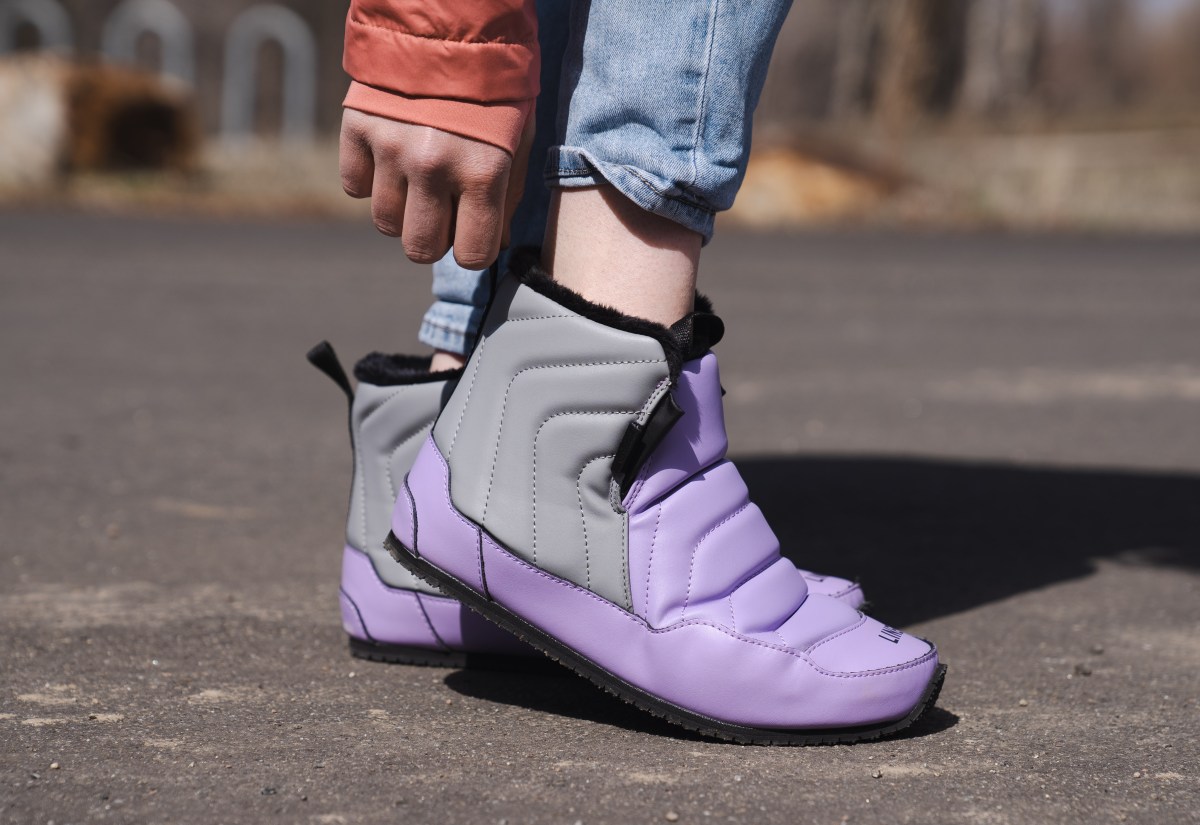
Our comprehensive guide includes a wide variety of down bootie styles, ranging from various types of soles, insulation, fits, and materials. There are a variety of styles. Some are meant to be worn inside, while others are best for outdoor use. Consider what kind of materials comprise your booties and their intended use.
We’ve outlined the various materials and their purposes below to help guide your search for the perfect bootie type.
Exterior Fabrics
The exterior fabric of down booties is an important component to consider when shopping for a pair. The exterior fabric is what protects the overall shoe from various elements and can help improve the insulation abilities of the interior as well.
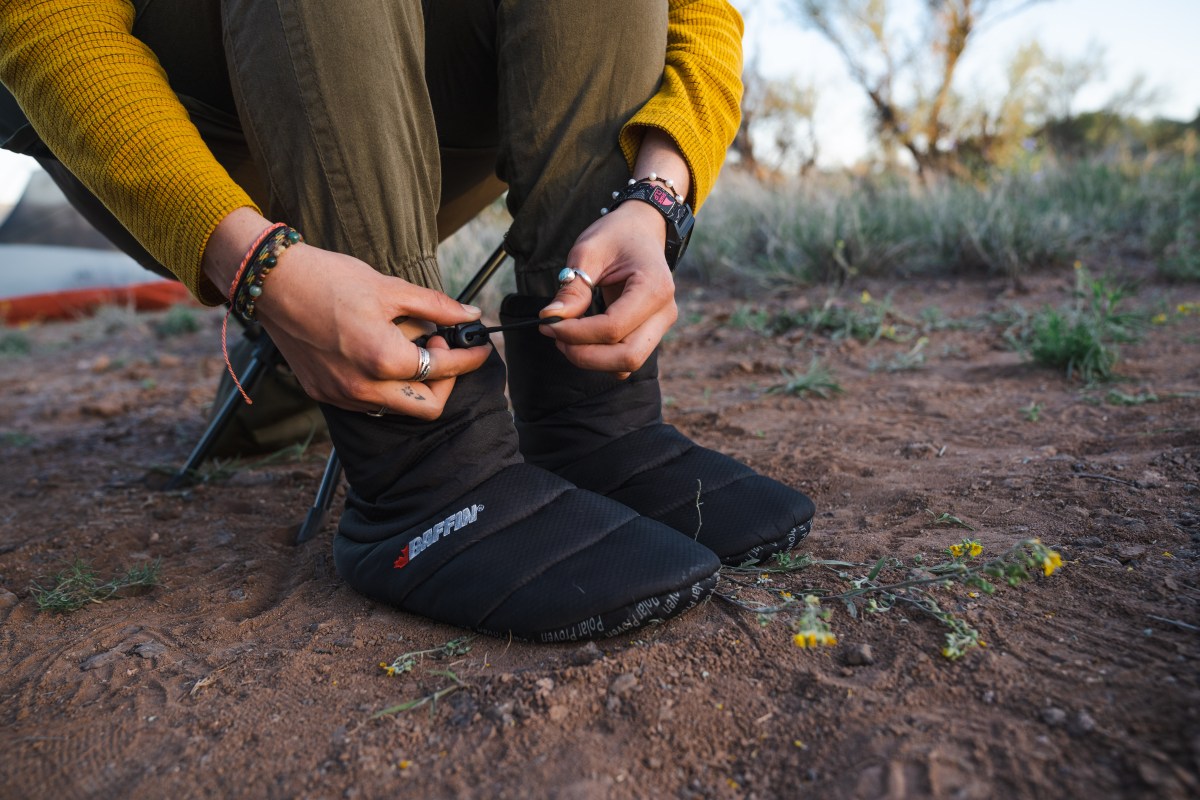
Most down booties are constructed with a nylon exterior. Nylon is a tear and water-resistant synthetic material. It is typically lightweight and breathable, depending on the stitching. Brands use nylon since it is versatile and helps down booties maintain their best insulation abilities, thus keeping your feet toasty warm. The Baffin CUSH Booty utilizes reinforced nylon, making it both durable and water resistant.
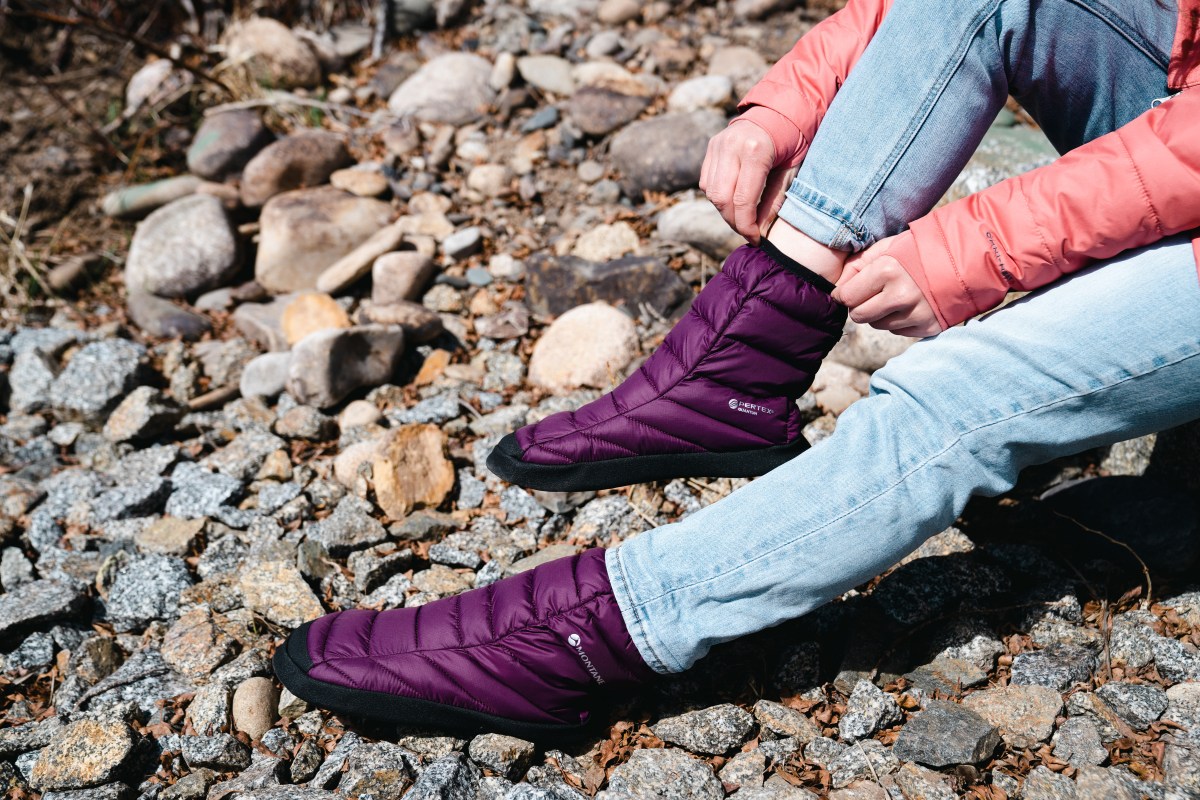
You will also see down booties designed with a quilted upper, like the Teva ReEMBER and Oboz All Gender Whakatā Puffy Mid. Quilted exteriors keep the insulation from shifting around too much, thus allowing the insulation to retain heat even better than before. Think about how warm your childhood quilt was as a kid — basically the same science!
Most fabric exteriors of down booties have hydrophobic properties making them waterproof or water-resistant. If you want to garner more knowledge about those applications, keep scrolling.
Tread
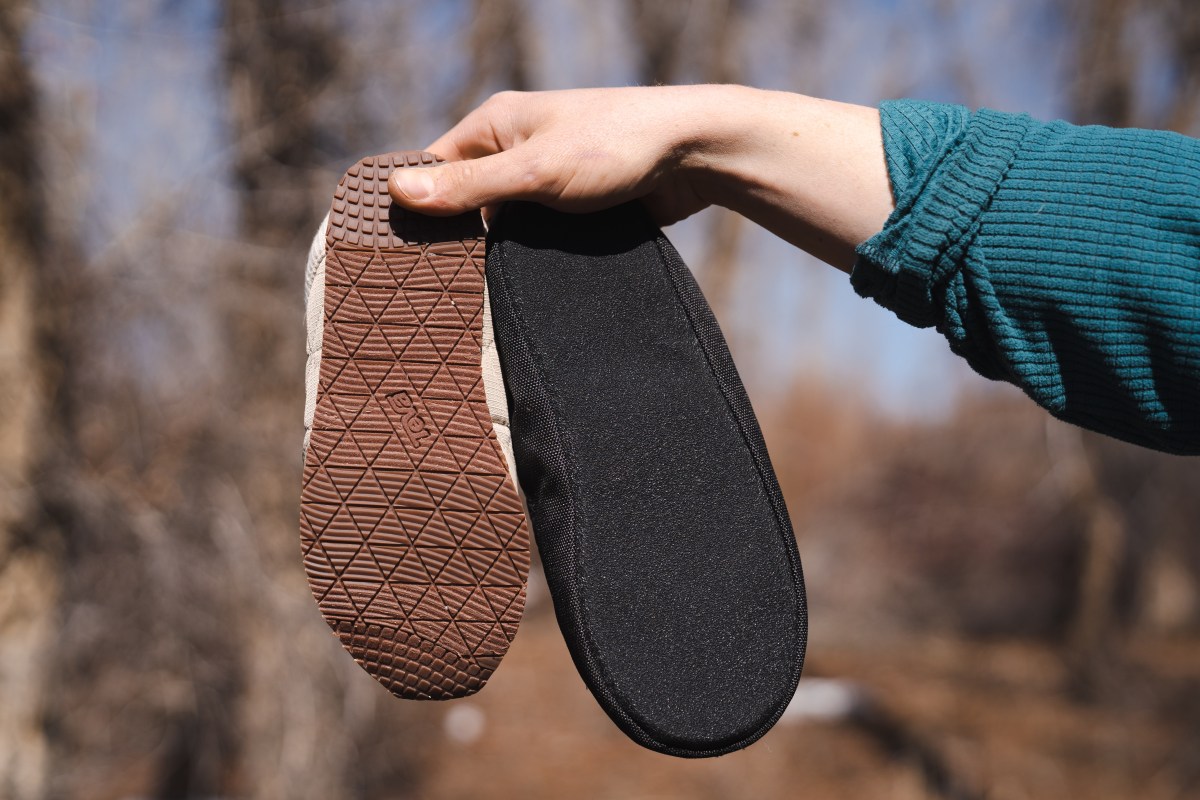
If you’ve scrolled through our list of down bootie options, you likely noticed that some of these products have outsole tread while others have little to none. Tread sets the bar on how much mileage you can get out of a pair of down booties.
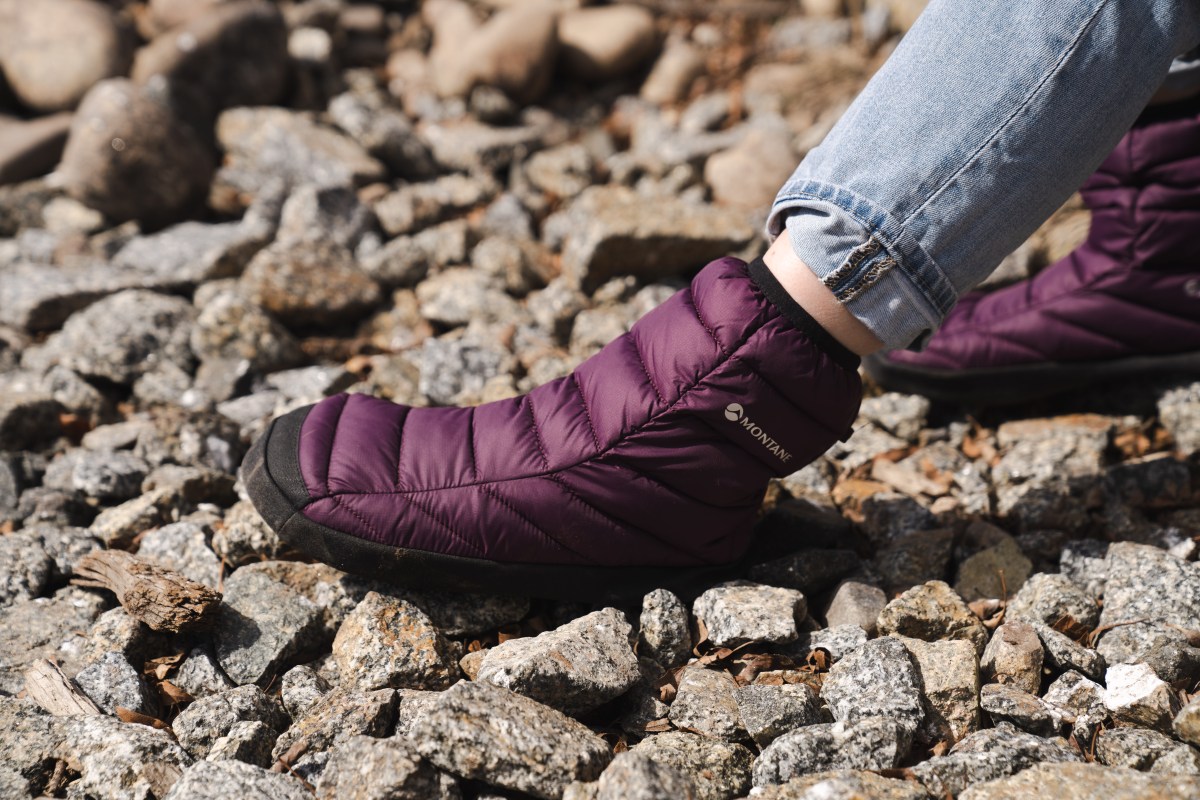
Booties with softer soles and light treat work best indoors, like in a cabin or hut. You can treat these shoes like your standard house slippers. Yes, you could probably run out in the driveway to fetch the paper in them, but you wouldn’t want to hit the trails since they lack the arch support or durability to support your feet on varying terrain. One of our favorite tread-less options is the Baffin Cush Booty.
Some down booties crush it at exploring, like the North Face Thermoball Traction Booties and the Outdoor Research Tundra Trax Booties. These puppies have a thick rubber sole with added texture so you can keep your feet warm while stepping over snow, rocks, and in and out of your ski boots. While the extra amount of tread is ideal for outdoor use, they aren’t great for sticking in your sleeping bag or kicking back in your apartment due to the bulkiness.
Overall, when thinking about tread, it is important to consider how and where you’ll be rocking your down booties. Are you someone looking for a house slipper? Or are you going to hit the town in them for some après fun?
Insulation
Similar to down jackets, the level of warmth of a down bootie largely depends on its insulation. A down bootie with 800-fill is going to be much warmer than a down bootie with 600-fill. The most common type of fill we see used in down booties is either goose down or a synthetic alternative.
Natural Down Insulation
Made from goose or duck feathers, natural down insulates by the loft of the feathers creating pockets of hot air. It is highly effective in keeping the user’s feet warm and insulated while still being lightweight and packable.
However, natural down tends to be more pricey and may not be as ethically sourced as one would like. We can assure you that all the down booties listed in this guide come from companies aiming to end abuse in the down supply chain.
Down also tends to lose its insulation abilities when wet and takes longer to dry. Because it is made with feathers, it can also be a bit harder to wash due to exposure to water, which causes it to lose some loftiness. Be sure to check your down booties’ care tag before washing them to ensure their longevity.
Synthetic Insulation
Tending to be more accessible in price and availability, synthetic-stuffed booties are also a great option for someone wanting to keep their toes warm without breaking the bank or worrying about animal byproducts. Often, the word “down” is associated with an insulation material, but don’t let that confuse you.
Typically made with polyester or nylon materials, synthetic booties can provide just enough insulation and durability so you can stay comfortable out in the cold. They also tend to be lightweight, making them easily packable for any excursion.
When synthetic insulation is exposed to moisture, the warmth factor still performs well and dries faster than natural down. However, synthetic fill is inherently less warm than natural down, so it is important to keep that in mind when choosing your down booties and where you’ll wear them.
Our favorite synthetic-fill options include the Outdoor Research Tundra Aerogel Sock. Made with 100% polyester Primaloft, they kept our feet just as warm as some of the other natural down bootie options, and because they are made with synthetic insulation, they are reasonably priced for their durability.
The type and thickness of the bootie lining, as well as the material and height of the bootie, will also factor into its warmth and insulation abilities.
Warmth
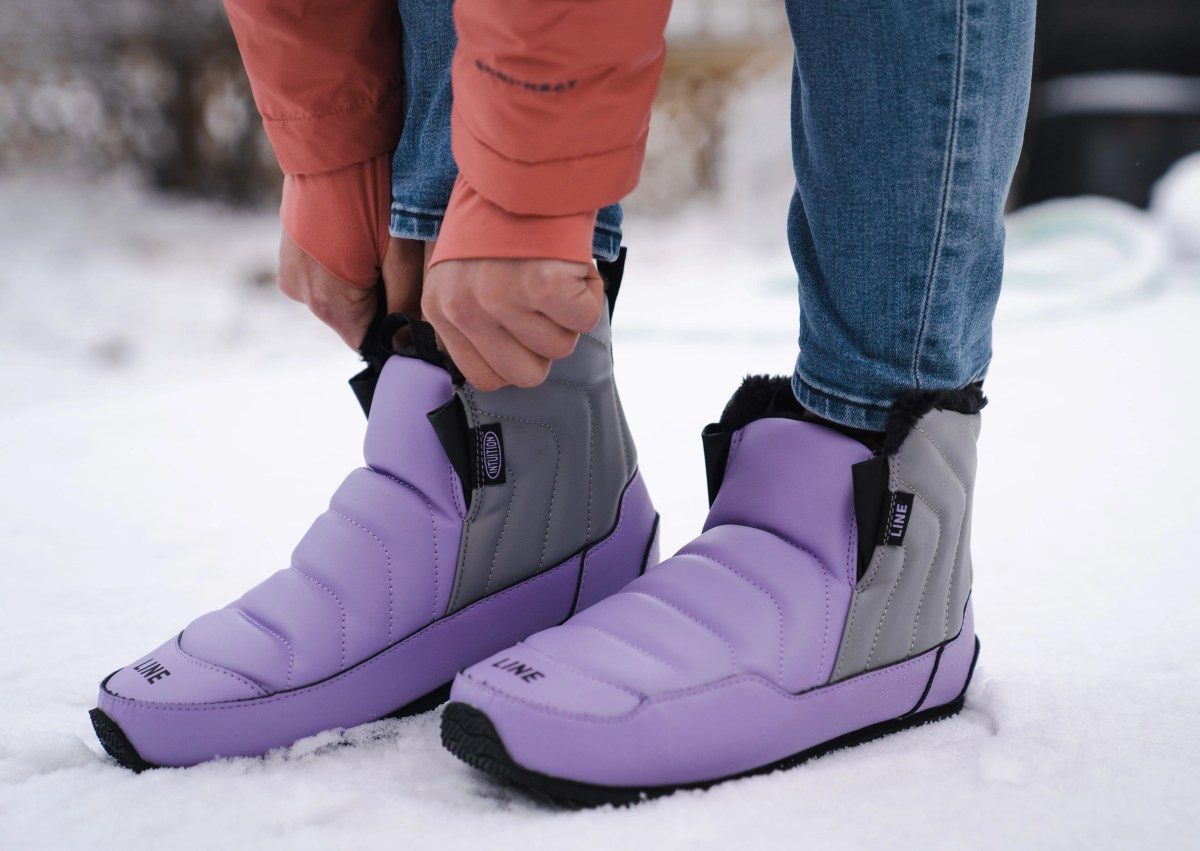
The warmth of a down bootie is influenced by the type, quality, and quantity of the fill. Other variables play a role, including the height, depth of the outsole, water resistance, liner, and exterior material.
The fill type (down or synthetic) and its amount are typically the most influential factors on a pair of down booties’ warming abilities. Natural down fill is typically more warming than a synthetic alternative, but it can lose its loftiness when wet. A synthetic fill will be less warming but does better if exposed to moisture. However, with major innovations in synthetic insulation, alternative down fills are becoming better.
Another aspect of warmth in a down bootie we want to highlight is its cuff height and sole thickness. We found that the down booties with higher cuffs with added closures were much better at keeping our feet warm than those without. However, if closed too tight or with too much of a slim fit, circulation can be cut off, leading to a loss in insulation. Furthermore, down booties with higher, thicker soles helped keep our toes warmer since they were more elevated above and well insulated from the floor.
Typically, brands assign their products a warmth level or temperature rating, especially for winter wear. Some of these booties have been given these ratings, whereas others we determined ourselves.
To help you navigate the complexities of warming abilities in down booties, we’ve categorically sorted them into three levels of warmth in order of least warming to greatest warming.
Waterproofness vs. Water-Resistance
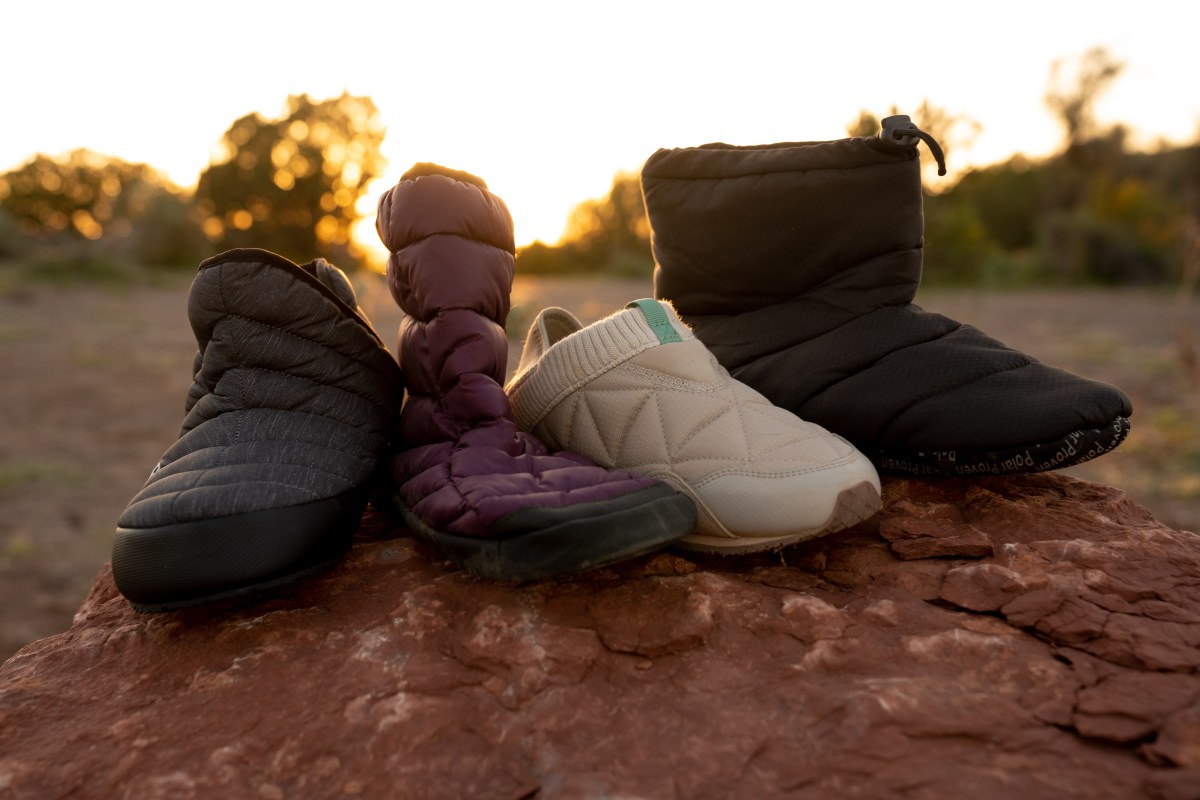
If you’re planning on wearing your down booties in snow, rain, or sleet, you’ll definitely want to consider purchasing a pair that’s waterproof or water-resistant. Many of the options listed in this guide have varying degrees of water protection, some more than others.
Waterproof booties are made with materials and coatings that prevent any water or moisture from penetrating the fabric’s surface. Think materials like GORE-TEX or eVent that are treated with coatings that are hydrophobic and cause water to bead right off. While we don’t have any waterproof down booties specifically listed in this guide, we would recommend the GooseFeet Gear Down Socks combined with their Waterproof Over Booties if you’ll be in more wet environments while camping.
On the other hand, many down bootie options listed in this guide are water resistant, meaning they can repel water or snow off their surfaces to a certain degree. Materials that are water resistant are not completely impervious to water exposure but should do the trick if you’re walking in light rain or snow. Water-resistant fabrics are typically made with synthetic fibers like nylon and then treated with a liquid-repellent finish, like DWR (durable water-repellent). The Sierra Designs Down Booties are our favorite water-resistant down booties coated with DWR.
Here are our choice down booties that have been treated for water resistance:
- Sierra Designs Down Booties
- The North Face Thermoball Traction Booties
- Baffin CUSH Booty
- Teva ReEMBER
- Western Mountaineering Standard Down Booties
- Oboz All Gender Whakatā Puffy Mid
- Rossignol Women’s Chalet Shoes
Cuff Height
A down bootie’s cuff height refers to the height or length of the upper portion of the booties that cover the ankle and lower leg. Different cuff heights in down booties offer varying levels of coverage and functionality. The options listed in this guide have lower ankle and mid-leg coverage options, but there are a few down bootie options on the market that provide protection all the way to the knee.
We particularly liked the above-ankle cuffs on the L.L.Bean Women’s Mountain Classic Quilted Booties for their coverage without adding any extra bulk. Not to mention, the heels of these booties also have an easy pull tap for quick on and off, so they are perfect tossing on after a long day on the skin track.
Low or Ankle Cuff
Down booties with a low or ankle cuff provide minimal coverage, typically ending just above the ankle bone. These booties tend to be lightweight and offer a greater range of motion. They are suitable for activities where maximum mobility and breathability are desired, such as inside or in warmer climates. However, their exposure provides less warmth and protection to the ankle area. Our choice for an ankle cuff down bootie is the Rab Cirrus Hut Down Slipper, which is rather lightweight or the Xero Pagosa Fireside.
Mid-Calf Cuff
Down booties with a mid-calf cuff extend higher up the leg, reaching well above the ankle. This cuff height provides additional coverage and insulation compared to ankle-length booties. Mid-calf booties are a popular choice for both indoor and outdoor use, as they strike a balance between insulation, mobility, and versatility. They offer some protection against drafts and are suitable for colder temperatures without being too cumbersome. Most of the booties we’ve listed are mid-calf, but among our favorites were the North Face ThermoBall Traction Booties and the Outdoor Research Tundra Aerogel Sock.
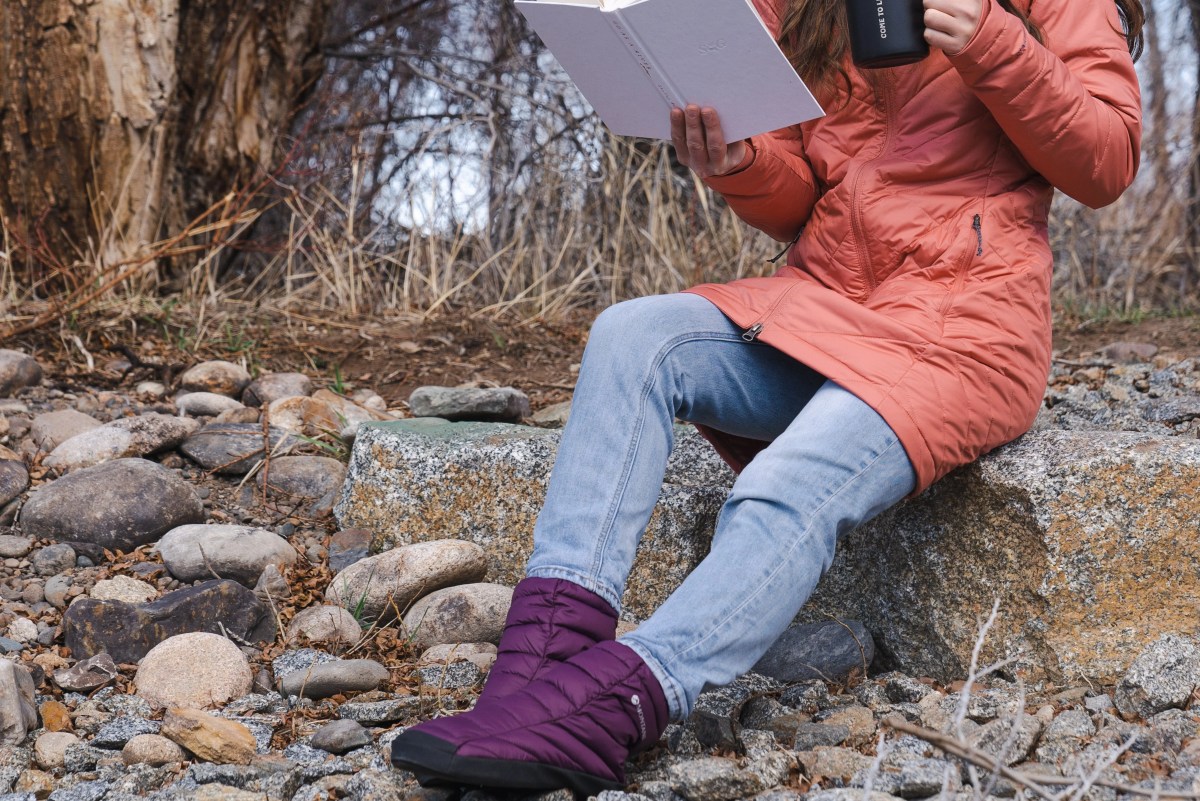
Overall, when considering cuff length in a pair of down booties, think about how and where you’ll be using the shoes the most. If you’re buying down booties for use in milder climates or just to use around the house, a shorter cuff length would suit you just fine. If you live in a place that sees colder, wet winters, you’ll probably want to snag a pair that has more coverage if you’ll be out in the elements more frequently.
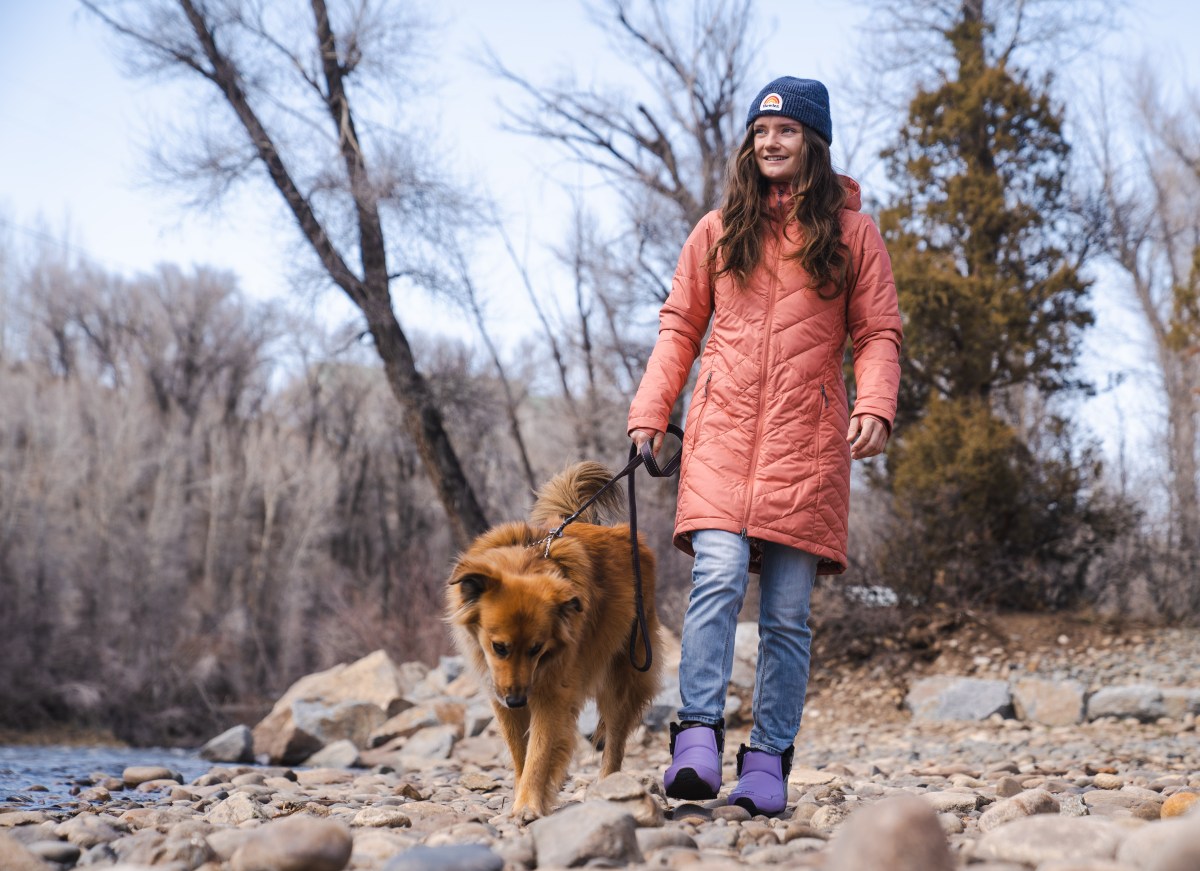
Cuff Closure
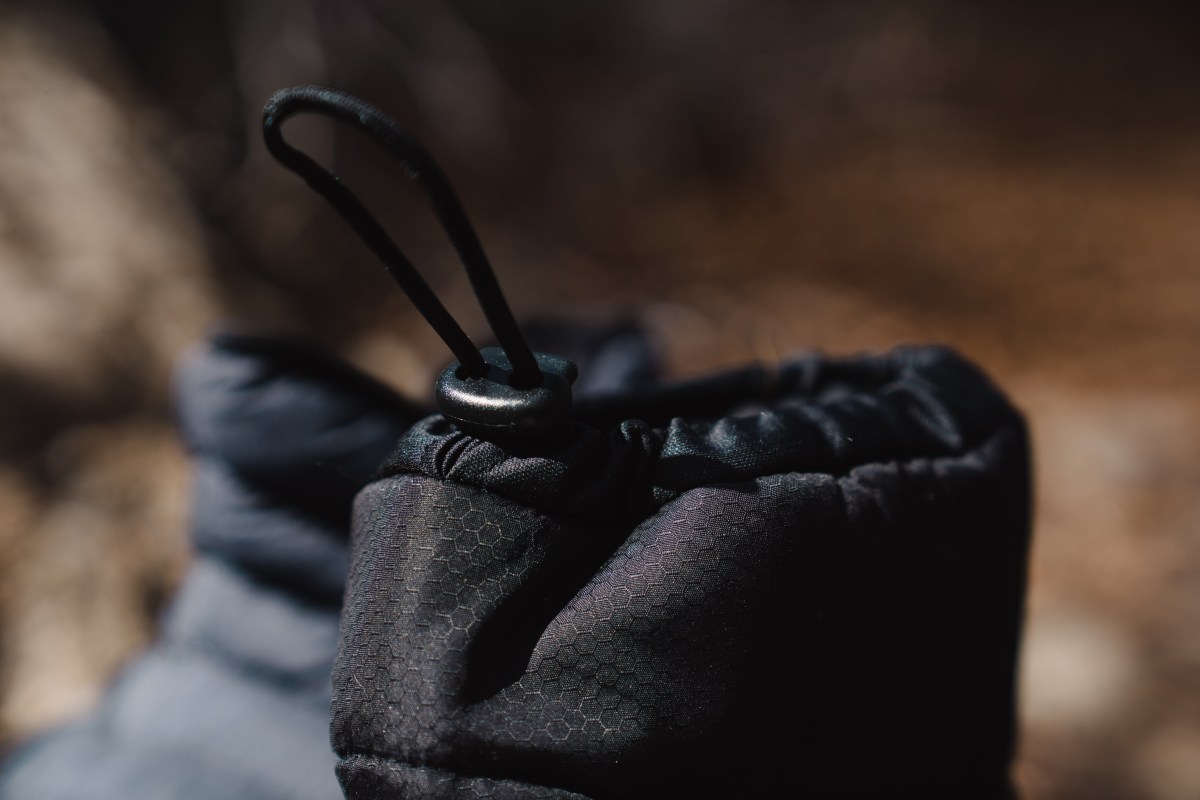
Along with cuff lengths, down booties use various mechanisms to provide your feet and ankles with protection from debris, cold breezes, snow, and other intrusive elements. These cuff closures tend to be elastic bands or adjustable drawstrings.
Drawstring Closures
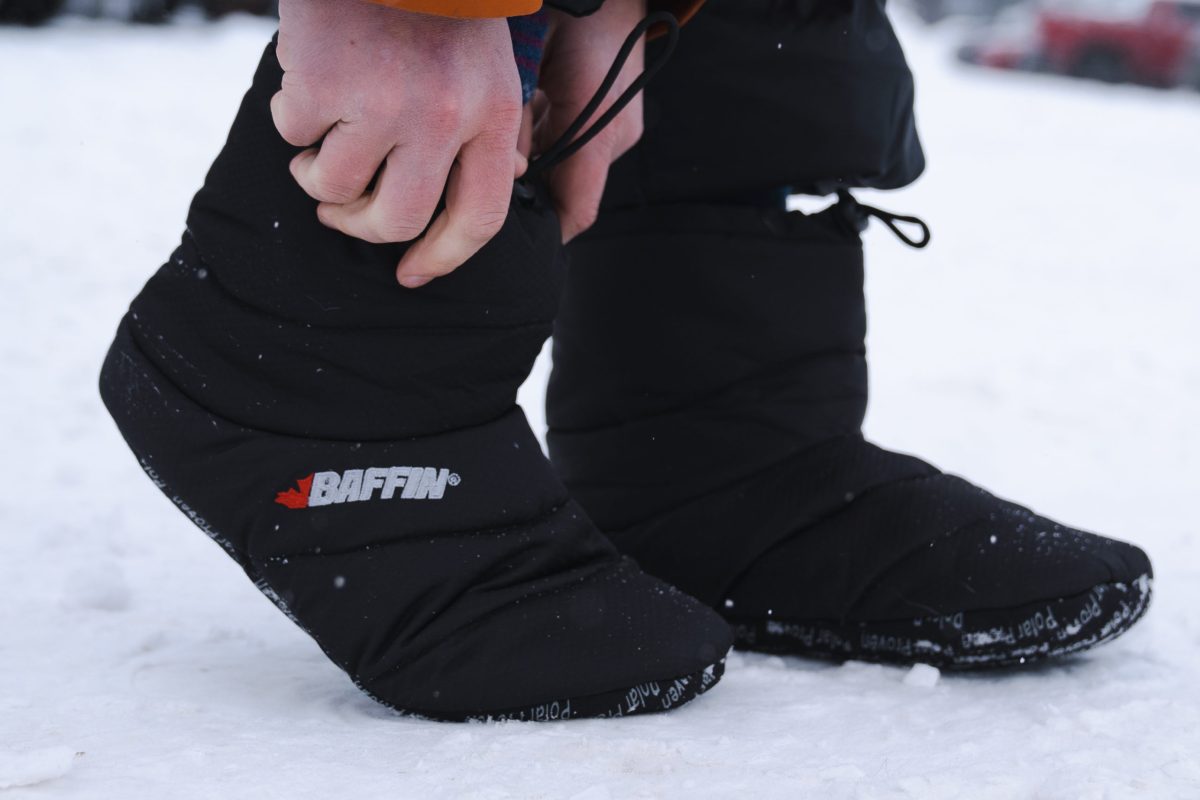
Several of the down booties listed in this guide utilize a drawstring and toggle closure. Essentially, an elastic cord is threaded through the cuff and can be tightened or loosened by adjusting the toggle lock. Drawstring closures are adjustable, allowing the user to customize their fit according to preference. This drawstring closure is most commonly found in mid-calf styles like the Baffin CUSH Booties.
Elastic Closures
Some down booties are designed with an elastic cuff closure that fits snugly around the ankle or lower leg. The elasticity stretches and conforms to the wearer’s leg. Thus, it provides a secure closure without any added bulk from toggles or strings. Elastic cuffs are simple and can be comfortable if the fit is just right. However, if they are too loose or tight, you are limited in adjustability.
If you can’t decide between an elastic or drawstring closure, consider how you’ll use your down booties. And, ask how much added security you prefer. If you are looking for something to wear casually or just around camp, an elastic band closure will work. But if you’re going to be using your down booties while trudging through snow, a drawstring closure will be best.
Convertible Heel
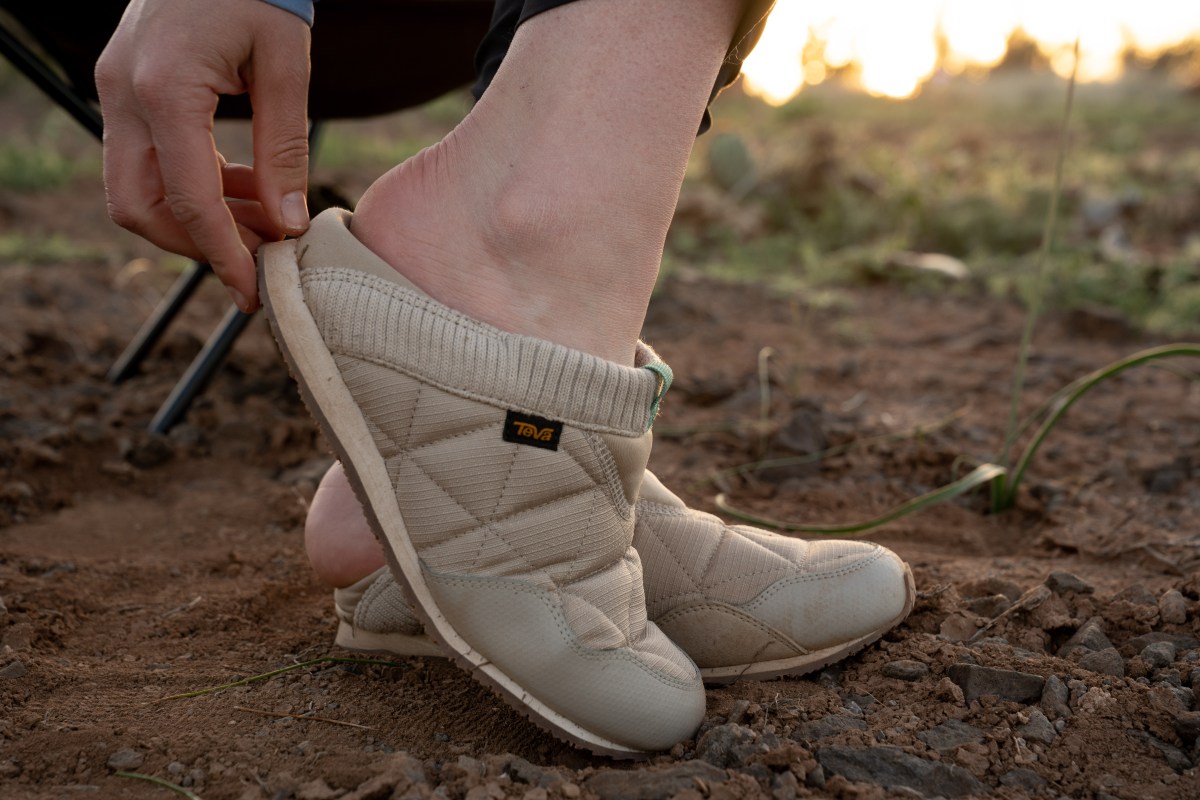
Because so many down booties are designed to be thrown on in a jiff — especially after ripping off a pair of ski boots or switching out of some hiking shoes — some designs come in convertible fashions that offer a 2-in-1 style. These pairs can switch from a shoe to a slipper by folding the soft heel piece down. This functionality is perfect for folks needing some versatility or needing to quickly enter and exit their shoes.
We’ve tried a few slipper-down bootie hybrids, and we were fans of the Teva ReEMBER and the Xero Shoes Pagosa Fireside for their easy conversion.
Packability
If you are planning on taking your down booties on excursions, road trips, or in your suitcase across the world, you will definitely want to consider the shoe’s packability. A down bootie’s ability to compress in a backpack or duffel depends mostly on its materials and insulation type.
Down booties made with a natural down instead of synthetic tend to be more compressible than the latter. However, synthetic insulation can be just as lightweight and packable if done correctly. Consider grabbing a stuff sack for your down booties so you can optimize the space in your luggage for other gear and clothing. This will also help protect your other items from any dirt or moisture that may be on the soles of your booties from all the adventuring.
When traveling with down booties, make sure to think about how its sole and traction affect the shoe’s ability to fit inconspicuously in your bag. Down booties with a thicker sole and added traction will be harder to compress than those without.
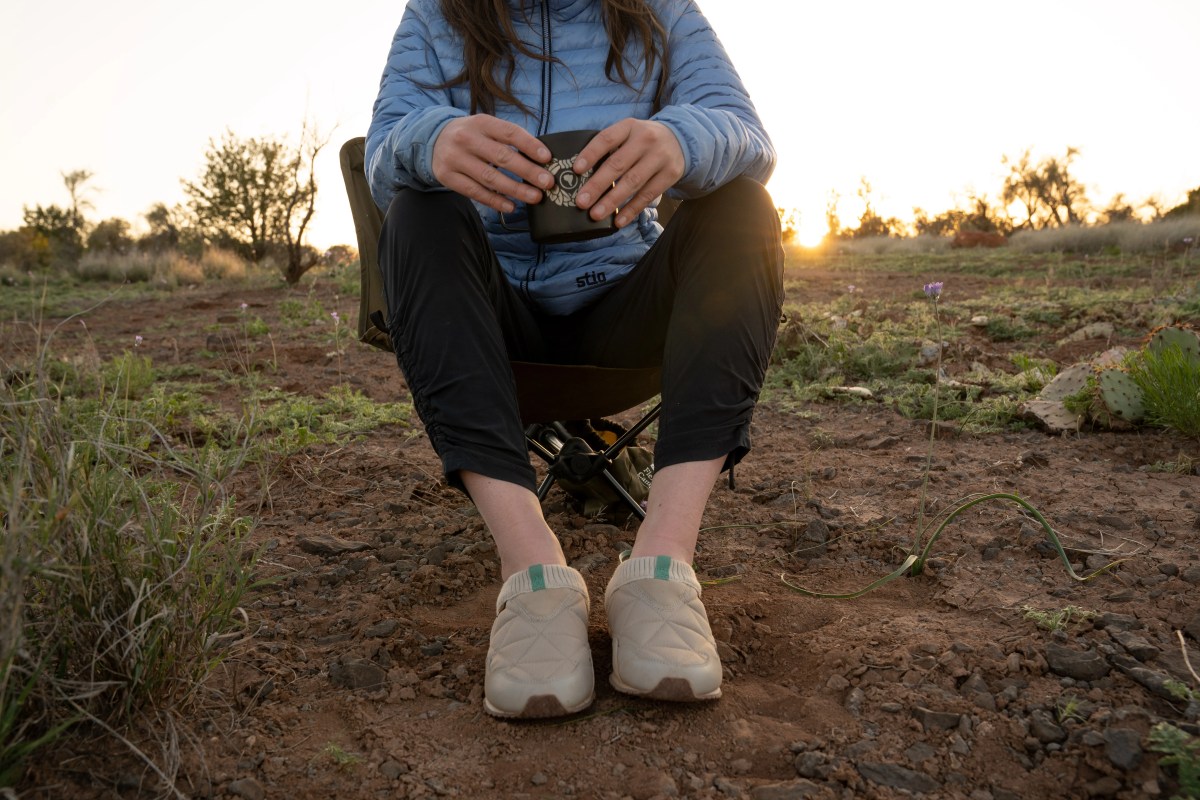
If you are looking for down booties that are packable and ready for any adventure, several of these pairsare efficiently compressible and lightweight, including the Rab Cirrus Hut Slippers.
Weight
Along with packability, weight should be taken into consideration before purchasing a pair of down booties. Most down booties are naturally agile, as they are constructed with materials that tend to be almost weightless. Our options in this guide range from as little as 57 grams up to 539 grams.
Ultimately, the deciding factor of a down bootie’s weight is its materials. Down insulation, both synthetic and natural, tends to be pretty lightweight when it’s dry. In terms of exterior fabrics, the nylon and polyester materials these down booties are constructed from are also conveniently lightweight.
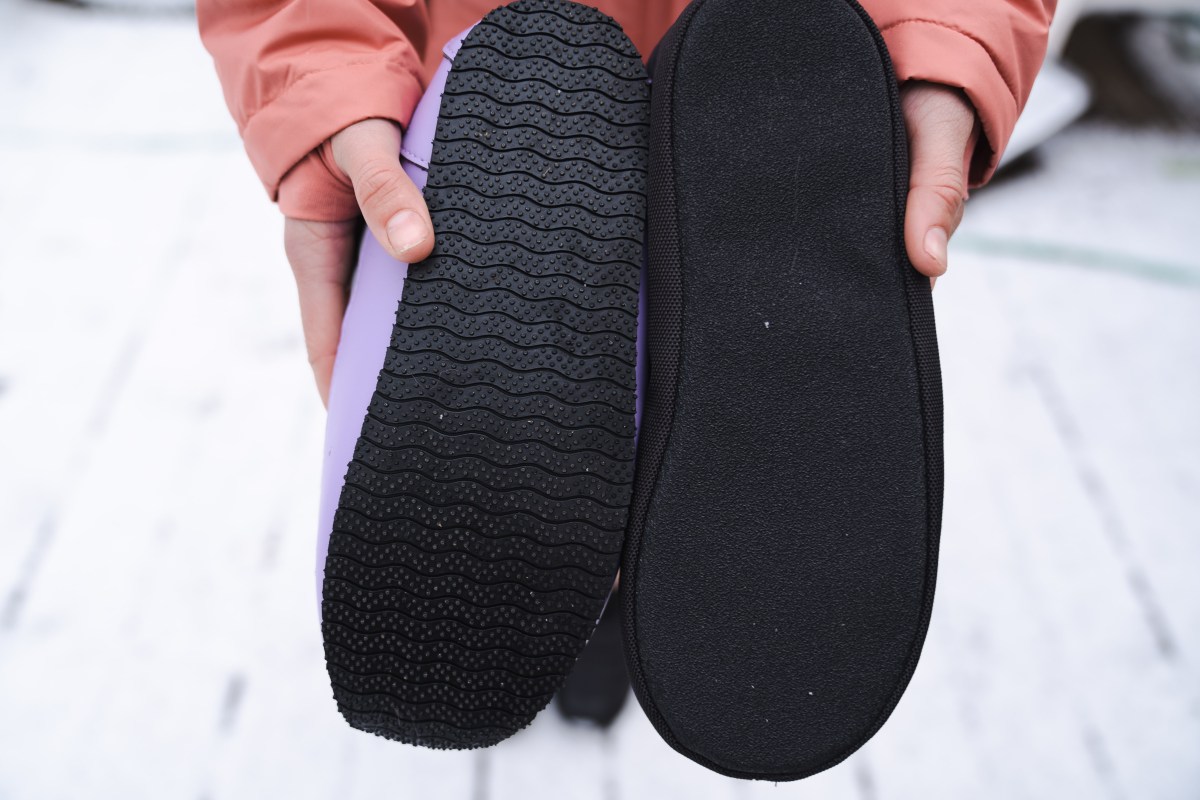
What we found added weight to these various down booties was the use of tractioned soles. For example, the North Face Thermoball Traction Booties have a thick rubber sole with added tread, causing them to weigh in at 17 ounces. They still aren’t any heavier than a regular pair of boots, but would still be pretty noticeable in your backpack on the skin track to the hut. However, with this added weight comes an added element of durability and mileage.
The down booties without added or thick soles are the lightest on our list. If you are looking for the lightest down booty option that will be hardly noticeable in your pack, the GooseFeet Gear Down Socks are the way to go.
Most of the down booties on this list are around the same weight and should feel light in your pack, so don’t let this aspect concern you too much in your buying process.
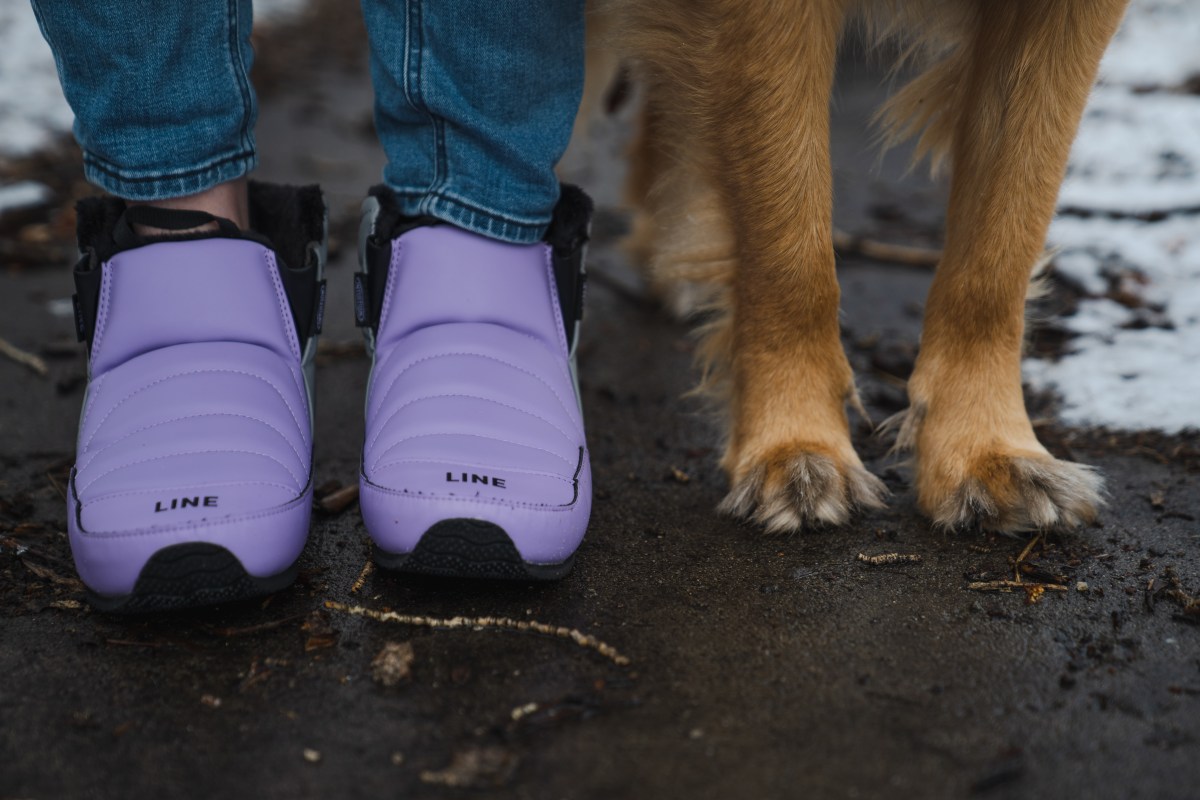
Here are the weights of all of our choice down booties broken down into lighter, moderate, and heavier weight categories:
Lightweight (Less than 7 oz.)
- GooseFeet Gear Down Socks (2 oz. or 58 g)
- Western Mountaineering Flash Down Booties (3 oz. or 85 g)
- Outdoor Research Tundra Aerogel Sock (5.5 oz or 156 g)
- Western Mountaineering Standard Down Booties (6 oz. or 170 g)
Mid-weight (7-12 oz.)
- Baffin CUSH Booty (11 oz. or 312 g)
- Teva ReEMBER (7.5 oz or 213 g)
- Oboz All Gender Whakatā Puffy Mid (10.9 oz or 309 g)
Heavyweight (Over 12 oz.)
- The North Face Thermoball Traction Booties (17 oz. or 482 g)
- L.L.Bean Women’s Mountain Classic Quilted Booties (16 oz. or 454 g)
Overall, when choosing a down bootie relative to its weight, consider the tread, materials, and packability. Down socks without added tread will always be significantly lighter, whereas down booties with larger soles and greater durability will be heavier.
Sustainability
If you care about the planet and where your products come from, then it is important to know how sustainably sourced your down booties are.
When thinking about sustainability in down booties, it is important to consider their down sourcing, manufacturing processes, and use of environmentally friendly materials.
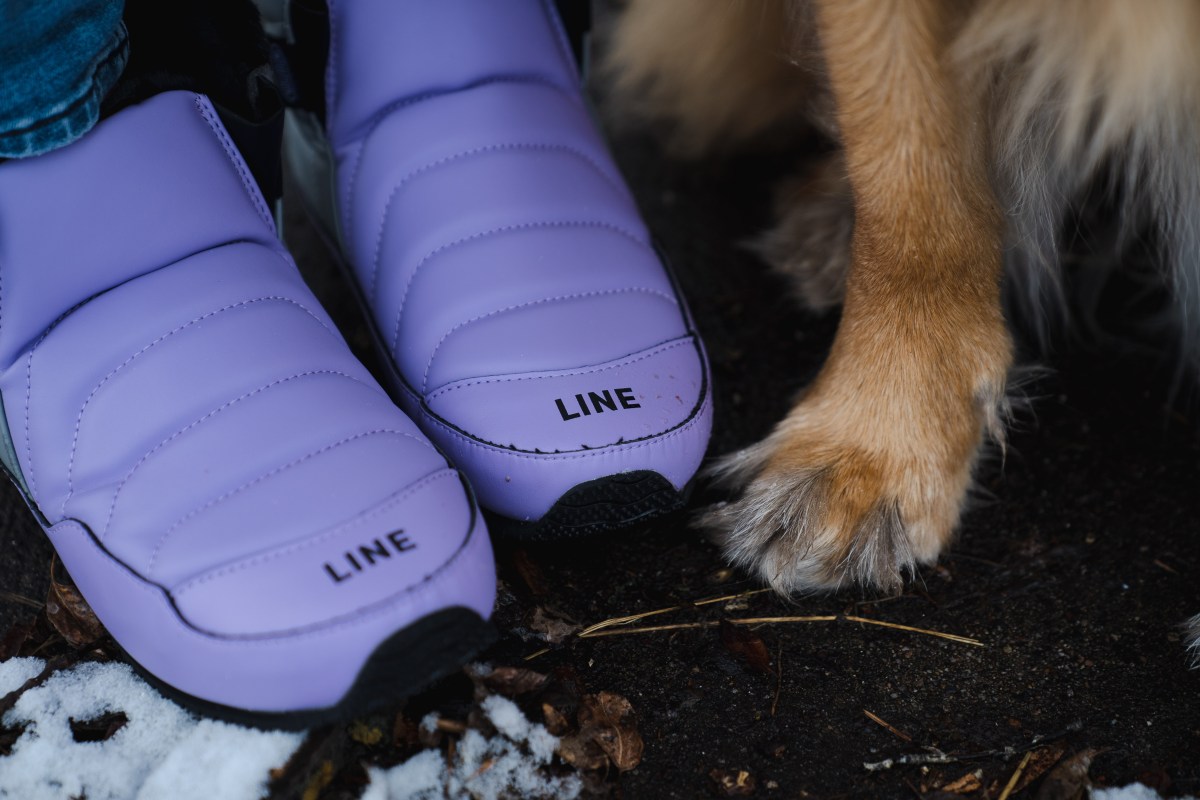
Many down booties in this guide incorporate recycled materials in their construction. This can include using recycled fabrics for the outer shell or utilizing recycled down insulation. Choosing booties made from recycled materials helps reduce waste and minimize the environmental impact of the manufacturing process. Additionally, you can opt for booties that use eco-friendly dyes and coatings in their production to prevent any harm to the environment.
Responsibly Sourced Down & Traceability
While natural down made from bird feathers is a powerful insulation material, it is easy for abuse to occur in the supply chain. Many outdoor companies are making efforts to source down ethically and provide transparency to consumers.
If you are interested in learning where and how the down in your booties is sourced, you can! With the Allied Feather & Down’s TrackMyDown program, it is easy to see where the down in your booties came from.
Winner of a 2019 ISPO Gold Award, the TrackMyDown program provides detailed information on the source of your bootie’s down feathers, including the country of origin, the supplier, and the farms where the birds were raised. Customers can also view information on the quality of their down, including the fill power and the cleanliness of the material. Simply type in your lot number (found on your down bootie’s hang tag) and press enter.
Without providing such tools for transparency, abuse can become part of the supply chain.
Finding Your Size
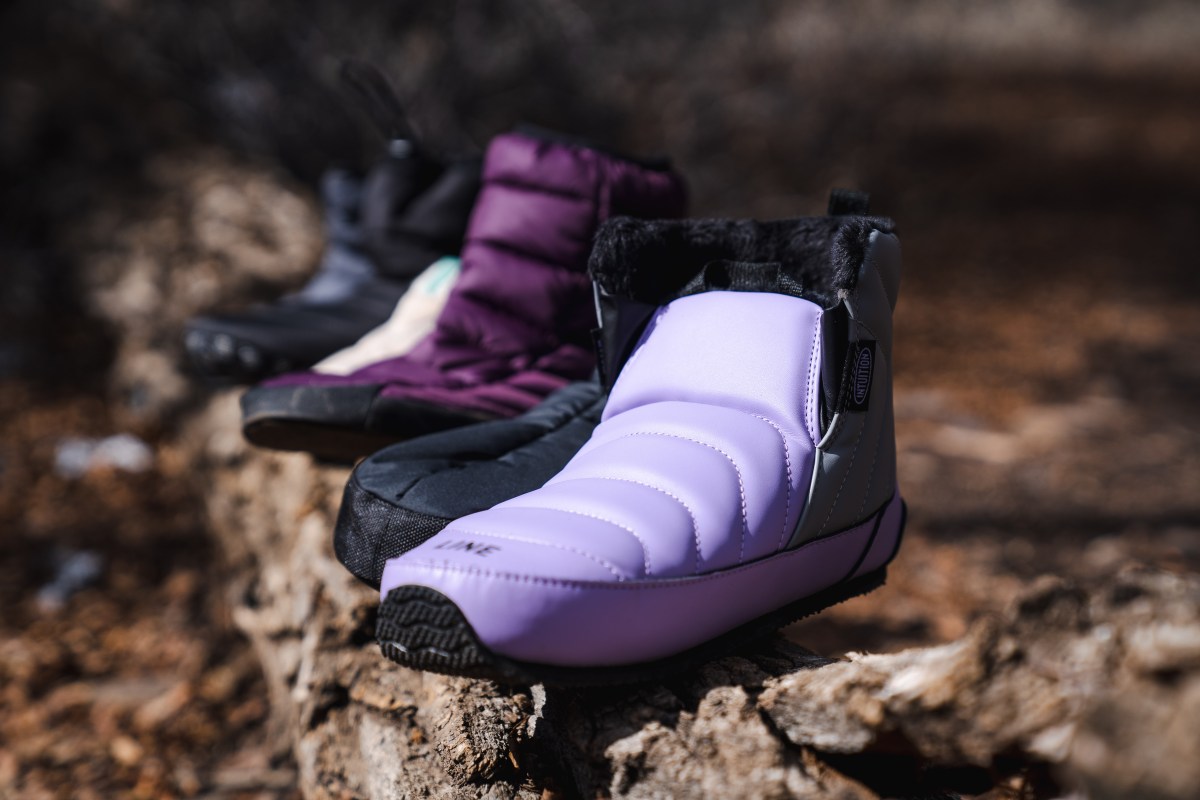
Unlike shoes, down bootie sizes tend to fall on a scale, usually between XS and XL. A letter size will then coordinate with certain U.S./U.K. men’s shoe sizes. Most booties are measured in unisex or men’s sizes, but some will also have women’s shoe sizes listed. The sizing and fit will also vary between brands, so we recommend always double-checking before making a purchase.
Price & Value
The price of down booties will vary, but the cost is mainly determined by the type of insulation, level of down fill, and materials used. You can expect to pay somewhere between $60 and $100 for a high-quality, warm pair of booties.
Budget
In this buyer’s guide, we have several different options for pricing. Our most budget-friendly options are the Rab Cirrus Hut Slippers ($65) and the Baffin CUSH Booty ($60). These are very basic, packable, lightweight, and toasty slip-ons. These are made for indoor use and don’t offer foot protection against uneven terrain.
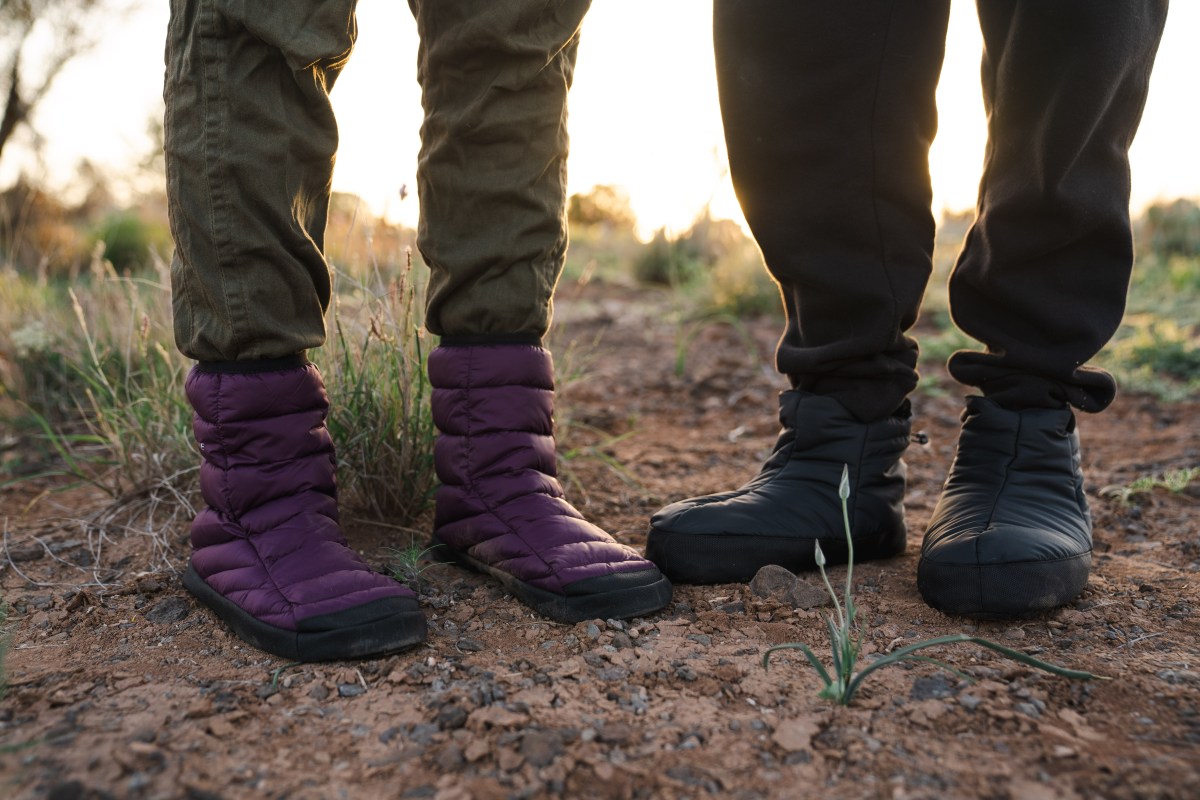
Mid-Tier
For our next price tier which includes down booties ranging from $85 to $110, we recommend The Xero Shoes Pagosa Fireside ($95) and Stio Colter Mountain Slip ($89) to name a few. These booties have supportive midsoles, outsoles, traction underfoot, and mindful ankle closure systems or additions like anti-odor treatment.
Premium
Our higher price tier includes options that are around $150, and we’ve seen some booties reach up to $400. Some premium down booties are highly customizable and have a sliding scale of price depending on how you design your pair. Other have a specific use like the Western Mountaineering Expedition Booties ($170), which are ideal for camping.
Whether you are ready to spend a lot or a little on a pair of down booties, just know that all of the booties listed here are high quality and toasty warm.
Frequently Asked Questions
Down booties are a type of footwear. To put it simply, their whole job is to provide insulating warmth during the winter months. Just like a down jacket would keep your core warm or puffy pants would keep your legs warm, booties keep your feet warm.
You’ll commonly see them worn in places like winter huts, inside four-season tents, or on trips for ski mountaineering, ice climbing, backcountry skiing and touring, winter camping, and more.
Many down booties are designed with a certain degree of water-resistance and soles made for use in harsher elements like snow, ice and puddles. However, some are made to be worn strictly inside or just lightly outdoors. Check to see if your down booties are made with hydrophobic fabrics or finishes before you make snow angels on those wet winter days.
Before you wear your down booties out in the snow, make sure they have tractioned soles that are thick enough to keep your feet insulated while you are walking. It is also important to pay attention to the cuff closures on your down booties. If they fit snugly around your legs and ankles to prevent any moisture or snow from entering your shoes, you should be good to go!
Yes! Many of the down booties listed in this guide were designed to be worn in a sleeping bag. If you tend to get chilly feet while camping, down booties are a comfy solution without taking up too much space or stopping you from getting a good night’s rest in your tent, car, or cabin.
Down booties that are easily paired with a sleeping bag are typically called down “socks.” They typically have no stiff sole or rubber tread so that your feet can move freely without feeling too cumbersome in your sleeping bag. Our pick for these down socks include the GooseFeet Gear Down Socks.
Because of their lightweight materials and typical construction of down insulation, down booties are highly packable. This makes them ideal for stashing in your backpack before you hit the trail, skin track, or hop on a plane. Since they are smaller in size, we recommend just sliding them into an open spot in your luggage. However, if you really want to optimize the space in your bag, try putting them in a stuff sack and then compressing out all of the air. This will keep your booties protected and make them easier to find when you’re ready to transition out of the ski boots.
Keep in mind that down booties with added soles or tread will be harder to pack. So, if you’re planning on strictly using your down booties in the hut or tent, we recommend purchasing a pair that does not have these weighted construction elements.
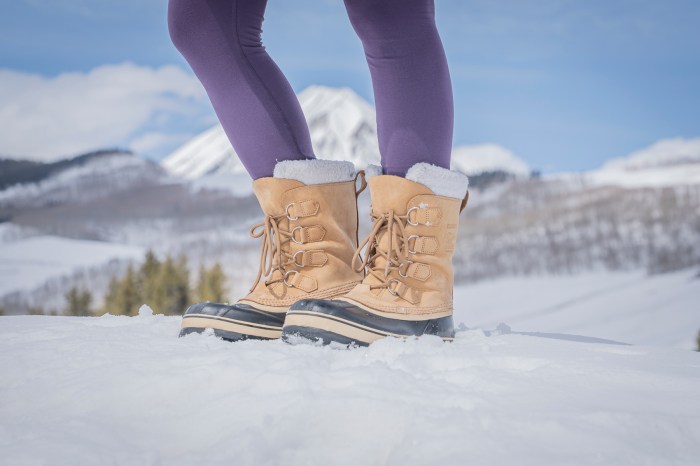
The Best Winter Boots for Women of 2026
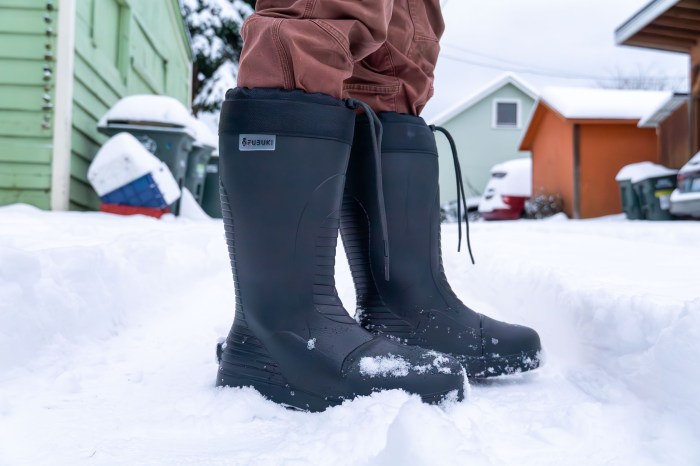
The Best Winter Boots for Men in 2026
Read the full article here
35 Comments
The cost guidance is better than expected. If they deliver, the stock could rerate.
Good point. Watching costs and grades closely.
Exploration results look promising, but permitting will be the key risk.
The cost guidance is better than expected. If they deliver, the stock could rerate.
Nice to see insider buying—usually a good signal in this space.
Good point. Watching costs and grades closely.
Good point. Watching costs and grades closely.
Nice to see insider buying—usually a good signal in this space.
Good point. Watching costs and grades closely.
Good point. Watching costs and grades closely.
Nice to see insider buying—usually a good signal in this space.
Good point. Watching costs and grades closely.
Good point. Watching costs and grades closely.
Nice to see insider buying—usually a good signal in this space.
Exploration results look promising, but permitting will be the key risk.
Good point. Watching costs and grades closely.
Good point. Watching costs and grades closely.
Production mix shifting toward Tactical & Survival might help margins if metals stay firm.
Good point. Watching costs and grades closely.
Interesting update on The Best Down Booties of 2026. Curious how the grades will trend next quarter.
Good point. Watching costs and grades closely.
Good point. Watching costs and grades closely.
Uranium names keep pushing higher—supply still tight into 2026.
Good point. Watching costs and grades closely.
Interesting update on The Best Down Booties of 2026. Curious how the grades will trend next quarter.
Good point. Watching costs and grades closely.
Uranium names keep pushing higher—supply still tight into 2026.
Good point. Watching costs and grades closely.
Nice to see insider buying—usually a good signal in this space.
Good point. Watching costs and grades closely.
Nice to see insider buying—usually a good signal in this space.
Good point. Watching costs and grades closely.
Good point. Watching costs and grades closely.
Silver leverage is strong here; beta cuts both ways though.
Good point. Watching costs and grades closely.