

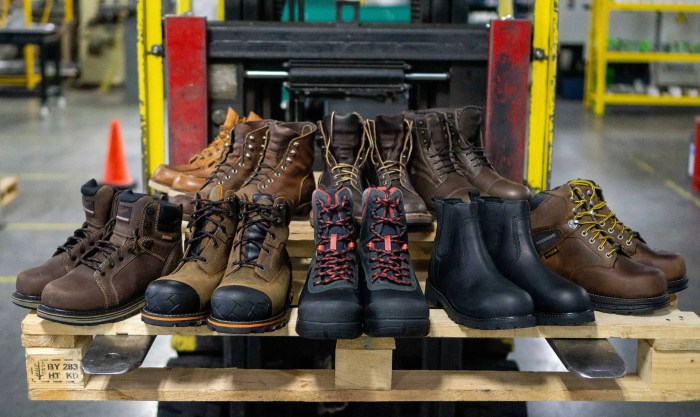
As with any tool, there’s the right boot for the job. One thing that all good work boots have in common, however, is that they balance the competing priorities of comfort and utility. A major part of that utility is protection. Even if you’re careful, heavy materials can unexpectedly fall and crush a foot. When that happens, the only thing between you and workers’ comp is a bomber work boot.
Finding the right footwear is thus a step toward a long, healthy career. To help you find the right pair, lead testers Nick LeFort and Constance Mahoney took dozens of boots to work to figure out which were the best of the best.
After countless hours on the job, the Timberland PRO Boondock 6-Inch Waterproof Comp-Toe Work Boot emerged as our favorite overall work boot. If you want to stretch your paycheck further without giving up quality, the Caterpillar Second Shift Steel Toe Work Boot is our favorite budget boot.
Editor’s Note: We updated this guide on November 16, 2026, with new review formats and a new product comparison chart, as well as updated prices and availability.
The Best Work Boots of 2026
Best Overall Work Boots
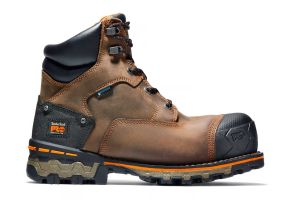
Timberland PRO Boondock 6-Inch Waterproof Comp-Toe Work Boot
Best Budget Work Boots
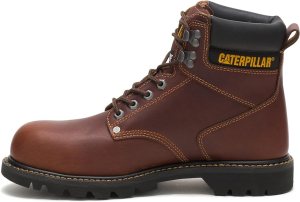
Caterpillar Second Shift Steel Toe Work Boot
Best Soft-Toe Work Boots
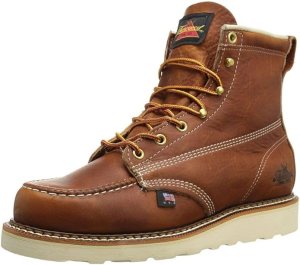
Thorogood American Heritage 6-Inch Moc Toe
Most Protective Work Boots
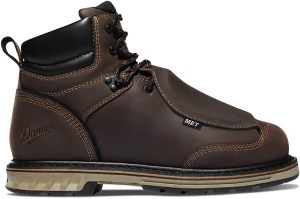
Danner Steel Yard
Most Comfortable Work Boots
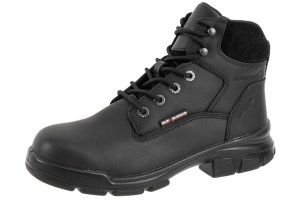
Wolverine DuraShocks SR Icon 6-Inch CarbonMax
Best Insulated Work Boots
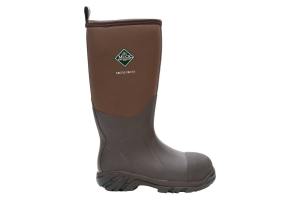
Muck Arctic Pro Steel Toe Boot
Best Pull-On Work Boots
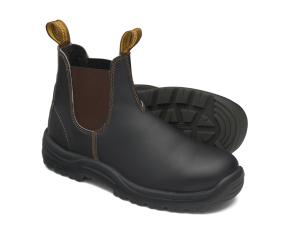
Blundstone Work Series #172
See more picks
Timberland PRO Boondock 6-Inch Waterproof Comp-Toe Work Boot
-

-
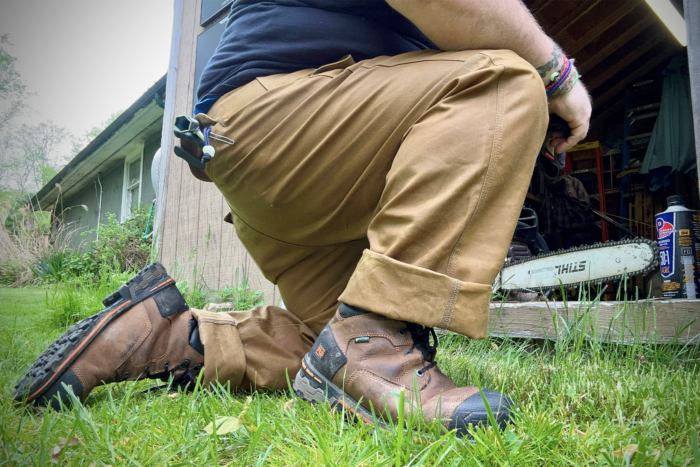
The Timberland PRO Boondock provides durability, stability, and comfort; (photo/Nick LeFort)

Specifications
Pros & Cons
Pros
- Plenty of structural support
- Comfortable for how rugged it is
- Durable
- Quite warm for a non-insulated work boot
Cons
- On the heavier side, especially for a boot without a steel toe
- Pricey (but worth it)
Bottom Line: A tank of a boot that feels both lighter and more comfortable than you’d think. Its wide design offers lots of toe room, and it’s waterproof and supportive as well.
Timberland’s PRO line offers boots for serious work while keeping comfort top of mind. The PRO Boondock 6-Inch Waterproof Comp-Toe Work Boot ($230) is protected with soft, waterproof leather and a robust rubber toe bumper, all sewn together with double, triple, and quadruple stitching. This boot exudes quality.
The Tech: Despite tipping the scales at 2 pounds, 3 ounces per boot, the hardwearing Boondock feels deceptively light on your feet. A composite safety toe protects your toes, and a fiberglass shank lightens the load while providing structural support. The midsole is made from dual-density foam, subtracting weight and adding flexibility and comfort. The Boondock has a hybrid outsole — the front three-quarters of the boot is fastened to the upper with a Goodyear welt, but the heel is cemented. Underfoot, the traction has a distinct hiking-style tread that sheds muck and resists slipping, oil, and abrasions.
What We Like: The combination of a welted and cemented sole allows for durability, stability, and a very comfortable boot that breaks in quickly. This is the most comfortable Goodyear welt boot in this guide. A fully waterproof bootie sits under the waterproof leather, extending into the gusseted tongue. We typically find this level of weather protection in winter hiking boots but rarely in work boots. Though the Boondock is not insulated, we found the waterproof membrane adds to the warmth. Our pair remained comfortable down to 32 degrees. The Boondock runs about half a size big and is also wide, especially in the toe box. If your dogs sit squarely in E, these will feel great. Otherwise, we’d recommend sizing down a half size.
What We Don’t: Unfortunately, the three-quarter welt is not resoleable.
Should You Buy It? For folks whose 9-to-5 runs closer to 7-to-7, the Boondock shouldn’t be overlooked — this is a supremely comfortable boot that doesn’t skimp on protection.
Caterpillar Second Shift Steel Toe Work Boot

Specifications
Pros & Cons
Pros
- Great value
- Durable, high-quality leather upper
- Solid breathability and comfort
Cons
- Advertised as waterproof, but tends to soak through easily
Bottom Line: This no-frills boot keeps the price down while offering plenty of workplace protection and solid comfort.
The Caterpillar Second Shift Steel Toe Work Boot ($125) fits the needs of someone looking for a great boot at a comparatively low price. It’s comfortable enough out of the box to wear for a full day’s work with no blisters or hot spots. As you wear it, the thick, oiled leather uppers transform into a comfortable fit that forms to your foot.
The Tech: This boot handles water exposure decently; it’s water resistant but not waterproof. We found that on a long day in the slush of a Minnesota spring, the leather became soaked, leading to damp and clammy feet. We would say the Second Shift is best suited for dry location work with occasional water exposure. Keeping the leather oiled helps with splashing through the occasional deep puddle or on really wet days.
What We Like: The Second Shift has a padded cuff to prevent chafing and a mesh liner that allows your feet to breathe. On the protection side, its steel toe guards against injury. The slip-resistant tread is shaped to shed dirt and rocks effectively while still providing great traction. Sole and mid-foot flexibility is great as well, allowing for all-day comfort.
What We Don’t: It doesn’t have as burly a build as more expensive competitors like the Timberland PRO Boondock 6-Inch Waterproof Comp-Toe Work Boot.
Should You Buy It? If you’re just starting your career or shopping for foot protection on a budget, the Second Shift is a high-value option.
Thorogood American Heritage 6-Inch Moc Toe

Specifications
Pros & Cons
Pros
- Sleek vintage look
- Durable
- Comfortable over long periods on your feet
Cons
- Not waterproof
- Not the most protective
- Expensive for being fairly light-duty
Bottom Line: Not every job requires the protective heft of a safety toe, and that’s why we love the flexibility and comfort of this classic soft-toe moc.
Many companies sell a wedge-style moc toe, but nobody owns the market like Thorogood. The American Heritage 6-Inch Moc Toe ($265) remains the brand’s flagship boot. With a 6-inch shaft, bold, reinforced stitching, and a moccasin-style cap sewn over a wedge sole, it’s an American workwear classic. It has the durability most weekend workers need and the unassuming confidence to tackle life’s lighter tasks.
The Tech: Those who stand on hard surfaces all day swear by this boot for comfort — instead of putting pressure on a heel and the ball of the foot, the flat outsole disperses your weight across the entire sole. The 2.2 mm, oil-tanned leather upper is unlined, triple-stitched for durability, and anchored to the MAXWear wedge sole with a Goodyear storm welt. The tread is too shallow for reliable traction on outdoor surfaces, but this boot excels on the hard, smooth, slick surfaces you find in warehouses.
What We Like: One of the best parts of owning a pair of American Heritage boots is Thorogood’s restoration program. After you’ve put years of miles and wear on them, you can box them up and send them back to Thorogood, where the brand will rebuild your boots by hand to a “like new” condition for $90 to $125.
What We Don’t: The lack of a steel toe means it’s less protective than something like the Caterpillar Second Shift Steel Toe Work Boot. If you want to guard your toes but love the American Heritage’s look, the boot is available in a steel-toe model for $275.
Should You Buy It? The stylish American Heritage has worked its way into the closets of the fashion-forward. But make no mistake — this is a hardworking boot that’s entirely capable of being worn on the job.
Danner Steel Yard

Specifications
Pros & Cons
Pros
- Top-notch protection
- Metatarsal shield protects against top-of-the-foot impacts
- Durable
- Comfortable
Cons
- Limited flexibility
- Heavy
Bottom Line: This ultra-protective work boot has a steel guard over the upper, as well as a steel toe. It also offers plenty of toe-box room for added comfort.
Many GearJunkie readers may know Danner more for its hiking boots, but the company is renowned for its commitment to craftsmanship and making durable boots for tradesmen and women. The Steel Yard ($150) is part of the brand’s most popular work boot family and pairs a metatarsal guard with a steel toe to offer full protection for your feet.
The Tech: Danner tests the full-grain leather upper six times for each boot to ensure it is the strongest and most durable material possible. The Steel Yard’s Goodyear welt construction attaches the outsole to the upper, creating a stable, long-lasting connection. The outsole has oil- and slip-resistant rubber with angled lugs and a defined heel for versatile traction. This boot is also Electrical Hazard Certified.
What We Like: Safety is crucial, but comfort is a welcome bonus. The inside of the Steel Yard has a mesh lining to improve airflow, a patent-pending plush, dual-density footbed, and underfoot venting. The heel is slightly narrow, but it opens up in the toe box. If you want to lean even more into comfort, check out the Wolverine DuraShocks SR Icon 6-Inch CarboMmax.
What We Don’t: While the footbed is comfortable, we noticed that the steel plate over the metatarsals limits flexibility. However, that’s a small price to pay for the safety the Steel Yard provides.
Should You Buy It? If you frequently work at a job site that has high potential for dropping heavy objects on your feet, the Steel Yard should be at the top of your list — so you don’t end up on the injured list.
Wolverine DuraShocks SR Icon 6-Inch CarbonMax

Specifications
Pros & Cons
Pros
- Extremely comfortable for a work boot
- No break-in period
- Cushioned collar provides additional support
Cons
- Sizing is about a half size bigger than standard
- Not very warm
Bottom Line: Comfort doesn’t always have to take a back seat to protection. This work boot offers a plush ride, a modern toe design, and a bevy of features.
Wolverine has been making its DuraShocks line for almost three decades, focusing on the twin hallmarks of work-boot durability and sneaker-like comfort. The DuraShocks SR Icon 6-Inch CarbonMax ($175) is a new take on the design that elevates foot feel. This super-comfy boot has no break-in period, so you can wear it right off the delivery truck.
The Tech: The dual-density polyurethane outsole is designed to absorb shock and dissipate impact. This gives the boot a cushy feel that we appreciated after a long day of walking on concrete, climbing up and down ladders, and hauling materials around. An additional benefit of this pair of DuraShocks is ASTM F3445-21 certified slip resistance. This allows you to walk on almost any surface in almost any condition and have the peace of mind that you won’t go slip-sliding away.
What We Like: The SR Icon 6-Inch CarbonMax has full-grain construction as well as a waterproof membrane. This double layer of protection also helps when working in adverse weather conditions and provides a little warmth to this otherwise uninsulated boot. Another bonus of the leather build is that it looks good. We know that might not mean a lot on the job site or out in the garage, but after a long day, you won’t feel like changing into something that looks and feels better.
What We Don’t: The SR Icon doesn’t provide enough warmth to keep your feet warm in colder weather.
Should You Buy It? You don’t always need a full steel toe, and for those days, the DuraShocks SR Icon 6-Inch CarbonMax is a great pick. This is the kind of boot you can wear for work and play.
Muck Arctic Pro Steel Toe Boot

Specifications
Pros & Cons
Pros
- Ideal for cold conditions and deep snow
- Good traction on slippery ground
- Warm
Cons
- Only available in whole sizes
- Tall height can inhibit stride
Bottom Line: This work boot doesn’t take snow days off. Its thickly insulated, waterproof build seals out the weather so you can thrive in winter.
For cold, snowy, wet conditions, we reach for a simple pull-on neoprene boot for bombproof weather protection. The Muck Boot Arctic Pro Steel Toe ($195) is the go-to boot for contractors in ever-expanding mountain towns, and for good reason. It’s easy to wear, warms your legs, and lets you work in deep drifts without letting snow in.
The Tech: The 17.5-inch shafts are made from thick 8mm neoprene and lined with soft fleece. The lower boot is protected by a rubber layup, adding complete waterproofing. A 2mm thermal foam footbed rides over the EVA midsole. It’s comfortable and prevents valuable heat from escaping through the sole. The boot is anchored with a Bob Tracker outsole; it’s not an aggressive hiker grip and doesn’t sport the ice-gripping rubber found on the Muck Boot Arctic Ice. Overall, it’s more suitable for snow and, well, muck.
What We Like: All that insulation brings these boots’ comfort range down to -60 degrees, according to Muck Boot. We haven’t tested that rating, and we hope you don’t have to either. But know that you’ll be comfortable working through just about any wet, wintry task. For more serious work, we recommend the Pro version, which is the warmest in the fleet and sports a steel toe and shank for protection.
What We Don’t: Keep in mind that Muck Boots are only available in whole sizes. Make sure you don’t fall awkwardly between sizes, and if you prefer a thick sock, we recommend sizing up.
Should You Buy It? If your job site can be described as a winter wonderland, this is the boot for keeping you warm, dry, and focused on the task at hand.
Blundstone Work Series #172

Specifications
Pros & Cons
Pros
- Durable
- Stylish
- Easy to pull on and take off
- Protective toe kick guard
Cons
- Not ideal for outdoor use in winter
Bottom Line: This is a stylish Chelsea boot that has a work-worthy skeleton. It may look fancy, but the steel toe, burly outsole, and leather build are all business.
The Blundstone Work Series #172 ($225) is a great choice for folks looking for a slip-on work boot with robust construction and a timeless design. Featuring a premium leather upper and a protective toe kick guard, this boot is stylish and built to withstand the rigors of both work environments and everyday use.
The Tech: Elastic side panels make the boot easy to put on and take off. The pull tab is robust and is large enough to pull while wearing work gloves. The boot’s durable leather is complemented by a heat-resistant TPU outsole, providing traction and stability on various surfaces. We found it worked well when things got slippery on the worksite, or there was an oil spill on the shop floor. The treads provided the security we needed to continue working without second-guessing our steps.
What We Like: The Work Series #172 has a cushioned midsole and a convenient removable footbed for swapping out insoles. At first, the steel toe restricted mobility, but after a month of break-in, we found it comfortable for all-day wear.
What We Don’t: The elastic ankle panels mean that it won’t provide as much support in that area as a boot like the Caterpillar Second Shift.
Should You Buy It? Overall, the Work Series #172 is best for those looking for a slip-on with a contemporary look that still offers protection while you’re working. Just be sure to schedule some break-in time before you wear it daily.
More Job-Tested Work Boots to Guard Your Feet
While not among our award winners, these protective pairs are still burly enough for rough-and-tumble tasks.
Caterpillar Invader Mecha Composite Toe Work Shoe

Specifications
Pros & Cons
Pros
- Comfortable
- Lightweight
- Durable
Cons
- Doesn’t breathe well with high output activity
- May not meet jobsite "boot" requirements
Bottom Line: Traditional work boots are usually bulky and heavy, but this low-top work shoe offers a lighter alternative. It doesn’t skimp much on protection, thankfully.
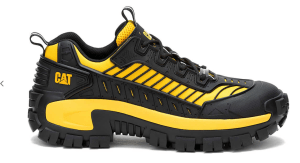
Sometimes, it’s nice to have a lighter, more mobile work shoe when a full-size boot isn’t necessary. The Caterpillar Invader Mecha Composite Toe Work Shoe ($145) stands out by blending the durability and safety features of work boots with a lower-profile design.
The Tech: Built with a composite toe, this shoe protects against impact and compression without the added weight of traditional steel toes. This makes it an excellent choice for those who need a lightweight yet protective option for their work environments.
What We Like: Comfort is a key highlight of the Invader Mecha. Its cushioned insole and shock-absorbing midsole work together to minimize foot fatigue, even during long hours on hard surfaces. We appreciated the comfort of a shoe on workdays when a full boot wasn’t required. This shoe also offers versatility and traction. The slip-resistant outsole provides grip on a variety of surfaces, reducing the risk of slips and falls. Additionally, the shoe’s design incorporates features like reinforced toe caps and durable stitching, ensuring longevity and resilience in harsh working conditions.
What We Don’t: The moisture-wicking lining kept our feet dry. However, we did notice our feet heating up — when we were actively working outside, we found that the shoe wasn’t as breathable as we would have liked.
Should You Buy It? While some users might find the Invader Mecha Composite Toe’s appearance a bit more casual compared to traditional work boots, its blend of functionality and comfort makes it a solid choice for those seeking reliable low-top work footwear.
BRUNT Workwear Sullivan 6-Inch Waterproof Comp Toe

Specifications
Pros & Cons
Pros
- Adjustable insole width
- Lightweight
- Waterproof
- Slip and high-heat-resistant
Cons
- Adjustable width feature can be tricky to get right
- Heel feels a little loose
Bottom Line: This boot’s burly leather upper and switchable insole design make it a versatile option. The heel construction also promotes safety, but the cup can feel a tad loose.
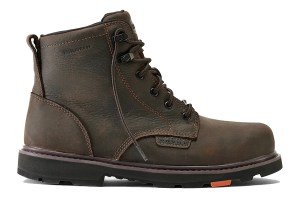
BRUNT Workwear might not be as well-known in this space as other brands on our list, but it’s made quite a name for itself in both workwear and footwear. The Sullivan 6-Inch Waterproof Comp Toe ($160) is a comfortable, versatile work boot that’s designed to be worn while you’re cutting down trees, repairing roofs, and doing general construction work.
The Tech: As is customary with BRUNT, the Sullivan comes in one width that can be converted down from EE to D using a proprietary insole system. This feature comes in handy as the weather changes from summer to fall, when we want to wear thicker, warmer socks. However, if you’re someone who falls between widths, you may need to forgo this feature altogether and get an insole or orthotic that works for you.
What We Like: The Sullivan is made with full-grain leather and has a waterproof membrane. The upper is also barnyard-resistant, meaning it can withstand oleic acid, urea, sodium chloride, and ammonium hydroxide. These chemicals are known to break down leather, lacing, and stitching and are corrosive to metals. The outsole on the Sullivan is both slip-resistant and high-heat-resistant up to 572 degrees. It also sports a 90-degree heel, making it safer and easier for climbing ladders and scaffolding, and for maintaining your balance on uneven terrain. In testing, we were beyond pleased with how comfortable this boot felt on day one. By day ninety, it still looked relatively new and was just as pleasant to wear.
What We Don’t: If you remove the insole to accommodate thicker socks, the Sullivan’s heel cup becomes a bit loose. We had to crank down on the laces to make sure we didn’t ruin our heels.
Should You Buy It? The Sullivan 6-Inch Waterproof Comp Toe is a well-rounded boot that will serve you nicely for a variety of jobs. Make sure you like how the heel feels with and without the insole, though.
Carhartt Waterproof 6-Inch Moc Steel Toe Wedge

Specifications
Pros & Cons
Pros
- Relatively fashionable
- Durable
- Waterproof
- Breathable
Cons
- Long break-in period
- Lugs are not aggressive
Bottom Line: While it wouldn’t look out of place at a social gathering or a night on the town, this boot has the chops to keep your feet from harm, as well as keep them dry.
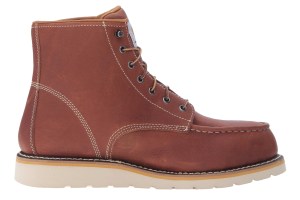
The Carhartt Waterproof 6-Inch Moc Steel Toe Wedge ($185) offers top-notch safety and is a testament to Carhartt’s commitment to quality. Crafted from oil-tanned leather, with a steel toe and a dual-density rubber outsole with Goodyear welt construction, this boot is not only waterproof and durable but also a stylish addition to your work kit.
The Tech: The wedge design adds over an inch in height but always feels stable. The extra-cushioned tongue provides protection and helps relieve pressure when the laces need to be locked down tight. The 6” Moc’s laces are long, round, and a little stiff; they tend to come untied at first and, like the shoe, have a bit of a break-in period. The lugs are not aggressive and are best used indoors or outside on flat terrain where extra grip is not needed. This boot includes a Storm Defender waterproof membrane that keeps moisture out while allowing sweaty feet to breathe. FastDry technology lining wicks away sweat and keeps your feet dry.
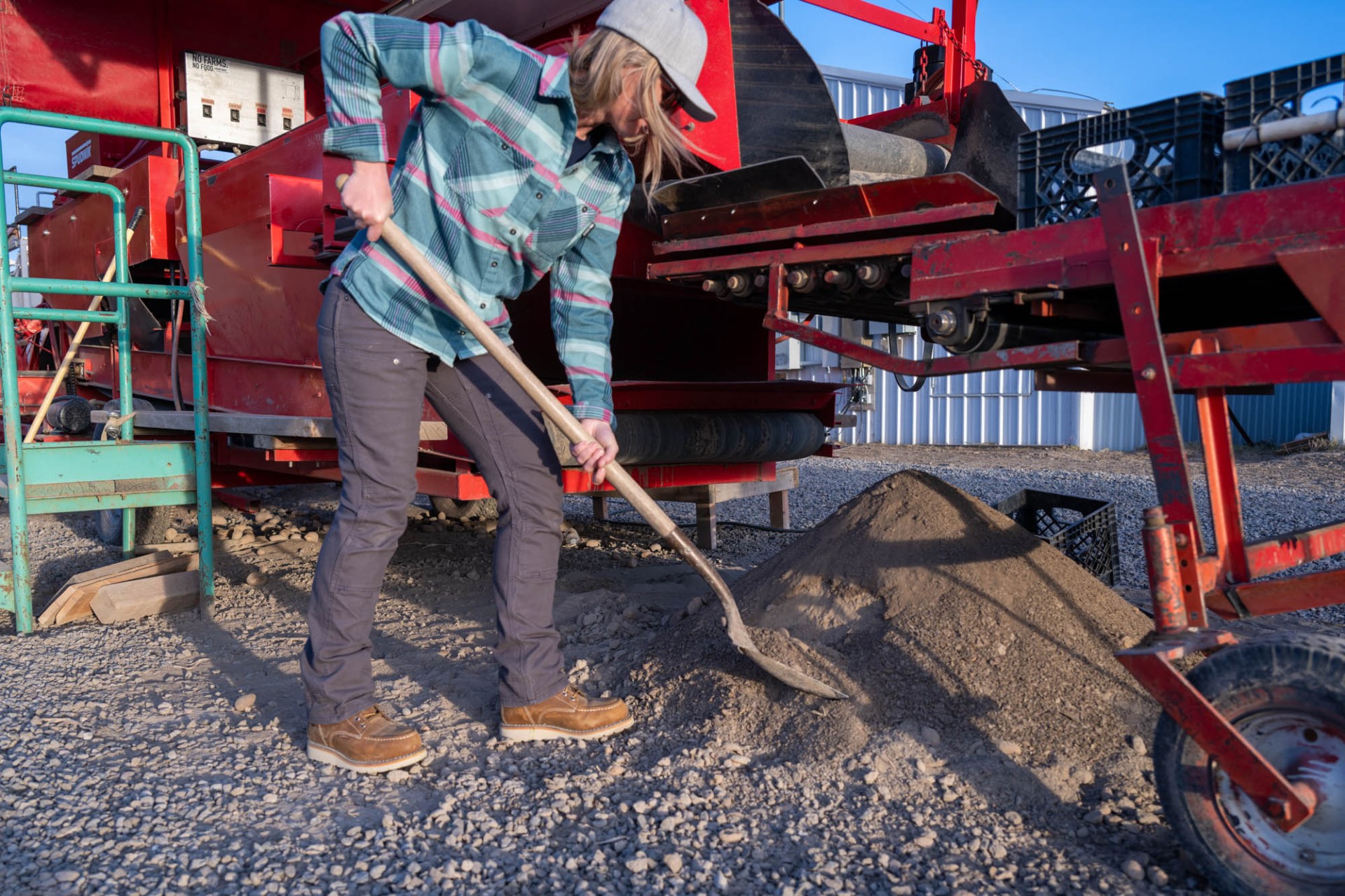
What We Like: During testing for this boot, we were on our feet all day shipping out seed potatoes, which included a mix of manual labor and standing next to a conveyor belt. The 6” Moc did a good job keeping the dust out and our feet dry. It’s the most comfortable for climbing in and out of tall trucks, but over time, the leather continues to soften. The sole is stiff, and the outsole offers oil- and slip-resistant lugs.
What We Don’t: This boot requires a break-in period to provide optimal comfort. If you’re planning to wear it for long workdays, be sure to allow for the initial adjustment.
Should You Buy It? The Waterproof 6-Inch Moc Steel Toe Wedge is a reliable choice for those looking for a fairly chic steel toe boot, especially for indoor use.
Wolverine ReForce EnergyBound Heavy Duty 6-Inch CarbonMax

Specifications
Pros & Cons
Pros
- Short break-in time
- Durable
- Slip-resistant outsole
Cons
- Runs large
- Doesn't breathe well
Bottom Line: With a good mixture of comfort and sturdiness, this boot ditches a steel toe in favor of a composite build that keeps it light and roomy.
The Wolverine ReForce EnergyBound Heavy Duty 6″ CarbonMax ($185) is a smart choice for workers seeking a blend of comfort, protection, and durability. The combination of CarbonMax toe technology for lightweight safety, an EnergyBound midsole for ample cushioning, and rugged construction makes this boot well-suited for demanding jobs.
The Tech: The ReForce has Wolverine’s CarbonMax safety toe technology, made of lightweight carbon fiber to protect against impact and compression hazards. The six-inch shaft provides ankle support with minimal restriction and a bit of height that’s beneficial for walking through worksites on rainy days. The boot is also equipped with slip-resistant rubber lugs, which worked well while we were working outdoors during a rainy spring in the Colorado Rockies. The grip allowed us to remain confident in our steps while transitioning from muddy ground to a concrete floor workspace.
What We Like: We wore the ReForce indoors, while navigating construction sites, and working in adverse weather conditions, and it delivered. We appreciated the lightness of the composite toe and the short break-in period. Its fit is slightly roomier than that of boots with traditional steel toes, which can be beneficial for those with wider feet or those who prefer a bit more wiggle room.
What We Don’t: This boot is not the most breathable, and our feet got hot while working long days outside mid-summer.
Should You Buy It? We recommend the ReForce EnergyBound Heavy Duty 6″ CarbonMax for those who prioritize comfort and safety, but who don’t necessarily need a steel-toed boot and want to keep the bill under $200.
Kodiak McKinney Chelsea

Specifications
Pros & Cons
Pros
- Comfortable
- Looks nice
- More work-capable than most other Chelsea-style boots
Cons
- Runs large
- Not ideal for wet conditions or deep snow
Bottom Line: This is a boot that can easily switch from casual wear to no-nonsense work mode. It’s stylish, with a lightly protective build that doesn’t feel overbuilt.
The pull-on Chelsea boot is one of our favorite boot styles. It fits over the foot with ease and comes off quickly after a long day at work. The Kodiak McKinney Chelsea ($180) is an interpretation of the form through the lens of the work boot, and it successfully melds ease of use with functionality.
The Tech: All seams on this 6-inch boot are double-stitched, which locks down the high-stress points. The composite safety toe fits unobtrusively inside. Its protective design is light and provides full coverage for the first four toes (the pinky toe sits just outside the toe box). While the McKinney’s silhouette is slightly stouter than a non-safety-toe boot, its Chelsea styling hides the bulk well. This boot runs about a size too large — we recommend buying a full size down from your normal size.
What We Like: The McKinney has a chunky, chevron-shaped tread. The traction is blocky, but the spacing is tight and prone to collecting debris. A 1.5cm heel gives the boot a middle-of-the-line lift that, in our minds, splits the difference between what we look for in an indoor and an outdoor boot, making it a good all-rounder. It’s capable considering its casual vibes, though we like the Blundstone #172 even more thanks to its dual pull-tabs and steel toe.
What We Don’t: The leather on the McKinney Chelsea is waterproof. Unfortunately, the elastic stretch panels are not. Step into anything deeper than 4 inches, and your feet will get wet. We also wish the boots had a front pull-on strap to pair with the back.
Should You Buy It? As a quiver-of-one boot that you can wear around town before heading straight to work — or vice versa — the McKinney Chelsea is a good choice for anyone looking to simplify their wardrobe.
Kenetrek Hardscrabble ST

Specifications
Pros & Cons
Pros
- Excellent ankle support
- Ideal for mud, snow, and loose outdoor surfaces
- Durable
Cons
- Exorbitantly expensive
- Requires some break-in
Bottom Line: This hybrid design holds appeal as both a super-rugged hiking boot and a steel-toe work boot. It grants excellent traction and a stable platform.
The Kenetrek Hardscrabble ST ($485) is a crossover boot built to withstand tough conditions. Whether you’re hiking, hunting, or working in demanding environments, it offers solid footing.
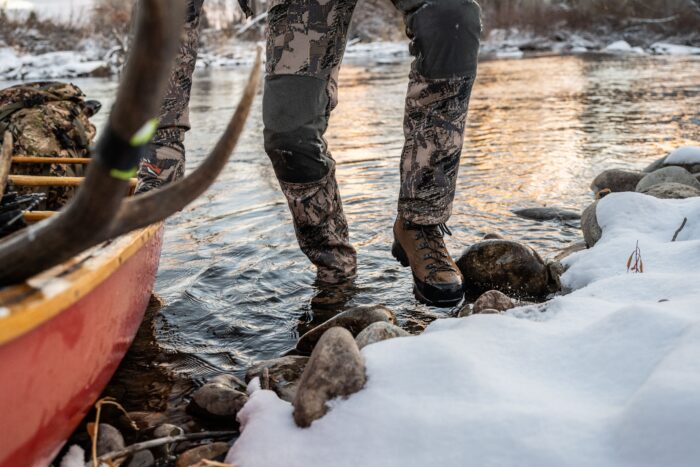
The Tech: The Hardscrabble ST has double and triple stitching in high-wear areas, 2.8mm thick full-grain leather uppers, and 7mm nylon midsoles for extra support. There are no seams down the tongue for abrasion resistance and to beef up its waterproofing. The Windtex’s waterproofing is outstanding, keeping your feet dry even in wet and muddy conditions. The waterproofing saved us from an uncomfortable paddle as we packed out an elk in a canoe during wintery weather.
What We Like: At 7 inches tall, this boot provides excellent ankle support, crucial for navigating uneven or rocky landscapes. The K-Talon outsole and protective rubber sole guard gave us confidence on slippery or loose surfaces. When you transition into work mode, the steel toe protects your feet. While there might be a brief break-in period, the long-term reliability and comfort make it a solid investment for outdoor enthusiasts and professionals alike.
What We Don’t: This burly leather boot requires a break-in period. Don’t go hiking long miles in it until you do so.
Should You Buy It? The Kenetrek Hardscrabble ST boots are an excellent choice for individuals who demand performance and durability in challenging outdoor environments.
Danner Vicious

Specifications
Pros & Cons
Pros
- Comfortable
- Minimal break-in required
- Effective waterproofing
- Hikes decently
Cons
- On the pricey side
Bottom Line: With a hiking-friendly design that includes work-friendly protection, this boot demonstrates capability on the trail and on the job.
The Danner Vicious ($240) is comfortable right out of the box and a top-tier option for those in need of reliable, durable work footwear that can also handle trail duties. The combination of comfort, traction, and waterproofing makes it versatile for a variety of activities and environments.
The Tech: The dual-density EVA midsole provides comfort on those extra-long workdays or when carrying heavy loads. It’s a relatively lightweight work boot, but that doesn’t mean it isn’t built to be used. The full-grain leather upper, Vibram outsole, and composite toe option make it durable and ready to put in a shift. The Vicious comes in many different height and build options, so make sure you choose the right one for you.
What We Like: This boot has a waterproof GORE-TEX liner, which we put to the test by packing out an elk with several creek and snow crossings. Our feet stayed dry, and we appreciated the heel cup and wide toe box. Our feet didn’t slip inside the boot, and we never had any blisters. The 90-degree heel adds more lugs and grooves to help maintain balance on uneven terrain but has a low enough profile that transitions from shop to outdoor work easily. That came in handy when we wore the same boots for standing on a concrete floor to process the elk.
What We Don’t: This boot is on the expensive side for a model that doesn’t quite match the bomber builds of peers like Danner’s own Steel Yard.
Should You Buy It? Despite a relatively high price point, the long-term durability and performance of the hiking-capable Vicious make it well worth the investment.
Best Work Boots Comparison Chart

Timberland PRO Boondock 6-Inch Waterproof Comp-Toe Work Boot |
Caterpillar Second Shift Steel Toe Work Boot |
Thorogood American Heritage 6-Inch Moc Toe |
Danner Steel Yard |
Wolverine DuraShocks SR Icon 6-Inch CarbonMax |
Muck Arctic Pro Steel Toe Boot |
Blundstone Work Series #172 |
Caterpillar Invader Mecha Composite Toe Work Shoe |
BRUNT Workwear Sullivan 6-Inch Waterproof Comp Toe |
Carhartt Waterproof 6-Inch Moc Steel Toe Wedge |
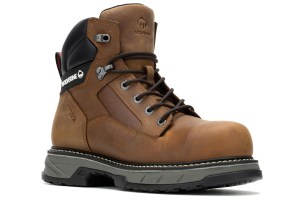
Wolverine ReForce EnergyBound Heavy Duty 6-Inch CarbonMax |
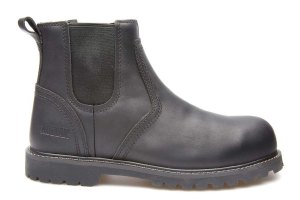
Kodiak McKinney Chelsea |
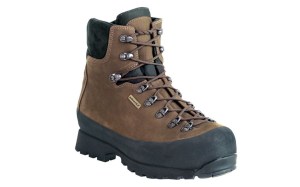
Kenetrek Hardscrabble ST |
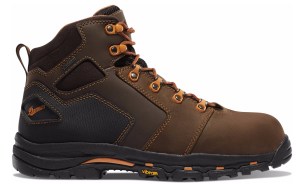
Danner Vicious |
|
|---|---|---|---|---|---|---|---|---|---|---|---|---|---|---|
|
Compare |
|
|
|
|
|
|
|
|
|
|
|
|
|
|
|
Price |
$230 |
$125 |
$265 |
$150 |
$175 |
$195 |
$225 |
$145 |
$160 |
$185 |
$185 |
$180 |
$485 |
$240 |
|
Toe protection |
Composite |
Steel |
None |
Steel, with metatarsal guard |
Composite |
Steel |
Steel |
Composite |
Composite |
Steel |
Composite |
Composite |
Steel |
Composite (other options available) |
|
Waterproof |
Yes |
Yes |
No |
No |
Yes |
Yes |
Leather upper is, elastic ankle panels are not |
Yes |
Yes |
Yes |
Yes |
Leather upper is, elastic ankles panels are not |
Yes |
Yes |
|
Safety features |
F2412-11, F2413-11, F2892-11 |
ASTM F2413-18 |
Electric shock-resisting soles and heels capable of withstanding 18,000 V |
ASTM F2413-18, I/75, C/75, Mt/75, EH |
ASTM F2413-18, M/I/C, EH rated, ASTM F3445-21 SR |
F2413-11, M I/75 C/75, EH |
ASTM F2413-18, M I/C EH |
ASTM F2413-18 |
ASTM F2413-18 |
ASTM F2413-18 EH |
ASTM F2413-18 M/I/C EH |
F2413 I/75 C/75 EH PR |
ASTM F2412-11 and F2413-11 impact, I/C EH |
ASTM F2413-24 I/C EH |
|
Weight per boot |
2 lbs. 3.2 oz. |
2 lbs. 2.5 oz. (size 12) |
1 lb. 12 oz. (size 12) |
2 lbs. 4 oz. (size 12) |
1 lb 11.7 oz. (size 9) |
2 lbs. 3.2 oz. (size 12) |
1 lb. 4.8 oz. |
1 lb. 1.8 oz. (size 12) |
1 lb. 14 oz. (size 9) |
1 lb. 11.7 oz. (size 8) |
1 lb. 14.1 oz. |
2 lbs. (size 12) |
1 lb. 14.4 oz. |
1 lb. 8 oz. |
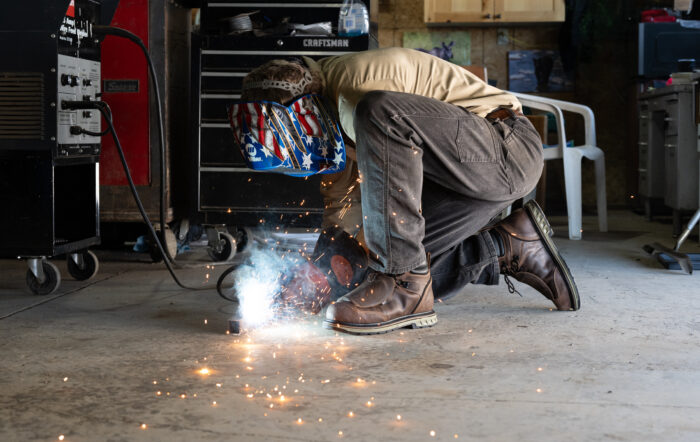
How We Tested the Best Work Boots
Our Expert Testers
This guide is brought to you by three lead testers, all of whom are intimately familiar with job-site hazards and requirements.
Contributor Constance Mahoney grew up on a cattle ranch in Montana and is no stranger to long days on her feet in all weather conditions. She understands the importance of having the right boot for the job and considers work boots just as important as the tools she uses.
Contributor Nick LeFort started his career as a teen selling work boots for one of the largest workwear retailers in New England. He eventually ended up working in environments that required work boots to keep him safe and comfortable during long days on his feet. LeFort has been known to wear work boots out on the trail when he’s hiking.
Gear tester Taylor Roby has been working in the trades for 20 years and is on-site five days a week. He is also trained in biomechanics, gait, and orthotics, giving him a unique perspective on how work boots should support, fit, and flex.
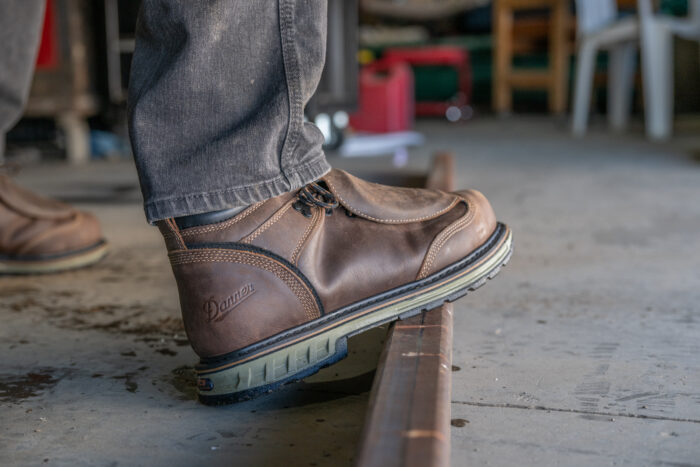
Our Testing Process & Grounds
We don’t shy away from manual work — especially when testing boots. Most of us either work blue-collar jobs, have worked them, or push our limits with laborious tasks in our free time. The GearJunkie crew is used to being on its feet for hours in all kinds of weather and working conditions.
When testing work boots, we wear them on-site while performing real work, not just in controlled environments. While using them in our daily lives, we pay close attention to their protection, stability, comfort, and other features that every working man and woman needs while taking on physical jobs.
Work boots account for almost one-third of all footwear sold in North America. The category comprises a wide variety of designs, with different heights, silhouettes, and forms of protection for your feet. We tested a mix of designs that reflect the market and provide readers with plenty of options to pick from to suit their individual needs.
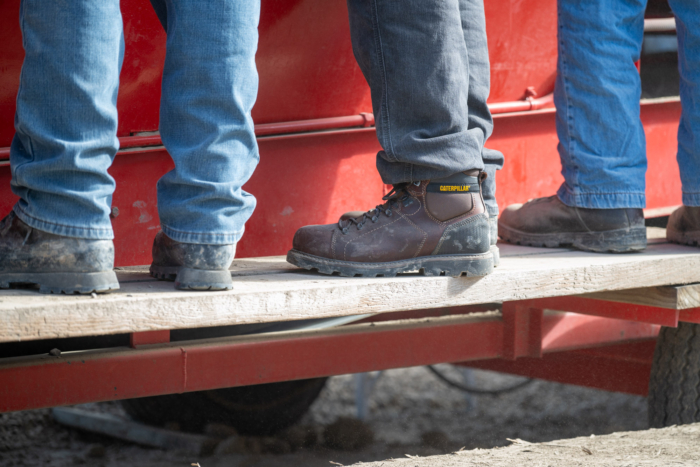
Buyer’s Guide: How to Choose the Best Work Boots
Hiking in Work Boots
Some of the boots in our selection are versatile enough to hike in, and some of us do. However, if you’re looking to get into the woods after you’ve clocked out, check out any of our other guides for further inspiration, like our list of the best hiking boots, best hiking shoes, and best hunting boots.
Boots that aren’t made to certain standards or are ill-fitting can be more than uncomfortable — they can be dangerous. That is why it is so important for us to list all of the safety ratings for the boots in this guide.
Soles
Of course, a work boot should protect your feet, but the unsung task of the work boot is to enable you to work hour after hour, day after day.
If the boot isn’t working, your legs, hips, back, and neck will compensate and eventually take the brunt (and do so with less grace). Above all else, a work boot’s task is to address stress at the ground level. A comfortable boot is arguably a safer boot. You’ll be more sure-footed and focused on the task at hand in a comfortable boot.
The outsole is where the rubber meets the road. Riding over the cushiony midsole and in direct contact with the ground, the outsole is about grip and protection.
Many boots use special formulas of urethane compounds that strike a balance of flexibility, durability, and increased traction on slick surfaces. If you work in shops where oils occasionally spill on the floor, look for shoes that specifically indicate oil and slip resistance. The best of the best are certified to meet SRC slip-resistance standards.
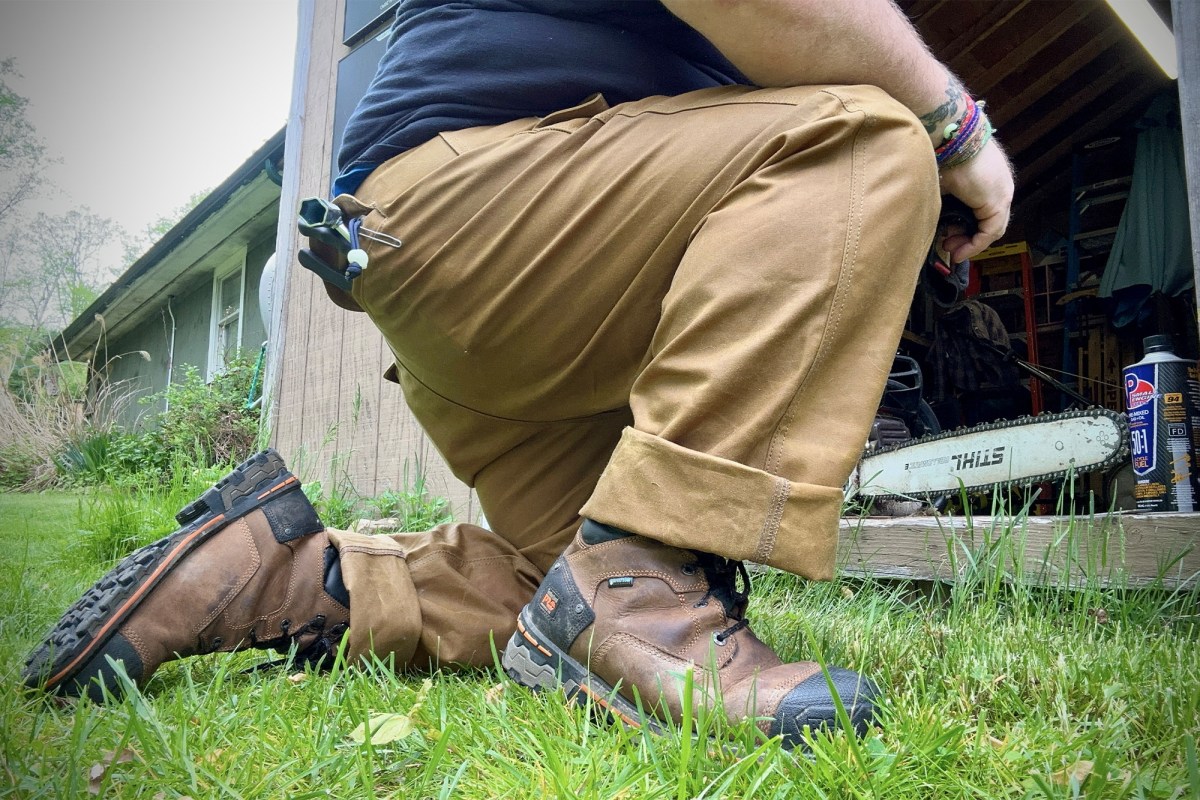
For standing all day on concrete, we prefer the simple wedge-shaped sole. Unlike a heeled boot, the sole has full contact with the ground. This helps absorb the shock with every step and disperses forces equally across the sole. A full-contact outsole also adds a little extra traction and, hence, is often a preferred sole for those working on slick surfaces.
When you think of the wedge sole, you immediately think of the classic moc-toe boot. We listed Thorogood’s American Heritage 6-inch Moc Toe as our preferred soft-toe boot. But if your shoes are resoleable, a wedge sole can be added to any work boot regardless of the toe type.
If you’re standing all day on cement, like working the floor at Costco, a wedge-shaped sole should be on your list. Or, if your work brings you outside, look for a hiker-like tread that provides more traction in dirt and mud.
Sitting opposite the wedge sole is the heeled boot. The raised cowboy-style heel shifts your center of gravity slightly forward. These boots can be extremely durable and stable. But that gap between the heel and under the ball of the foot doesn’t give the foot full contact with the ground.
Because of this, they can feel a little squirrelly on slick ground. But they seat well with climbing spurs and have added ankle stability while climbing. Hence, you’ll often find taller heels on logger-style boots.
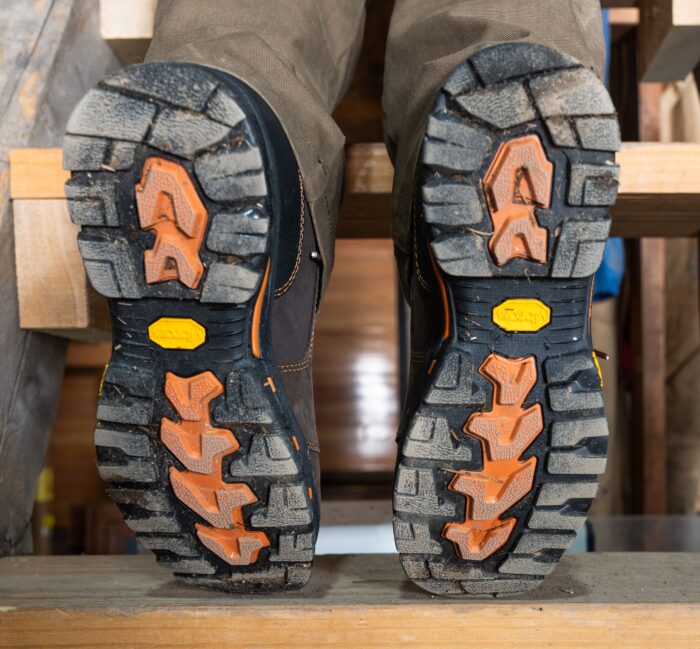
Soles can be cemented or welted to the boot. Cemented boots are lighter, more flexible, and arguably more comfortable out of the box. But once the sole wears out, shoes with cemented outsoles are irreparable.
A Goodyear welt can be resoled several times, increasing the life of your purchase. The outsole welt is sewn to the bottom of the shoe, enabling boots to be sewn and re-sewn multiple times. The shoe won’t be as comfortable underfoot as a boot cemented to an EVA midsole, but the durability and support are reasonable trade-offs. Over time, slipping into a Goodyear-welted boot will feel wonderfully comfortable.
Need more support? Consider an aftermarket insole. Available in a variety of thicknesses and cushion levels, Superfeet orthotics add a touch of personalized support to your boot. We particularly recommend an aftermarket insole for boots that lack a midsole.
Weatherproof
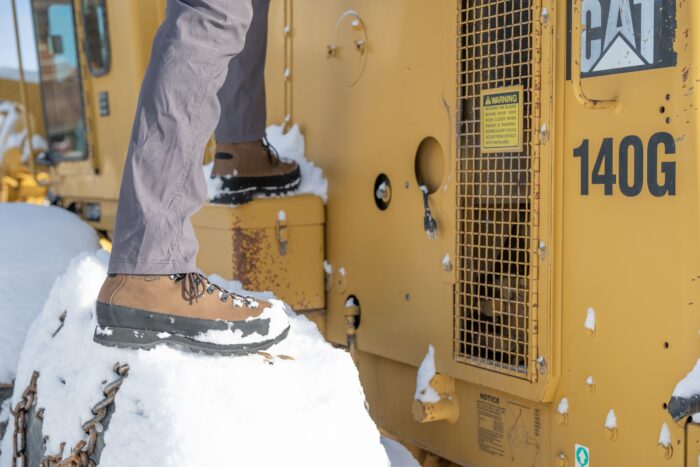
Dry feet are warm feet. If you’re working in truly wet conditions — like pulling crab pots off the Aleutian Islands — look for 100% waterproof boots. If it’s both wet and cold, upgrade to a thicker neoprene shell like Muck Boot’s fleece-lined Arctic Pro. It’s both 100% waterproof and rated down to -60 degrees F.
Other boots use waterproof leather. In addition to waterproof leather, Timberland’s PRO Boondock and Kenetrek Hardscrabble ST boots add a waterproof-breathable membrane to keep moisture out. These membranes allow boots to be both waterproof and breathable.
Insulation
Cold-weather boots include a thermal footbed and insulation in the shaft. The insulation is listed in the fabric’s weight per yard in grams. The higher the gram count, the warmer the boot is.
For cold job sites, we recommend boots with no less than 200 grams of insulation in the liner (with 400 grams the preferred winter standard). Muck Boot’s Arctic Pro has a fat neoprene outer lined with fleece.
If winter work boots have a safety toe, look for boots with insulation around the cap (or composite cap). This reduces the conductive effects of heat transfer from the toes to the safety toe.
High-vis accents are also great, especially if your work starts and ends in the dark or if you’re working roadside.
Toe Protection
When he was younger, our lead tester’s dad worked on a farm that still plowed the fields with steel-wheeled tractors. Long story short, he now has nine toes. The importance of protective boots can’t be overlooked.
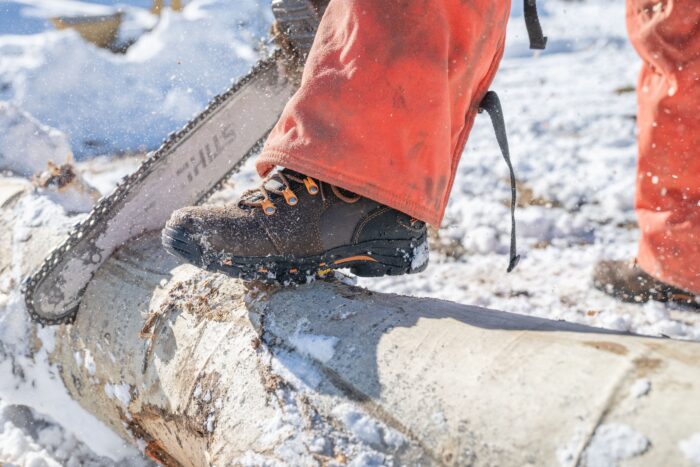
Safety boots are boots that have a protective cap that covers the phalanges (your actual toes). The cap resists compression, puncture, and impact forces.
Steel toe versus safety toe: What’s the difference? All steel-toe boots are considered safety-toe boots. Safety-toe boots are available in composites, alloys, Kevlar, and hard plastics. Steel is more durable and is considered the gold standard on many job sites. But they can conduct cold, heat, and electricity. The Caterpillar (CAT) Second Shift Steel Toe is a great budget-friendly option.
Composites still meet the compression and impact safety standards, but they may only be able to sustain one of these impacts. On the flip side, composite-toe boots are lighter and won’t conduct currents. If you are looking for an office boot with a composite toe, check out the Kodiak McKinney Chelsea.
Nineteen of the foot’s 26 bones sit under the tongue and vamp of a shoe. The five bones that connect the toes to the ankle and form the arch of the foot are your metatarsals. Some boots like the Danner Steel Yard come with an additional protective “met-guard” that lies over the laces, protecting the metatarsals.
ASTM Safety Standards
Protection is what elevates a boot from a supportive hiker to an industry heavy-hitter. Standards provide confidence in the boot’s ability to perform under specific stressors.
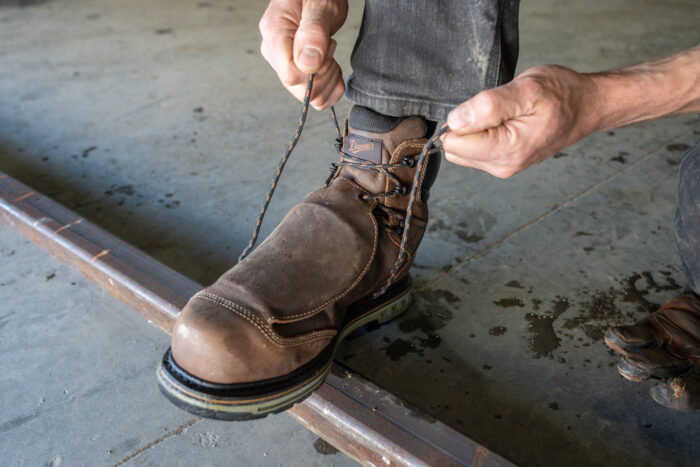
If you poke around work boots enough, you’ll likely come across safety ratings set by the American Society for Testing and Materials (ASTM). These are international standards that identify the minimal requirements for protective footwear on the job site. They rate everything from viral penetration to puncture resistance to compression ratings.
ASTM-F2413 standards rate boots specifically for compression, impact, metatarsal, conductive properties, electrical hazards, static dissipation, and puncture. Here are some typical ASTM abbreviations:
- I for Impact
- C for Compression
- Mt for Metatarsal
- Cd for Conductive
- EH for Electrical Hazard
- SD for Static Dissipating
- PR for Puncture Resistant
- CS Chain Saw cut resistance
- DI for Dielectric insulation — insulation from circuits or conductors
Each is followed by a number. To find how your prospective boot rates, the ASTM standards are outlined in four lines:
- Line 1: Compliance and year
- Line 2: Gender/impact/compression/metatarsal resistance
- Line 3-4: Specific hazards the boot protects against
So if we interpret the Timberland Boondock, we get the following:
- ASTM F2413-11: Complies with the performance requirement of F2413, issued in 2011
- M/I/75C/75: A men’s boot that complies with the impact and compression requirements of a 50-pound weight dropped from 18 inches, delivering 75 foot-pounds of force on the toe, and can endure 2,500 pounds of rolling force over the toe
- EH: Outsole is made from non-conductive materials that are shock-resistant
Buying Your Work Boots
Which boot is best for you? If you’re puttering around the house on weekends, choose a comfortable boot with appropriate protection for your daily tasks.
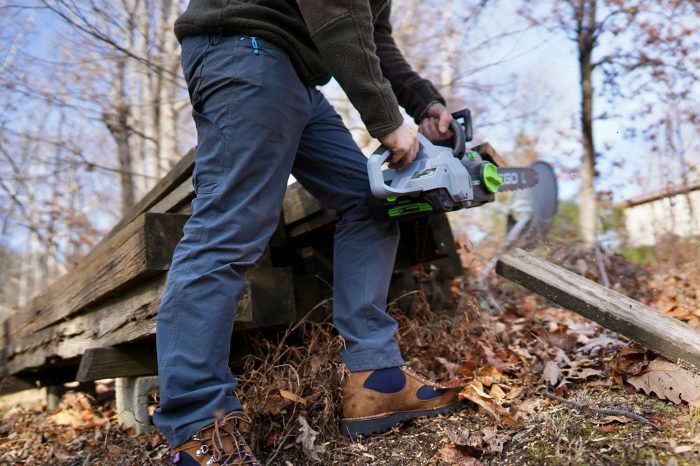
Unless you’re Clark Griswold, you probably don’t need a heavy-duty, steel-toe boot to hang Christmas lights. You’d be better served with a comfortable, supportive boot with traction like the Danner Vicious. If you want something more stylish that pairs well with suites and shop work, look at Thorogood’s American Heritage 6-Inch Moc Toe. However, if you’re splitting wood or mowing the lawn, it’s not a bad idea to consider a safety toe for protection.
Many jobs will explicitly share which footwear meets required ASTM standards before you can step foot on the site. Neglecting to follow them can incur large fines from OSHA. Getting injured while deciding not to wear protective boots on the job can affect your workmen’s comp and insurance. If you’re unsure, ask your boss what standards your boots need to comply with.
You can buy any of these boots online. And some manufacturers, like White’s, will only build a boot off of your mailed measurements. But for most boots, it’s best to try them on at a local shop. A boot’s last can be different than your street shoe. A shop can measure your feet and ensure you’re stepping into a proper-fitting boot.
Try boots on at the end of the day, preferably after work. Your feet swell over a day’s work, and trying on shoes after your shift will provide a better gauge of a proper fit.
When you try on ski boots, you bring ski socks. The same goes for work boots. Bring a pair of socks you intend to wear with the boots. Better yet, buy yourself a new pair of socks; they wear out quicker than you think. Plus, nobody wants to try on shoes with socks pulled from the shop’s community bin.
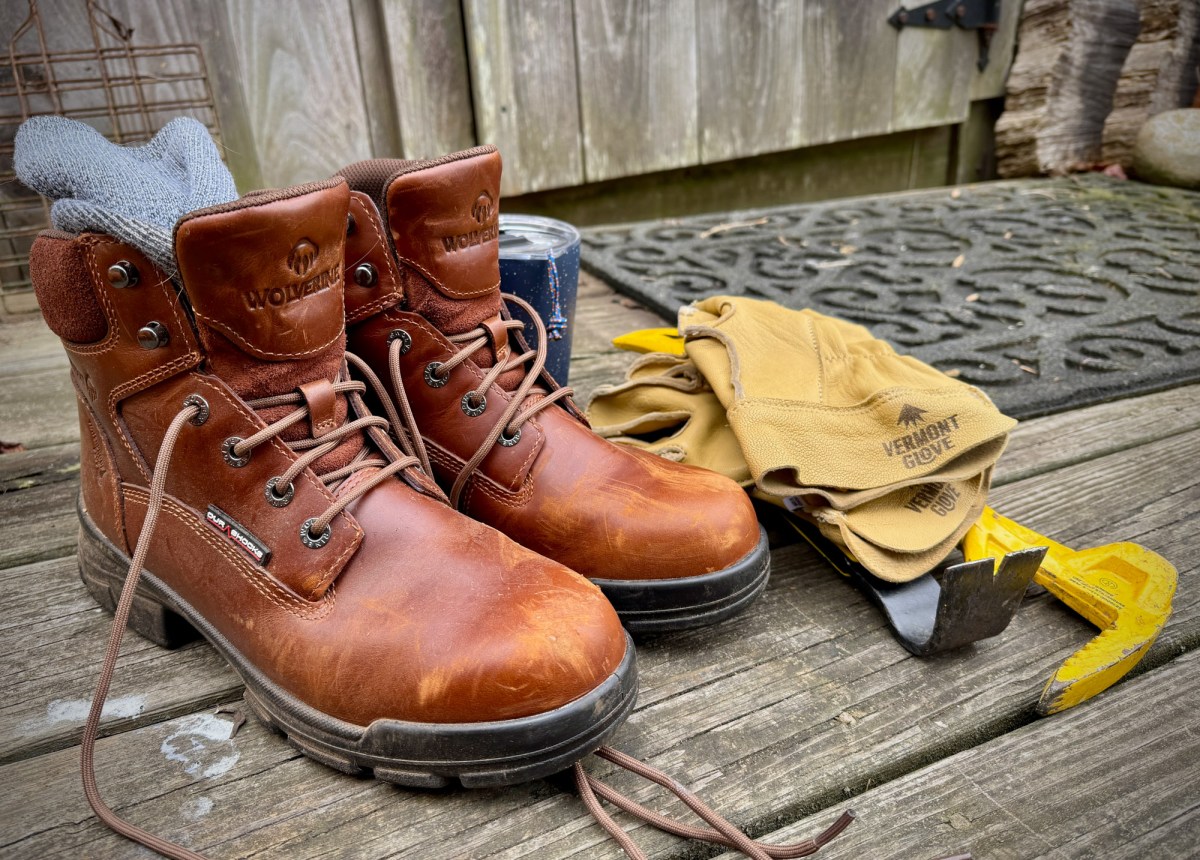
Take care of your boots. Invest in a good horsehair brush to regularly dust off dirt and grime. Clean your boots with warm water. Leather is like your skin and needs moisturizing. Condition your leather boots after every wash.
Your boots are tools, so periodically check them for wear and tear. Treat the safety toe like a helmet. If a composite toe has taken a hit, it’s probably best to retire the boots. If the boot has a Goodyear welt, uneven wear on the sole’s heel, or any splitting from the boot, it’s a good indication it’s time to resole.
Hiking in Work Boots
Some of the boots in our selection are versatile enough to hike in, and some of us do. However, if you’re looking to get into the woods after you’ve clocked out, check out any of our other guides for further inspiration, like our list of the best hiking boots, best hiking shoes, and best hunting boots.
Price & Value
Work boots are your first line of defense in a work setting – whether it’s in a factory, on the job site, or in your backyard. They face the most abuse from the environment they are being used in as well as weather conditions in general. For these reasons, you want to make sure you invest in the right boot for you that will stand the test of time.
Budget
There’s always a negative connotation surrounding budget work boots. The fact of the matter is that there are quality work boots in the budget category, but they may not meet all of the standards that you need for your job. However, if you’re looking for a good boot for the backyard or workshop, you can save yourself some money.
At $125, the Caterpillar Second Shift work boots are a great steel-toe boot for the price. They’re made from full-grain leather, feature an EH-rated steel toe, and have the added benefit of a resistant outsole. For those of you who don’t need a steel toe and are looking to save a few bucks, the Second Shift is also available in a soft-toe model.
Mid-tier
When considering a mid-tier level work boot, plan on paying between $150-200. These are boots that are generally made from longer-lasting materials and typically meet all of the required ASTM standards a work boot needs to be used in a hard-working environment. The Muck Arctic Pro Steel Toe Boot was designed to keep you comfortable, dry, warm, and supported for hours. At $195, this boot is actually a bargain, considering what it has to offer.
Premium
In the world of work boots, premium boots meet or exceed everything that you would expect from a mid-tier boot but may have certain features that elevate their price and categorization. One example would be the Thorogood American Heritage 6-inch Moc Toe. These boots are American-made, which impacts their cost. Another example of a premium work boot would be one designed for harsh environments.
On this list, our top pick, the Timberland PRO Boondock 6-inch Comp Toe ($230), would be categorized as “premium”. Contributor Nick LeFort swears by these boots and has gotten upwards of two years of hard use out of a pair. This level of comfort, quality, and reliability has made him buy two more pairs over the years.
Frequently Asked Questions
We found that the BOGS Bedrock II 6″ WP is the most comfortable work boot on the market for most foot shapes. However, if possible, go to a store after your shift is done and try on different boots to see what feels more comfortable to you.
The best work boot you can buy will be the one that matches the safety ratings you need and one that you can wear repeatedly for hours on end. Everyone’s specifics will differ, but the Timberland PRO Boondock 6-inch Comp Toe and the Danner Steel Yard were two of the best overall boots we tested.
A MOC toe is a style of boot that has a seam running around the top edge of the toe. The Thorogood American Heritage 6-inch moc toe is a prime example of this.
Work boots that hurt your feet generally do not provide the correct support, or they do not fit correctly. Finding the correct boots for your feet is important, and generally, the more money you spend on a work boot, the more comfort and support you will get. Follow our buyer’s guide above to help make a comfortable choice.
Everyone’s feet are different, so finding the correct boot for your feet is important. Here are some tips to lead you to the right boot when you go out boot shopping. If you need more info on how to choose the right boot, check out GearJunkie’s boot-buying tips.
- Decide what features you are looking for to help guide you to a specific style of boot. Some examples of boot features are as follows: waterproof, steel or safety toe, electrical shock-resistant, slip-on versus lace-up, boot height, etc.
- Test the boots for length and width. Not every company sizes its boots the same. Some are longer or shorter, and boot width can vary significantly, especially when it comes to safety/steel-toe boots. We have found discrepancies of up to a full boot size between different brands we tried, so you can’t always rely on the size that’s on the tag. Make sure to try them on before buying them, or if ordering online, make sure you can return them if the fit is incorrect.
- Make sure that the boots flex well and in the right location. Boots should flex at the ball of your foot, not at your arch. If the boot flexes too far back it will lead to foot fatigue due to lack of support. Looking for boots that say they have a “shank“ can help, as this adds support and only allows the boot to flex where it should flex.
- Make sure that the laces hold your foot in place. If you cannot get the boot to the correct tightness, it will allow your foot to move too much, causing blistering or irritation.
- Wear the same socks you wear on the job while trying on boots. Wool/synthetic blends will keep your feet more comfortable than cotton during a long workday.
Try on boots at the end of the workday. Your feet change shape throughout the day so trying on boots at the end of the day when your feet have swollen, widened, and flattened will allow for a much better fit that won’t have your feet hurting at the end of a long day.
The Best Work Pants of 2026
Read the full article here
22 Comments
Uranium names keep pushing higher—supply still tight into 2026.
Uranium names keep pushing higher—supply still tight into 2026.
Good point. Watching costs and grades closely.
Production mix shifting toward Tactical & Survival might help margins if metals stay firm.
Silver leverage is strong here; beta cuts both ways though.
Good point. Watching costs and grades closely.
I like the balance sheet here—less leverage than peers.
Good point. Watching costs and grades closely.
Good point. Watching costs and grades closely.
Interesting update on The Best Work Boots of 2026. Curious how the grades will trend next quarter.
I like the balance sheet here—less leverage than peers.
Exploration results look promising, but permitting will be the key risk.
The cost guidance is better than expected. If they deliver, the stock could rerate.
Production mix shifting toward Tactical & Survival might help margins if metals stay firm.
Good point. Watching costs and grades closely.
Good point. Watching costs and grades closely.
I like the balance sheet here—less leverage than peers.
Good point. Watching costs and grades closely.
Production mix shifting toward Tactical & Survival might help margins if metals stay firm.
Good point. Watching costs and grades closely.
Exploration results look promising, but permitting will be the key risk.
Good point. Watching costs and grades closely.