

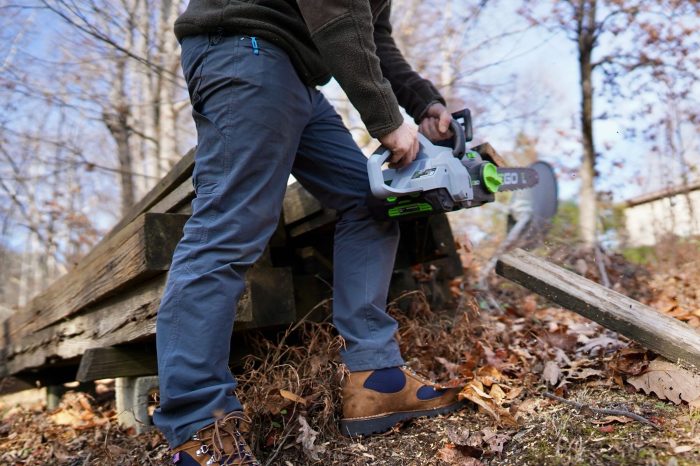
Kneeling for hours in grubby conditions, fending off sparks and debris, stashing greasy tools — work pants have to deal with a lot. Whether you are a professional tradesman or DIY fiend paying your dues on personal projects, narrowing in on the best work pants for your needs is important for efficiency and safety on the job site.
Our team, led by GearJunkie Editor in Chief Sean McCoy, has collectively put hundreds of different work pants through the wringer on tasks around homesteads, construction jobs, and everyday yard work. For this edition of the guide, McCoy and tester Nick LeFort got down and dirty in six new pairs and compared them to the category’s best.
When the dust (and wood chips, and mud) settled, the rugged-yet-comfortable 1620 Workwear Double Knee Utility Pant 2.0 remained our favorite pair. The Carhartt Slim Tapered Rugged Flex Duck Double-Front Dungaree emerged as our favorite budget work pant, with reliable performance for less than a Benjamin.
Editor’s Note: We updated this guide on November 16, 2026, with scannable review formats and a new product comparison chart, in addition to current availability and prices.
The Best Work Pants of 2026
Best Overall Work Pants
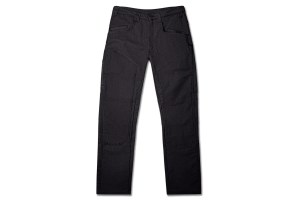
1620 Workwear Double Knee Utility Pant 2.0
Best Budget Work Pants
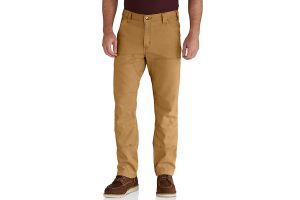
Carhartt Slim Tapered Rugged Flex Duck Double-Front Dungaree
Best Work Pants for Tree Work
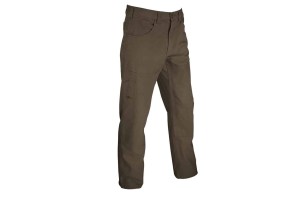
Arborwear Original Tree Climbers’ Pants
Best Work Pants for Mobility
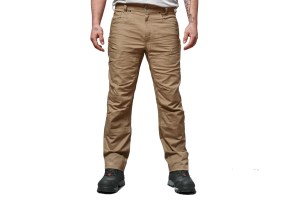
BRUNT Workwear Torra HD Pant
Most Stylish Work Pants
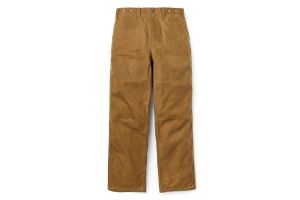
Filson Oil Finish Single Tin Cloth Pants
Best Work Pants for Hot Environments
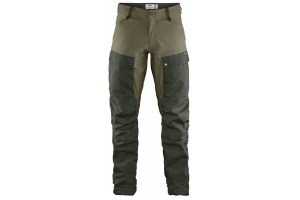
Fjällräven Keb Trousers
Best Work Jeans
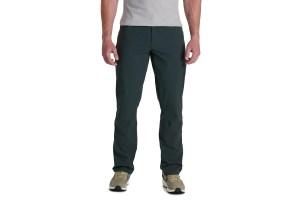
KÜHL Resistor Jean
See more picks
1620 Workwear Double Knee Utility Pant 2.0
-

-
(Photo/Nick LeFort)


Specifications
Pros & Cons
Pros
- Stellar pocket layout
- Tough NYCO fabric
- Fit is dialed
- Meets No Melt No Drip standards
Cons
- Expensive
Bottom Line: Tough, well-fitting, and with more than enough storage, these pants hit the workwear trifecta. They’re worth grabbing if you can make peace with their price tag.
For the second test in a row, the 1620 Workwear Double Knee Utility Pant 2.0 ($228) reigned supreme. We love these pants and wear them nearly every day. Not only is the cut an excellent fit, but the pocket configuration matches our EDC needs — whether we’re working in the field, guiding, sitting at a desk, or traveling.
The Tech: The Double Knee Utility Pant 2.0 has a modern, regular cut and a true-to-size waist and inseam. All 1620 pants have innovative pocket designs, including slanted rear pockets for easy access (especially while you’re sitting), and they keep a clip knife in place. They also have easy-reach-in and high-volume front hand-pocket bags. These pants are tough: The NYCO fabric meets NFPA 1975 No Melt No Drip thermal standards and has been lab-tested. It’s 10 times more abrasion-resistant and dries twice as fast as 100% cotton canvas of a similar weight and construction. Those factors keep the Double Knee Utility Pant 2.0 out of landfills for as long as possible.
What We Like: In the left-hand pocket is a traditional coin pocket that is too deep to dig coins out of — but we discovered we like using it for credit card-sized items. (The website describes it as a watch pocket, which we find amusingly nostalgic.) The utility pocket layout on the Double Knee Utility Pant 2.0 is robust: It has back yoke welt pockets, dual watch pockets, a right-side phone pocket, a right zip key pocket, a military-spec shank button, dual hammer loops, and a left-leg utility pocket. And if you find yourself wanting another pair, the brand has a buyback and resell program called Patina, which is a great place to find discounts.
What We Don’t: The only argument against 1620 is that its pants are expensive. However, since its launch in 2016, prices have come down, and the brand occasionally puts items on sale. It’s also worth keeping in mind that buying products from 1620 means paying for American-made fabrics (North Carolina) and American labor (designed and sewn in a shop in Massachusetts).
Should You Buy It? The Double Knee Utility Pant 2.0 has once again increased in price since we last reviewed it, but we still think it’s worth the cash. There are few competitors out there that can match its blend of durability, functionality, and feel.
Carhartt Slim Tapered Rugged Flex Duck Double-Front Dungaree
-
-
(Photo/Nick LeFort)
-
(Photo/Nick LeFort)


Specifications
Pros & Cons
Pros
- Comfortable off the shelf
- Durable and flexible Carhartt Duck fabric
- Simple pocket layout
Cons
- Less durable than the unwashed Duck ("Firm Duck")
Bottom Line: Finding functional work pants that are also versatile and reasonably stylish for less than $100 is a win in anybody’s book. We especially like this slim-fit version.
Before you start freaking out about why we went with the slim-fit version of the Carhartt Slim Tapered Rugged Flex Duck Double-Front Dungaree ($75), it’s because they fit better than the Relaxed and Loose fits. That’s important whether you’re working or playing; you need to be able to move around without feeling like your pants are hanging off of you. We also found that the slim cut provided a larger range of motion in all conditions. Don’t worry — the leg opening is still ample enough to go over your favorite work boots.
The Tech: Carhartt has designed go-to work pants for many folks for a long time. Where the brand used to only offer its unwashed Duck material for its double-knee pants, expanding its double-knee lineup to its washed Duck fabric eliminates the break-in period found with the unwashed Duck material, now called “Firm Duck”. We’ll be honest: We miss the rivets synonymous with classic double-knee pants, but it’s a fair trade for the flexibility that 1% spandex provides.
What We Like: We really enjoyed how these pants kept up, even after a week of living and playing in the great outdoors. Even though they have a double-knee design, the Rugged Flex Utility Double Front Pants don’t look overly aggressive and fit right in at the local pub, après work. Dirt and debris easily brush off the tight-weave cotton/duck fabric, and it pairs well with work boots, hiking boots, and even Crocs. Yes, Crocs: Just like these pants, don’t knock ’em until you rock ’em.
What We Don’t: Unlike the 1620 Workwear Double Knee Utility Pant 2.0, the Rugged Flex Utility Doubles do not have any type of water resistance. That may not fly with some folks, but it also helps keep the cost down. However, if you work in wet environments, an easy way to make these pants water-repellent is to treat them with Nikwax TX.Direct Wash-In.
Should You Buy It? These will work for anybody who wants to update their work pants for the modern age. The Rugged Flex Utility Double Front Pants will happily oblige, with a slim cut that doesn’t detract from their performance — it only adds to it.
Arborwear Original Tree Climbers’ Pants

Specifications
Pros & Cons
Pros
- Extremely durable
- Tough knee reinforcements
- Comfortable classic fit
Cons
- Utility pocket on thigh is small and restricting
- Not very stretchy
Bottom Line: We love niche products, and these pants are specifically designed for arborists and others who work with (and in) trees. Be aware that they run a bit snug in the waist.
A reader’s comment on the original version of this guide turned us on to Arborwear, and we opted to check out the product that launched the brand in the late ’90s. The Original Tree Climbers’ Pants ($105), which come in a comfortable, classic fit, are the tough, durable pants one would expect from a brand targeting professionals who climb trees all day long.
The Tech: Without any spandex in the weave, the 12.5-ounce ringspun 100% cotton canvas is a little less forgiving and has one of the tighter 32-inch waistbands in the guide. These pants will be most comfortable for waists that fit them perfectly. For anyone between sizes and sizing down, the pants will be too snug and uncomfortable. Someone a little smaller will feel the pants are a little loose and will need a belt or suspenders. The double-knee reinforcement is stitched straight across the upper thigh from the outseam to the inseam and reaches down to just below the knee. There are no articulated darts or pockets for knee pads.
What We Like: We are confident in the durability of the Tree Climbers’ Pants. They’re as tough as they feel and break in nicely, becoming a little more pliable after some rigorous use and the ensuing wash cycles. The pockets are pretty standard, with a patch-style rear pocket and swooped, horizontal, bag-style hand pockets that feel a little tight. It takes a bit of a push to get our hands in and out of the pockets. But that’s just at the hem — once our hands are in, the pockets are a good depth and are cut to a comfortable volume. For even better storage, go with the 1620 Workwear Double Knee Utility Pant 2.0.
What We Don’t: Our biggest gripe with the Arborwear Original Tree Climbers’ Pants is the minuscule utility pocket on the right thigh. This patch-style pocket is only 3 inches wide with a half-inch opening. Clearly, it’s not designed to hold a phone. Maybe an old clam-shell phone could be wedged in. Instead, many arborists use it to hold a chainsaw scrench or a clip knife for when they’re in the trees while their back pocket is covered by a harness.
Should You Buy It? As the tag says, these pants are well-suited for monkeying around in the canopy, whether for work or play. They’re built to last, provided you get the correct size.
BRUNT Workwear Torra HD Pant

Specifications
Pros & Cons
Pros
- Fantastic balance between durability and flexibility
- Moisture-wicking waistband
- Gusseted crotch for ease of movement
- Double-front design
Cons
- Zipper on the left utility pocket is overkill
- They wrinkle easily
Bottom Line: These deliver a very un-work-pant-like feel that’s matched by work-pant performance. They’re light, impressively mobile, and affordable to boot.
BRUNT Workwear has only been on the scene for a few years, but in that time, the brand has made its presence known in the world of workwear and work boots. Not only is the quality of its products top-notch, but its attention to detail shows how much its designers listened to the needs of the people wearing them. The brand’s Torra HD Pant ($80) exceeded all our expectations for what we thought it could do.
The Tech: Early in testing, these pants proved they were everything they claimed to be. The 8.5-ounce-per-square-yard fabric makes these the lightest option in our guide. What makes that even more impressive is that they are also double-front pants (BRUNT refers to this as a “hidden double layer”). The design starts below the crotch and ends just above the shin, but it doesn’t impact your mobility at all. Previously, the KÜHL Resistor Jean held this spot in the guide, but it was hard to ignore the unmatched balance between durability and mobility of the Torra HD. Both pants have a similar material blend, but the Resistor lacks the double-front benefit.
What We Like: As far as fit and finish are concerned, the Torra HD has been comfortable since day one. Its moisture-wicking waistband is a standout among its desirable features: It increases the pants’ overall breathability, which comes in handy on hot, humid days. The pant legs taper down to keep them from looking baggy and shapeless, but they’re wide enough for work boots. They also have a DWR treatment, which helps them shed water and keeps them from getting weighed down when you’re working in the rain. That’s a bonus in both warm and cold weather.
What We Don’t: While the Torra HD should prove plenty durable in the long run, it can’t match the pure toughness of thicker and heavier pants like the 1620 Workwear Double Knee Utility Pant 2.0 or the Fjällräven Keb Trousers. To be fair, though, both of those cost well over $200.
Should You Buy It? Innovations in materials have proven that work pants don’t need to be heavy and bulky to be effective. We think you’ll enjoy the balanced feel of the Torra HD.
Filson Oil Finish Single Tin Cloth Pants
-
-
(Photo/Nick LeFort)
-
(Photo/Nick LeFort)
-
(Photo/Nick LeFort)


Specifications
Pros & Cons
Pros
- Extremely durable
- Wax finish makes them virtually stain-proof
- Built-in suspender buttons
Cons
- Can stain light-colored clothing from prolonged contact
- Expensive
Bottom Line: These pants have a retro look and a wax treatment that keeps them clean in situations where competitors would stain easily. They’re highly water-resistant, but not the most comfortable.
Who says you can’t look good at work? Also, who says you have to wash your pants at all? The Filson Oil Finish Single Tin Cloth Pants ($199) repudiate both those ideas. That’s because these handsome pants are treated with water-resistant wax that allows dirt, mud, and sauce from that meatball grinder to slide right off the fabric instead of soaking into it. And no, they don’t stink after the long haul.
The Tech: For any of you wondering what “tin cloth” is, it’s just waxed cotton fabric. (We can all agree that “tin cloth” is a much more inspiring name.) These pants look like Teddy Roosevelt may have worn them, and they haven’t changed much in form or function since then. We found the legs to be straight and wide and the pockets to be accommodating.
What We Like: We had a blast wearing these pants in the winter, as not only does the wax block wind, it also makes the Oil Finish Single Tin Cloth awesome snow pants for working and playing outdoors. We spent a few nights before dinner sledding with the kids until our knees felt like they were going to fall off from dragging them up the hill over and over again. But the pants never quit — we remained dry the entire time.
What We Don’t: The caveat to the set-and-forget build is that the waxed fabric is unforgiving. As durable as the Oil Finish Single Tin Cloth Pants are, it takes a while to get them to the point of being considered comfortable at all. But we can tell you that the more you work and play in them, the quicker they break in. For comparison, the 1620 Workwear Double Knee Utility Pant 2.0 is also water-resistant — less so, of course, but also more immediately comfortable.
Should You Buy It? These pants have a distinct look and build, and for $199, you’d better be sure you’re up for what those entail. But it’s obvious that the Oil Finish Single Tin Cloth Pants are superb for negating mess at hectic job sites and staying dry without resorting to a waterproof shell.
Fjällräven Keb Trousers
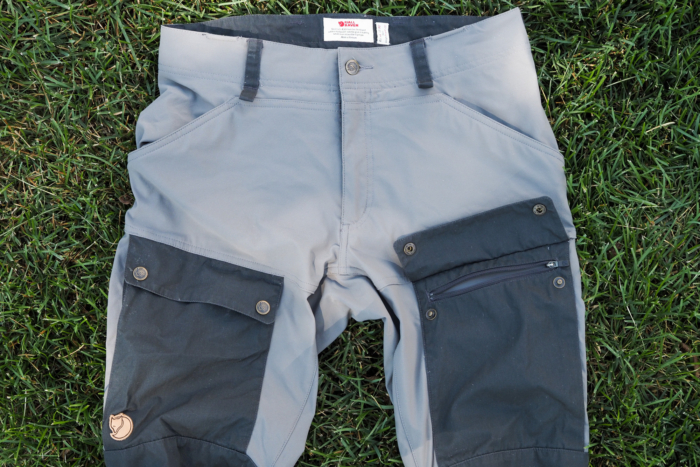
-
-
Fjallraven Keb Trousers after 100 miles of hiking and one wash; (photo/Sean McCoy)
-
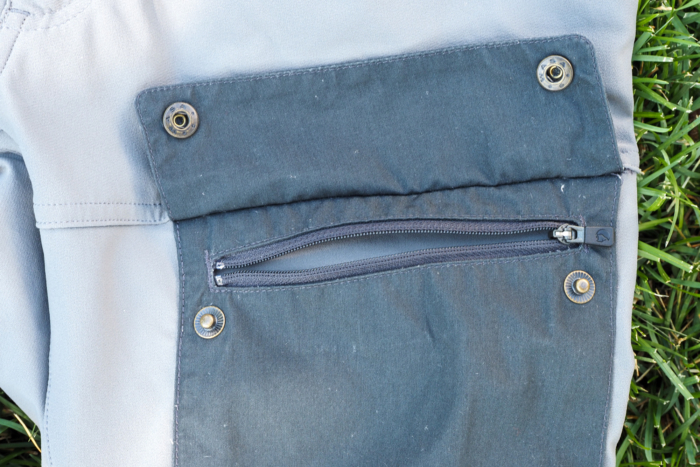
One thigh pocket on the Fjallraven Keb has both a zipper and buttons; (photo/Sean McCoy)

Specifications
Pros & Cons
Pros
- Hip-to-knee and lower leg ventilation zippers
- Reinforced knees with openings for pads
- Extremely durable
- Sustainable build
Cons
- Heavy
- Not the most flexible
- Not the best next-to-skin comfort
- Pricey
Bottom Line: Though technically hiking pants, these will excel at any technical task you put your mind to. They also shrug off significant abuse and keep you cool when the pace picks up.
OK, you caught us. While the legendary Fjällräven Keb Trousers ($250) are technically made for tough hiking, they also double as stellar work pants. We’ve been trotting around in our Kebs for a while now, and use them for much more than trekking. Bucking logs in the backyard, ripping around on our motorcycle, or bushwhacking through briars — there’s not much we don’t do with these versatile, ventilated wonders.
The Tech: The Keb Trousers are constructed of two types of fabric: proprietary waxed G-1000, a durable poly-cotton material, and a stretchy polyamide. G-1000 is used on the front of the legs (up to the upper thigh), the backside, the ankles, and the knees. The reinforced knees also have openings for inserting pads if needed; all the bases are covered. This does introduce a lot of stitching, which contributes to their heft. Despite a large number of potential failure points along the seams, we’ve had no durability issues with the Kebs, and still abuse them as we did on day one.
What We Like: These are some of our favorite pants for jobs that boost our heart rates in hot temps. Think hauling load after load of wood back and forth in a wheelbarrow all day. Thanks to deep hip-to-knee ventilation zippers that run down the outside of the legs, a simple tug exposes your bare legs to fresh air. Need even more A/C? Throw the calf zippers down and expose the lower leg, quickly dumping heat. Organization on the Kebs is pretty basic, with two leg pockets with buttoned flaps and a mesh pocket inside one of them (in addition to two hand pockets). We like the simplicity though, and rarely find ourselves wishing for more. It helps keep them lighter and more mobile.
What We Don’t: The Kebs are the most expensive option in this guide, and spending more than $200 on a pair of work pants is an understandable nonstarter for many. We do think they’re fairly priced, but you can also use the money to get three pairs of Carhartt Slim Tapered Rugged Flex Duck Double-Front Dungarees.
Should You Buy It? For tough, active jobs that require intense movement in hot environments, the Keb Trousers are hard to beat. You won’t have to worry about ripping them, and they regulate temperature better than anything we’ve tested. Is the $250 price tag worth it? If we have any say in the matter — yes.
KÜHL Resistor Jean
-
-
Cutting up wood with a light e-chainsaw while wearing the Kühl Resistor Jeans; (photo/Emily Malone)


Specifications
Pros & Cons
Pros
- Great stretch and mobility
- Solid durability
- Soft next-to-skin feel
- Gusseted crotch for freedom of movement
- Cuff guards at bottom hem
Cons
- No knee reinforcement
- Right drop-in pocket is a bit loose and not very deep
- Thick stitching on hand pockets makes it hard to slide a knife clip in
Bottom Line: These are the most limber work pants we tested, and they add healthy doses of durability and on-skin feel. A few design missteps hold them back.
The KÜHL Resistor Jean ($139) is sleek, stylish, and supremely flexible. For reliable durability with uncompromising mobility, these are the pants to snag. They shine on jobs that require a bit of contortion, or for those who love a snug fit that doesn’t feel constraining. The Resistor boasts a good-looking, slightly tapered fit, but moves with you better than most pants we’ve tried on.
The Tech: The Resistor’s cotton/nylon/spandex blend is battle-ready yet has a soft, smooth texture for next-to-skin comfort. The “jean” element of these pants comes from characteristic denim-style front and back hand pockets with rivets. A discreet drop-in pocket on the left leg stashes a phone, and a generous 3D drop-in pocket decorates the right leg. We use the phone pocket a lot, but the 3D pocket seems too loose and shallow for most things — unless we don’t mind losing them. That one generally goes unused.
What We Like: Whether you’re climbing around rickety scaffolding, high-stepping over bucked-up logs, or simply kneeling down to drive in a screw, these aren’t going to hold you back. We have plenty of pants in our closet with top-shelf flexibility, but few of them also boast bombproof durability. KÜHL’s exclusive performance fabric has unparalleled stretch, with a noticeable rebound that resists bagging out over time. A gusseted crotch and articulated knees also contribute to its peerless mobility.
What We Don’t: There are a few reasons that we chose the BRUNT Torra HD above these as the best work pants for mobility. Cuff guards at the bottom hem help with fraying, but we wish the rear and/or knees were reinforced. (Eschewing that does keep the weight down and boost mobility, though, so we can’t be too picky.) We also noticed that the relatively thick stitching at the lip of the hand pockets makes it a bit more challenging to slide a knife clip over the pocket than on other pants in our rotation.
Should You Buy It? Even though we like the Torra HD a bit more, the Resistor Jeans’ stellar durability and soft, flowy fabric make it a great option for anyone who asks a lot of their pants — and of their stretching routine.
Other Field-Tested Work Pants to Tackle Tough Jobs
These pairs will keep you protected and comfortable shift after shift.
Dickies FLEX Duck Double Knee Pants

Specifications
Pros & Cons
Pros
- Lightweight and comfy fabric
- Durable for the weight
- Roomy but feel fitted
Cons
- Waist is larger than standard sizing
- Outperformed by closest competitors
Bottom Line: These are meat-and-potatoes work pants from a classic workwear brand. They don’t stand out from the crowd, but they do provide good value and decent performance.
Along with Carhartt, Dickies is the brand that’s most synonymous with “work pants.” Its FLEX Duck Double Knee Pants ($50) are classic double-knee work pants that lack the category’s classic bulk and rigidity. Off the shelf, they are supple and well broken in. On the job, they’re durable, comfortable, and ready to take on any task.
The Tech: Though the FLEX Duck Double Knees don’t have any weatherproof treatment, we found that snow, light rain, and dropped liquids rolled off the pants instead of soaking in. That was a nice surprise that kept us dry and working while we cleared snow and persevered through a rainstorm.
What We Like: In testing, we found the pants to be roomy but not baggy. This allowed us to stuff our pockets with socket wrenches, sockets, and screwdrivers, along with a wallet, keys, cell phone, and earbuds. Even fully loaded, they didn’t feel restricted or like they were being pulled down. We were pleasantly surprised, considering the waist was looser than all the other pants we tested in the same size.
What We Don’t: Because the waist is so loose — designed with movement in mind, but a bug as much as it is a feature — you should make sure to pair the FLEX Duck Double Knees with your favorite work-worthy belt.
Should You Buy It? Though we still prefer the Carhartt Slim Tapered Rugged Flex Duck Double-Front Dungarees to these, if you’re looking to save a few dollars or prefer a lighter feel, the Dickies FLEX Duck Double Knees offer a viable alternative.
KÜHL Free Rydr

Specifications
Pros & Cons
Pros
- Just enough elastic for stretch without sacrificing durability
- Reinforced hem and pocket lips
- Comfortable fabric
Cons
- No reinforced knees
Bottom Line: More of a crossover model than a true workwear pair, these are still a decent choice for those who like their everyday pants with a bit more backbone.
The brushed twill exterior of the fabric used on the KÜHL Free Rydr ($109) has a nice hand, and the substantial 10.8-ounce, 98% cotton, 2% spandex fabric feels protective and durable. KÜHL describes these pants as a lean fit, but they feel more like a regular fit to us, with plenty of room for the legs and articulated knees.
The Tech: The Free Rydr is built with only single-knee construction, but it does sport a few other reinforced areas. Those include along the tops of the front and back pockets for clipping a knife or tape measure, as well as on the hem above the heel as scuff guards. The double-knee Carhartt Slim Tapered Rugged Flex Duck Double-Front Dungaree would be a better choice for upping durability.
What We Like: The hand pockets are a good depth and have a moderate amount of volume. The coin pocket is on the right side, not too deep, and easy to reach into with your index finger. The cellphone pocket is on the right side, behind the outseam, with an eighth-inch lip above the pocket to help catch a phone from slipping out while sitting. The back pockets are deeper than usual, at 8 inches (most are 6 inches).
What We Don’t: The swooping horizontal hand pockets are a little tight to reach into, thanks in part to the reinforced layer along the pocket cuff.
Should You Buy It? The Free Rydr aren’t the burliest workwear pants we tested, but they’re much better than your run-of-the-mill khakis. We’d happily press them into light duty and then head to a barbecue directly after.
Work Pants Comparison Chart

1620 Workwear Double Knee Utility Pant 2.0 |
Carhartt Slim Tapered Rugged Flex Duck Double-Front Dungaree |
Arborwear Original Tree Climbers’ Pants |
BRUNT Workwear Torra HD Pant |
Filson Oil Finish Single Tin Cloth Pants |
Fjällräven Keb Trousers |
KÜHL Resistor Jean |
Dickies FLEX Duck Double Knee Pants |
KÜHL Free Rydr |
|
|---|---|---|---|---|---|---|---|---|---|
|
Compare |
|
|
|
|
|
|
|
|
|
|
Price |
$228 |
$75 |
$105 |
$80 |
$199 |
$250 |
$139 |
$50 |
$109 |
|
Fabric |
Cordura stretch NYCO |
12 oz., 99% cotton, 1% spandex Duck |
100% cotton ringspun canvas |
8.5 oz. blend of cotton (70%), nylon (28%), and spandex (2%) |
100% 14 oz. cotton oil finish tin cloth |
Waxed G-1000 (65% recycled polyester, 35% organic cotton) |
XKanvas (65% cotton, 26% nylon, & 9% spandex) |
9 oz. Duck (68% cotton, 30% polyester, 2% Lycra) |
Cotton/spandex Eurotwill |
|
Utility Pockets |
Back welt pockets, dual watch pockets, right phone pocket, right zip key pocket, shank button, dual hammer loops, left leg utility pocket |
Deep front pockets, left and right phone pockets, right utility pocket, right hammer loop, reinforced back pockets, knee pad pockets on front of legs |
Utility pocket on right thigh |
Deep right-side tool pocket, deep left-side zippered pocket, angled back pockets |
Deep front and rear pockets |
2 leg pockets with buttoned flaps, mesh pocket inside one of the leg pockets |
3D drop-in right-side pocket, drop-in left-side phone pocket |
Tool pocket on right thigh |
Side drop-in pocket |
|
Water Resistance |
DWR coating |
No |
None |
DWR coating |
Oil wax finish |
PFC-free wax coating |
DWR coating |
None |
None |
|
Fit |
Regular |
Slim |
Classic |
Regular |
Classic |
Regular |
Regular |
Regular |
Regular |
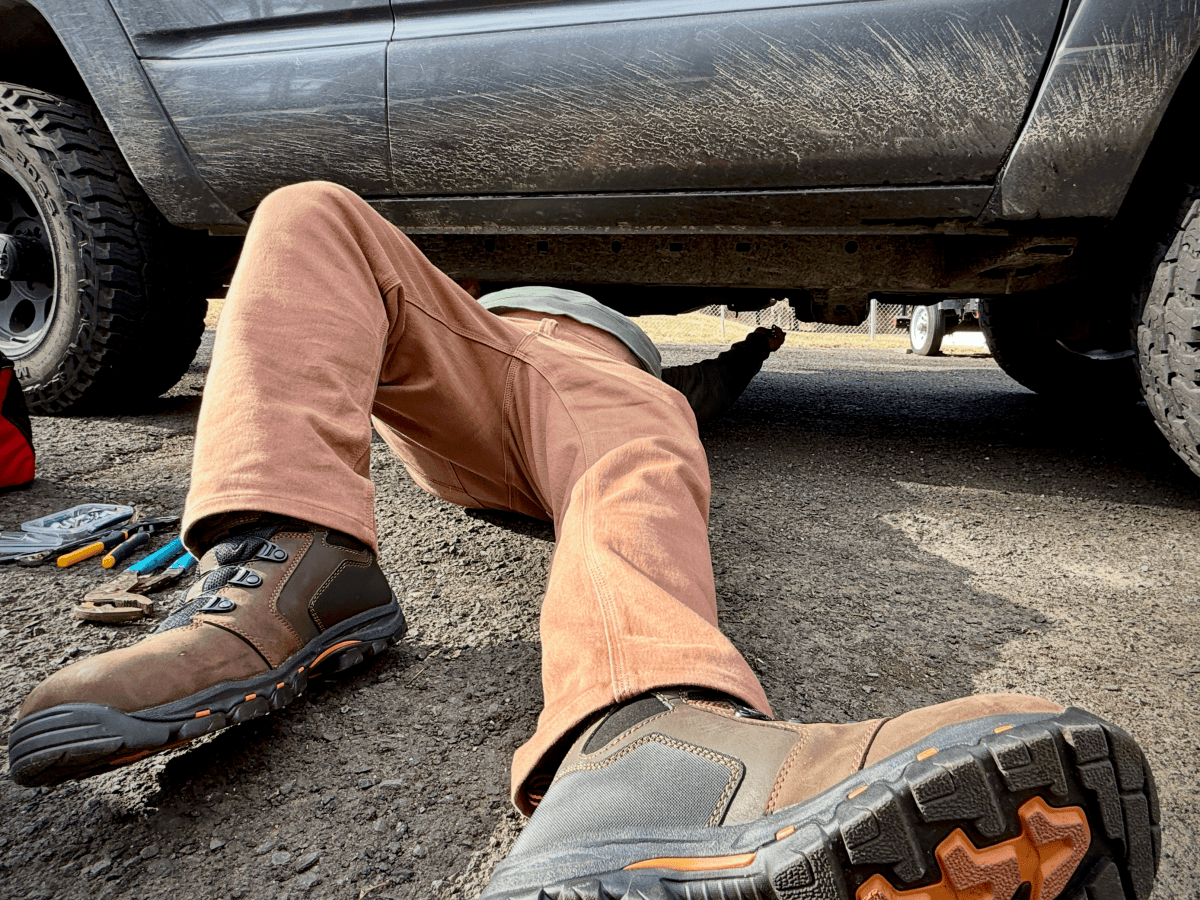
How We Tested the Best Work Pants
Our Expert Testers
GearJunkie Editor in Chief Sean McCoy joined forces with contributors Chris Carter and Nick LeFort to curate the streamlined selection of pants you see today. Each man worked and played in these pants for months to prove their worth.
All three have vast experience across the spectrum of activities that work pants are designed for, from homesteading and construction to auto repair and DIY tinkering. (McCoy, for example, once worked on a farm for a few years.) They know the value of work pants that are functional and durable enough to rise to the task, and what to look for in a standout pair.
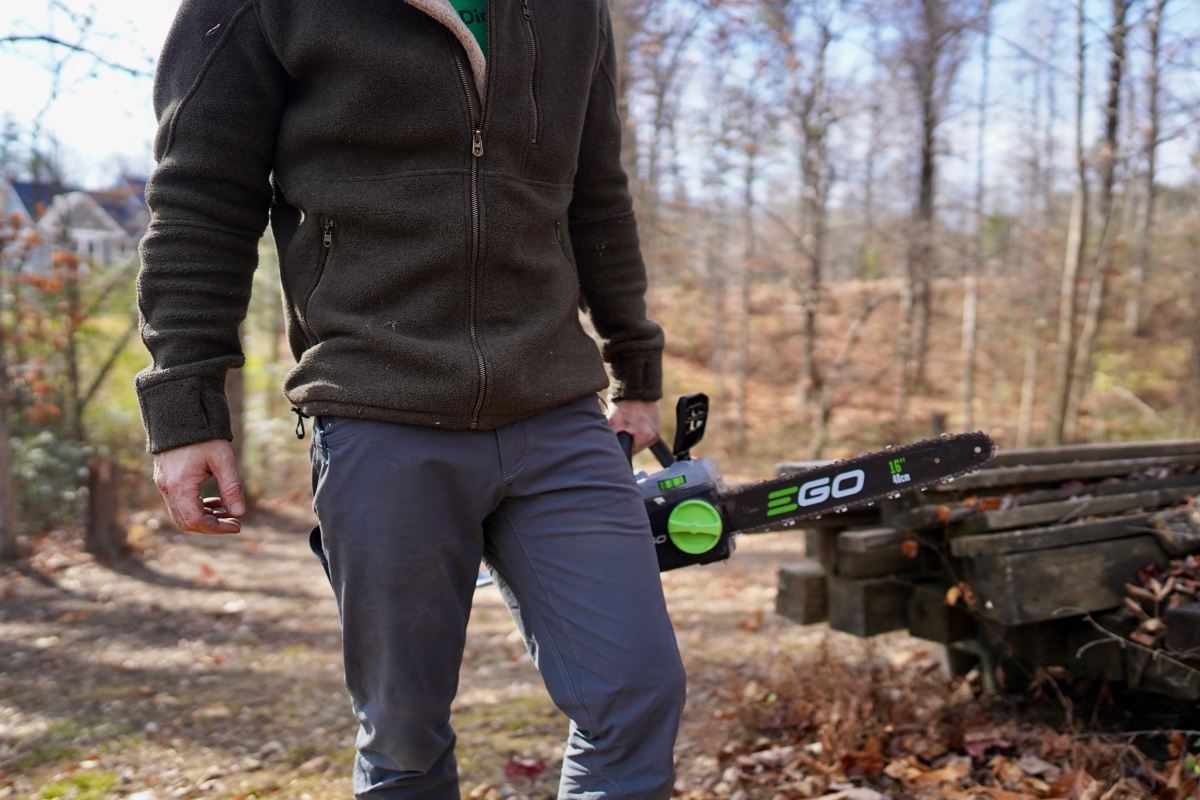
Our Testing Process & Grounds
Work pants are meant to be worn when you’re busting your butt getting physical tasks done at home, on the jobsite, and wherever else laborious effort takes you. Sure, they look great when you’re standing in line at the coffee shop or draining a couple of cold ones after a long day, but they’re built for hard use.
For this test, we bucked logs in the backcountry, chipped away at construction projects, and generally abused a whole slew of work pants to narrow in on the best of the best.
When we find a new pair of pants for our testers to vet, we spend upwards of two to three months working in them. When assessing pants, we consider how well they do hard jobs while protecting our legs, and how comfortable we feel in them. We also consider durability and its relationship to pricing and overall construction.
We know that the work pants podium is competitive and constantly evolving, which is why we update this guide whenever we’ve tested the latest pairs. Our team is perpetually scouring the internet, attending gear shows, and bugging the pros to make sure we test and review the most deserving pants on the market.
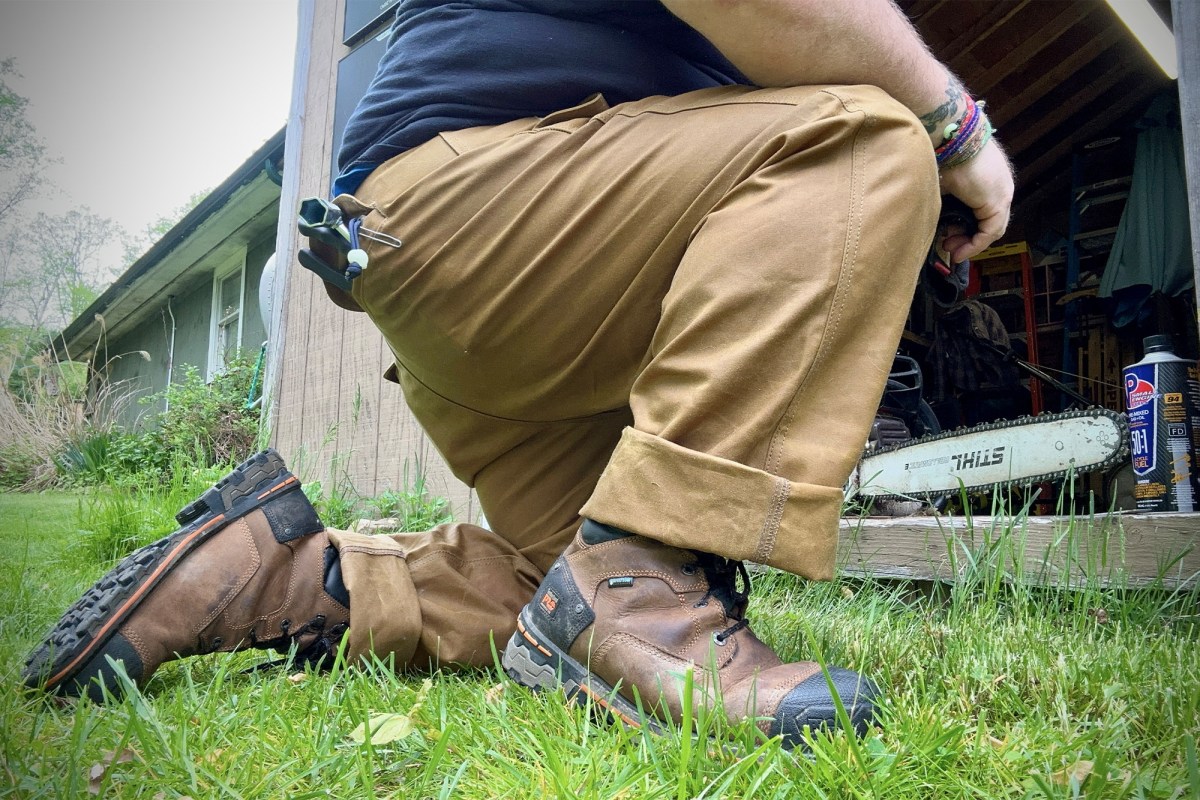
Our Work Pant Rating System
Each work pant in this guide was tested and rated on a scale of 1 to 10 in four categories: Fit, Mobility, Durability, and Value.
- Fit considers the first thing that you notice when you try on a pair of pants. Are slim-fitting pants a good blend of trim and flexible? Do regular-fit pants give you room to breathe? Are they true to size? If a pair of pants fit as expected, it generally received a good rating.
- Mobility looks at how well the pants move with you. We tested each pair’s range of motion by squatting, high-stepping, lunging, and performing our normal workday movements. If the pants allowed us to move freely, they received a better score.
- Durability measures a pant’s toughness. We considered reinforced knees, tough fabric, and build quality. If we saw any fraying or signs of wear during our testing, those pants would get dinged.
- Value can be subjective, but we weighed the cost of a pair of pants against its use and utility. If a pricier pair earned its price tag, it received a better score. Likewise, if less expensive pants fell apart after a few weeks, a low score reflected that.
After compiling those four scores, we gave each pair of pants an Overall Score. That rating is not a simple average of these categories; instead, it reflects our judgment based on the complete user experience. For example, a pair of pants with low durability might rank high for their excellent fit and affordable price.
Buyer’s Guide: How to Choose the Best Work Pants
Like most things out there, work pants come in all shapes and sizes, and there are enough options to make your head spin. Since you’ll be doing more in these pants than just walking or hanging around, it’s important to consider the materials, features, and intended use of work pants before making your selection.
We’ve highlighted a number of our top picks above, but are continually testing more models as they come out and updating our list of favorites. Though brands like Carhartt, 1620, and Arborwear keep showing up in our rotation, there are a lot of brands out there vying for the top slots.
The two key factors in picking the best pair of work pants for you are fit and function. Each brand has its own cut or silhouette. And while we try our best to describe how each of the above pairs of pants fit us, the only way to really know how they fit you is by trying them on.
Additionally, each brand has its own take on fabric. Whether it’s something off the shelf or proprietary to the brand, the amount of different fabrics out there for work pants is pretty impressive. But these different fabrics can change the way pants fit and perform.
When shopping at a store, that’s easy to solve by jumping into the fitting room. But when buying a brand for the first time online, be sure to check out its return policy in case they don’t fit how you like and you need to send them back.
Pro tip: Order a few different sizes in the first batch to avoid a bunch of shipping back and forth. Try them all on and just send back the pairs that don’t fit right.
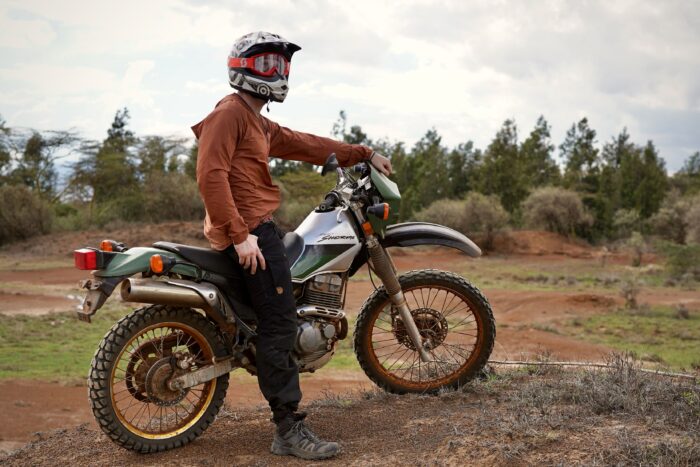
Things to consider are features like articulated knees or a gusseted crotch. These are important depending on how much squatting, kneeling, or climbing you will be doing in the pants. A pair of pants that don’t fit well won’t get worn or will just cause endless frustration.
The second factor is function. Some key features to consider are pocket configuration, reinforced areas (pockets, knees, hemlines, etc.), hammer loops, and the ability to take knee pads. These vary in importance depending on what you will be doing in these pants. Below, we’ll take a look at what makes a good pair of work pants.
The last thing to consider when choosing the right work pants is how they perform when you’re done working. Would be caught dead food shopping in them? How about a night out on the town? Or even an apres work beer? Part of feeling comfortable is looking the part. You’re not always going to run home to change before you start living the leisure part of life.
It’s also worth noting that this guide covers features and materials specific to sturdy work pants, which tend to fit pretty niche purposes. For information on other outdoor pants categories, check out our comprehensive guides on the Best Hiking Pants for Men and the Best Travel Pants for Men.
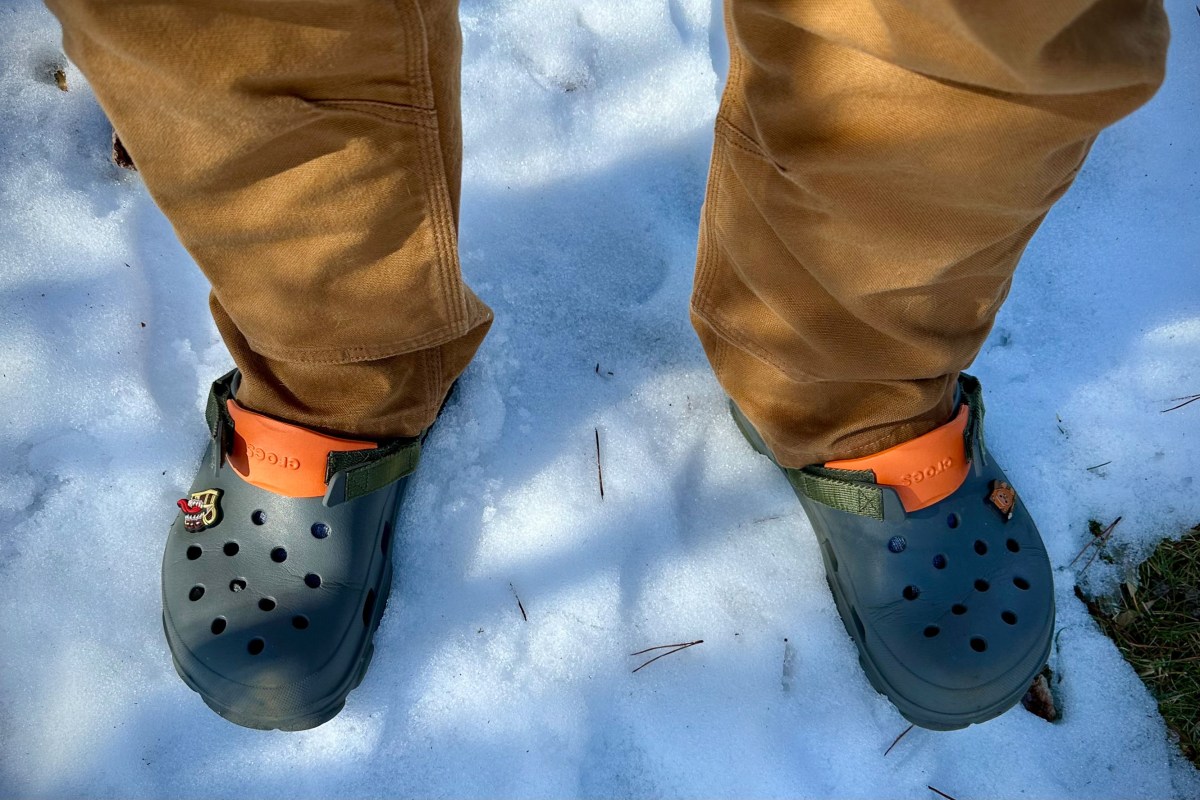
Fit Categories of Work Pants
Work pants, as with other pants, fall into a few different categories that can give you an idea of how they will fit without actually trying them on. Most work pants fall into one of the following categories: relaxed, regular, classic, or slim.
- Relaxed: These are some of the more comfortable-fitting pants, offering roomy fit in the seat, thigh, and ankle. These run on the baggy side, but eschew the stiffness that often accompanies tighter-fitting pants. This boils down to personal preference, but we tend to avoid relaxed fits while we are working, as we don’t want anything to get in our way while making precision cuts or lunging over a pile of lumber. For us, it’s important to find a healthy balance of a tapered form fit with enough stretch to easily move about.
- Regular: These pants strike a healthy balance between relaxed and slim pants. They don’t offer as much room in the seat and thigh but aren’t necessarily form-fitting. These are easy to move in without being too tight. Regular pants often have a straight leg opening, and sit slightly below the waist.
- Classic: The line between regular and classic can sometimes be blurred, but as a general rule classic pants also have a straight leg opening, but run more on the slim side than regular. They can have a flat or pleated front and usually sit at the waist. This is our author’s personal favorite — as long as they have enough flexibility built into the fabric.
- Slim: These pants aren’t necessarily “skinny jeans” status, but do sit much closer and tighter to the leg. The leg openings will still allow you to wear heavy work boots underneath but are much more form-fitting than the other categories. If you can’t stand the baggy look, these are the pants for you.
The type of pants you go with purely depends on personal preference and the type of jobs you plan to be tackling in them.
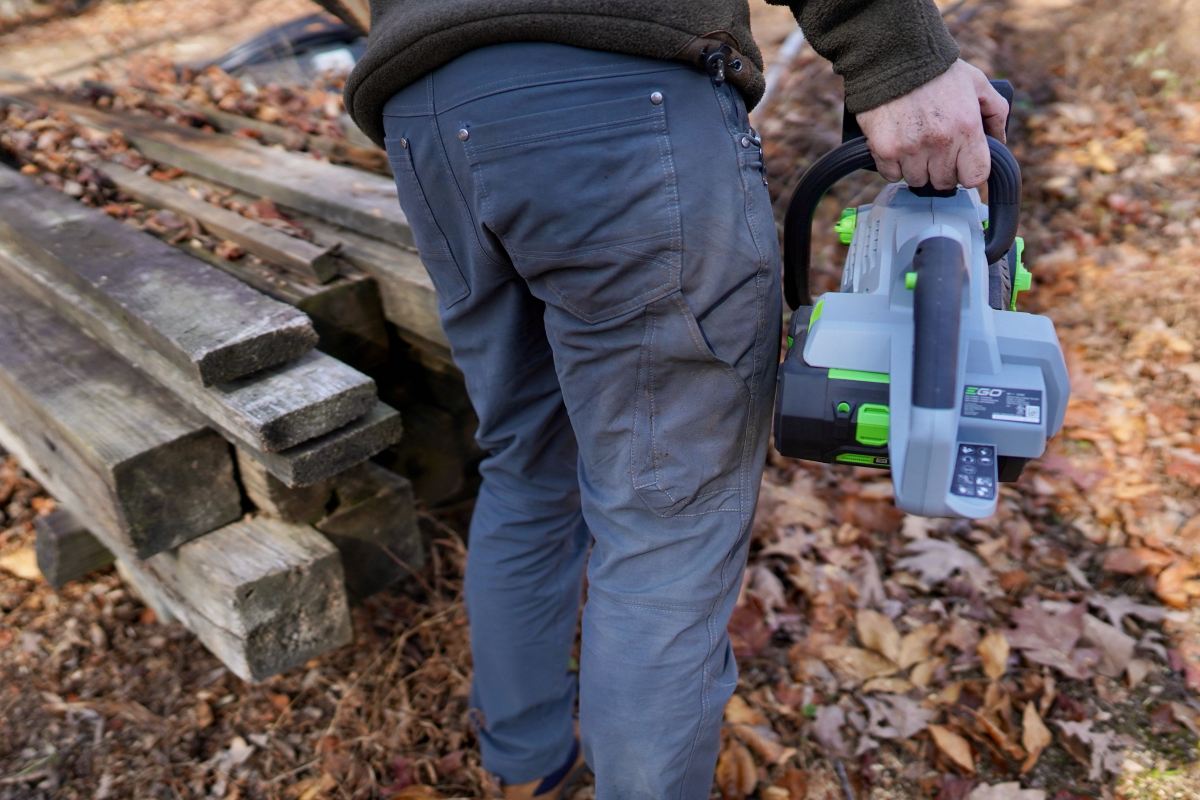
Features of Work Pants
The feature sets on work pants are diverse and job-specific and contribute to their useability. Consider the type of tasks you want to accomplish in your pants and select a feature set accordingly. While it may seem awesome to have a million pockets, loops, and zippers on your pants, these can get in the way if your job requires you to be quick and mobile. Additional features add fail points to the pants and contribute to the overall weight. They can also reduce the ventilating abilities of the pants — so choose with care.
Gusseted Crotch
We are seriously skeptical of work pants if they don’t have these. A gusseted crotch is a diamond-shaped piece of fabric sewn into the crotch area. A gusset eliminates four seams coming together where the legs join, which limits mobility and can be uncomfortable. A gusset also helps disperse stress around the crotch, boosting pants’ durability and making it easier to crouch down or high-step over obstacles.

Articulated Knees
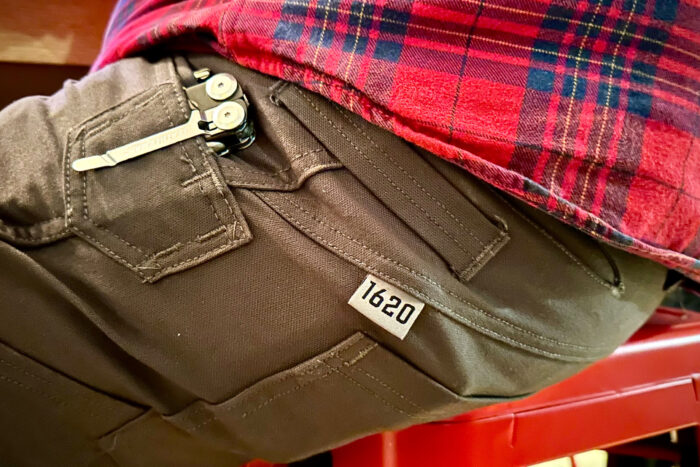
Similar to gusseted crotches, articulated knees provide a bit more flexion in the knee area allowing you to bend and kneel more easily. These come in incredibly handy if you find yourself climbing up and down a ladder or navigating scaffolding at your work site. Articulated knees are created by sewing “darts” — a seamstress term for a simple fold sewn into the pant’s material — into the knees, like in the photo above.
Reinforced Areas
Kneeling for hours on rocky ground, sitting on rough concrete, or rubbing against abrasive surfaces — work pants deal with loads of abuse. It’s not uncommon to see extra patches of thicker fabric sewn over high-use areas like the knees or rear in these stalwart trousers. These afford extra protection for your legs, while also prolonging the life of your pants. Just be aware that reinforcement patches add weight and extra stitching, and can limit the pant’s ventilation.
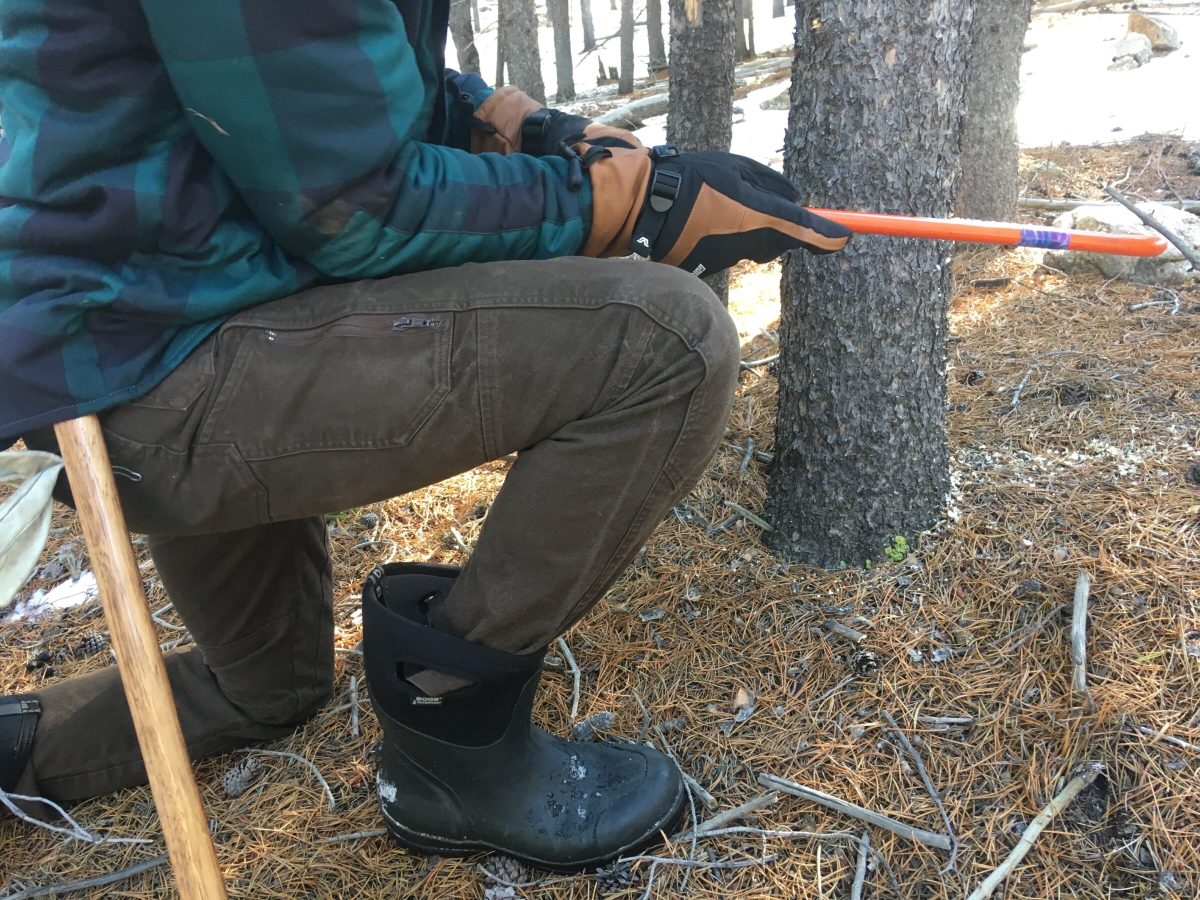
Extra Pockets & Loops
Work pants are often specced out with some seriously sweet accessories, like dedicated phone pockets, zip and cargo pockets, shank buttons, or hammer loops. These can all be used to store EDC items like knives, phones, and multitools, and also allow you to quickly stash tools or materials as they amass mid-job.
We particularly appreciate side drop-in pockets — if they are deep and tight enough — for throwing a handful of nails or screws in if we are going to be standing in one place for a while putting something together. These aren’t often the most secure pockets (unless they are zippered or buckled closed), so it’s best to not keep dangerous materials in them for too long.
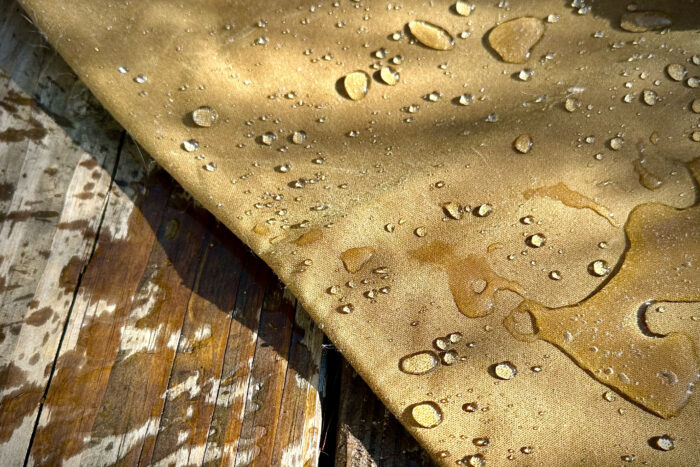
Materials & Durability of Work Pants
Of all the pants in our closet, work pants are the most battle-ready. Reinforcement patches, thick stitching, and expensive materials generally decorate these models, and they are designed to withstand years of torture. These features make work pants great for more than just a job site. We find ourselves grabbing them for backcountry bushwhacks, motorcycle tours, and any activity that would threaten to shred our legs.
Work pants are usually constructed with several different materials, blending fabrics to deliver the highest quality of each material. Here are some of the primary materials used in work pants:
- Cotton/Cotton Duck: Cotton is the most widely used natural fiber in the world today, and most work pants have a certain degree of cotton in them. Cotton is the foundation of other fabrics, such as denim and duck. As we all know, however, cotton has its downsides. Namely, it can shrink, is prone to wrinkling, and dries very slowly if it gets wet. Cotton duck is a tightly woven cotton fabric and is tougher than denim. It is likened to a canvas fabric and is incredibly resistant to softening over time — which is a downfall of denim. It is quite tear-resistant and has even been used to construct things like hammocks and sails.
- Spandex/Lycra: this material has great flexion, but returns to its normal shape and structure. Spandex isn’t used generously in work pants but is an important element in the blends that manufacturers use. You move around a lot in work pants, and there needs to be some give to accommodate all the needs of an active job site. Spandex isn’t particularly durable though. Spandex is frequently added to the waistband of pants to afford more stretch and comfort.
- Cordura: This is a super tough material that is highly tear- and abrasion-resistant. Cordura is often used in reinforcement patches and high-stress areas to prolong the life of pants.
- Polyester: Compared to cotton, polyester is incredibly strong and durable. It dries out much faster than cotton and doesn’t absorb stains quite as easily. Polyester doesn’t breathe as well as cotton, though, and is therefore often mixed with cotton to make a more performative poly/cotton blend.
- Nylon: Though it’s not common as a primary material in work pants, nylon may be used as part of a blend. It may also be used to reinforce areas like the knee, crotch, and cuff. In some cases the nylon featured in work pants may be rip-stop, similar to what is found in rain shells, backpacks, and other items that need to hold up to harsh environments and treatment.
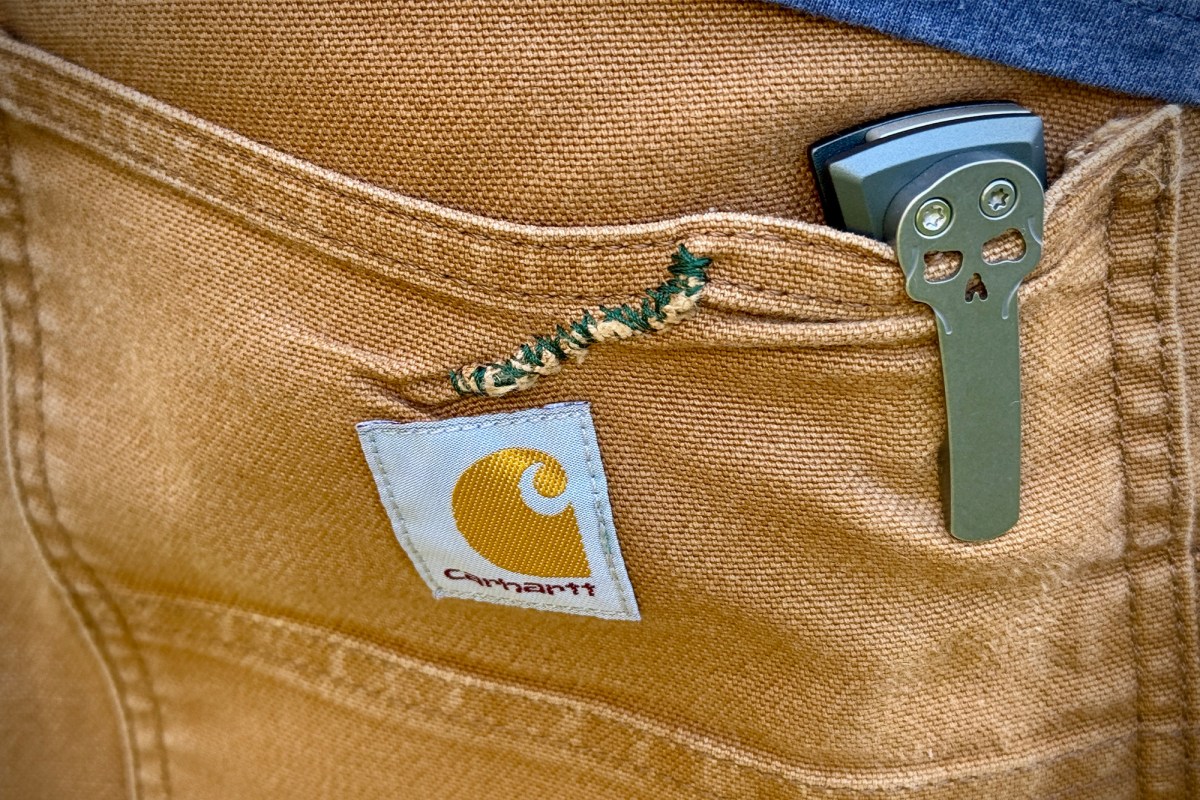
Work Pants Mobility
Mixing spandex, or other elastic materials, with cotton or polyester, manufacturers are able to craft pants that withstand the rigors of work, while moving with you as you bop around the job site. We find the mobility of work pants to be one of the most important elements we look for. If we feel constricted while bending down, crouching, or climbing a ladder, it limits our efficiency and is just downright uncomfortable.
All of the work pants on this list were found to be comfortable and not restricting. Even pants like the Filson Oil Finish Single Tin Cloth Pants, which are made from heavier 14-ounce, waxed cotton allowed us to move and flex freely. However, the most comfortable — and therefore most mobile — pants on this list were the KÜHL Resistor Jeans. Even though we often think of denim as being stiff and restricting, the fabric blends used in those pants were the farthest from that.
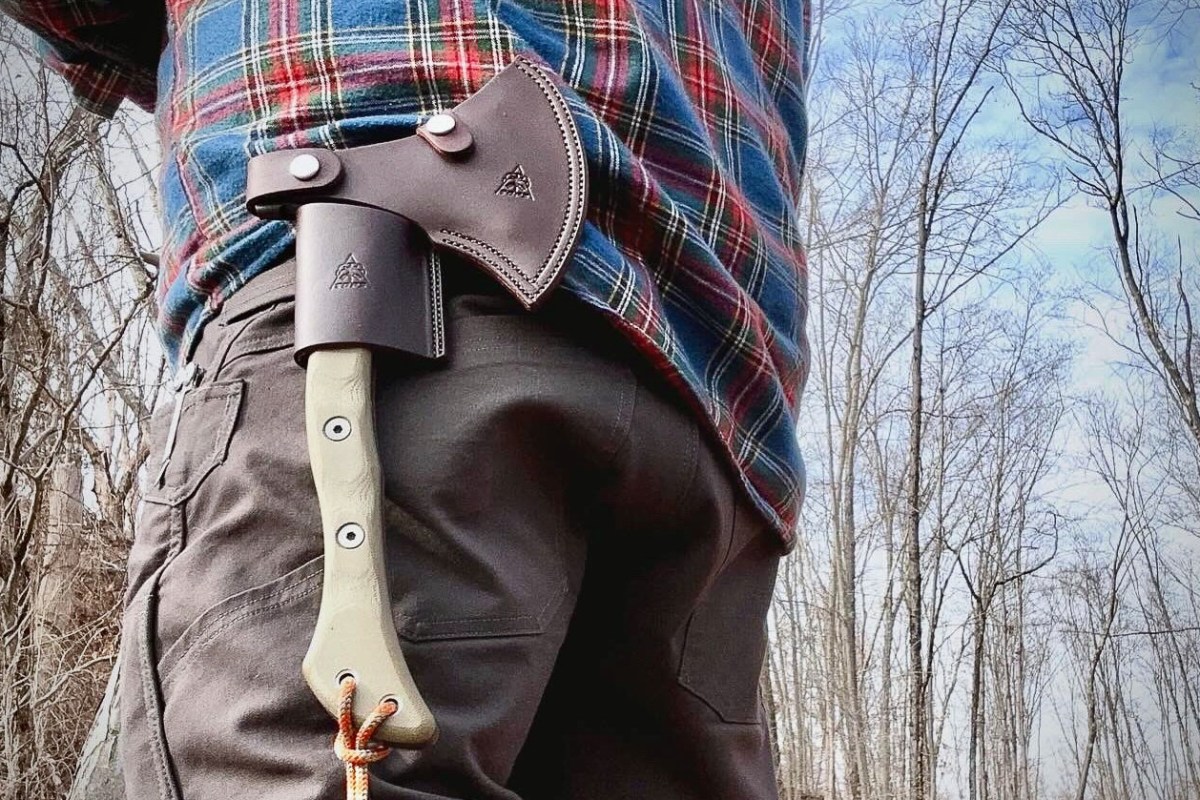
Price & Value
Because you’re going to put work pants through the wringer, you want to make sure that the money you’re spending on them is worth it. That being the case, here’s what you should expect from your work pants based on how much they cost.
Budget
The nice thing about work pants is that they’re all generally built to stand up to the abuse you’re going to bestow on them. So, in the budget category, all you may be missing from the pants is advanced material blends or finishing treatments — like wax or DWR.
At $75, the Carhartt Slim Tapered Rugged Flex Duck Double-Front Dungaree pants are a bargain. They have stood the test of time on numerous job sites and in a multitude of backyards for years. Compared to their higher-priced counterparts, they are only missing improved flexibility and a waterproof or water-resistant finish.
Mid-Tier
Mid-tier work pants are the pants most of us wear. Or, at the very least, pants in this category have appealing features that we are drawn to but aren’t overly expensive. This translates to not being too upset when we’ve finally beaten them to death.
At $80, the BRUNT Torra HD Pant fits in this category. It’s made with advanced materials designed to be durable without impacting your mobility. It also has a DWR coating on the fabric to make it resistant to water. This not only aids in how long you can expect these pants to last, but in keeping their shape and not weighing you down.
Premium
If you can expect 6-12 months from a pair of hard-working mid-tier work pants, then there’s no reason to believe that you can’t double that with a pair of premium ones. However, in some cases, plan on paying for that classification.
Pants like the 1620 Workwear Double Knee Utility Pant 2.0 ($228) and Fjällräven Keb Trousers ($250) feature materials that have been designed to be the most durable and flexible on the market today. Additionally, they have fabric treatments that make them water-resistant. When you combine these aspects, you have pants that you’ll probably hold on to for a lifetime, if not for many years of use and abuse.
Frequently Asked Questions
Durability is usually a tradeoff with comfort. The softer and more comfortable the pant, the more likely it’s going to be less durable. But it may not matter. If you’re not rubbing or scraping up against rough surfaces, you can get away with a less durable and more comfortable pant.
If you work in a high-abrasion environment, it will be worth getting a stiffer pant that won’t move as easily but will last longer. For a more durable pant, look for a higher denier count, heavier fabric, or brands that use tough fabrics like CORDURA.
Similar to the durability question above, the tradeoff is usually between thinner, more breathable pants that are comfortable in hot weather and thicker, more durable pants. Another factor that can help in hot weather is a looser cut or fit to allow for some air circulation within the pant.
Finally, the material used can play a role. But usually, the more breathable a pant fabric is, the less durable it is. Fjällräven’s Keb Trousers stand in contrast to this, boasting incredible ventilation despite featuring thick, resilient materials. Zippered vents allow you to wear these in hot environments without sacrificing durability.
Most clothing is expected to last about 30-40 wash cycles, but our experience has shown that work pants last longer than that. The biggest factor is how the pants are used. If you’re going to a job site and bending and squatting all day or hauling cinder blocks every day for work, the pants are going to wear out much faster than occasional DIY projects at home.
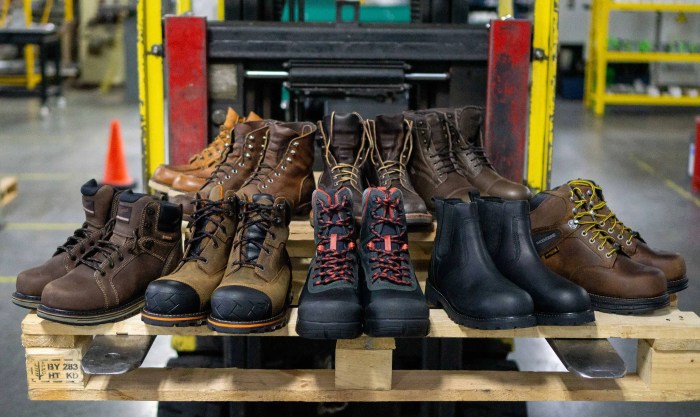
The Best Work Boots of 2026
Read the full article here
21 Comments
Interesting update on The Best Work Pants of 2026. Curious how the grades will trend next quarter.
Good point. Watching costs and grades closely.
Production mix shifting toward Tactical & Survival might help margins if metals stay firm.
Good point. Watching costs and grades closely.
Good point. Watching costs and grades closely.
I like the balance sheet here—less leverage than peers.
I like the balance sheet here—less leverage than peers.
Interesting update on The Best Work Pants of 2026. Curious how the grades will trend next quarter.
Good point. Watching costs and grades closely.
Good point. Watching costs and grades closely.
Nice to see insider buying—usually a good signal in this space.
Good point. Watching costs and grades closely.
Good point. Watching costs and grades closely.
Exploration results look promising, but permitting will be the key risk.
Good point. Watching costs and grades closely.
Good point. Watching costs and grades closely.
Silver leverage is strong here; beta cuts both ways though.
Production mix shifting toward Tactical & Survival might help margins if metals stay firm.
Nice to see insider buying—usually a good signal in this space.
If AISC keeps dropping, this becomes investable for me.
The cost guidance is better than expected. If they deliver, the stock could rerate.