

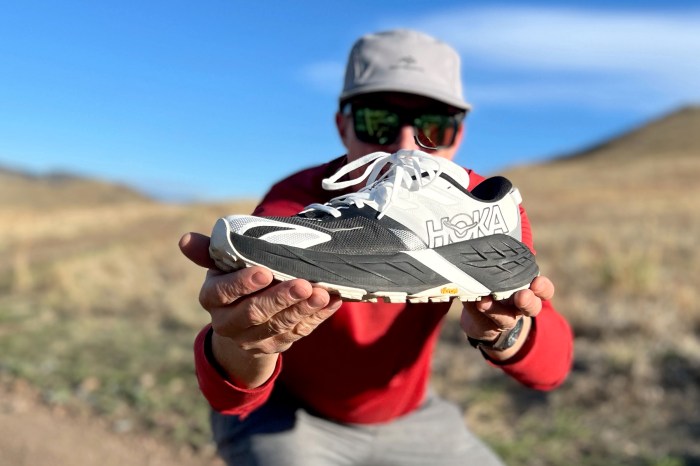
The best hiking shoes are light, efficient, protective, and keep you moving steadily. You’ll give up some ankle support with a shoe compared to a boot, but many hikers find the increased comfort and breathability worth the trade-off.
GearJunkie has tested hundreds of hiking shoes since 2012. For the current version of this guide, we leaned on the experience and guidance of consummate woodsman Nick LeFort and GearJunkie Editor in Chief Sean McCoy.
Between them, they’ve spent thousands of miles testing shoes from the forests of Appalachia to California’s granite peaks. Over the past six years, they wore 30 pairs of shoes to determine the best pairs on the market.
The Salomon X Ultra 5 GORE-TEX emerged as the top pick, with the Merrell Moab 3 retaining its spot as the best budget shoe for more casual hikers.
The list below highlights those models and the rest of our favorite hiking shoes, field-tested and compared side by side. Some of our top choices are also excellent trail running shoes.
Editor’s Note: We updated this guide on November 16, 2026 with all-new review formats and an upgraded product comparison chart.
The Best Hiking Shoes of 2026
Best overall Hiking Shoe
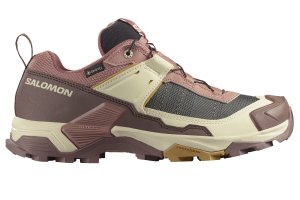
Salomon X Ultra 5 GTX Hiking Shoe
Best Budget Hiking Shoe
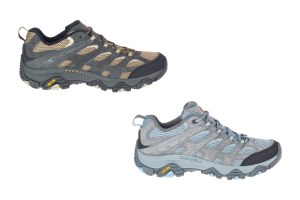
Merrell Moab 3
Best trail runner For Hiking
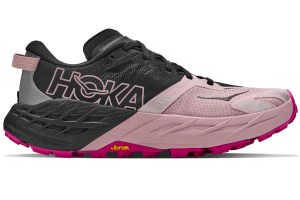
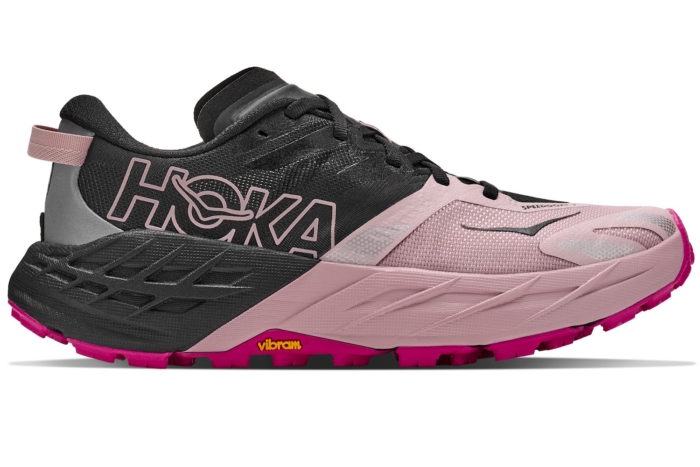
HOKA Speedgoat 7
Best Zero-Drop Hiking Shoe
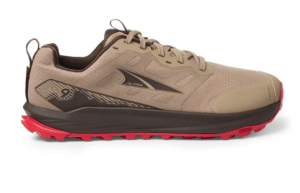
Altra Lone Peak 9
Best Waterproof Hiking Shoe
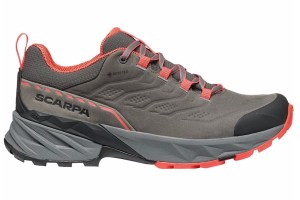
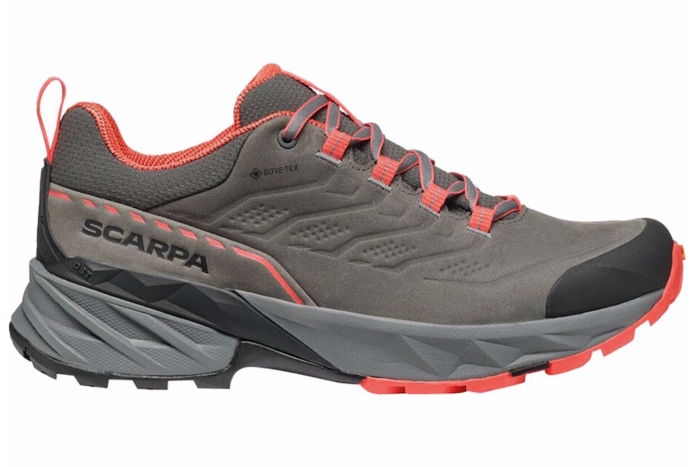
SCARPA Rush 2 Pro GTX
Best Technical/Scrambling Hiking Shoe
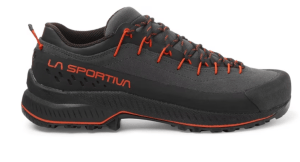
La Sportiva TX4 EVO
Best Trail-to-town hiking shoe
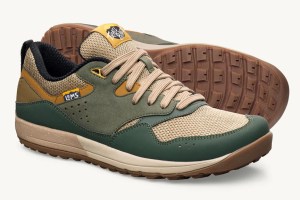
Lems Trail Blazer
See more picks
Salomon X Ultra 5 GTX Hiking Shoe
-

-
-
Salomon XUltra
-
-
-
-


Specifications
Pros & Cons
Pros
- Secure, snug fit
- No break-in needed
- Durable yet lightweight and breathable
- Excellent traction and stability
Cons
- No backup if lacing system fails
- Runs a bit tight
Bottom Line: For most fast-moving hikers and backpackers, this shoe delivers exceptional control and comfort without the bulk of a full boot. It’s an outstanding option for a wide range of wearers.
The Salomon X Ultra 5 GORE-TEX ($175) offers a rare balance of lightweight agility and boot-like stability, making it ideal for hikers who tackle steep, rocky, or otherwise demanding terrain. But it also excels on flatter trails and offers good support.
The Tech: Its precise fit, sticky Contagrip outsole, and engaging midfoot chassis keep you confident on uneven ground, while the waterproof GORE-TEX membrane keeps feet dry in wet conditions. This boot fits the average foot nicely, but those with wider feet may want to look elsewhere. Hikers in hotter, drier climates should consider the non-GORE-TEX X Ultra 5 ($155), and folks who want even more support, protection, and water resistance will be well-served by the X Ultra 5 Mid GORE-TEX ($190).
What We Like: During testing, tester Constance Mahoney hiked to the midpoint of the South Kaibab Trail in the Grand Canyon, meeting folks on a rim-to-rim attempt. The X Ultra 5 offered her a confident grip the entire way, even as she shouldered a 25-pound pack. The shoe remained supportive and secure, allowing consistent confidence on exposed switchbacks. Its waterproofing also stood out, keeping Mahoney’s feet dry during creek crossings and while she traversed snowfields in the Rockies.
What We Don’t: Breathability takes a hit in hot, arid climates, and the snug fit may feel restrictive for wide-footed hikers. The Quicklace system is fast and secure, but it lacks a field-repair option if it fails. The X Ultra 5 also isn’t the most pillowy shoe in this guide, and hikers looking for more cushion should check out the HOKA Anacapa 2 Low GTX.
Should You Buy It? Grab the X Ultra 5 if you’re looking for a balanced, durable, capable hiking shoe that fits average feet well and is ideal for rugged terrain. This is one of the category’s best models and one of its best values.
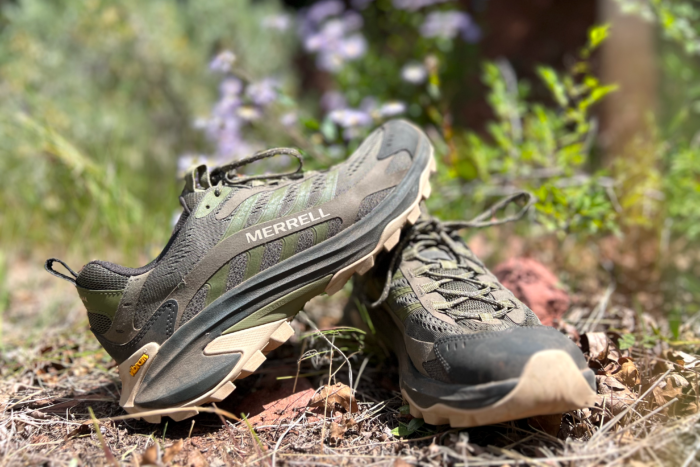
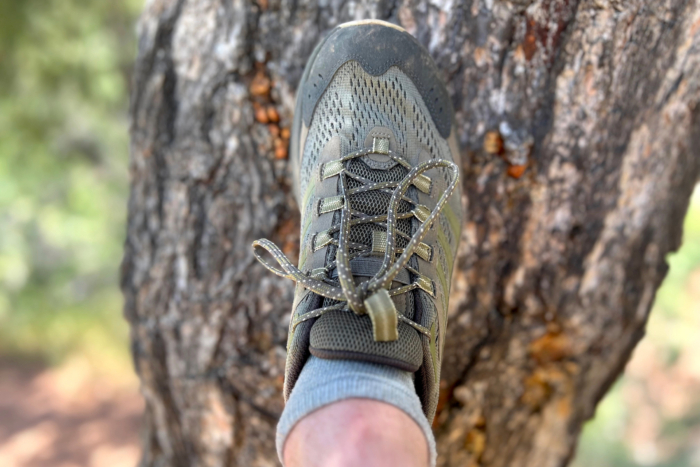
Merrell Moab 3
-
-
(Photo/Sean McCoy)
-
(Photo/Sean McCoy)


Specifications
Pros & Cons
Pros
- Good value
- Impressive traction and stability
- Breathable
Cons
- A bit heavy and bulky
- Requires a break-in period for peak comfort
Bottom Line: This durable, time-tested hiking shoe is a superb option for hikers on a budget — especially if they prefer a wider fit. It doesn’t specialize in precision and speed, though.
It’s no surprise the Merrell Moab 3 ($145) is one of the top-selling hiking shoes. The side ventilation keeps feet cool during warm-weather hikes, and the pigskin leather and mesh upper hold up well through rocky scrambles, long day hikes, and multi-day adventures. We like that they provide some of the stability and traction generally found in a hiking boot with the low-top freedom of a shoe.
The Tech: The Moab 3 has a wide, high-volume fit that feels comfortable across a wide range of foot shapes, and while it is stiffer than some trail-running shoe crossovers like the Altra Lone Peak 9 and the HOKA Speedgoat 7, it still feels more like a shoe than a boot. Folks who are new to hiking often gravitate toward the Moab 3 because they feel very comfortable walking around the store. Just be aware that “roomy” can also mean your foot moves around a lot in the shoe, which can lead to blisters. If your foot slides around in the heel too much, look elsewhere. On the other hand, for those with wide, high-volume feet, the Moab 3 is a wonderful choice, as it offers plenty of room in the toe box.
What We Like: With the right size, lacing techniques, and a good pair of socks, most folks can get a good fit with the Moab 3. For an extremely reasonable price, you get a tough mesh/leather upper and a durable Vibram TC5+ outsole that handles mud, rocks, and loose gravel well. Tester Constance Mahoney enjoyed the shoe’s balanced, grounded feel; she noted that it didn’t jump off the starting line like a trail runner, but lauded it as “incredibly steady.” While it’s not a great pick for technical terrain, the Moab 3 is more than adequate for day hikes on regular trails. It’s also available in a waterproof version ($165).
What We Don’t: The only reason it doesn’t rate higher overall is weight and bulk. The Moab 3 is a rather burly shoe and is not the most efficient option for making fast trail miles. Check out the much lighter, quicker HOKA Speedgoat 7 if you want to set some personal bests.
Should You Buy It? Finding a good trail shoe under $150 might seem impossible if you don’t know where to look, but the Moab 3 offers a light in the darkness. This is a reliable, sturdy shoe that will get the job done for many hikers.
HOKA Speedgoat 7
-
-
-
-
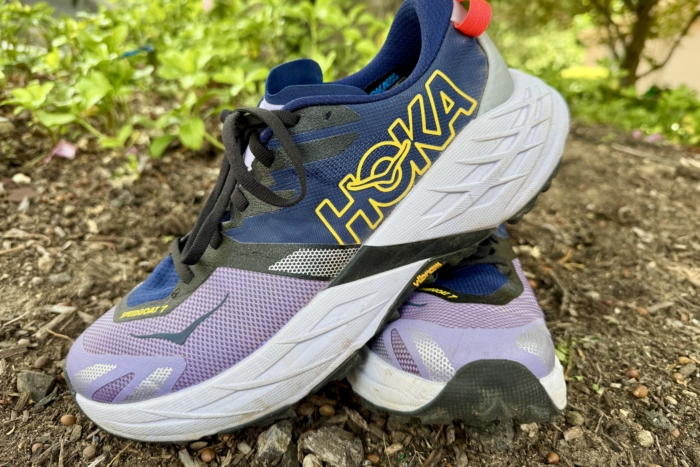
The HOKA Speedgoat 7 is one of the top-performing hiking shoe/trail runner crossovers; (Photo / TK)
Specifications
Pros & Cons
Pros
- Secure fit on technical terrain
- Livelier, more responsive ride thanks to new supercritical foam
- Strong traction on mixed surfaces
- Well-cushioned for long miles
Cons
- Fits a bit smaller than past versions
- Upper feels less breathable
Bottom Line: This speedy, impressive shoe boasts dual citizenship in the hiking and trail running worlds. Its tall, cushy midsole and grippy tread are both outstanding, and the latest version is more responsive than ever.
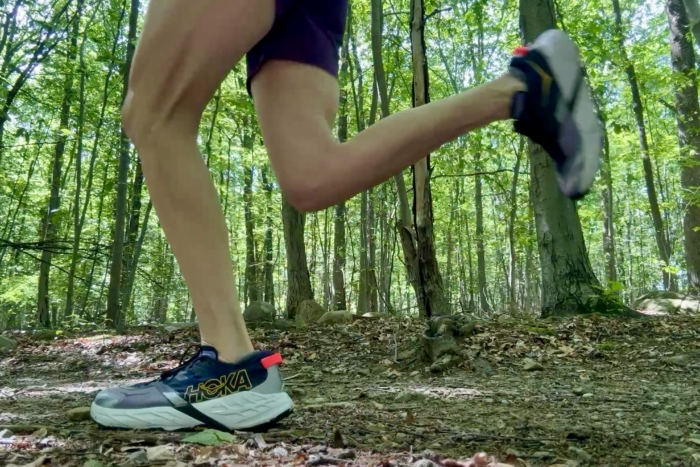
The HOKA Speedgoat 7 ($165) isn’t only a top trail running shoe: It’s also a fantastic choice for hikers who like to move fast and light on the trail, while at the same time offering good protection. It’s earned a well-deserved place in our quiver for light hikes that border on trail runs.
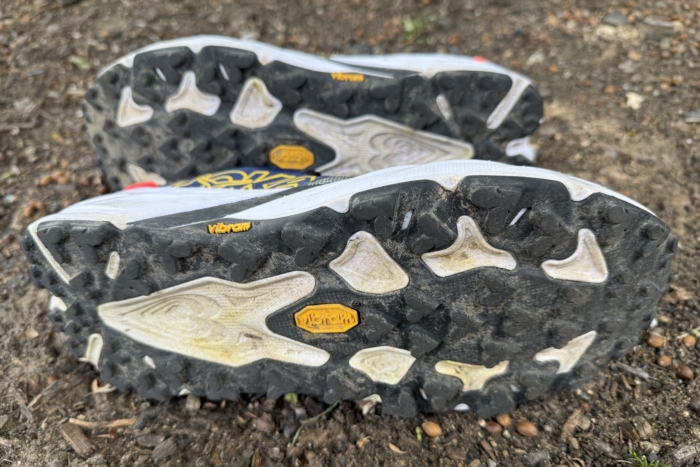
The Tech: The Speedgoat 7 is a major improvement over the Speedgoat 6, with a much more responsive midsole, improved Vibram Megagrip outsole, and a locked-down upper that keeps it secure on rough terrain. For a highly cushioned shoe, the Speedgoat 7 is remarkably lively, thanks to an upgraded supercritical foam. This foam is much more responsive than standard EVA, and you can really feel it when hiking fast or running. The shoe provides a springy feeling underfoot and isn’t as dead as previous versions.
What We Like: GearJunkie Editor in Chief and AllGear Digital Editorial Director Sean McCoy, as well as contributor Chris Kassar, tested the Speedgoat 7 for four months. In that time, it proved itself to be comfortable, grippy, and fast. As a hiking shoe, it offers the efficiency of trail-running shoes while providing enough protection for long, multi-day hikes. McCoy wore the Speedgoat over long laps through the Colorado foothills in the spring, encountering dry, hard soil and rocky terrain. The shoe’s 37 mm heel stack height (it has a 5 mm drop) provided ample protection, keeping his feet feeling great after 10-mile outings of mixed running and speed walking up steep hills. Some high-stack trail running shoes feel sloppy around the foot, but not the Speedgoat 7. It’s locked in, with a snug heel and a static upper that keeps the foot in place — a key attribute when you’re scrambling on steep, technical terrain.
What We Don’t: The Speedgoat 7 isn’t a very grounded-feeling shoe. The highly responsive midsole propels you forward quickly but doesn’t provide quite the proprioception of lower-drop, less-responsive shoes like the Lems Trail Blazer or the Altra Lone Peak 9.
Should You Buy It? Hikers looking to prioritize efficiency and speed will love the Speedgoat 7. It doesn’t require the wearer to give up much in the way of protection and stability, and its traction makes it an excellent choice for rocky routes.
Altra Lone Peak 9
-
-
-
(photo/Miya Tsudome)


Specifications
Pros & Cons
Pros
- Lightweight
- Wide forefoot for comfort and swollen feet
- Zero drop promotes a healthy stride
- Quick gaiter attachment points
Cons
- Zero drop takes some getting used to and isn't for everybody
- Modest support
Bottom Line: A light, zero-drop trail-running shoe that lets your toes splay over long miles and during fast missions. Its upper is improved compared to prior iterations, and it’s a smart choice for zero-drop adherents who want to zoom.
The Altra Lone Peak 9 ($145) is a zero-drop, wide-fit shoe. Previous iterations of the Lone Peak have long been popular among thru-hikers for their extremely roomy toe box and stable platform. While this shoe isn’t for everyone, a seasoned hiker with fleet feet and strong legs looking to stack multiple 20-mile days could go far with it.
The Tech: Zero drop means that the height of your heel is the same as the height at the ball of your foot in the shoe. For some folks, this encourages midfoot rather than heel strikes, and for many, the neutral positioning of zero-drop shoes makes a huge difference over long distances, reducing overuse pain in the knees and hips and improving posture. If the Lone Peak works for your foot, you’ll be pleased to know comfort is one of its standout features. Its toe box feels wider than any other shoe we’ve tested, and a side-by-side comparison of the insoles of the HOKA Speedgoat 7 and the Lone Peak clearly shows that the latter’s are almost a centimeter wider at the forefoot.
What We Like: Previous versions of this shoe made the top of this list, and the Lone Peak 9 is arguably better than the Lone Peak 8 thanks to some improvements, like the more durable upper. The mesh fabric is plenty breathable, though “mesh” feels like a misnomer, as the material feels tougher and less porous than most mesh designs we’ve encountered. A rubber toe bumper on the front and side of the upper adds reinforcement to areas that we often wear through first. And, although Altra switched to its proprietary MaxTrac outsole from a Vibram one in the Lone Peak 8, tester David Young reported that he didn’t experience any drop in traction while he traversed snowy and icy trails on Colorado’s Front Range.
What We Don’t: It’s worth noting that those new to zero-drop shoes should start with low mileage and build up while monitoring their Achilles and calf muscles to avoid injury. Even if you’re an experienced hiker who’s never worn a zero-drop shoe, be conservative and work up to bigger miles in the Lone Peaks before you go for a big day. Getting accustomed to this shoe style could be the key to long-term comfort. A clip-in loop over the midfoot and a Velcro release on the heel pull tab make it quick and easy to attach a pair of gaiters for extra protection during snow crossings or tick-infested zones.
Should You Buy It? If you’re getting big miles in every chance you get, you should grab a pair of the Lone Peak 9s and see if zero drop works for you. While our team of hikers feels the Speedgoat 7 is the best trail-runner/hiking-shoe hybrid for most people, the Lone Peak is the best option for anyone who wants a more splayed, natural feel.
SCARPA Rush 2 Pro GTX
-
-
(photo/Miya Tsudome)

Specifications
Pros & Cons
Pros
- Exceptionally stable and supportive
- High durability from the Nubuck leather upper
- Excellent waterproofing
- Confident traction on loose dirt and rock
Cons
- Firm underfoot (lacks plush cushioning)
- Lacks breathability on hot days
Bottom Line: This midweight hiking shoe possesses excellent waterproofing and a durable leather build. It’s basically a super beefed-up trail runner, which means there’s a lot to like.
With so many of our favorite hiking shoes actually being trail running shoes, it’s no surprise that the SCARPA Rush 2 Pro GTX ($189) is near the top of our list. Its heel-to-toe drop and springy stride feel trail-runner-esque, but make no mistake: The Rush 2 Pro is a burly, waterproof hiking shoe that can take way more of a beating than any trail-running shoe. A GORE-TEX liner seals the deal, making this our favorite hiking shoe for wet conditions.
The Tech: Aside from the tongue, the Rush 2 Pro has an entirely Nubuck leather upper. There are a few laser-cut perforations for venting, but breathability is not the top design priority here. As a result, this shoe has a more boot-like feel than most models in this guide in terms of durability and overall waterproofing. While a mesh upper can snag and tear, or eventually wear thin, the leather upper on the Rush 2 Pro holds up well to bushwhacking and off-trail scrambling. We wouldn’t hesitate to do some trail work in these shoes, and that’s not something we’d risk in trail runners.
What We Like: Our lead tester post-holed through a foot of snow and made multiple stream crossings in these shoes on an ill-conceived sport-climbing mission. Thanks to the GORE-TEX membrane, his socks remained dry all day, even when water washed over the tops of his shoes (but not the ankle cuffs). The Rush 2 Pro’s Presa outsole also performed well on wet rock and snow and has shown no signs of premature wear. The shoe runs a bit small, so we’d recommend going up a half size from your usual size. Overall, it’s not as wide as the Altra Lone Peak 9 or the HOKA Speedgoat 7; if you feel like your feet are swimming in either of those shoes, the Rush may fit better.
What We Don’t: Breathability is not a strong suit of the Rush 2 Pro, so you’ll want something else when you’re exclusively hiking in hot and dry conditions. The Lone Peak would be a better bet for scorching trail days.
Should You Buy It? Durability and waterproofing may not be at the top of everyone’s list when looking for a hiking shoe, but if they’re on yours, we highly recommend the Scarpa Rush 2 Pro GTX. This is a well-built shoe that will last many a season.
La Sportiva TX4 EVO
-
-
(Photo/Ryan Bode)
-
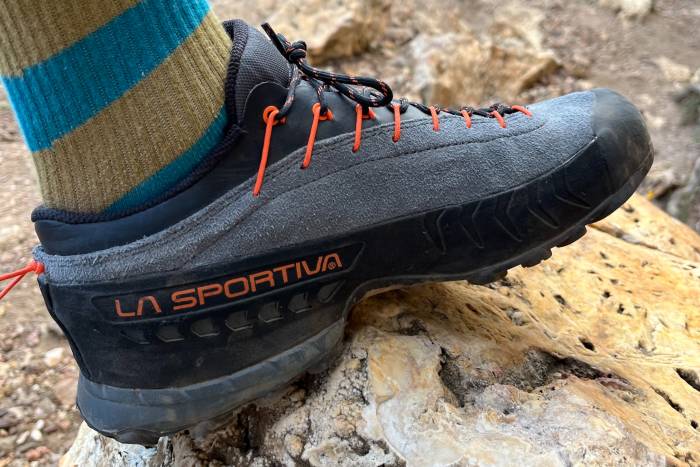
The TX4 has a durable leather upper and stiff sole. (photo/Austin Beck-Doss)

Specifications
Pros & Cons
Pros
- Extremely sticky rubber, great for rock
- Good balance between comfort and support
- Durable and abrasion-resistant upper material
Cons
- Heavy
- Low traction on mud
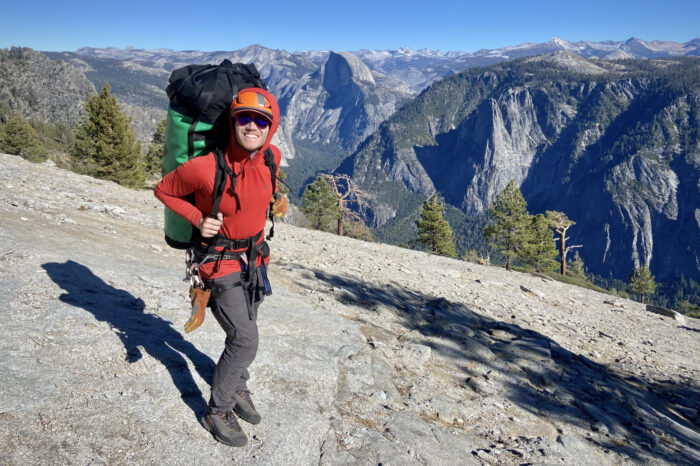
Bottom Line: This stiff, sticky-soled approach shoe is designed for steep and technical scrambling. It might not be the choice for making long miles, but for smearing, stemming, and staying stuck on rock, there’s nothing better.
The La Sportiva TX4 EVO ($189) is a specialist shoe, but it’s great at what it does. If you’re scrambling or hiking up steep rock, whether it’s on a marked route or a climber’s access trail, you’ll appreciate its stupendously grippy outsole and rugged leather construction. We’re not saying you can’t backpack in it, but we recommend sticking to its vertically-oriented lane.
The Tech: La Sportiva built this shoe with a Vibram Megagrip outsole that has a smooth section under the toe for smearing on smooth rock. Overall, the TX4 has an appealing balance between stiffness (needed for making climbing-adjacent moves) and flexibility, and with the EVO model, designers used a more environmentally responsible construction with recycled materials, including the laces, tongue, and rubber rand that surrounds the midsole. The TX4’s laces reach all the way to the toe, which can sometimes be restrictive, but we found that it kept our feet from moving around and limiting precision, which is key for scrambling.
What We Like: During testing, tester Nick LeFort appreciated the TX4 EVO’s durability as he traversed scree and rocky outcrops. On a hike in Connecticut, where most of the terrain is composed of trap rock — known for its sharp, unforgiving nature — the shoe took a serious beating on the way back to the trailhead. But LeFort was able to rely on it while climbing down from one level of the trail to the next while relying on small footholds, and the TX4 was fantastic in keeping him from slipping. You won’t be able to go as fast and far in it as you would with a shoe like the HOKA Speedgoat 7, but in dicey, rocky terrain, you’ll be glad you’re wearing it.
What We Don’t: With its Nubuck leather upper, the TX4 EVO requires some break-in, unlike most other hiking shoes in this guide. Thankfully, after a few good approaches, we found it comfortable to wear both out and about and on casual hikes.
Should You Buy It? Any climber who wants an approach shoe that they can also throw on for a hike should grab the TX4 EVO. Likewise, this is an excellent shoe for hikers who want to progress to more technical routes in rocky terrain.
Lems Trail Blazer
-
(Photo/Lems)
-
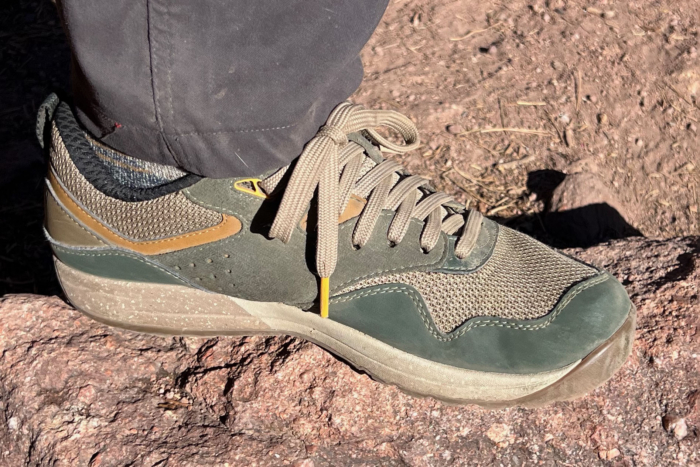
The Lems Trail Blazer hiking shoe; (photo/Sean McCoy)
-
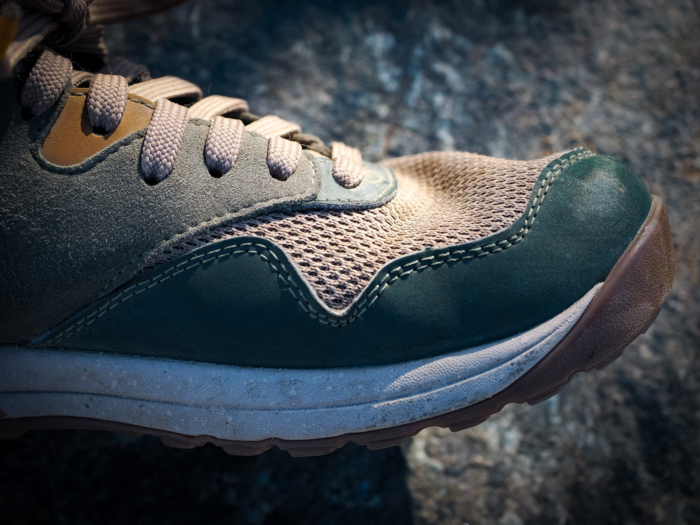
Leather and rubber toe caps are made for longevity; (photo/Sean McCoy)
-
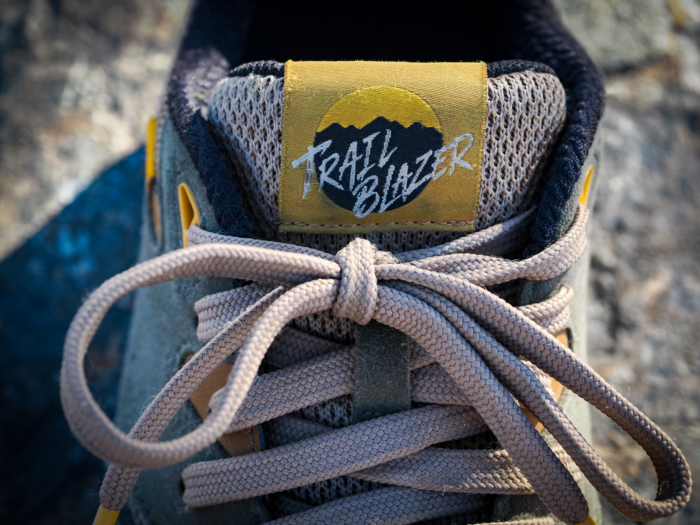
The Trail Blazer has a bit of a 90's vibe, as you can see on the tongue; (photo/Sean McCoy)
-


Specifications
Pros & Cons
Pros
- Wide toe box
- Firm, protective midsole
- Zero drop (not for everyone)
- Good traction
- Exceptional proprioception
Cons
- Not as responsive as some models
- Not waterproof
Bottom Line: This is a versatile, zero-drop minimalist hiking shoe that makes an exemplary companion for hiking, travel, and casual wear. It’s not very light, but breathability is a major plus.
If there’s one shoe in this guide that we never want to take off, it’s this one. The Lems Trail Blazer ($145) is incredibly comfortable, looks great, and excels as both a trail and travel shoe. This zero-drop model is designed for those who want a natural, minimalist feel without sacrificing the protection needed for the trail.
The Tech: The Trail Blazer strikes a rare balance of offering exceptional proprioception and a firm, protective midsole that shields against jagged rocks and uneven terrain. Unlike many flimsy minimalist options, it has a robust leather upper and rubber toe caps for longevity, making it a “grown-up” version of the old-school minimalist shoes some hikers may be used to.
What We Like: One of the standout features of the Trail Blazer is its immediate comfort, largely due to its wide toe box that allows for natural toe splay. Zero-drop shoes require some acclimation for calves and Achilles tendons, but the Trail Blazer’s 14 mm stack height provides enough cushioning to make it an excellent “bridge” shoe for those transitioning away from traditional, high-heeled hikers. GearJunkie Editor in Chief and AllGear Digital Editorial Director Sean McCoy enjoyed that it made him feel stable and confident on kitty-litter gravel and rocky soil as he wound his way up and down trails on Colorado’s Front Range. Beyond the trailhead, he also noted that the Trail Blazer thrived as a travel shoe and daily driver. Its understated, outdoorsy aesthetic is subtle enough for casual office days, airport sprints, or walking on concrete city streets without causing foot fatigue.
What We Don’t: With its wide forefoot and firm midsole, the Trail Blazer isn’t as responsive as shoes like the HOKA Speedgoat 7 or the Salomon X Ultra 5. It’s got a leg up on the more stolid Merrell Moab 3 in this department, though.
Should You Buy It? While it isn’t a dedicated trail running shoe or a heavy-duty boot, the Trail Blazer’s lightweight build and flexibility make it a premier choice for hikers who value a grounded, intuitive feel during both weekend adventures and everyday life.
Other Field-Tested Hiking Shoes for Taming the Trail
While the models below didn’t make the top of our list, they’re all well-designed and well-constructed. If you’re shopping for sales or don’t like any of the shoes we’ve highlighted above, they’re worth your time.
HOKA Anacapa 2 Low GTX
-
-
The HOKA Anacapa 2 Low is a highly cushioned hiking shoe; (Photo/Elk Raven Photography)


Specifications
Pros & Cons
Pros
- Sustainably made
- Sticky outsole with self-cleaning lug pattern
- Plenty of cushion
Cons
- Runs a bit large
- Extended heel cushion isn't everyone's cup of tea
- Pretty heavy
Bottom Line: A heavily cushioned hiking shoe with excellent traction and a host of features that promote a smooth stride. Be aware, though, that its oversized heel can snag on trail obstacles.
HOKA has made a name for itself with forward-thinking (some would even say futuristic) hiking footwear design, and the Anacapa 2 Low GTX ($180) continues the brand’s flair for the unique. There are aspects of its design that will divide hikers — we had mixed impressions ourselves — but overall, this is a well-designed hiking shoe that’s packed with premium tech.
The Tech: The Anacapa 2’s outsole is made with tacky Vibram Megagrip, and HOKA designed it with a “self-cleaning” lug pattern that channels mud away from grooves between the lugs as you stride, forcing it to slide off the sole. That construction, paired with the shoe’s premium GORE-TEX waterproofing, makes this shoe one of the best we’ve tested for dealing with wet, sloppy conditions. Additionally, its rocker point is located closer to the toe than normal, which promotes stability at slower speeds. This isn’t a shoe built for chasing FKTs — for that, look to HOKA’s own Speedgoat 7.
What We Like: Tester Chris Carter used the Anacapa 2 (both the low and mid-cut versions) while hiking in Zion National Park. While he usually prefers an early stage rocker, this shoe’s design gave him confidence as he picked his way through variable terrain, as well as smoothing out his stride. The protruding SwallowTail heel also provided him with greater traction and stability while bombing downhill. However, he also noted its propensity to catch on roots and rocks on the trail — not a big enough issue to consign this shoe to the resale bin, but something to be aware of.
What We Don’t: We found these shoes to run a bit large, so make an effort to try them on in-store before snagging a pair. These are also on the heavier (and pricier) end of the spectrum, but the comfort and cushion they offer mostly make up for that.
Should You Buy It? For all-day comfort and stability on slower-paced outings, or day-length hikes in wet climates, the Anacapa 2 Low GTX would be a stellar companion for almost any adventure you can drum up.
Merrell Moab Speed 2
-
(Photo/Merrell)
-
(Photo/Will Brendza)
-
(Photo/Will Brendza)
-
(Photo/Will Brendza)
-
(Photo/Will Brendza)

Specifications
Pros & Cons
Pros
- Bellows tongue keeps it debris-free
- Comfortable and breathable
- Light on the feet
- Feels very stable
Cons
- Pull tabs could be slightly larger
- Some complaints of sizing issues
Bottom Line: This shoe is a solid daily driver that leans more toward the speedy end of the spectrum. Its accommodating fit and breathability further enhance its affordable appeal.
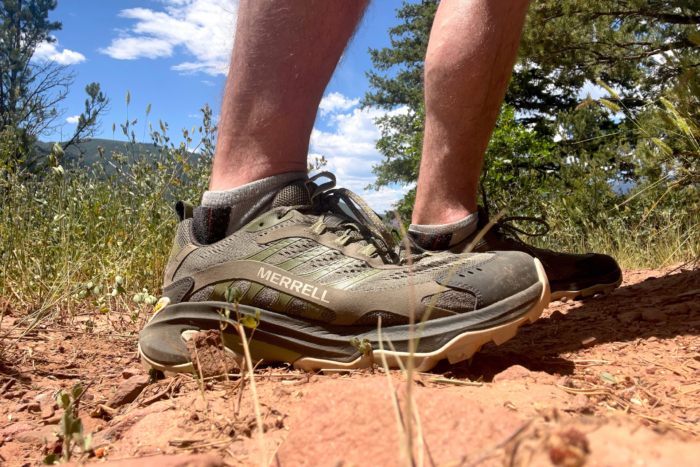
Like the popular Merrell Moab 3, our best budget pick, the Moab Speed 2 ($145) has a wide, comfortable fit. But while the Moab 3 leans more toward stiffness and durability for backpackers, the Speed 2 is more breathable and feels more like a trail-running shoe. If you dig the fit of Moab 3 and are day hiking or fastpacking, you should check out this speedy entry to the Moab line.
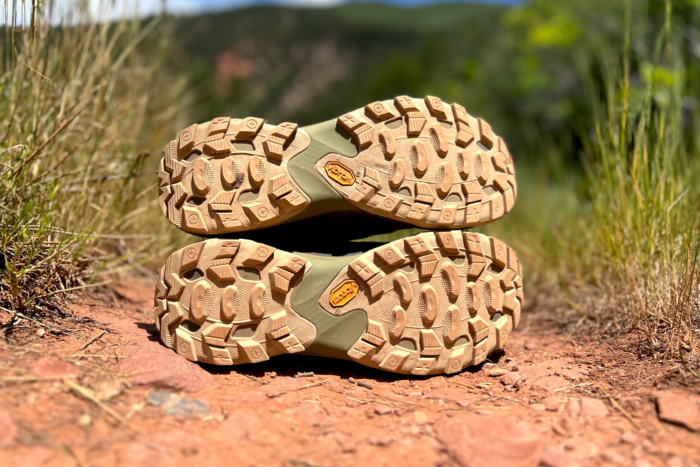
The Tech: The Speed 2 has a Vibram TC5+ outsole that proved sufficiently grippy on smooth river rocks, while the lugs easily found traction in sand and gravel. This shoe is also equipped with a full-length flexplate and extra cushioning. In the field, that translates to better feel and response over uneven and loose surfaces. Unlike its cousin, the Speed 2 has no leather in its upper, just breathable mesh and TPU, making it significantly more breathable (as well as vegan). Bonus: The shoe is made from 100% recycled materials.
What We Like: Tester Will Brendza wore the Speed 2 on hot Colorado summer hikes near Glenwood Springs and appreciated the lightweight materials and breathability. He also noted the 34 mm/24 mm heel and toe stack heights, which allowed him to walk on sharp and gravelly surfaces without feeling any discomfort. Brendza credited the insole with solid energy return, although it doesn’t provide the same pop that more trail running-oriented shoes do.
What We Don’t: The dual heel and tongue loops make getting the shoe on and off relatively easy, but they could be slightly larger. Brendza’s swollen post-hike fingers struggled to fit into them.
Should You Buy It? If you’re primarily interested in traditional backpacking, stick with the Moab 3 — it’s stiffer and more supportive for carrying heavier loads. But for folks looking to do day hikes or put together an ultralight or fastpacking setup, the Moab Speed 2 is a better choice, and it’s almost as good a deal.
Danner Trail 2650


Specifications
Pros & Cons
Pros
- Stylish and versatile
- Breathable
- Grippy outsole
Cons
- Expensive for its performance compared to other options
- Not as supportive as some shoes
Bottom Line: This shoe is easy on the eyes and the feet. It leans casual, but it adapts to most day-hike conditions and transitions smoothly from dirt-packed terrain to dinner in town.
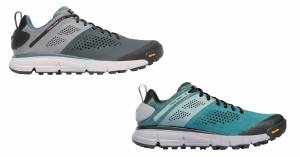
Danner is known for making high-quality, long-lasting hiking boots. While testing the Trail 2650 ($190), we found that to be true of its hiking shoes, too. Inspired by the 2,650-mile Pacific Crest Trail, this shoe is built to go the distance — and fit right in with town life once you’re done.
The Tech: Although it looks more casual than many shoes in this guide, the Trail 2650 packs in some premium features. It has a Vibram 460 outsole (a Megagrip compound made specifically for Danner) with a variety of lug shapes and sipes to siphon mud to the side. TPU shanks between the outsole and midsole prevent foot bruising and provide an extra shot of stability. The Trail 2650 also comes in several versions, including waterproof, mesh, and mid styles.
What We Like: The mesh liner helped keep tester Chris Kassar’s feet cool and aided in breathability on hot summer outings in the Tetons. She found the shoe comfortable out of the box and suitable for all manner of day hikes. This is also a flat-out good-looking shoe: The Trail 2650 will work great out on the town after you’ve finished your hike. Its half-suede upper isn’t just for show, though, and boosts durability on the business end of this lightweight shoe.
What We Don’t: This isn’t a top choice for multi-day backpacking. It doesn’t offer as much support as something like the Salomon X Ultra 5, and we didn’t find its traction top-tier on rough trails.
Should You Buy It? For days that take you from rolling singletrack to post-hike socializing, the Trail 2650 is a versatile option. You might not be ripping off huge missions in it, but this is a fine shoe for casual to moderate hikes.
Oboz Sawtooth X Low

Specifications
Pros & Cons
Pros
- Grippy outsole
- Minimal break-in period
- Highly durable
Cons
- Heavier than others
- Takes forever to dry out if it gets wet
Bottom Line: For bashing through brush and rambling over rocky ground, few hiking shoes can match this one’s rugged design. However, it’s one of the slower-paced models in this guide.
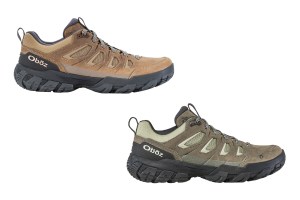
Looking for a hiking shoe with a more traditional hiking-boot design? This below-the-ankle pick could be just what you need. The Oboz Sawtooth X Low ($165) slices through harsh terrain better than most mid-height hiking boots, and offers stellar durability with bomb-proof oiled Nubuck leather and CORDURA fabric mesh.
The Tech: The Adaptive Cushioning Technology used in these shoes is an interesting touch. It’s dual-density rubberized EVA that’s designed to easily adapt to changing terrain; while we can’t say we fully felt the intended effect, this has a cushioned ride to it and a soft heel strike zone with solid shock absorption.
What We Like: This shoe comes out of the box ready to hike. It promotes more foot freedom with a wider toe box and an “O Fit” insole that combats shifting and boosts comfort even on daunting descents. The lug pattern of the Sawtooth X gives plenty of grip, and the toe overlays prevent abrasion. Even after significant abuse, our pair hasn’t yet shown any signs of abrasion. Plus, you can feel good knowing that Oboz plants a tree for every pair of shoes sold.
What We Don’t: This is a heavy shoe. It weighs just a hair below 2 pounds per pair, and won’t aid in fast-paced missions the way competitors like the Altra Lone Peak 9 or the comparably burly SCARPA Rush 2 Pro GTX will.
Should You Buy It? If you want your hiking shoe to hold up no matter what you throw at it, the Sawtooth X Low is a smart choice. It will breathe better and give you more mobility than a mid-cut boot, but you can confidently stride in it through rough terrain.
Hiking Shoe Comparison Table

Salomon X Ultra 5 GTX Hiking Shoe |
Merrell Moab 3 |
HOKA Speedgoat 7 |
Altra Lone Peak 9 |
SCARPA Rush 2 Pro GTX |
La Sportiva TX4 EVO |
Lems Trail Blazer |
HOKA Anacapa 2 Low GTX |
Merrell Moab Speed 2 |
Danner Trail 2650 |
Oboz Sawtooth X Low |
|
|---|---|---|---|---|---|---|---|---|---|---|---|
|
Compare |
|
|
|
|
|
|
|
|
|
|
|
|
Price |
$175 |
$145 |
$165 |
$145 |
$189 |
$189 |
$145 |
$180 |
$145 |
$190 |
$165 |
|
Weight |
1 lb. 6 oz. |
2 lbs. 1 oz. |
1 lb. 0.6 oz. |
1 lb. 6.4 oz. |
1 lb. 7.2 oz. |
1 lb. 9.2 oz. |
1 lb. 5.6 oz. |
1 lb. 14.7 oz. |
1 lb. 8 oz. |
1 lb. 8 oz. |
1 lb. 15.6 oz. |
|
Waterproof |
Yes |
No |
No |
No |
Yes |
No |
No |
Yes |
No |
No |
No |
|
Outsole |
Contagrip |
Vibram TC5+ |
Vibram Megagrip |
MaxTrac |
PRESA HIK-01 |
Vibram Megagrip |
Trail Traction |
Vibram Megagrip |
Vibram TC5+ |
Vibram 460 Megagrip |
True Tread |
|
Best For |
Most hikers |
Fast and light |
Wide feet and budget-conscious |
Fast and light |
Wet terrain |
Scrambling, steep rock |
Travel, versatile hiking |
Fast and light |
Fast and light |
Trail-to-town |
Off-trail hiking |
How We Tested Hiking Shoes
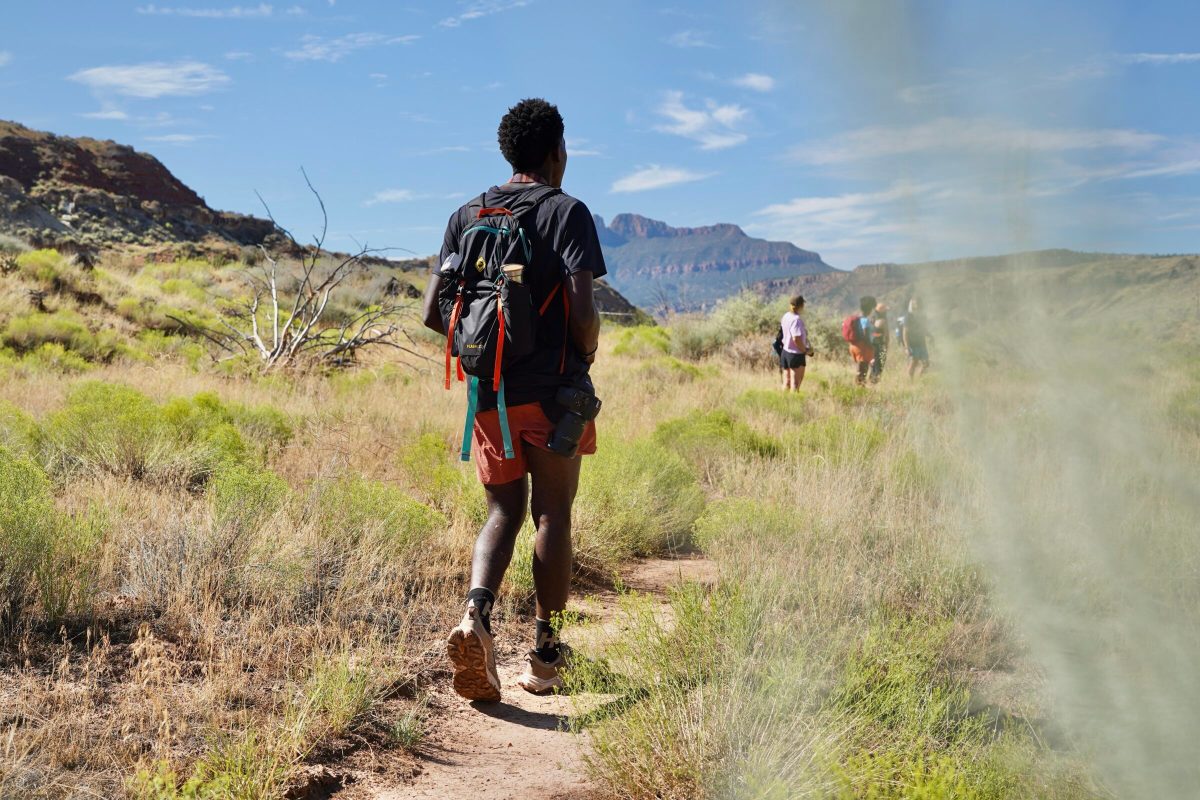
In our search for the best hiking shoes, we spent months on the trail testing every model. From the dry Arizona desert to the hot and humid Appalachian Trail and the heights of the Rocky Mountains, we’ve logged a lot of miles to bring you this guide.
Our Expert Testers
GearJunkie Editor in Chief Sean McCoy took the wheel on this guide in April 2026. McCoy is an avid hiker and runner, having completed routes as diverse as the Tour du Mont Blanc, Colorado’s Four Pass Loop, and the Leadville 100.
Tester Nick LeFort, based in Connecticut, is a former boot fitter who knows his way around a Brannock device and can make solid recommendations for any foot shape. Contributor Chris Carter, the guide’s previous minder, has thru-hiked the Triple Crown of long trails in the United States: the Pacific Crest Trail, the Continental Divide Trail, and the Appalachian Trail.
Additionally, tester Will Brendza added his two cents (and then some). As a journalist covering outdoor gear and news, he’s tested shoes and boots from every major brand.
Our Testing Process & Grounds
While compiling our roundup, we considered each shoe’s intended use. We paid careful attention to comfort, stability, outsole traction and grip, and long-term durability.
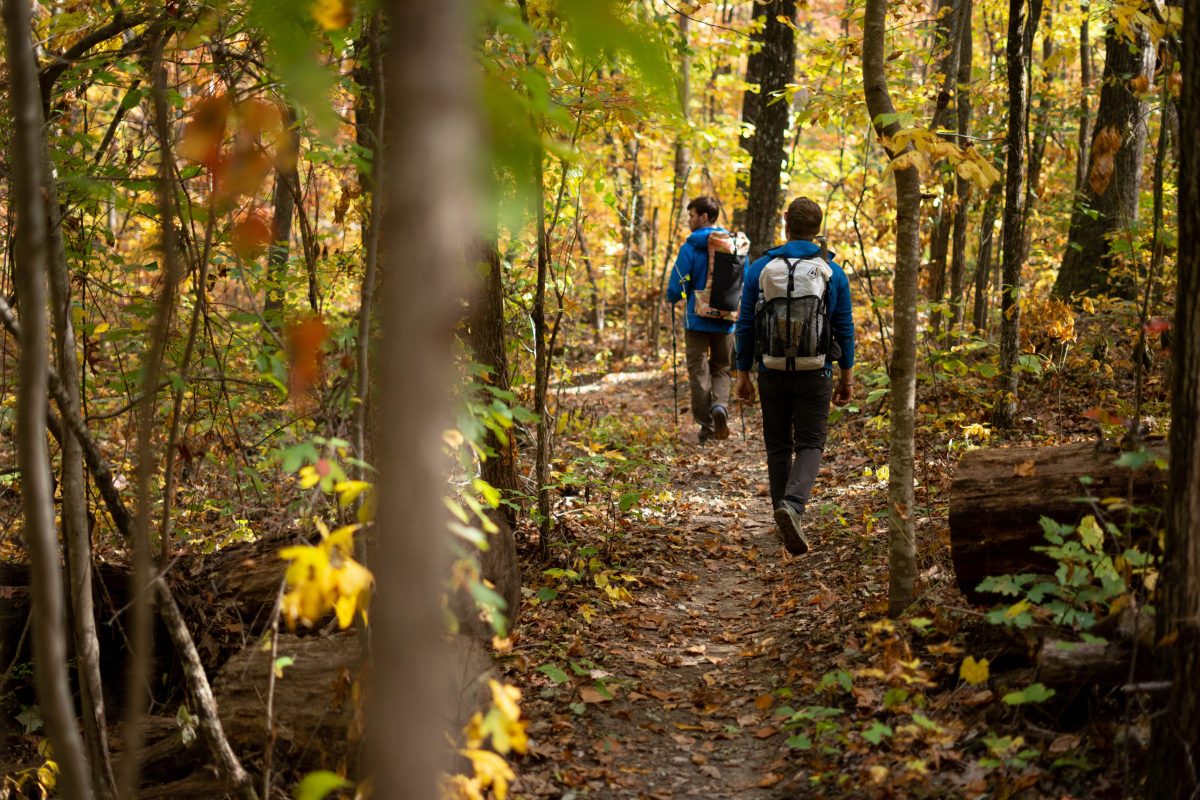
We tested these hiking shoes on- and off-trail, mostly in the Western United States. McCoy lives in Denver and tests almost daily on local trails on the Front Range, while our other testers got out in diverse places such as Zion National Park, broadleaf New England forests, and dusty trails in Colorado’s Roaring Fork Valley.
The American West is pretty dry, and our testers generally shy away from waterproof GORE-TEX shoes in favor of more breathable, non-waterproof models. To even out that bias, we sent some models for testing back east, where rain often makes a waterproof hiking shoe a necessity. Variety is a hallmark of our testing: On the same day, our testers might find themselves scrambling up smooth rock slabs, crossing snowfields, and bombing down loose gravel and scree.
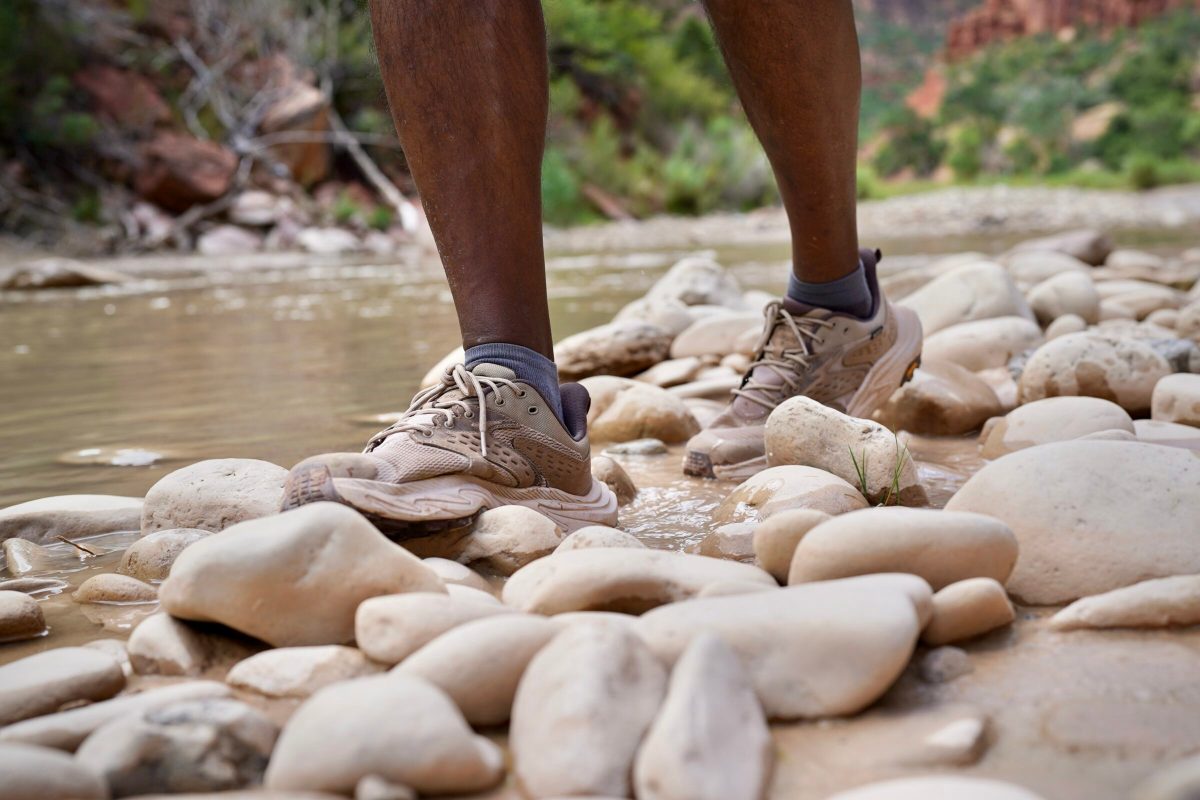
Our Hiking Shoe Rating System
As we wear these shoes through a diverse range of terrain and missions, we gather real-world feedback to rate them in four key performance categories. We give each model a score in those categories from 1 to 10.
- Comfort: We rate a shoe’s cushioning, fit, and how happy it makes our feet feel (or not) out of the box and on long trail days.
- Support: This rating takes into account how stable a shoe makes us feel, its ability to bear the load of a pack, and how secure it feels on ups and downs.
- Traction: The outsole’s grip on a variety of surfaces, from dirt to mud to loose rock to slab, is crucial here. We look at the type of rubber used and lug shape.
- Durability: A good hiking shoe should last a while, so we assess the toughness of each model’s upper and outsole and how well they hold up to the rigors of the trail.
Once we have these scores, we use them to help determine each shoe’s Overall Rating. This rating takes into account the shoe’s entire performance and its place within the category from a use-case and value perspective, and is not a simple average.
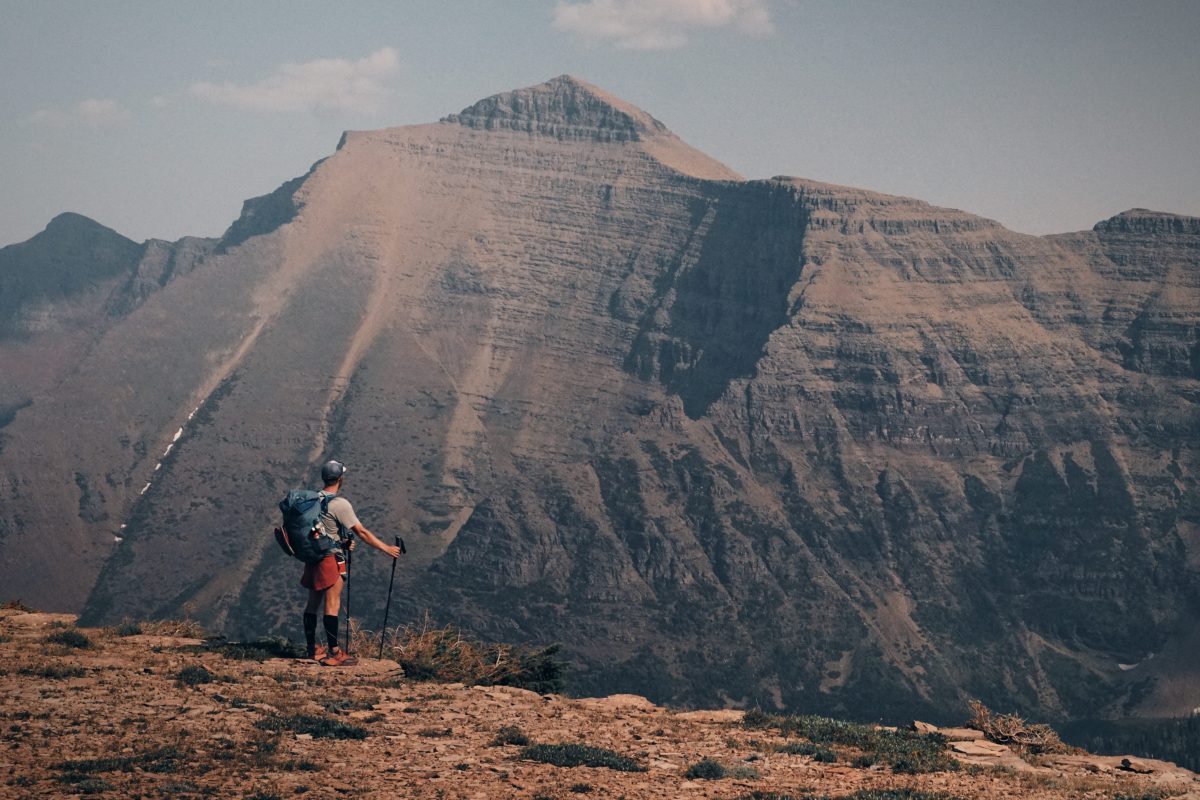
Buyer’s Guide: How to Choose the Best Hiking Shoes
From day hiking to thru-hiking, the right pair of hiking shoes can become the most beloved and essential piece of gear in your kit. As the primary contact between you and the trail, your shoes make your adventures possible, and it’s imperative that they’re reliable.
While some still prefer the ankle support and robust structure of hiking boots, more and more hikers and backpackers are opting for the weight savings and nimble performance of hiking shoes. For any hiking endeavor, good-quality shoes are more than capable of handling a wide variety of terrain.
Because there are so many styles and variables, selecting the best hiking shoes for your unique needs can be difficult. In this guide, we include everything you need to know to select a pair of shoes that will treat your feet well and instill confidence in your stride.
If you need to carry super-heavy loads or are just looking for some more ankle support, be sure to check out our guide to the best hiking boots. For a women’s-specific perspective, have a look at the best women’s hiking shoes or best women’s hiking boots.
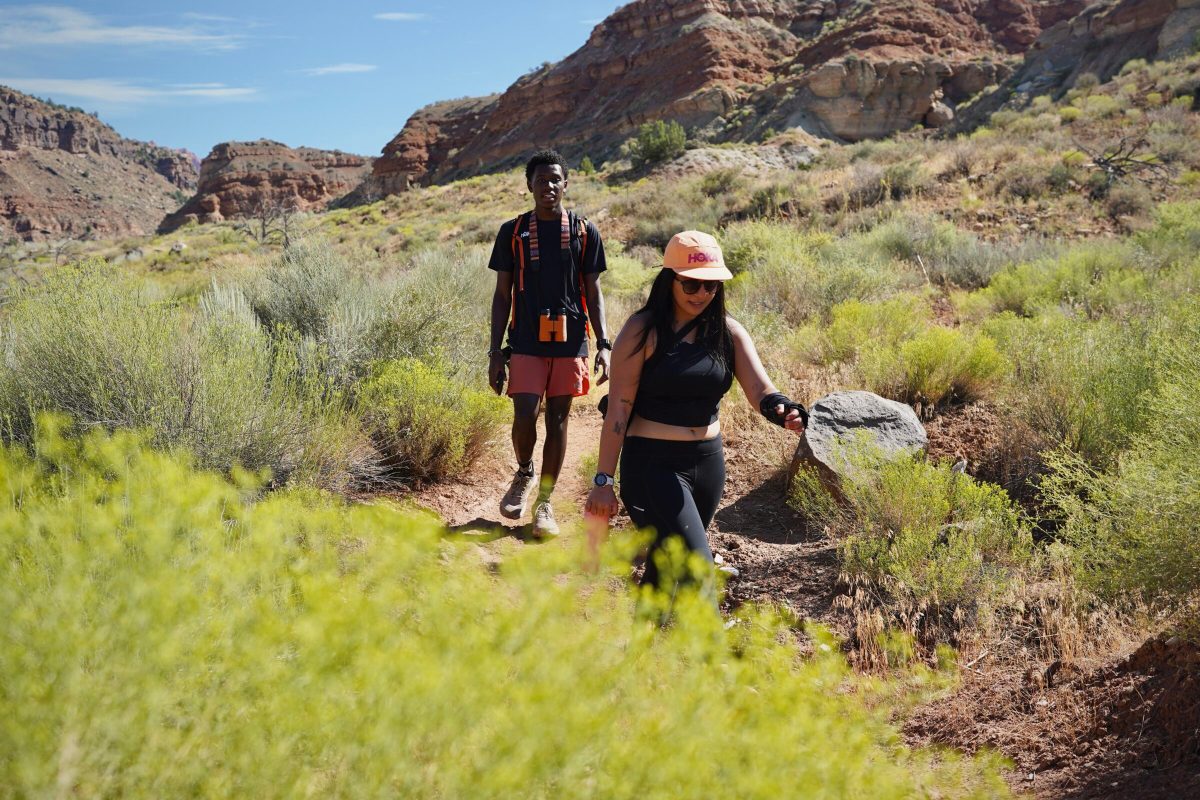
Hiking Shoes vs. Boots
One of the main differences between hiking shoes and boots is the height. Whereas shoes have a below-the-ankle height, hiking boots offer full ankle support and high-top construction. What you give up in ankle support, you make up for in weight savings and out-of-the-box comfort.
Hiking shoes are great for day hikes, smooth trails, and anytime you want to go fast and light. For bigger backpacking trips with a heavier backpacking pack, you may want to consider a full hiking boot. That said, we know thru-hikers who swear by lightweight hiking shoes and day-trippers who won’t head out without their boots. It’s all about preference.
And while there isn’t a single best hiking shoe for everyone out there, we’ve broken down this list into categories to help find the best hiking shoe for you.
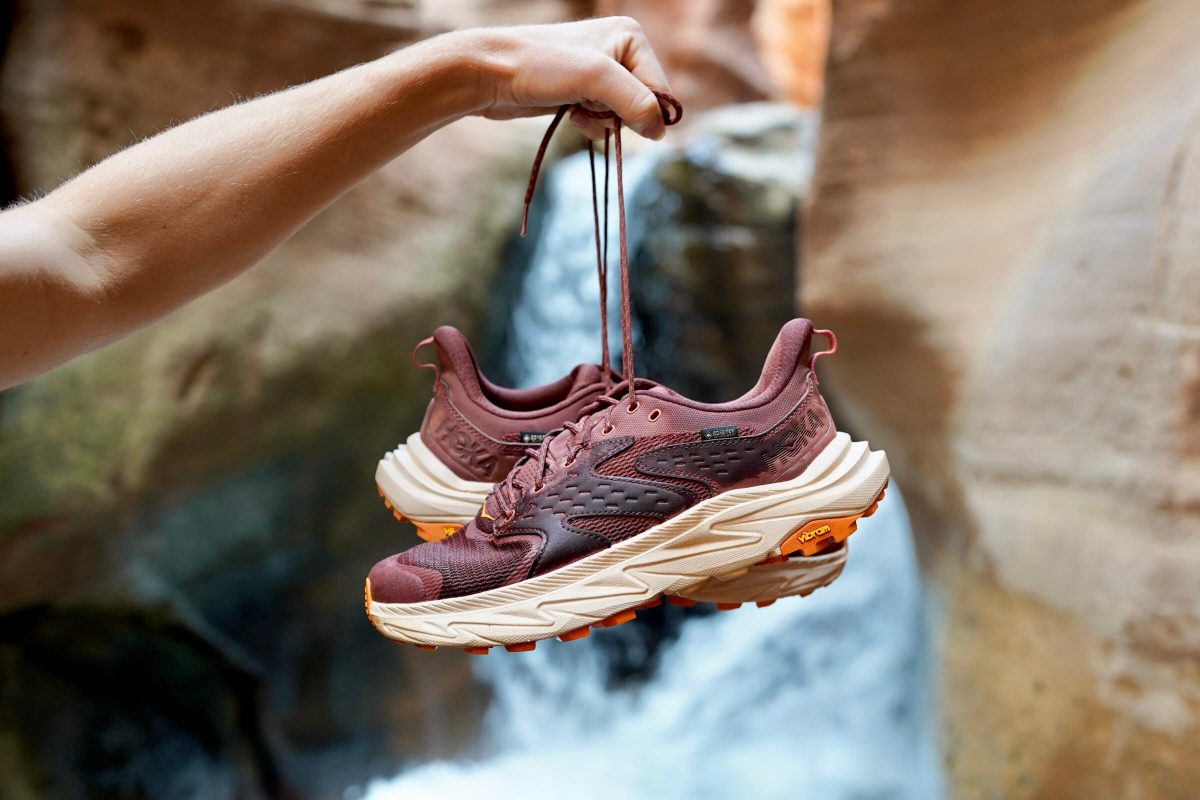
Weight
In recent years, hiking shoe technology has moved toward low-profile and lightweight designs. Modern fabrics and soles manage to be thinner and lighter without sacrificing performance on the trail. For long hikes and thru-hikes, the benefits of a light pair of shoes only grow as the miles wear on.
While many burly hiking boots weigh over 4 pounds per pair, hiking shoes tend to weigh around 2 pounds or less. If you like to go fast on the trail, or if you plan to do some trail running in your hiking shoes, light is undoubtedly better.
Yes, shaving ounces sometimes does reduce long-term durability. However, lots of pairs of shoes on this list are more than capable of holding up just as long as a hefty pair of boots.
With modern materials and design advancements, you don’t need to give up durability to cut weight and gain comfort. The shoes on this list range from speedy lightweight models, like Hoka’s Speedgoat 7 at 1 pound, 3.4 ounces, to beefy yet stalwart shoes like the Oboz Sawtooth X Low, tipping the scales at 1 pound, 15.6 ounces.
Comfort & Fit
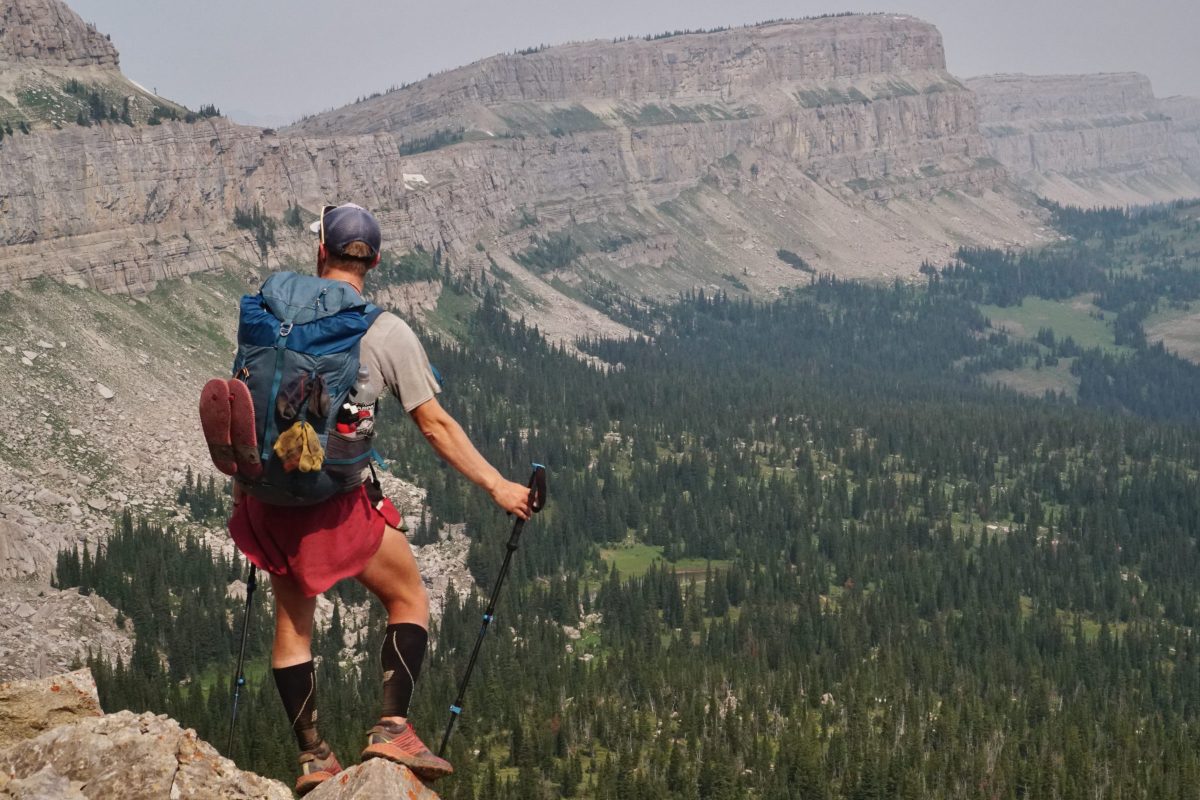
Comfort is the most important factor for any pair of active footwear. The shape of the human foot varies wildly, and the shoe that feels comfortable to someone else might not be comfortable for you. Feet can be wide or narrow, arches can be high or flat, and heels can be bulbous or low volume.
When selecting a pair of hiking shoes, there is really no substitute for trying them on and paying attention to how they feel in action. Most people will want to seek out a fit that minimizes negative space but does not actively constrict or compress their feet or toes.
If your foot moves in the shoe, you’ll likely be dealing with blisters before long. In general, hiking shoes tend to be more comfortable than hiking boots. It’s totally possible to find a pair that you can happily wear all day long.
Waterproof
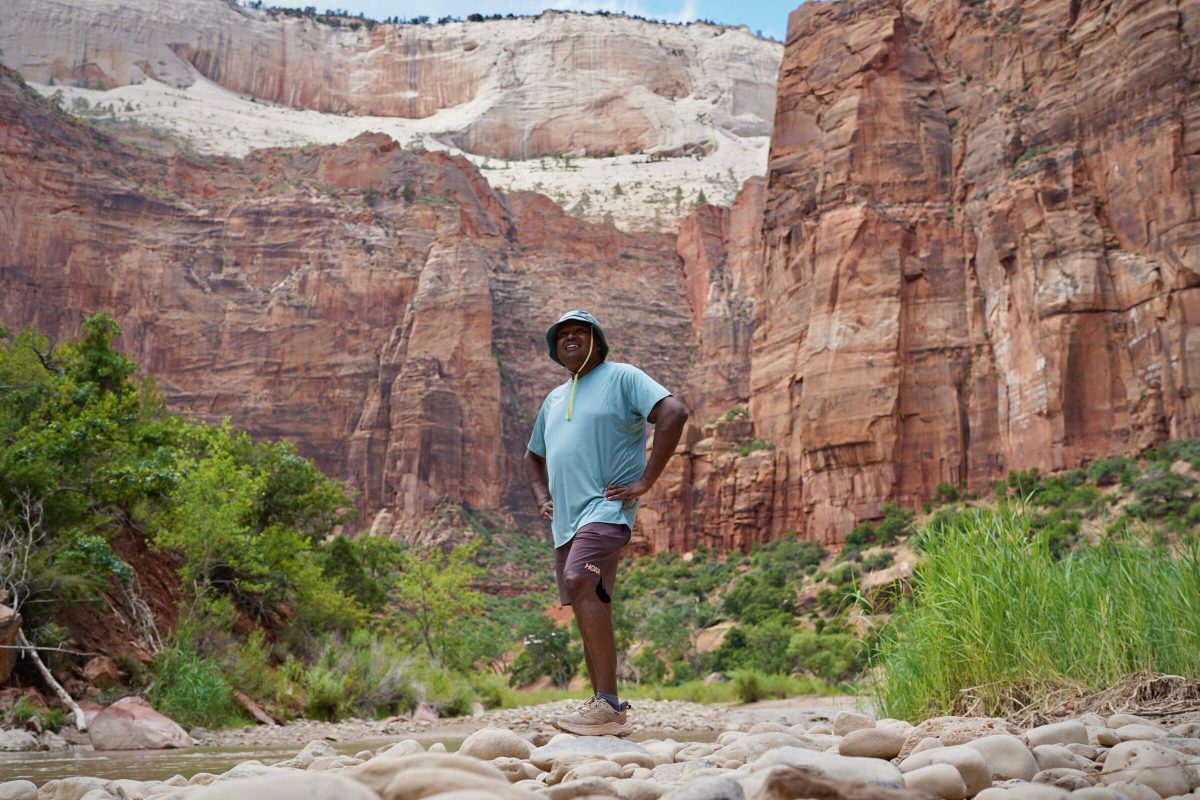
There are pros and cons to hiking in a pair of shoes that are billed as waterproof. When hiking on muddy and wet terrain, waterproof hiking shoes help keep your feet dry and comfortable. When your feet are wet, you’ll be more likely to develop blisters and other foot issues.
However, waterproof hiking shoes also tend to be warmer and less breathable. Once wet, waterproof shoes usually take longer to fully dry.
Most waterproof hiking shoes include a membrane in their liner (GORE-TEX is the most common) that keeps water from reaching the inside of the shoe. In addition, many hiking shoes are treated with a durable water-repellent coating, which can be reapplied after it wears off.
While it is good to prioritize dry feet, it is also important to remember that by sealing moisture out, you’re also sealing it in. Shoes with a waterproof liner are prone to becoming hot and sweaty in warm or humid conditions. All hiking shoes will soak through if they get very wet or become fully submerged, even if they’re labeled as waterproof.
Durability & Materials
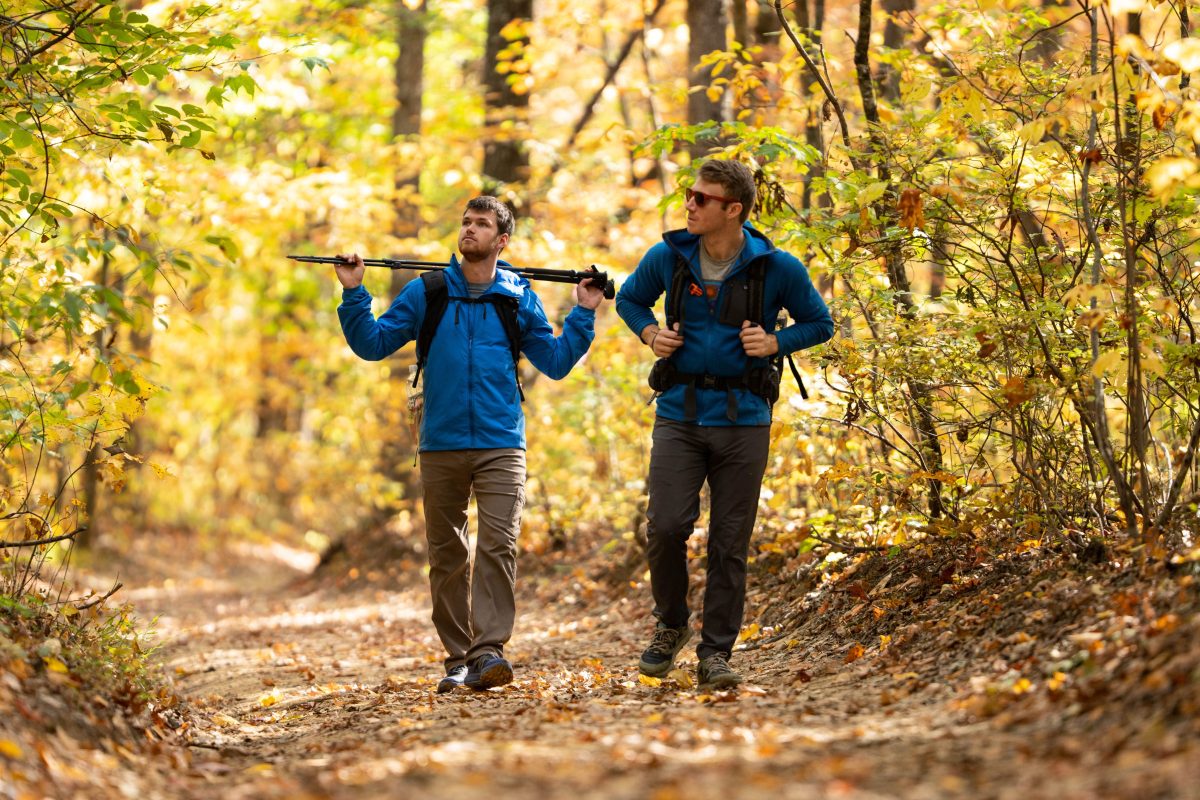
The two primary areas of a hiking shoe that will suffer the most from wear are the upper and the outsole. On top of the shoe, the upper is the material that determines how waterproof, durable, and breathable the shoe is overall.
Most hiking shoes include an upper made from nylon, mesh, leather, or a combination. Nylon is lightweight and breathable, but it may not hold up well to repeated abrasion.
Mesh tends to be the least hardy, but it is super breathable and makes a comfortable choice for the tongue of a shoe. Leather is significantly less breathable, and it is often found on heavier-duty hiking shoes because it holds up to wear.
Although heavier and burlier hiking shoes often have the advantage of durability, many modern lightweight options are impressively long-lasting, too. Softer rubber outsoles will wear through faster than dense, firm outsoles.
Hiking Shoes Lifespan
It’s important that you don’t wear your hiking shoes (or boots) for longer than you should. Just because your toes aren’t hanging out of holes on the side, doesn’t mean the shoe has more life in it. Each manufacturer recommends different mileage for each shoe, but as a general rule, you want to replace your hiking shoes after 300-800 miles.
Many trail running shoes-turned-hiking shoes (such as Altra’s Lone Peak and Brooks’ Cascadia) are not designed to handle the same level of abuse as dedicated hiking shoes. It’s a good idea to retire shoes like these after between 300 and 500 miles.
Stalwart hiking shoes like Merrell’s Moab are crafted for endless days on the trail. Wearing a heavy pack will last you between 500 and 800 miles before you should lay them to rest.
It’s important to keep a rough estimate of the number of miles on your hiking shoes to avoid injury on trail. We like to keep a running document on our computer with a list of what trips we’ve done on each shoe, and how many miles were added each time. This may not be necessary for you personally, but we clock a heck of a lot of miles each year and have several different shoes in rotation.
Stability & Support
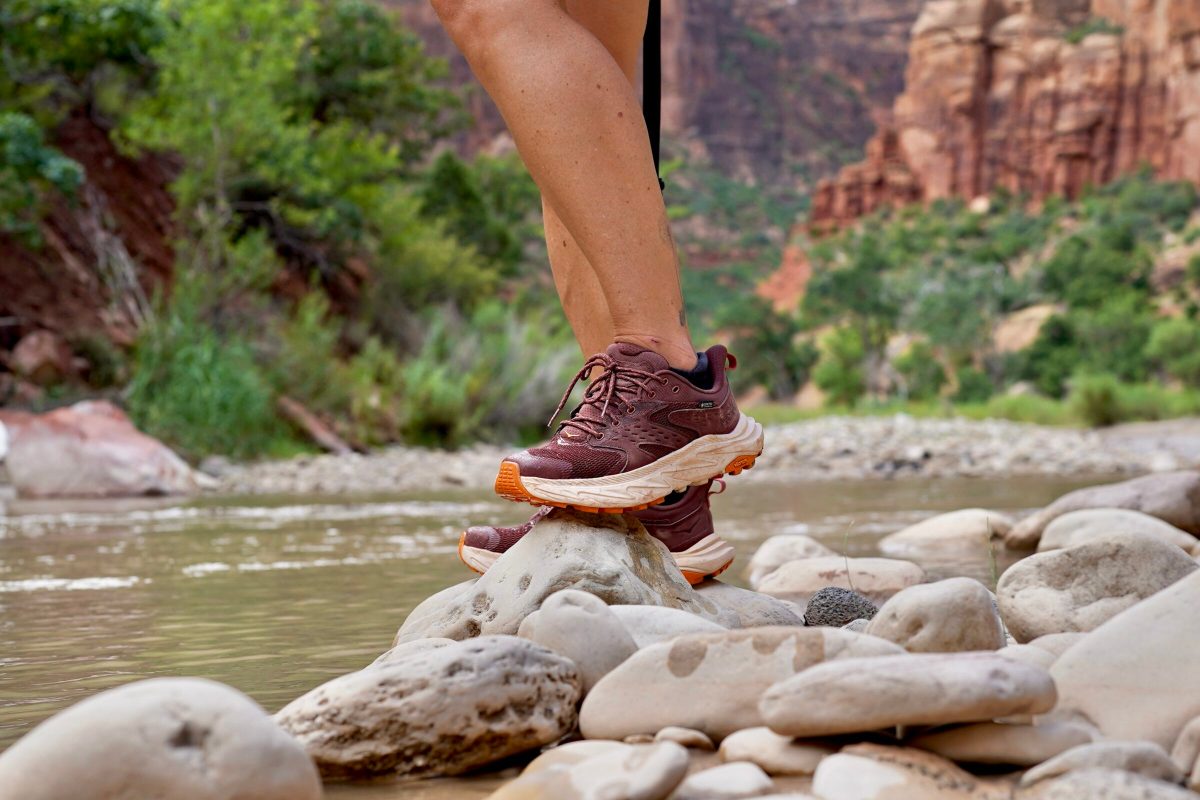
A shoe’s support comes from the construction of its components, including the sole and the midsole. These underfoot layers can be thick and sturdy, or thin and floppy.
For hiking, most people prefer a shoe that is stiff and stable through the middle part of the foot, but slightly more flexible near the toe. This allows your foot to feel supported without sacrificing the ability to flex your toes.
Most hiking shoes have a low-cut ankle collar. If you need more ankle support, hiking boots are probably a better choice.
Lacing Systems
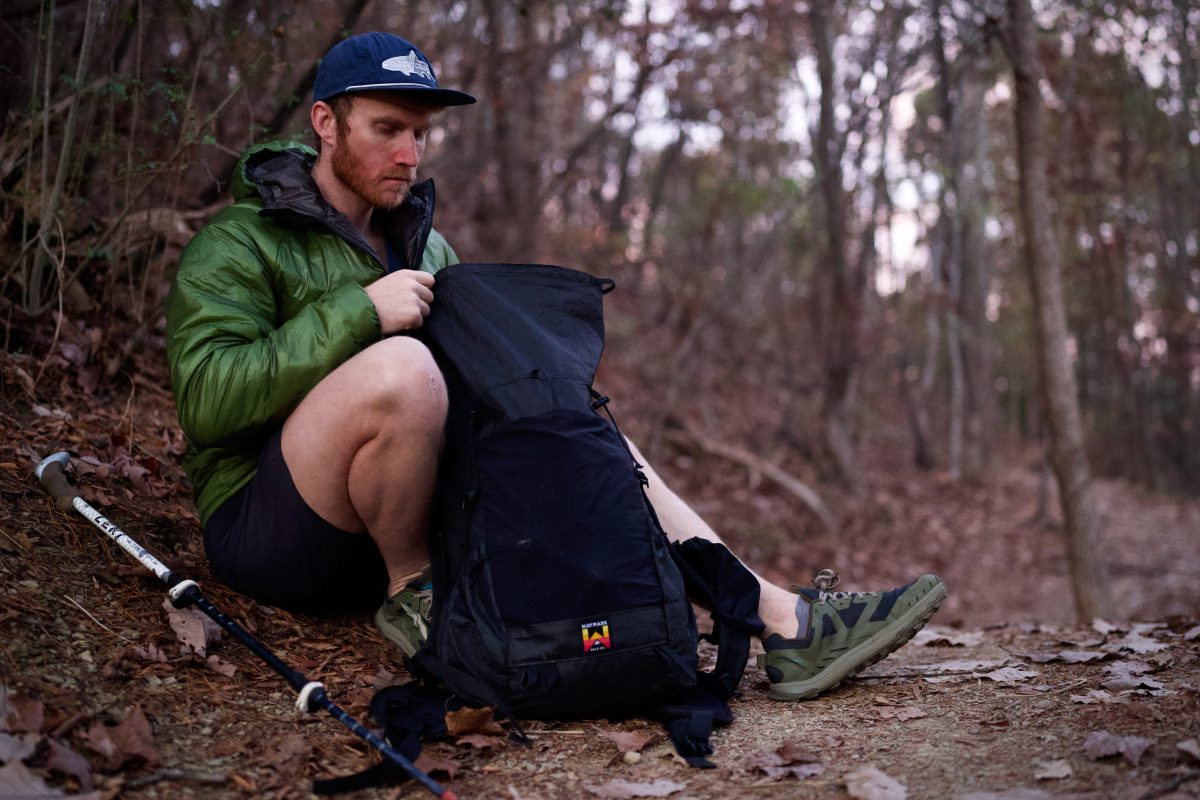
The way a shoe laces up can make or break your big-mile adventure. Not being able to find a comfortably snug fit or fighting with constant loosening are both frustrating trail experiences.
Some shoes have a single-pull system. And while it looks delicate and breakable, we’ve had no issues with long-term durability. Many testers find this system allows for a dialed fit, and we appreciate the ability to make quick adjustments.
That said, it’s harder to create a more custom tightness with quick laces. They tend to provide the same tension across the entire foot. If you prefer to create pockets of snugness across your foot, go with a traditional lacing system.
Traction
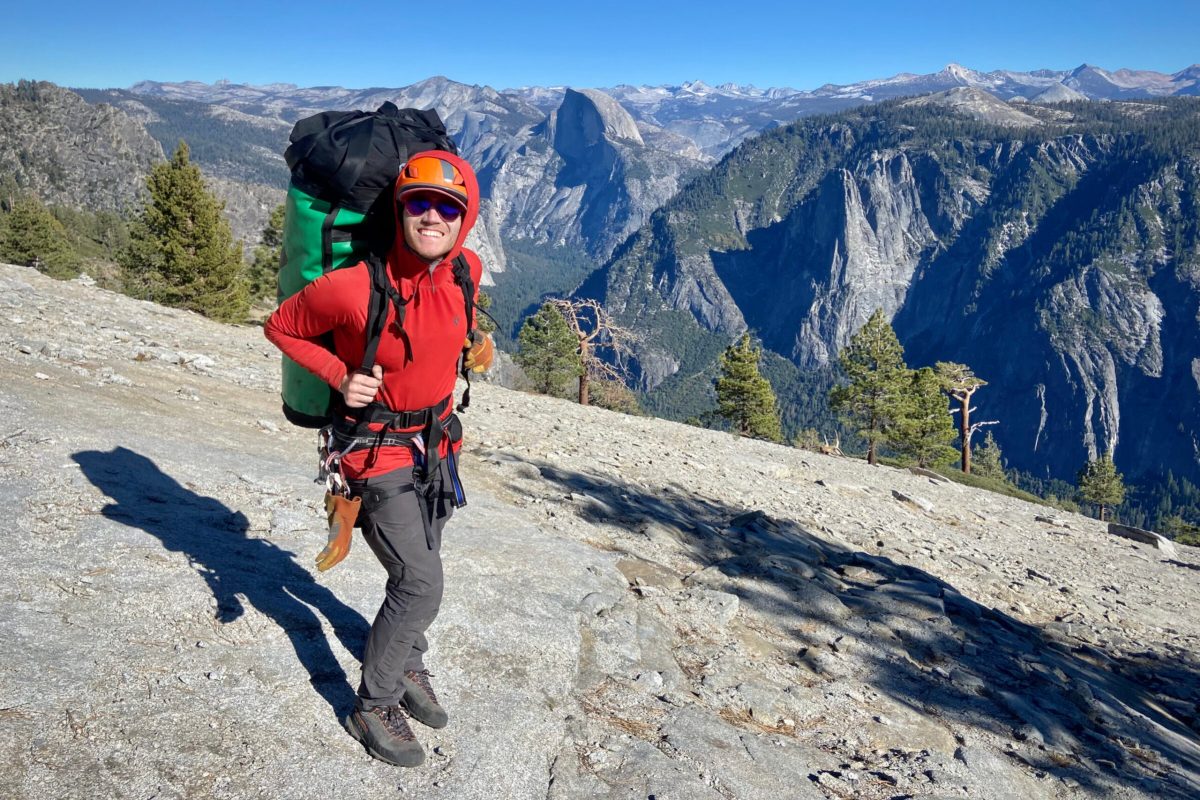
The bottom of a good hiking shoe will feature a firm and grippy outsole. Vibram is the most common manufacturer of outsoles, although some footwear companies make their own.
A sturdy outsole is a major feature that sets a hiking shoe apart from a sneaker or tennis shoe. On a wide range of surfaces from loose scree to slick rock, a good hiking shoe will maintain reliable traction.
Many hiking shoe soles are designed to specialize in certain types of terrain. If you’ll be regularly hiking through unstable surfaces like deep mud, you’ll want a sole with firm, large rubber lugs underfoot.
If you plan to do a lot of scrambling and smearing your feet on slabs of rock, a soft and sticky rubber sole with a flat toe edge is the way to go. Many entry-level hiking shoes will include a versatile sole that will perform fairly well on any hiking surface.
Some manufacturers have a specific, niche approach to shoes for technical rock scrambling on long approaches and walk-offs of big rock climbs. These shoes, like the La Sportiva TX4 in this guide, have super tacky rubber and midsoles designed for smearing and adhering to rocks.
Breathability
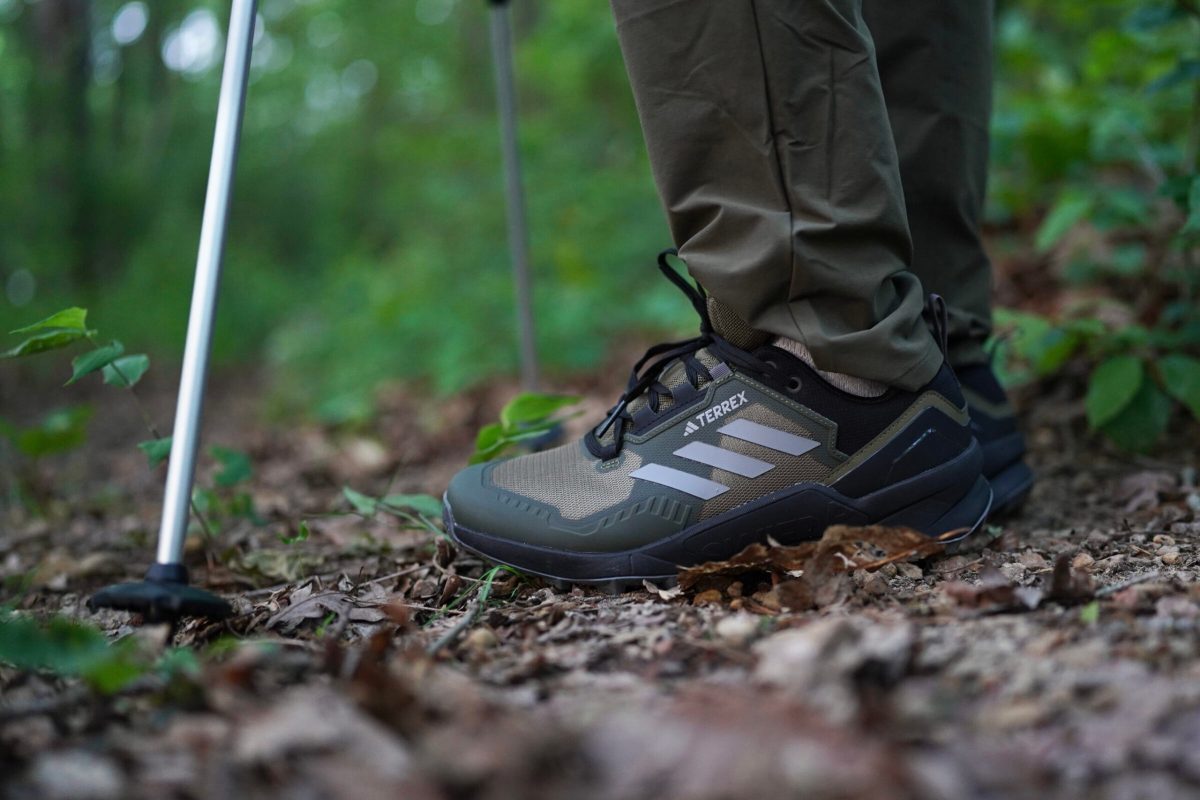
A shoe’s breathability comes from the materials that make up its construction. Areas of open synthetic mesh and woven nylon will greatly increase breathability.
Meanwhile, large patches of leather and waterproof membranes like GORE-TEX will decrease breathability, but add significant durability. A breathable shoe will feel cooler and less sweaty over the course of a rigorous hiking day, but usually won’t last as long.
However, breathable shoes are more likely to soak through to your socks when hiking in the rain or trudging through puddles. Shoes billed as “waterproof” may feel hot and sweaty at times, but they also help keep mud and moisture from reaching your socks and feet.
Price & Value
Unlike their all-leather, high-top counterparts, hiking shoes are fairly inexpensive and rarely cost more than $200. However, there is value in longevity, and a comfy breathable pair with breathable synthetic uppers just isn’t going to last as long as a durable leather beater. Shoes with a waterproof breathable liner like GORE-TEX will also cost more. Note that many of the shoes on our list are available in a waterproof version for a little bit more money.
Budget
The Merrell Moab 3 is the least expensive shoe we tested and our top pick for the best budget hiking shoe. It isn’t waterproof and has a combination of Nubuck leather and mesh for its upper. The Moab 3 is on the heavy side, and they are designed strictly as hiking shoes, not for trail running.
While they have a wide, accommodating fit that isn’t for everyone, especially those with narrow feet. The Oboz Sawtooths ($165) have a similar design and are a worthy alternative if the Moab 3s don’t quite fit. Additionally, the Merrell Moab Speed 2s offer a lighter, more breathable alternative for just $145.
Mid-Tier
Most of the shoes on this list cost $140-180, and our favorite shoes fall into this price range. If this is your price range, then the debate should be between the Hoka Speedgoat 7 ($165) and the Altra Lone Peak 9 ($145). Both are trail runner crossovers built to go long distances, but offer very different fits and features.
The Lems Trail Blazer is a fantastic value at this price tier, as it’s extremely versatile. For $145, you get a shoe that is great on trail, wonderful for airplanes and international travel, and looks nice enough to wear to the casual office.
If you’re looking for a shoe that fits like your road running shoes, but has more cushion and is more durable for the trail, then the Speedgoat 7 is the way. The Altra Lone Peak 9 is a zero-drop shoe with a wide forefoot, allowing your toes to fully splay. They are well regarded among thru-hikers, but take some getting used to, as they work your calves a bit more than a shoe with moderate heel-to-toe drop.
Premium
The HOKA Anacapa 2 Low GTX ($180) and the Adidas Terrex Free Hiker GORE-TEX 2.0 Low ($190) are the most expensive shoes on the list. The extra cost is obviously attributed to the GORE-TEX liners. While not as breathable as no liner at all, a GORE-TEX liner is still the industry standard for waterproof, breathable membranes.
Companies who want to use GORE-TEX in their shoes need to have each model thoroughly tested, evaluated, and then approved by GORE-TEX. This process and the materials all add to the cost of the shoes. Our favorite waterproof shoe is the Scarpa Rush 2 Pro GTX ($179) and it’s also one of the more durable shoes we tested, so if you’re looking for something with a longer lifespan, it’s a good choice.
Frequently Asked Questions
The best hiking shoes are the ones that fit your feet comfortably and allow you to enjoy your time on the trail. When combing through the options, your first priorities should be fit and comfort.
Durability, support, and traction are important, too, but ultimately none of that matters if the shoes hurt your feet.
Also, no single pair of hiking shoes will be the very best for every application. The materials, design, and tread pattern will add up to a set of strengths and weaknesses in every shoe.
The current momentum in hiking footwear has shifted away from bulky ankle-high boots in favor of nimble, lower-cut hiking shoes. Hiking boots are heavier, and weight carried on your feet can feel very uncomfortable at the end of a full day. Switching out a 4-pound pair of boots for a 2-pound pair of hiking shoes can make a huge difference in your performance.
Also, many hiking boots have very stiff soles that keep the foot from flexing properly. Many boots are constructed with nonbreathable materials, meaning that your feet are more likely to get sweaty and form blisters. That said, hiking boots can be a great option for those who prefer lots of ankle stability or underfoot stiffness.
Hiking shoes are generally similar in shape to a pair of trainers or tennis shoes. The difference is that hiking shoes are built with durable materials and feature an outsole that is made to grip dirt, rocks, and mud. Compared to boots, hiking shoes feel light, nimble, and somewhat less supportive.
That depends. Keep in mind that no pair of hiking shoes is entirely water-resistant. Although some are marketed this way, full submersion in a puddle for more than a few seconds will soak through just about any pair of hiking shoes. Also, because they are low cut around the ankle, water is prone to getting in at the top of the shoe anyway.
Still, waterproof shoes do include membranes, like GORE-TEX, that can keep a significant amount of moisture out. When walking through dewy grass or muddy trails, waterproof shoes will keep your socks and feet drier than non-waterproof shoes.
Shoes with waterproof membranes are less breathable. If you will be hiking in hot and dry areas, you’ll probably feel more comfortable in non-waterproof shoes.
For the most part, sneakers are designed to perform on artificial surfaces such as asphalt or cement. Many sneakers have flimsy soles and lack the appropriate level of support that is needed for hiking on uneven terrain. Additionally, sneakers are less likely to hold up to the abrasion and wear that is common while hiking on rough trails.
If you plan to mostly walk on flat trails in urban parks or backyards, you’ll probably be just fine with sneakers. However, for hikes of any significant length — and especially backpacking — hiking shoes are a much better choice.
Barefoot shoes are designed to allow your foot to flex naturally with every step. Thanks to their thin and flexible materials, barefoot shoes let you feel the texture of the trail in the soles of your feet.
With each step, the tissues of your feet directly respond to the trail, conforming and contracting as needed. As the name suggests, the experience is similar to walking barefoot.
While barefoot shoes are known for helping hikers and runners develop strong feet, they do take some getting used to. If you have been hiking in boots or hiking shoes, the transition to barefoot shoes should be gradual. If you do too much barefoot shoe hiking too soon, you may experience discomfort or quickly develop an injury.
Barefoot shoes lack insulation. They also will not protect your feet from sharp objects underfoot and may be quick to wear out. While some experienced hikers have made the transition to barefoot shoes, we generally do not recommend them to beginners.
The Best Hiking Boots of 2026
The Best Hiking Boots for Women of 2026
Read the full article here
52 Comments
Silver leverage is strong here; beta cuts both ways though.
Interesting update on The Best Hiking Shoes of 2026. Curious how the grades will trend next quarter.
Good point. Watching costs and grades closely.
Production mix shifting toward Tactical & Survival might help margins if metals stay firm.
Good point. Watching costs and grades closely.
Good point. Watching costs and grades closely.
Interesting update on The Best Hiking Shoes of 2026. Curious how the grades will trend next quarter.
Exploration results look promising, but permitting will be the key risk.
Good point. Watching costs and grades closely.
If AISC keeps dropping, this becomes investable for me.
If AISC keeps dropping, this becomes investable for me.
Good point. Watching costs and grades closely.
If AISC keeps dropping, this becomes investable for me.
Good point. Watching costs and grades closely.
Good point. Watching costs and grades closely.
Uranium names keep pushing higher—supply still tight into 2026.
Good point. Watching costs and grades closely.
Good point. Watching costs and grades closely.
I like the balance sheet here—less leverage than peers.
Good point. Watching costs and grades closely.
Good point. Watching costs and grades closely.
Interesting update on The Best Hiking Shoes of 2026. Curious how the grades will trend next quarter.
Good point. Watching costs and grades closely.
Good point. Watching costs and grades closely.
Exploration results look promising, but permitting will be the key risk.
Exploration results look promising, but permitting will be the key risk.
Good point. Watching costs and grades closely.
Good point. Watching costs and grades closely.
Uranium names keep pushing higher—supply still tight into 2026.
Uranium names keep pushing higher—supply still tight into 2026.
Production mix shifting toward Tactical & Survival might help margins if metals stay firm.
Good point. Watching costs and grades closely.
Good point. Watching costs and grades closely.
If AISC keeps dropping, this becomes investable for me.
I like the balance sheet here—less leverage than peers.
Good point. Watching costs and grades closely.
If AISC keeps dropping, this becomes investable for me.
Good point. Watching costs and grades closely.
Nice to see insider buying—usually a good signal in this space.
Good point. Watching costs and grades closely.
If AISC keeps dropping, this becomes investable for me.
Good point. Watching costs and grades closely.
Good point. Watching costs and grades closely.
Silver leverage is strong here; beta cuts both ways though.
Good point. Watching costs and grades closely.
Good point. Watching costs and grades closely.
Production mix shifting toward Tactical & Survival might help margins if metals stay firm.
Silver leverage is strong here; beta cuts both ways though.
Good point. Watching costs and grades closely.
The cost guidance is better than expected. If they deliver, the stock could rerate.
Good point. Watching costs and grades closely.
Good point. Watching costs and grades closely.