
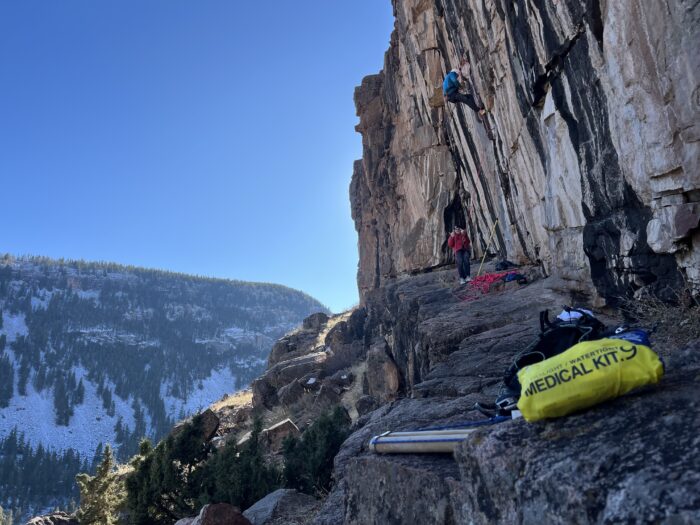
The best first-aid kits keep essential medical supplies organized, accessible, and ready when minor injuries or backcountry mishaps happen.
Lead tester Meg Carney and GearJunkie Editor Chris Kassar long-term tested seven kits over the past 12 months. Carney is a guide and climbing instructor who has responded to numerous field emergencies, while Kassar is a longtime Wilderness First Responder. We brought these first-aid kits on high-alpine hikes up Colorado fourteeners, kayaking trips off the Washington coast, and casual car-camping adventures. Across those outings, we logged more than 30 field days and 150 backcountry miles while assessing internal organization, durability, and portability.
The Adventure Medical Kits Ultralight/Watertight .7 remains our best overall pick for its compact, weather-resistant design and well-rounded supplies. Meanwhile, the HART Outdoor Weekend First-Aid Kit earned our budget award for delivering a useful, well-organized setup at a sweet price.
Over the past five years, our team of experts has vetted 25 first-aid kits across frontcountry, backcountry, and everyday use.
Editor’s Note: We updated our First-Aid Kits Guide on May 16, 2026, with continued field testing on our existing selection of nine kits, refreshed reviews, updated awards, new ratings, and a revised comparison chart.
The Best First-Aid Kits of 2026
Best Overall First-Aid Kit
9.3/10 RATING
Best Budget First-Aid Kit
7.3/10 RATING
Best First-Aid Kit for Car Camping
8.5/10 RATING
Best Dog First-Aid Kit
8.2/10 RATING
Best Comprehensive First-Aid Kit
8/10 RATING
See more picks
Dimensions
8.5 x 6.5 x 2″
Pros
- Lightweight
- Quality contents
- Waterproof
- Sewn-in loops for easy attachment
- Durable
Cons
- Low quantities of certain items
- Not sufficient for large groups
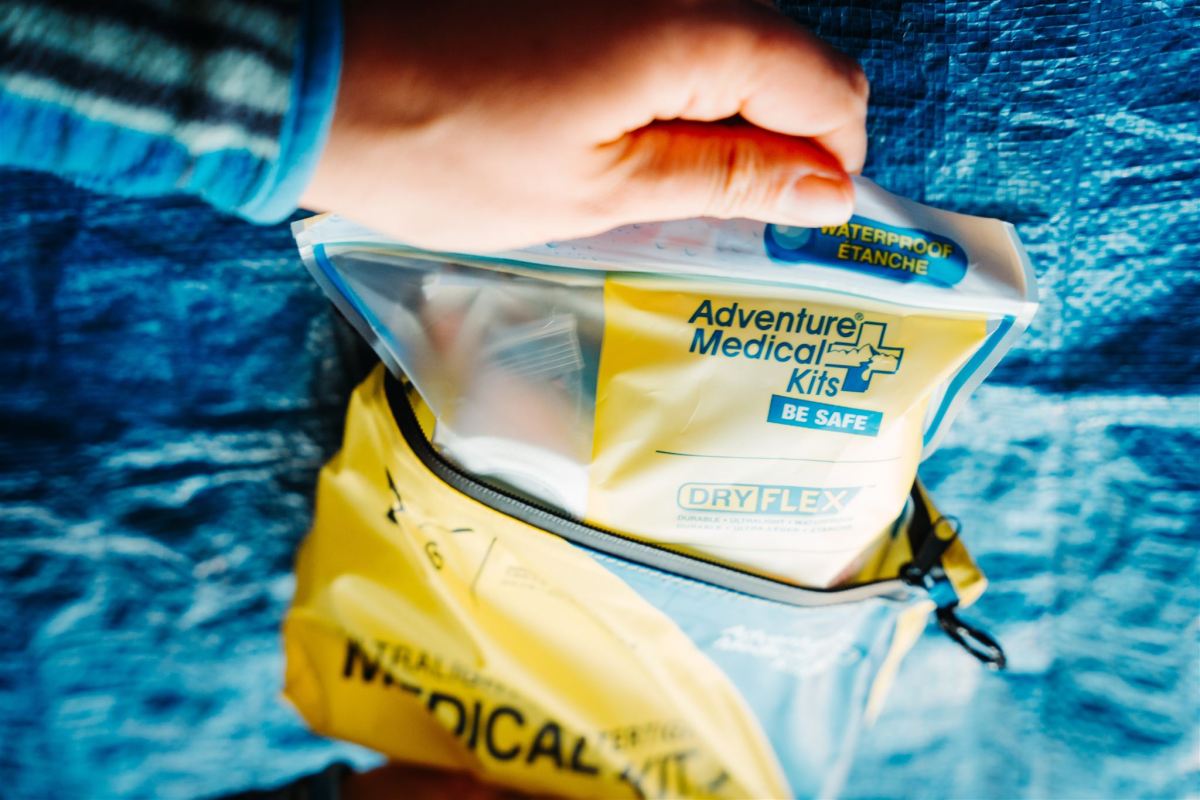
At just 8 ounces, the Adventure Medical Kits Ultralight/Watertight .7 ($45) is easy to pack, weather-ready, and well-stocked for solo hikers, small groups, and short backpacking trips. It’s our best overall first-aid kit because it strikes the right balance of portability, protection, and useful supplies without taking up much space in a pack, boat, or travel bag.
The fully waterproof case keeps supplies dry, and the bright yellow exterior is easy to spot in a crowded pack. Ours has held up through years of field use, and the compact shape fits easily in a backpack, kayak, canoe, or climbing pack. Sewn-in loops also let you clip it to the outside of a pack or harness when quick access matters.
Inside, the .7 includes a smart mix of essentials, including a full sheet of moleskin, adhesive bandages in several sizes, medical tape, wound care supplies, and common medications like aspirin and ibuprofen. It doesn’t include a CPR face shield, but there’s enough extra room to add one or tuck in a few personal medications.
Compared to the Adventure Medical Kits Mountain Series Hiker, the .7 is more compact and weather-resistant, while the Hiker has a more structured layout and slightly easier organization. The Ultralight/Watertight .9 offers more supplies for longer trips or larger groups. Tradeoff: It also takes up more space.
For one to three people heading out for day hikes, paddling trips, weekend backpacking, or lightweight travel, the Ultralight/Watertight .7 is the kit we’d reach for first
Dimensions
6.5 x 5.5 x 2″
Pros
- Good packable size
- Fairly lightweight
- Great organization and labeling
Cons
- Low contents of certain items
- We wish that more tape was included
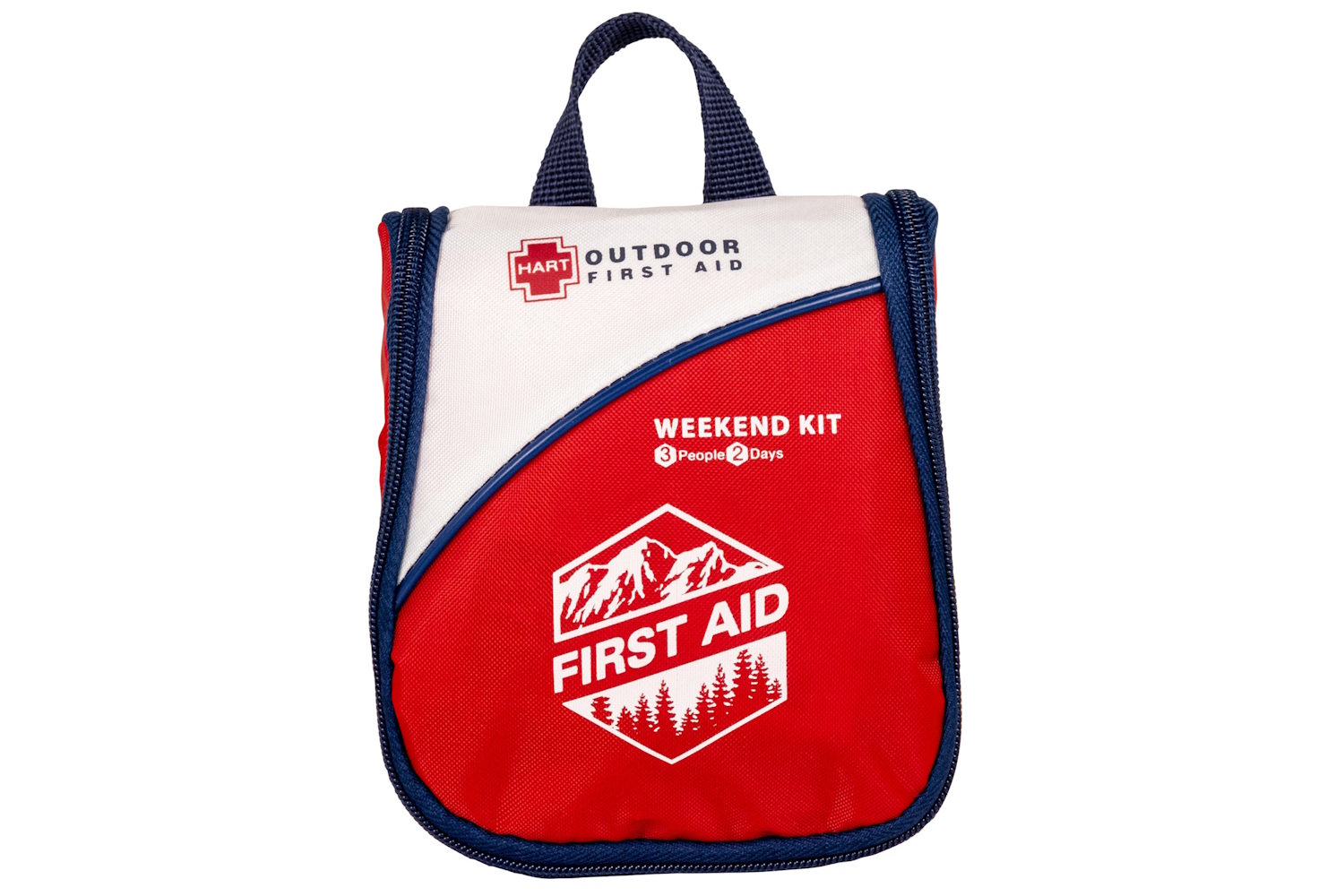
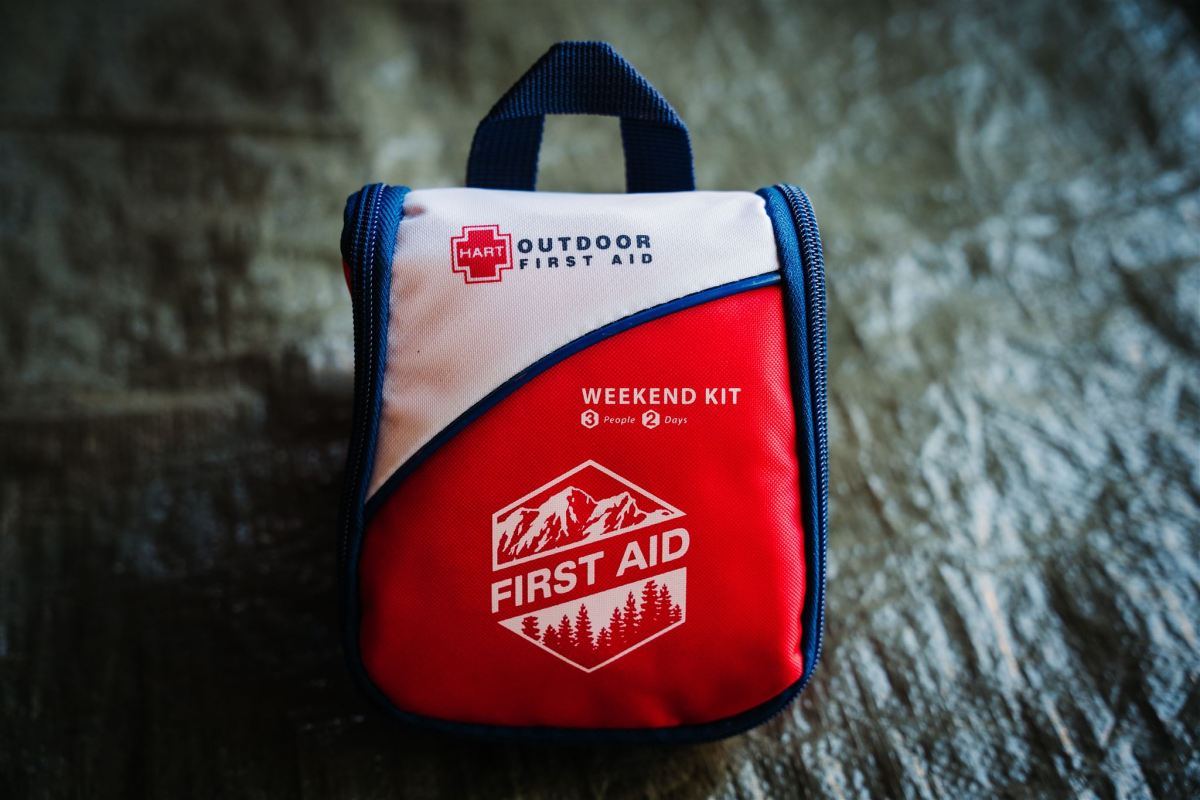
The HART Outdoor Weekend First-Aid Kit ($31) is an excellent choice for quick getaways of up to two days, especially for one or two people. It strikes a great balance between packability and functionality at an approachable price.
It has a good spread of supplies, including four butterfly closures, multiple gauze pads, antiseptic towelettes, and even a Wilderness First-Aid Guide. However, the limited availability of certain items, such as adhesive bandages and tape, may require you to restock ibuprofen sooner than anticipated. This can be a bummer for more severe injuries or multiple incidents.
While it’s a well-rounded kit for short trips, it doesn’t hold up as well for larger groups or extended outings, especially when compared to options like the Adventure Medical Kits Mountain Series Hiker. For just a few dollars more ($35), the Hiker kit offers better organization with labeled pouches and is better suited to multiday hiking trips.
While solid in its offerings, it feels slightly less durable due to its non-waterproof material. If camping in wetter conditions, consider adding a waterproof bag to protect the contents. Also, we noted the absence of a CPR face shield, which is a crucial item in emergency situations. For those willing to customize, there’s ample room to add personal medications or additional bandages.
The Weekend First-Aid Kit is an excellent choice for budget-conscious adventurers seeking a lightweight, organized option for short trips. It also comes in a similar multi-day option if you frequently camp with larger groups or take longer excursions.
Dimensions
8.5” x 6” x 4”
Pros
- Highly comprehensive kit
- Items to treat severe traumas
- Durable carrying case
- Well-organized and easy-to-find items
Cons
- Heavy
- Medical guide is only available as an ebook
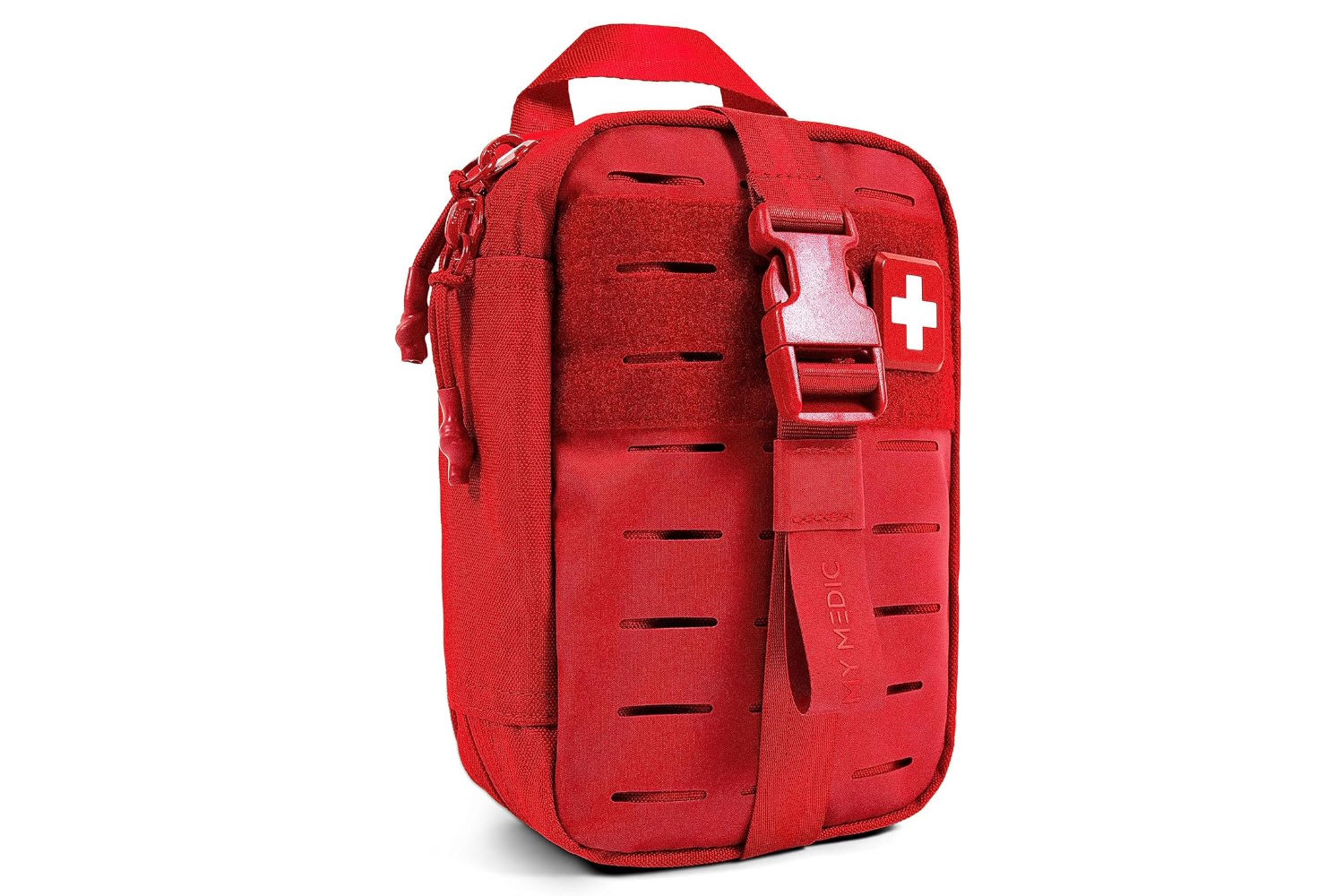
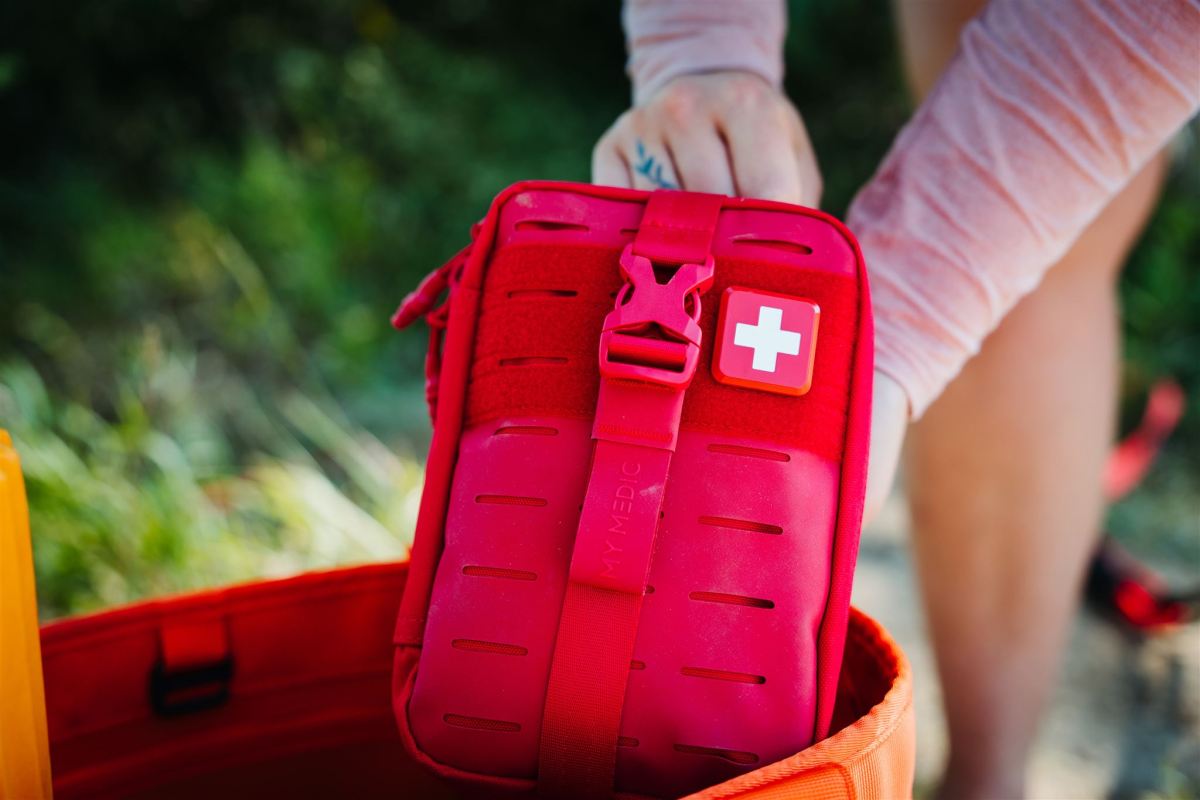
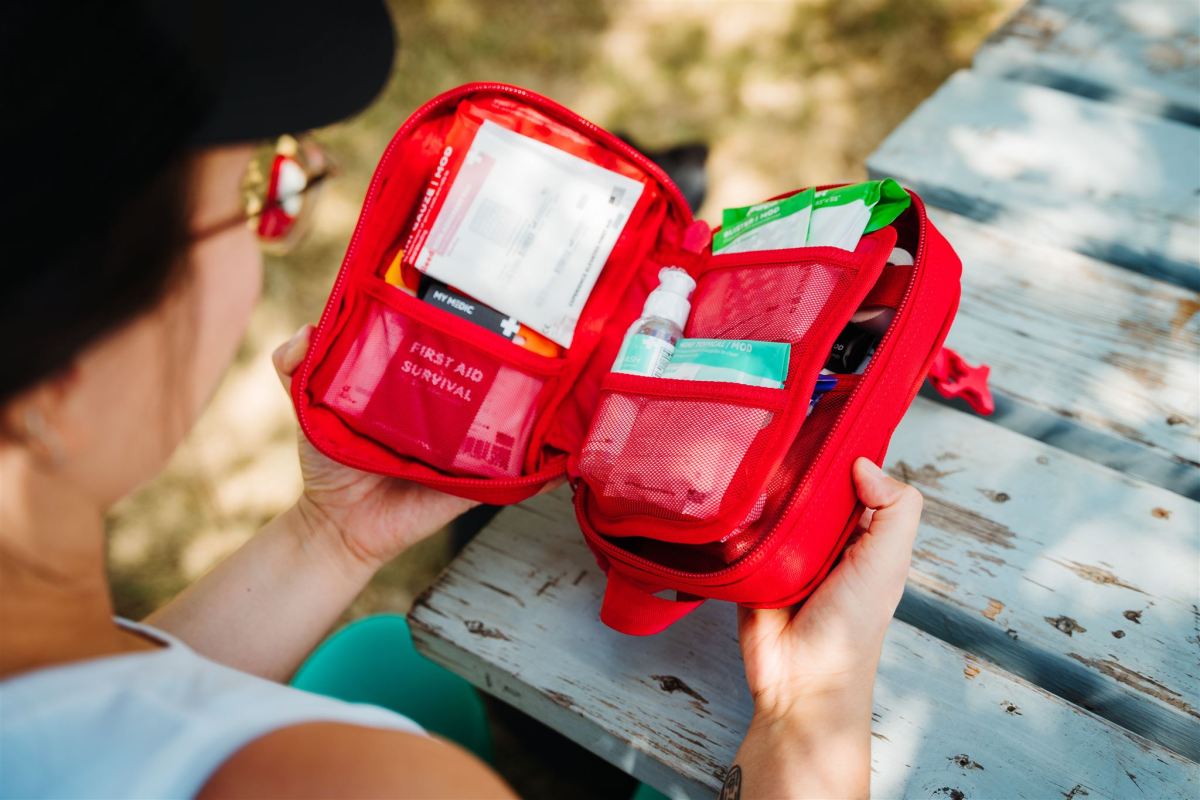
The MyMedic MYFAK Mini ($123) is a burly first-aid kit in a portable package. It is rugged and durable, but it also holds over 62 lifesaving items. Thanks to thoughtful organization and a comprehensive array of supplies, including medications and trauma items, we came away from testing quite impressed.
The folding page design and organizational modules enhance organization and allow for quick access to items. Each component is stored in durable, weather-resistant pouches to protect and keep them sterile. Keep in mind that this kit’s outer packaging isn’t completely waterproof. The kit includes pro-grade tools, such as EMT-grade trauma shears and a digital thermometer, offering the reliability needed for serious emergencies. These qualities elevate it above many competitors.
Compared to the Surviveware Comprehensive Small First Aid Kit, the MYFAK Mini offers more advanced supplies, including pressure bandages and splints. This makes it a better choice for those venturing into remote areas.
We love the quality of the MYFAK Mini, but it is heavy. It is not really suitable for hiking and backpacking, but it is perfect for scenarios where you can afford a bit of extra weight, like in an RV or during backcountry explorations. In addition to its comprehensive supplies, the “basic” MYFAK Mini includes a complimentary MARCH Training Course that equips users with essential skills for effective treatment. We tested the “pro” version of the MYFAK Mini, which includes an hour-long digital training course on using the trauma items.
The MyMedic MYFAK Mini is a robust first-aid kit that combines quality, versatility, and comprehensive first-aid training into one portable package. It is best suited for serious adventurers who need a reliable, all-in-one solution for emergencies in the field.
Dimensions
7.5 x 1.5 x 5.3″
Pros
- Well-stocked with dog-specific supplies
- Includes waterproof ziplock bag
- Inexpensive
Cons
- Low quantities of certain items
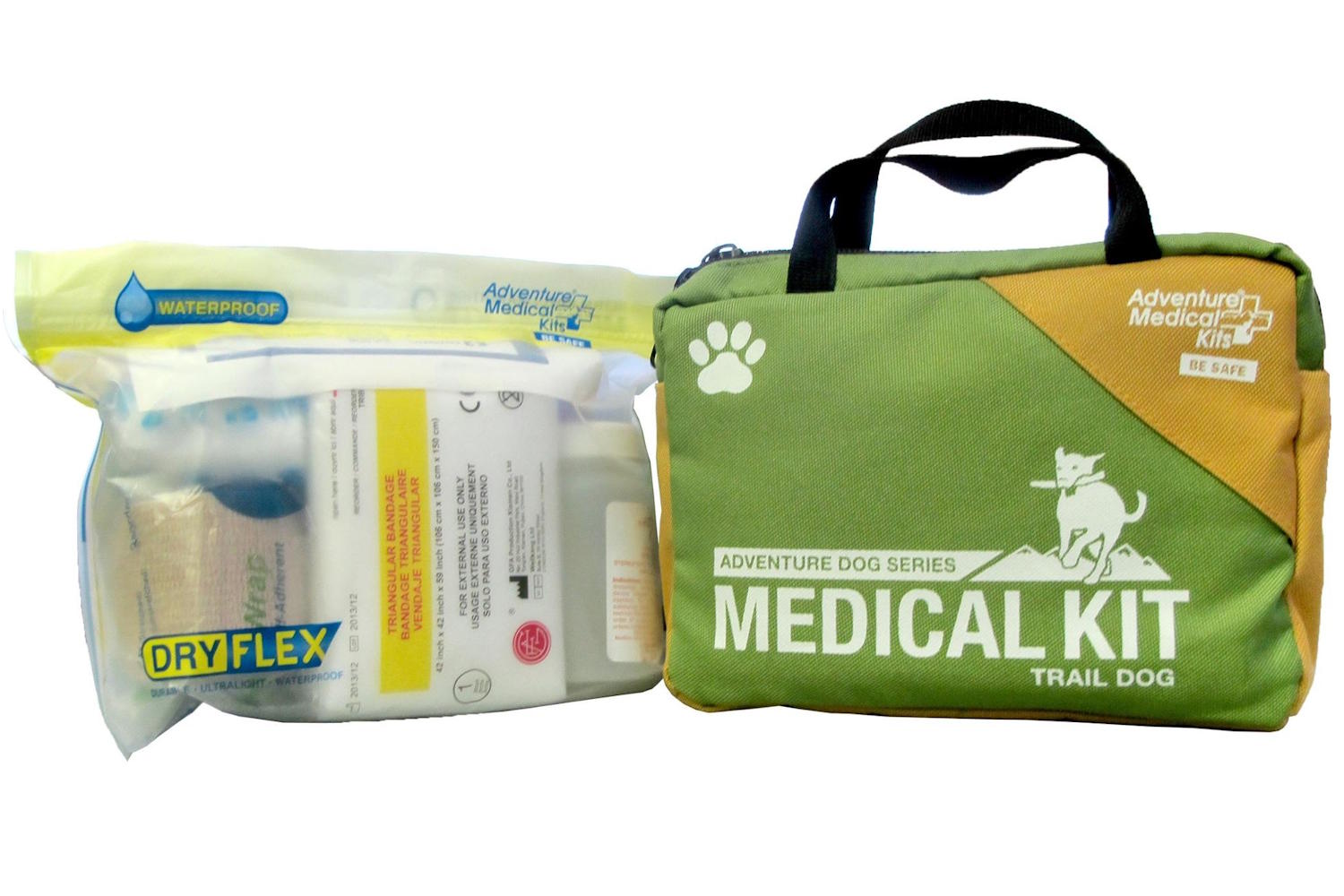
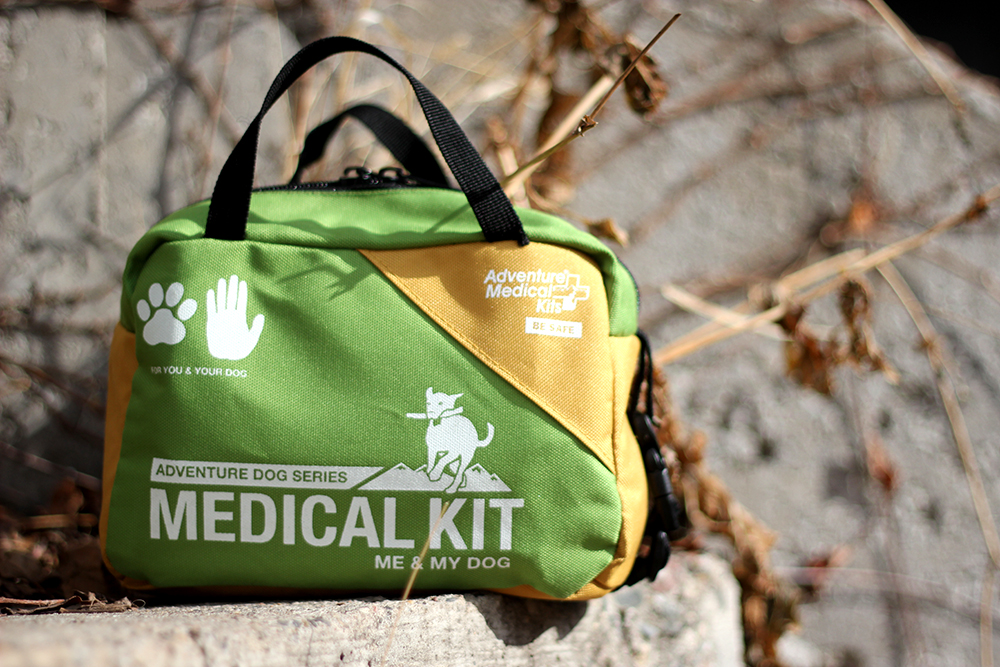
If your pup is going to join your outdoor adventures, it’s wise to be prepared with dog-specific medical supplies. Dogs and humans have very different anatomies, and many human first-aid items don’t work well for our four-legged friends. The Adventure Medical Trail Dog First Aid Kit ($38) contains contents specifically designed to treat common injuries and ailments a dog is likely to sustain outdoors.
In addition to the numerous helpful medical supplies for treating your dog, this first-aid kit includes a well-written, organized handbook. When your dog is in obvious pain or discomfort, the guidebook can be an invaluable resource for identifying the issue and responding appropriately.
The kit’s design has a durable fabric outer case with a waterproof zip-lock bag inside, keeping the contents dry — even if your pup decides to take a dip. This waterproofing is particularly useful if your dog carries its gear, ensuring that the kit remains functional no matter what the adventure.
While the Trail Dog Kit gives you the confidence to take your dog farther into the backcountry, it has limitations. For example, it is not as comprehensive as kits designed for humans or more complex injuries. The Adventure Medical Mountain Series Hiker, paired with the Trail Dog Kit, provides necessary items for you and your hiking pup.
For dog owners who bring their pups everywhere, this kit ensures you are medically ready. From paw care items to leg wraps and an effective tick remover, the Adventure Medical Trail Dog First-Aid Kit has you and your best buddy covered. Plus, it’s fairly inexpensive at $38.
Dimensions
7.5 x 6 x 3.5″
Pros
- Quality contents
- Included removable CPR kit
- Well-organized
- Generous quantities
- Durable
Cons
- A little heavy for solo backpacking
- Doesn’t include any medications
- Expensive
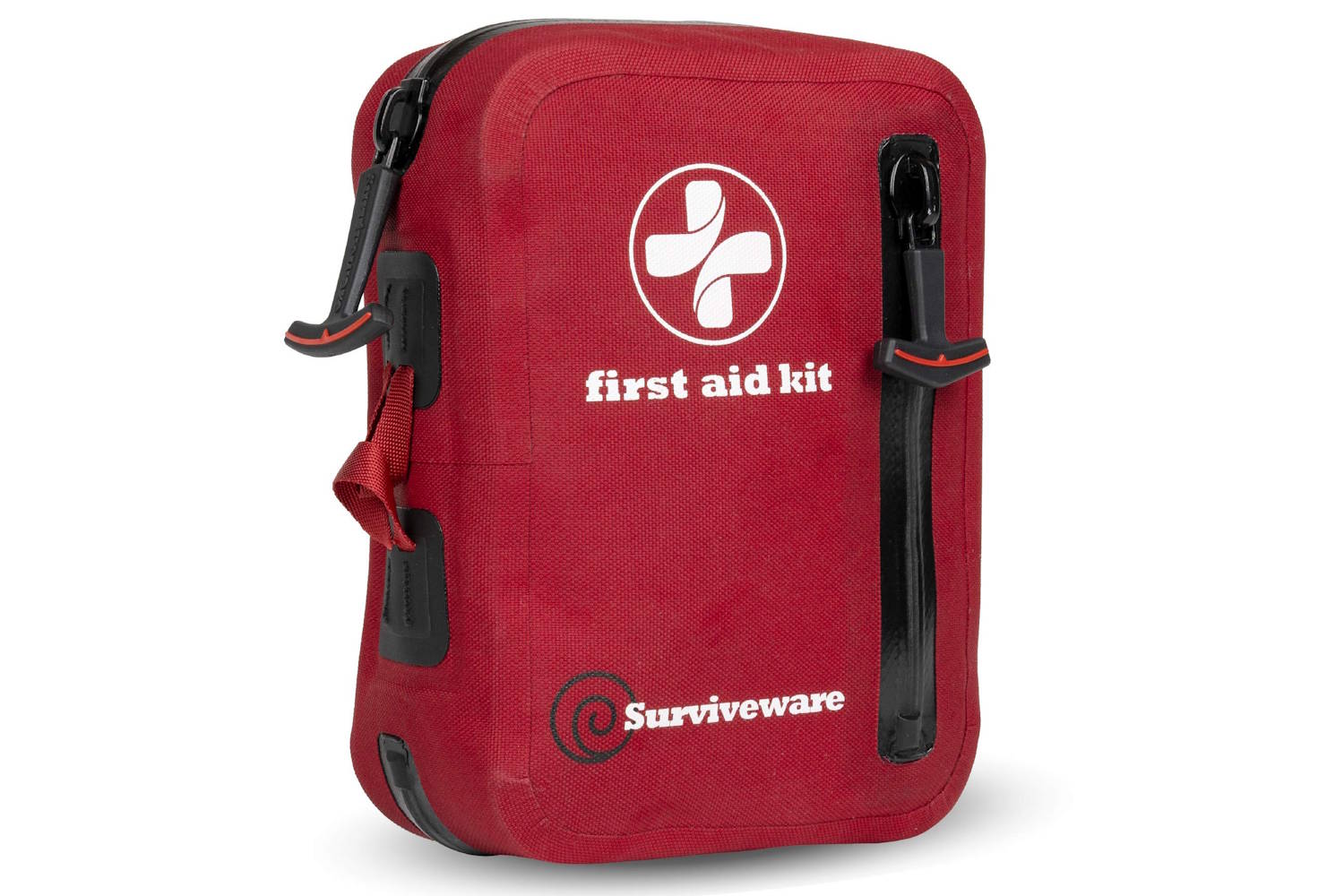
The well-stocked and impressive Surviveware Comprehensive Small First Aid Kit ($35) offers great value and utility. On the outside, a rugged, high-denier nylon opens up with a large, robust zipper. Once opened, this kit is noticeably well-organized and uses pouches and resealable packaging to protect its contents. Surviveware is known for making quality kits, and this one is no exception.
Weighing one pound, this kit is a different beast than ultralight kits like the Adventure Medical Kits .7. Still, it feels compact and is certainly not too bulky to bring along, especially if you’re car camping.
The contents of this kit are thoughtfully curated, featuring essential items like trauma shears and a functional tourniquet. A wide elastic pressure bandage enhances its utility, making it well-suited for a range of emergencies.
One downside is the challenge of repacking the kit once it’s open. The generous quantities of supplies, including over 40 wound-closure strips in various sizes, can make organization tricky. The upside of this is that the abundance of supplies ensures you’ll have what you need when it counts.
For $35, the Surviveware Comprehensive Small First-Aid Kit is an absolute steal given its size. Its rugged construction and well-stocked interior fully justify the price tag. For rafting or other water-based activities, we recommend placing this kit inside a dry bag, as it’s not fully waterproof. A much larger version is also available for $130.
More First-Aid Kits We Tested
Dimensions
6.5 x 5.5 x 3″
Pros
- Lightweight
- Good-quality supplies
- Included Wilderness First Aid guidebook
- Well-organized
Cons
- Could use more pairs of nitrile gloves
- No included CPR mask
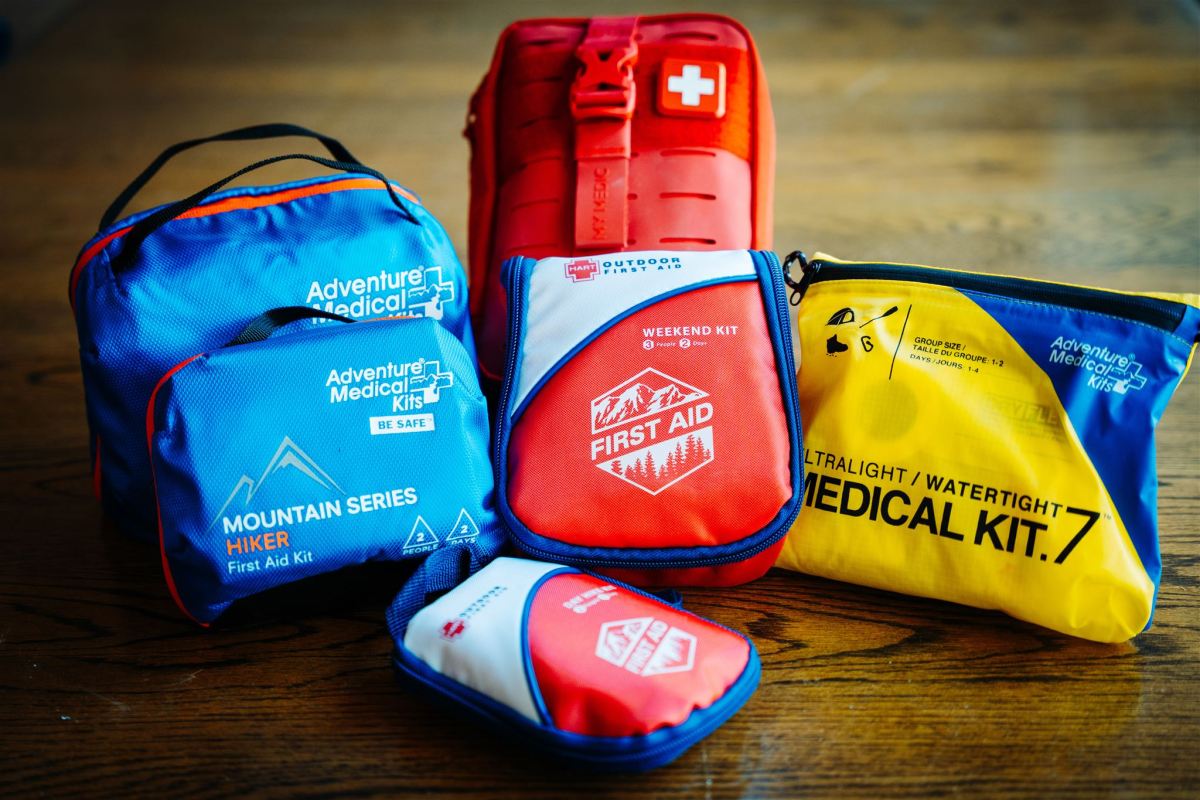
As a longstanding maker of first-aid kits, Adventure Medical Kits dominates our list of recommendations for a reason. The well-regarded brand makes a wide variety of kits for various activities. The lightweight, well-organized Adventure Medical Kits Mountain Series Hiker ($35) is an ideal pick for overnight backpacking adventures.
Inside, labeled pouches keep supplies organized and easily accessible, preventing chaos when you need to find something quickly. Each pouch zips shut, keeping everything in place, even on bumpy hikes. This kit is well-suited for small-group hiking trips lasting up to a few days, but it may not meet the needs of large groups or those seeking advanced trauma care.
While this kit excels in quality, with reputable items like medical-grade trauma shears and durable medical tape, it does have some shortcomings. Specifically, the limited supply of nitrile gloves is insufficient for multiple injuries, and the lack of a CPR mask could be a concern in some emergencies.
Compared to other kits like the HART Outdoor Weekend First-Aid Kit ($31), the Mountain Series Hiker offers a more comprehensive selection of high-quality supplies, but it weighs slightly more. The HART kit is great for quick getaways but may lack the rugged durability of the Mountain Series.
At just 10 ounces, the Mountain Series Hiker is a small and lightweight first-aid kit. It’s not sufficient for high-level trauma care and can’t support groups with more than two people. Still, for small-group hiking trips of up to a few days, this kit offers top-quality supplies and good value.
Dimensions
5.5 x 4.5 x 1”
Pros
- Very lightweight and packable
- Clear pockets make access easy
- Easy to repack
- High-quality products
- Enough room for a few additions
Cons
- No gloves or tweezer
- Not ideal for epic days
The best first-aid kit is the one you carry. Before finding the HART Outdoor Day Hike First-Aid Kit ($17), we often went on day hikes without first-aid supplies. We know that is not safe or best practice, and we’re not recommending it. But, all our other kits felt overly complicated and bulky for a few-mile jaunt to an alpine lake or a quick hike to a desert arch.
Luckily, the Outdoor Day Hike kit has everything you need and nothing you don’t. It’s got all the supplies you need to clean and treat cuts, scrapes, slivers, and blisters. The bandages, gauze, scissors, and meds are all high-quality and performed well during testing. Clear pockets make it quick and easy to access what you need. Plus, this compact first-aid kit has room to spare, so it’s easy to repack and add items to customize the contents.
We would like gloves and tweezers included in this kit, but we added them ourselves. We also added more anti-inflammatories and an ACE bandage to support an ankle sprain if needed.
While we love the organization, making it waterproof would significantly improve its durability and usefulness. This kit is ideal for a headache, cut, or blister, but for anything bigger, you’ll wish you had a beefier kit like the Adventure Medical Kits Mountain Series Hiker.
If you’re looking for a simple, easy-to-use first-aid kit with high-quality materials ideal for a short day trip, pick up the HART Day Hiker.
Dimensions
7.9 x 5.9′ x 3.6″
Pros
- Well stocked with pads and bandages
- High quality shears
- Face shield included
The generously stocked Homestock+ Professional First-Aid Kit ($37) has become our go-to for weekend-warrior-style car camping. This kit lives in the car and is always ready when called upon. For certain bike rides or climbing days, we’ll even throw it into our pack and haul it, even though it’s more cumbersome than many other kits.
We appreciate that the brand opted for a thick, robust outer material instead of a rip-prone nylon. This kit’s case is robust, which adds durability in the plus column and extra weight in the minus. Over a pound all told, this kit never pretends to be ultralight. Instead, it’s a workhorse stocked with plenty of bandages, gauze, and reliable tools.
We favor the Adventure Medical Kits Ultralight/Watertight .7 for on-the-go adventures because it is compact and easy to carry. But the Homestock+ offers a more extensive array of supplies, even if it requires more space.
With over 70 Band-Aids and 50 cotton swabs, you’ll rarely have to restock the basics in this kit. Unfortunately, it lacks ointments and medications, so you’ll probably want to make a few key additions yourself. Like most store-bought first-aid kits, consider this a platform for building the ultimate portable medical treatment center.
The Homestock+ Professional First Aid Kit also includes a CPR face shield, an emergency blanket, and a whistle.
Pros
- Compact
- Lightweight
- High quality medications
- Durable, waterproof casing
Cons
- Small quantities of key items
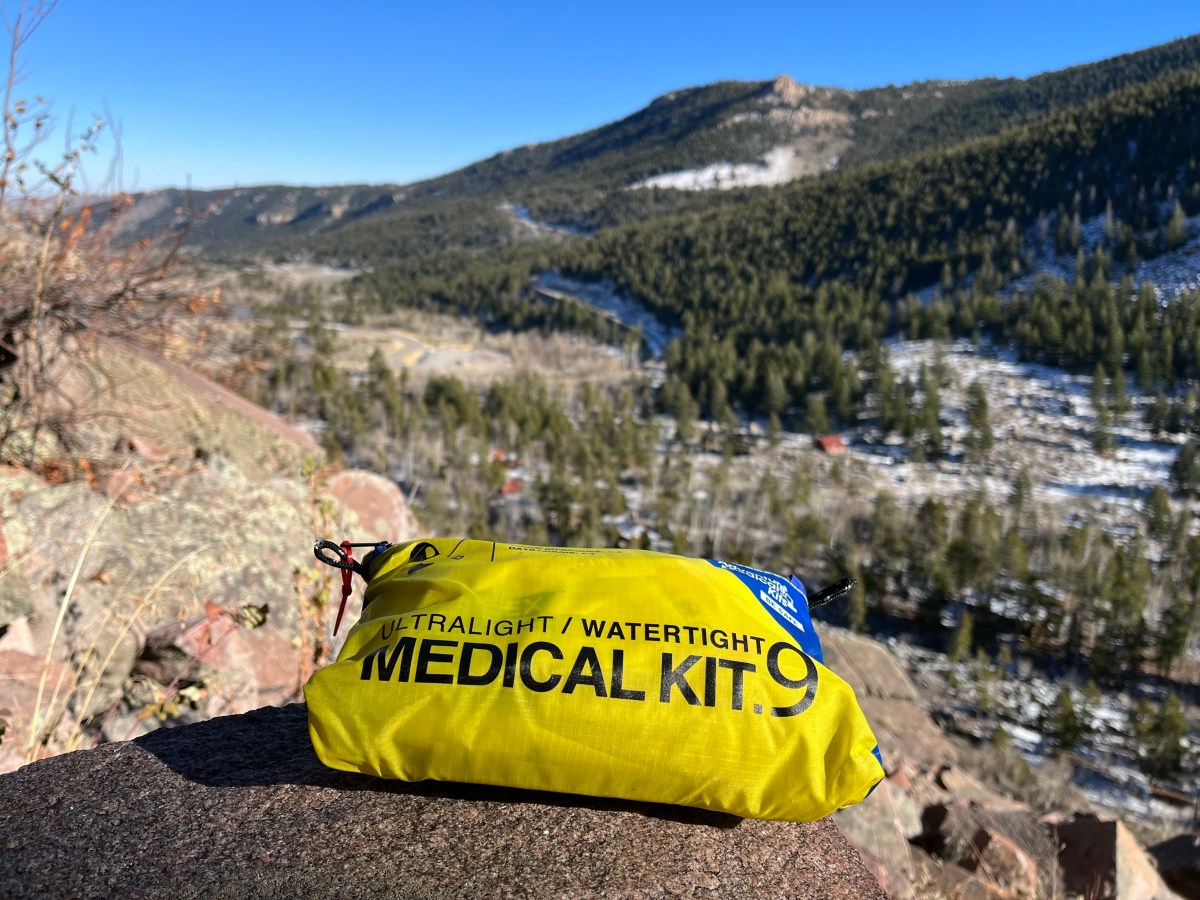
Adventure Medical Kits consistently produces top-tier outdoor first-aid kits, and the Ultralight Watertight First-Aid Kit .9 ($64) further solidifies the brand’s status. Much like the .7 version, this kit is light, packable, easy to use, and packed in a waterproof bag.
Like most ultralight kits, the .9 has limited quantities of almost every included item. That’s the tradeoff with lightweight kits: They require frequent restocking. In our experience, though, this kit is extremely well thought out. Depending on your preferences and the outdoor context, you likely won’t need to add much.
While testing this kit, we used the pre-cut moleskin pieces, duct tape, adhesive bandages, splinter remover, antibiotic ointment, antihistamine, and sterile gauze, all in just a few outings. It weighs less than half a pound, so we didn’t mind tossing it into the climbing pack ahead of long, arduous approaches. The included medical tape and Band-Aids easily handled a severe flapper on sharp limestone.
If you’re seeking a compact backpacking kit, the .9 is a winner. It may be more than is required for a solo trip, but it’s the perfect candidate for a mid-length trip with a group of four or fewer people. The included array of medications is particularly impressive. No other similar kit on the market has such a well-curated selection.
The Ultralight Watertight First Aid Kit .9 doesn’t come cheap at $64, but it’s a worthy investment that should serve you for years to come with regular restocking.
First-Aid Kits Comparison Chart
How We Tested First-Aid Kits
Our Expert Testers
Lead tester Meg Carney is a backpacking guide, climbing instructor, and outdoor educator. Having carried first-aid kits on countless professional outings, she has responded to enough real field injuries to know when a kit is genuinely useful, overbuilt, understocked, or hard to navigate in a crisis.
Editor and longtime Wilderness First Responder Chris Kassar also evaluated this lineup, bringing decades of experience across hiking, paddling, climbing, wildlife work, and remote travel. Original author Austin Beck-Doss laid the foundation for this guide over years as an outdoor instructor, regularly managing group medical kits in the field.
Our Testing Process & Grounds
For this update, Carney and Kassar field-tested seven of the nine existing first-aid kits over a 12-month cycle. We carried them on day hikes, backpacking trips, car camping weekends, kayaking excursions, and everyday travel to see how well each kit fit into real adventure routines.
We evaluated each kit for supply quality, organization, access speed, durability, weather resistance, and overall usefulness based on trip length and group size. While we did not intentionally injure ourselves, we used these kits to treat real blisters, cuts, scrapes, and minor field issues. Not all bandages, trauma shears, and blister treatments are created equal, and lower-quality supplies stood out immediately.
Every first-aid kit sees at least five outings before inclusion, though many have months or years of use behind them. Since 2021, our team has tested 25 first-aid kits across frontcountry camping, backpacking, paddling, road travel, and group trips. Products remain in ongoing testing after publication, and we update this guide seasonally as new kits arrive and long-term durability becomes clear.
Our First-Aid Kit Rating System
Supply Quality: We evaluate the usefulness, quantity, and quality of each kit’s bandages, blister care, wound care, medications, tools, and emergency supplies.
Organization: We look at how easy it is to find the right item quickly, especially when dealing with stress, bad weather, low light, or an injured person.
Durability: We assess the outer case, zippers, internal pockets, and weather resistance, noting how well the kit holds up to being packed, dropped, compressed, and carried repeatedly.
Portability: We consider size, weight, and pack shape to determine if the kit makes sense for its intended use, whether that is a short day hike or a multi-day group trip.
The overall score reflects extended real-world use and is not a simple calculation from the category scores.
Buyer’s Guide: How to Choose a First-Aid Kit
The first-aid kit you choose should be able to handle the situations or injuries likely to accompany your personal pursuits. If you need a first-aid kit for solo lightweight backpacking, you probably shouldn’t purchase a large, heavy kit that’s better suited to car campers.
Similarly, if primarily bringing your first-aid kit on multipitch climbing routes, you don’t need a kit full of first-aid supplies for dogs. Simply put, there are lots of first-aid kits available, and you’ll need to be discerning to identify the best one for you.
Many current first-aid kits include the number of days and number of people the contents serve. For example, a kit designed for two people for 4-5 days could work in various scenarios.
Many key factors differentiate one from the next, which we’ll explore below. The most important factors are kit size, weight, included supplies, durability, price, group size, and activity type. If you’re rounding out your survival essentials for backcountry travel, check out our guide to the best compasses and best emergency radios.
Size
First-aid kits come in all shapes and sizes. If you want to carry your kit on long trail-based adventures like thru-hiking or trail running, go with something small that will fit easily in a backpack or fanny pack. The Adventure Medical Kits Ultralight/Watertight .7 weighs less than half a pound and clips easily to the outside of a pack or harness, or it can stash into a hydration vest.
Generally, small and ultralight first-aid kits, like our top pick for day hiking, the HART Outdoor Day Hike First-Aid Kit, are good for just a few people on single-day trips or brief overnight outings. But most small or ultralight packs don’t include the ideal supplies for larger groups or trips that venture far out into the front country.
Larger kits, like the Homestock+ Professional First-Aid Kit and the MyMedic MYFAK Mini, are better for supporting a group of more than two people over longer trips. The downside to a larger kit is increased weight and volume.
Weight is probably less of a concern for car camping, canoeing, or river rafting, so a large kit may be the way to go.
Weight
The kits on this list range in weight from less than half a pound to almost 2 pounds. If your activity of choice requires you to consider every ounce, go for something small and light like the Adventure Medical Kits Ultralight/Watertight .7. Remember, less weight usually means fewer supplies and reduced quantities.
You should also consider that every first-aid kit can be customized at home. If certain supplies are deemed unnecessary, you can leave them behind to shave weight or replace them with supplies that better suit your needs.
For activities like car camping and whitewater rafting, weight may be of less concern, and you could get away with bringing a heavier kit along. A heavier kit usually means more supplies, which is a good thing for large groups and long trips.
Supplies Included
Before purchasing a first-aid kit, read through the list of supplies and consider whether or not the kit comes with the kinds of items you’re likely to need.
Almost all kits come standard with a certain quantity of adhesive bandages, various forms of gauze, antibiotic ointment, medical tape, and more. Other items that are less often standard but potentially highly important include trauma shears, basic medications, finger splints, and emergency blankets.
Be sure to check the quantity of each included item. Some kits, like the Surviveware Small First Aid Kit, come with an impressive 100-plus items. However, a closer inspection reveals that many of these are small adhesive bandages.
Another important item to look out for is a first-aid reference. A small reference book is especially important for those without medical training who may not know how to use the items in their kit. If you don’t know how to use your kit and it also doesn’t come with an instructional guide, the kit won’t be very useful to you in the field.
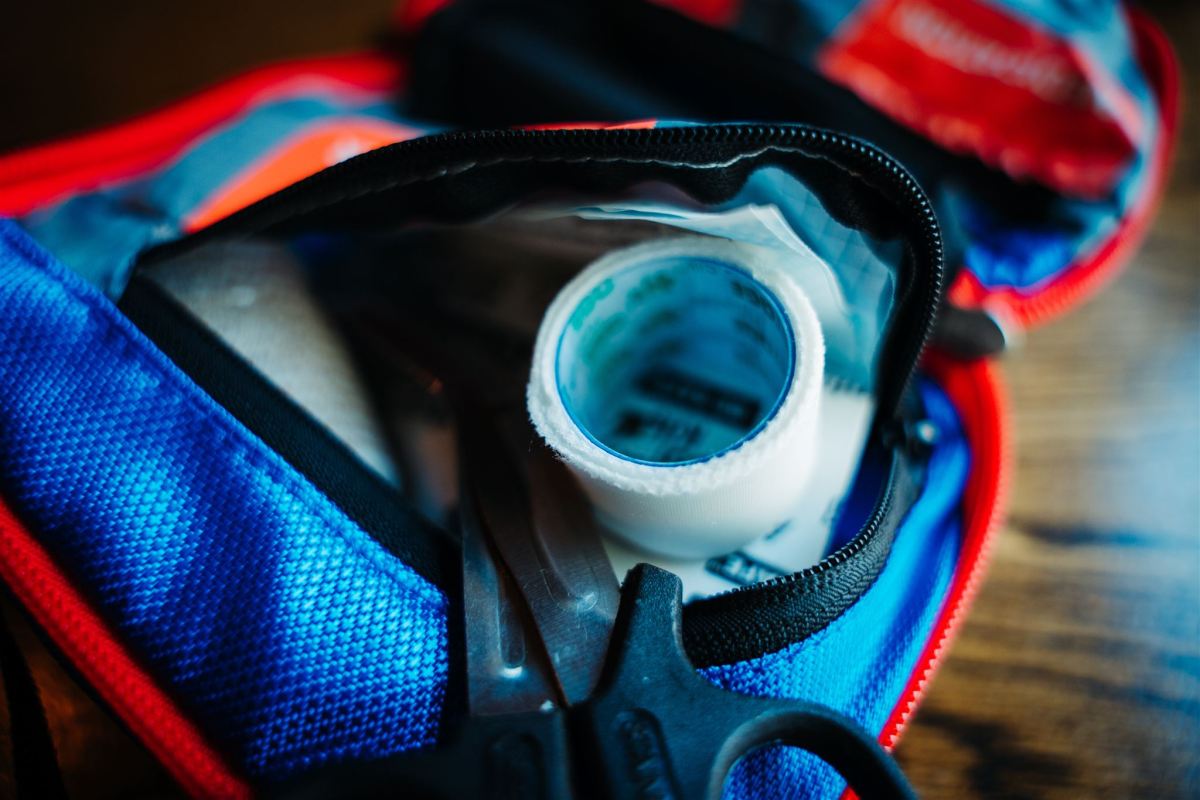
Some kits are small but still include some high-quality, high-value items. The Adventure Medical Kits Mountain Series Hiker Medical Kit is quite compact but still includes potentially crucial items like a pair of medical-grade trauma shears and a variety of medications.
Durability
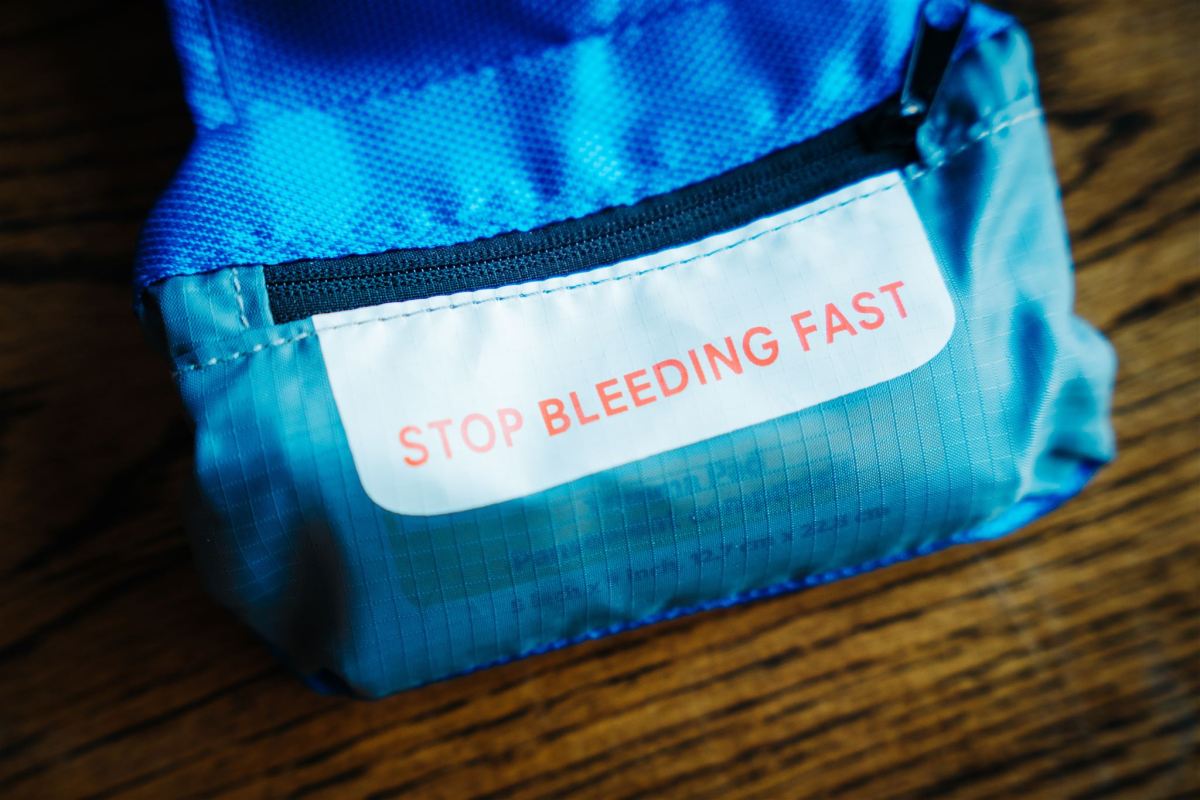
A durable kit will withstand the conditions it’s designed to be exposed to. First, it should have a durable outer case. We like that the Adventure Medical Kits Ultralight/Watertight .7 comes in a watertight bag.
Other kits on this list, like the Surviveware Small Kit, have a high-denier nylon carrying case that resists abrasion and holds up in the long term. You don’t want to have to break out your sewing supplies to do surgery on your first-aid kit.
Because many common medical supplies are fragile and vulnerable to water, it’s wise to seek out a waterproof kit. This is especially important for those who plan to bring their kit along on water-based activities like kayaking or rafting. Kits that aren’t already waterproof can be customized with a durable ziplock bag or a dry bag.
If possible, check the expiration dates of supplies inside a kit before you purchase. Many kits come with medications, which is great unless they’re all due to expire soon. I have gotten into the habit of checking the dates of all my kits’ medications every 2-3 months or so and replacing them as needed.
Group Size
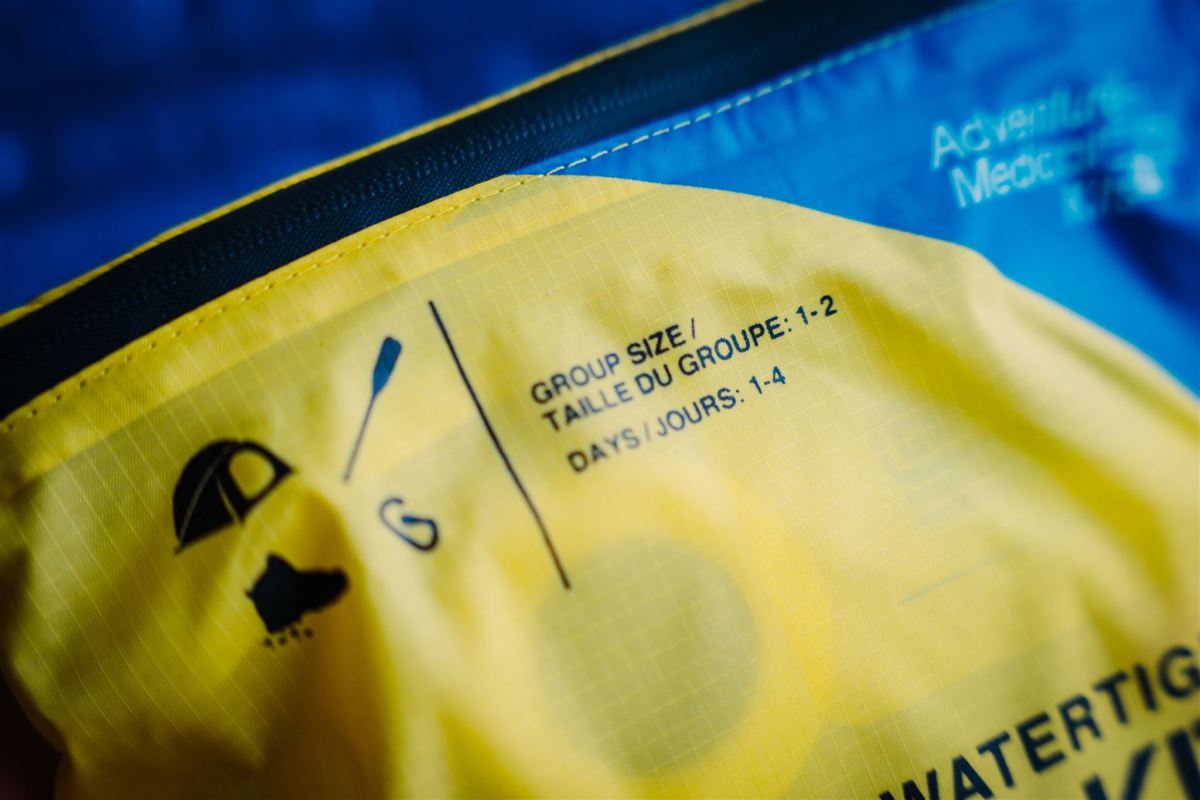
Most first-aid kits are designed to support a certain number of people for a certain number of days. Ultralight kits are usually made to accommodate one or two people on shorter trips of 1-2 days. Larger kits can support larger groups on longer trips.
Often, the difference between a single-day kit and a long-trip kit is supply quantity. For example, a kit with a single triangular gauze would be fine for a single day out when multiple injuries are unlikely. However, on multiday trips, you might need to use certain items multiple times over the course of the trip, so the supply quantity should reflect this.
Type of Activity
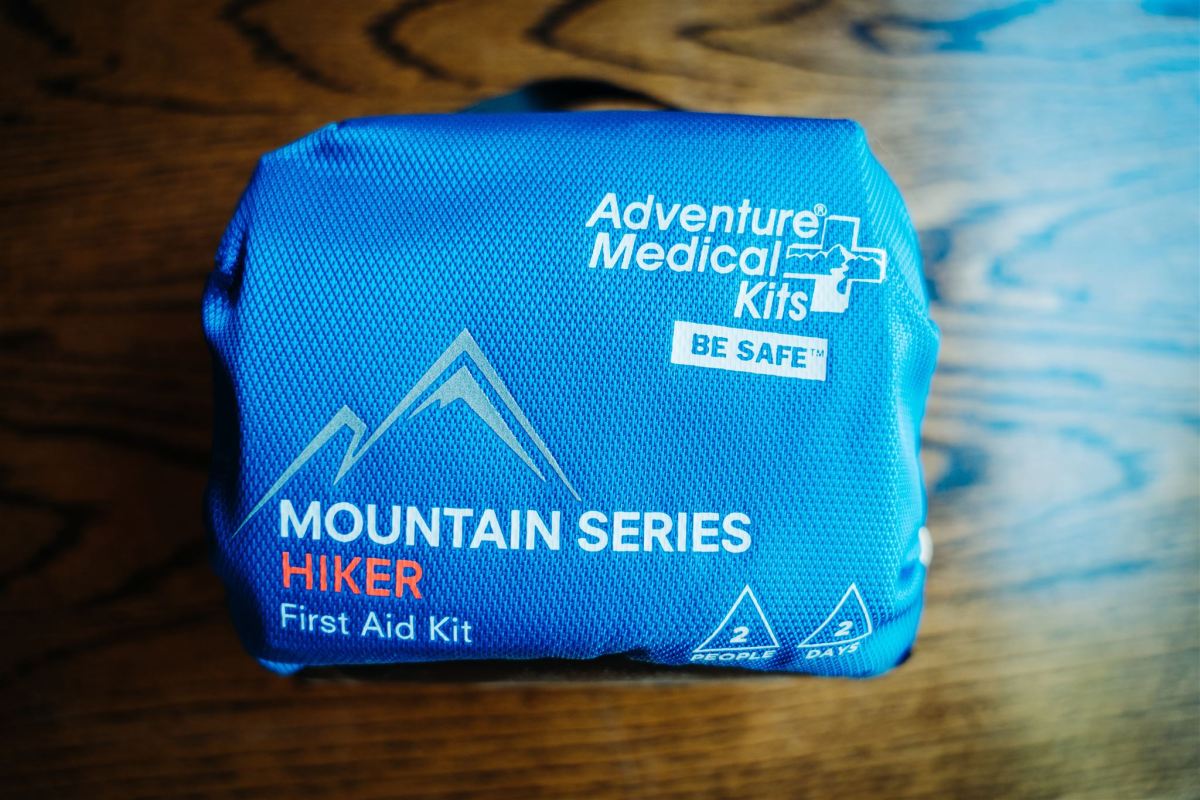
Some first-aid kits, like the Adventure Medical Kits Series Hiker, are made for specific activities. These can be super helpful because they’ve been put together with special consideration for the injuries likely to occur during that activity.
For example, a good hiking first-aid kit will likely include plenty of supplies to treat a sprained ankle or skinned knees. A first-aid kit aimed at mountain bikers contains supplies like bandages that are ideal for dealing with emergent injuries more likely to happen while riding a mountain bike.
While activity-specific kits may be slightly less versatile than other options, they are ideal for those who will be sticking to one activity.
Price & Value
First-aid kit value comes down to matching the supplies, size, and durability to the trips you actually take. Spending more usually buys better organization, tougher cases, stronger weather protection, and more complete wound care.
Budget
Budget kits under $35 work best for short outings, cars, camp bins, or mellow day hikes. The HART Outdoor Day Hike First-Aid Kit ($17) covers basics like blisters, small cuts, and headaches, while the HART Outdoor Weekend First-Aid Kit ($31) adds enough supplies for one or two people over a short trip. You give up some durability and depth of supplies, but this tier is a smart, affordable starting point.
Mid-Tier
Mid-tier kits from $35 to $50 offer better organization, more useful supplies, and stronger backcountry versatility. The Surviveware Comprehensive Small First Aid Kit ($35) offers incredible basecamp utility, while the Adventure Medical Kits Ultralight/Watertight .7 ($45) is our best overall pick because it is compact, weather-resistant, and well-stocked for hiking, backpacking, paddling, and travel. This tier is the best fit for most outdoor users.
Premium
Premium kits around $60 and up add tougher cases, deeper supply lists, and more advanced emergency tools. The Adventure Medical Kits Ultralight/Watertight .9 ($64) scales up weather-resistant protection for larger groups, while the MyMedic MYFAK Mini Pro ($123) offers the most comprehensive, trauma-ready setup in the guide. This tier is best for guides, frequent travelers, larger groups, and higher-consequence trips.
Frequently Asked Questions
While we recommend all of the first-aid kits on this list for various reasons, we have selected the Adventure Medical Kits Ultralight/Watertight .7 as our choice for the best overall first-aid kit — though, we’ve also used the Adventure Medical Kit .9 (that accommodates a slightly bigger group) and the Mountain Series kits as well, and liked those too.
Ultimately, the best first-aid kit to buy is the one that’s most likely to be useful when you need it.
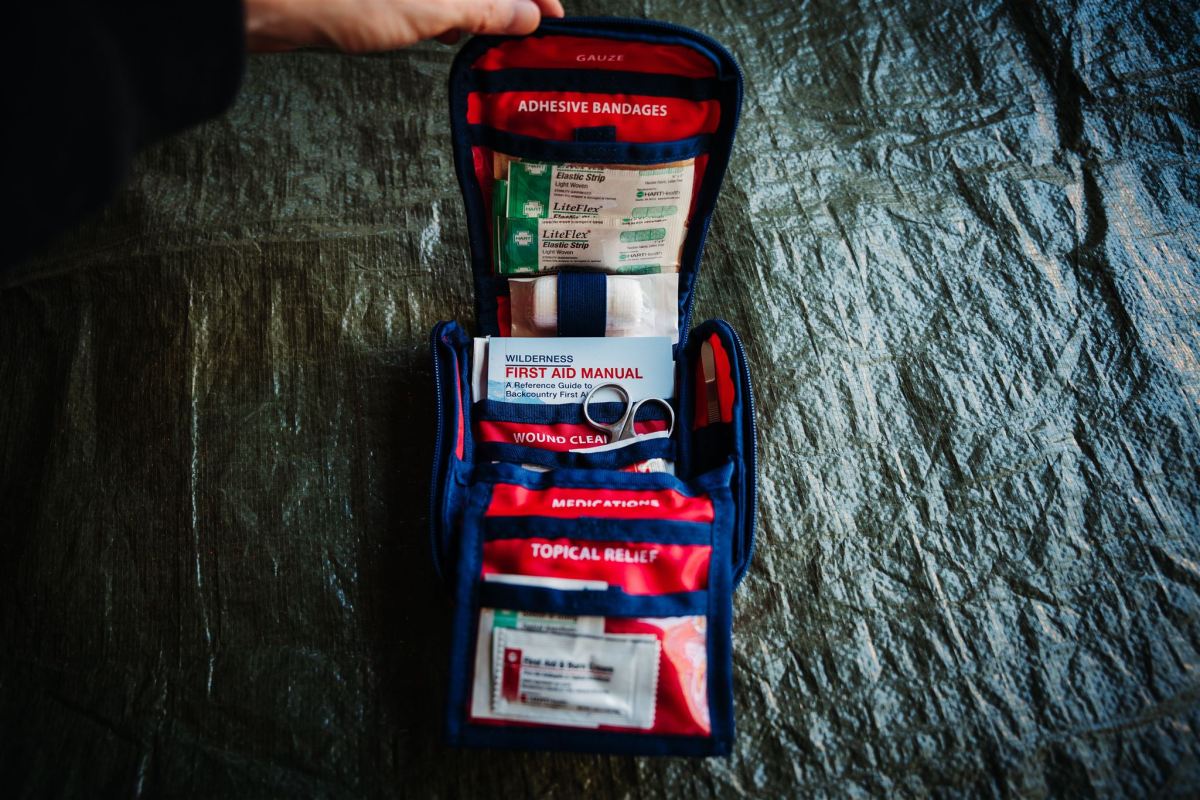
While the supplies in first-aid kits vary depending on the purpose and design of the kit, some key items should be on every first-aid kit checklist. These essential first-aid items include:
- Adhesive bandages of various sizes
- Medical tape
- Gauze
- Sanitary gloves
- Scissors or trauma shears
- Tweezers
- Antibiotic ointment
- Compression bandages
Other items that are less universal but still potentially valuable include:
- Irrigation syringes
- OTC medications
- Burn ointment or 2nd Skin burn pads
- Cloth slings or splints
- Tourniquets
Basic first-aid skills include the ability to treat and care for common injuries and ailments. Properly cleaning a small cut and applying an adhesive bandage ranks as basic first aid.
Those who administer first aid can continue to work on their skills over time and increase the level of care they can provide. Before going out to recreate with your first-aid kit, it’s helpful to know how to deal with a range of injuries and emergencies that are most likely to occur — from wound care to blister prevention to lifesaving CPR.
First-aid courses are regularly available in most areas and regions. Some common providers of basic first-aid courses include the American Red Cross and the National Safety Council.
For medical training designed specifically for the outdoors, certifications like Wilderness First Aid and Wilderness First Responder are worthwhile pursuits. Common course providers of wilderness medicine include NOLS and Wilderness Medical Associates.
That depends. Usually, medications are the first items in a first-aid kit to expire. However, many other first-aid kit supplies have expiration dates too.
The adhesive on a roll of tape can also expire — if your tape is old and disintegrating, it’s useless! A new first-aid kit should last for a year or more before anything inside expires, but it all depends on the specific contents of the kit.
Read the full article here
49 Comments
Production mix shifting toward Tactical & Survival might help margins if metals stay firm.
Good point. Watching costs and grades closely.
Nice to see insider buying—usually a good signal in this space.
Good point. Watching costs and grades closely.
Good point. Watching costs and grades closely.
Silver leverage is strong here; beta cuts both ways though.
Production mix shifting toward Tactical & Survival might help margins if metals stay firm.
Good point. Watching costs and grades closely.
Good point. Watching costs and grades closely.
Interesting update on The Best First-Aid Kits of 2026. Curious how the grades will trend next quarter.
Good point. Watching costs and grades closely.
Silver leverage is strong here; beta cuts both ways though.
Silver leverage is strong here; beta cuts both ways though.
Good point. Watching costs and grades closely.
Good point. Watching costs and grades closely.
Nice to see insider buying—usually a good signal in this space.
Good point. Watching costs and grades closely.
Nice to see insider buying—usually a good signal in this space.
Silver leverage is strong here; beta cuts both ways though.
Good point. Watching costs and grades closely.
The cost guidance is better than expected. If they deliver, the stock could rerate.
Good point. Watching costs and grades closely.
Good point. Watching costs and grades closely.
Interesting update on The Best First-Aid Kits of 2026. Curious how the grades will trend next quarter.
Uranium names keep pushing higher—supply still tight into 2026.
Good point. Watching costs and grades closely.
Good point. Watching costs and grades closely.
Interesting update on The Best First-Aid Kits of 2026. Curious how the grades will trend next quarter.
Good point. Watching costs and grades closely.
Uranium names keep pushing higher—supply still tight into 2026.
The cost guidance is better than expected. If they deliver, the stock could rerate.
Good point. Watching costs and grades closely.
Good point. Watching costs and grades closely.
Nice to see insider buying—usually a good signal in this space.
The cost guidance is better than expected. If they deliver, the stock could rerate.
Good point. Watching costs and grades closely.
I like the balance sheet here—less leverage than peers.
Good point. Watching costs and grades closely.
Interesting update on The Best First-Aid Kits of 2026. Curious how the grades will trend next quarter.
Good point. Watching costs and grades closely.
Silver leverage is strong here; beta cuts both ways though.
Good point. Watching costs and grades closely.
Good point. Watching costs and grades closely.
Uranium names keep pushing higher—supply still tight into 2026.
Good point. Watching costs and grades closely.
Good point. Watching costs and grades closely.
Nice to see insider buying—usually a good signal in this space.
Nice to see insider buying—usually a good signal in this space.
Good point. Watching costs and grades closely.