

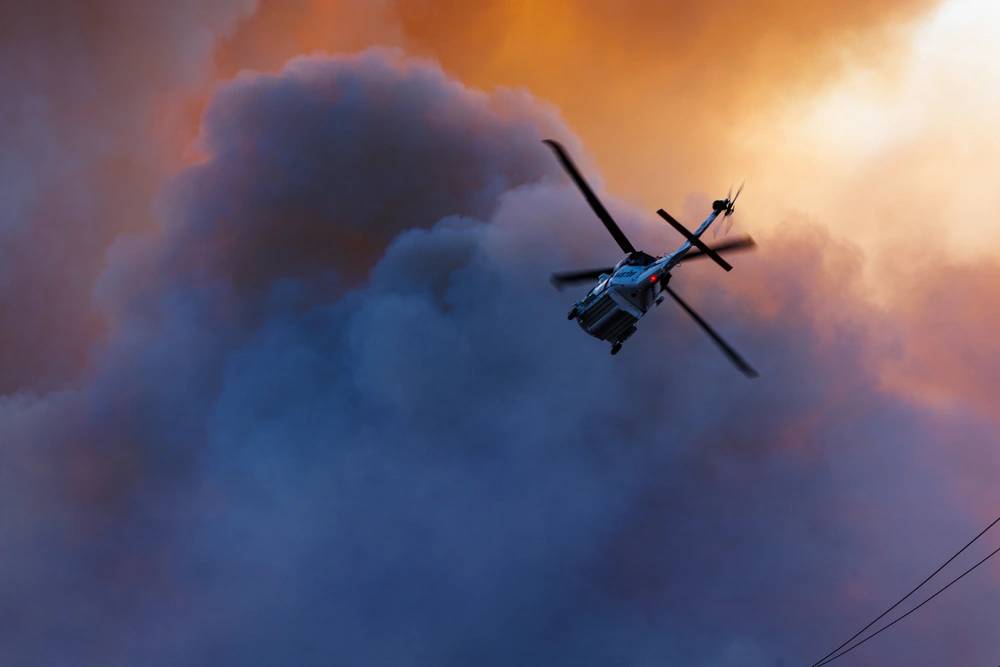
As Northern California wraps up its peak wildfire season, which typically runs from June or July through late October or November, there’s a growing sense of relief that this year’s fires weren’t as bad as last year’s.
Most recently, the Henderson Fire at Marine Corps Base Camp Pendleton in Oceanside, about 40 miles north of San Diego, reached 100% containment in four days, after scorching more than 3,200 acres starting Thursday, Oct. 15. The blaze actually doubled in size in one day to more than 8 square kilometers, and crossed containment lines, closing a section of the I-5 freeway for a period of time.
But quickly there was relief. Favorable weather helped fire crews on base, along with CAL FIRE, San Diego County Fire and the U.S. Forest Service, as they worked across thousands of acres of remote, sometimes hard-to-reach terrain.
Fire Contained With Skilled Preparation And Luck
Jeff Shelton is a fire behavior analyst with FireWatch, a wildfire mapping and preparedness company. He lives in Oceanside, near Camp Pendleton, and told Military.com the base benefited from skilled preparation and a little luck.
“We had a pretty good rain event in the last several days which kind of put a bow on it,” Shelton said. “It is nature. Camp Pendleton has a very skilled firefighting force that is very adept at wild land firefighting. They also have quite a few challenges with places where a fire may start, but they can’t get to it. They have to let the fire come to them.”
In a statement to Military.com from CAL FIRE, there were 485 firefighters and 14 hand crews on hand for a total of 654 firefighting personnel tackling the Henderson Fire at its peak. Additional support included 69 fire engines, water tenders, bulldozers, two helicopters and one fixed-wing aircraft.
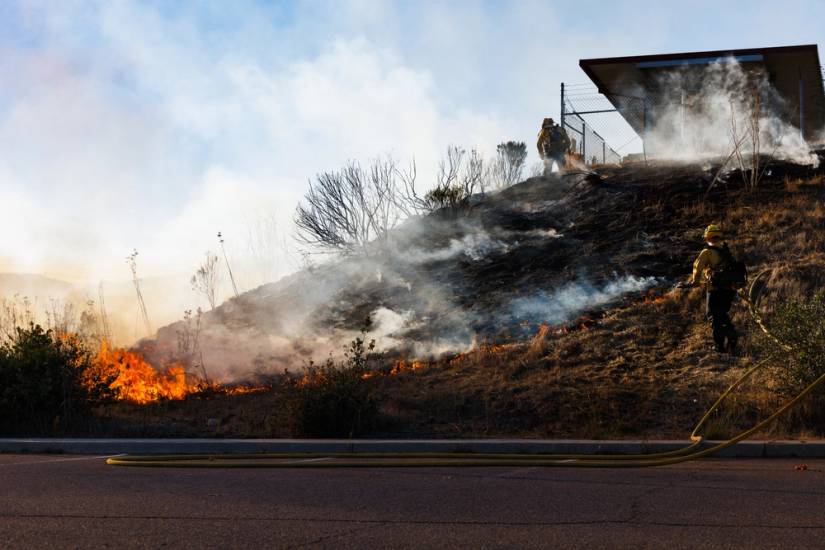
“Currently, there are no active threats to personnel or facilities,” CAL FIRE’s statement read. “The safety of Marines, sailors, civilians, family members, and the surrounding community remains the top priority of Marine Corps Installations West.”
As with any large wildfire, there were concerns about air quality in the region. But offshore winds quickly swept the smoke out to sea.
“Most of it was an offshore wind event, so all the smoke and the air quality issues all went away from the inland,” Shelton explained. “The challenge now could be land erosion from the scorched environment. Officials are probably already talking about erosion control, especially in a year when we have a very large El Niño threat with rising sea temperatures and winds that could get real very quickly.”
Lessons Learned Despite Repeated Fire Threat
Shelton said looking ahead, there are lessons to be learned from any wildfire, many of them already implemented with training at Camp Pendleton, though he admits nature will take its course.
“Fires are a function of three basic things of what we call ‘The Triangle.’ The fuel, which is the vegetation, and not just grass or brush or trees. I look at it as stored energy of any kind. The other part is the topography, the lay of the land, the terrain, and that has the ability to take fire and move it across the landscape,” he explained. “And then the last piece of that triangle is weather. Fire behavior is especially sensitive to wind, humidity, and temperature, because that affects how that stored energy, those fuels, are going to react.”
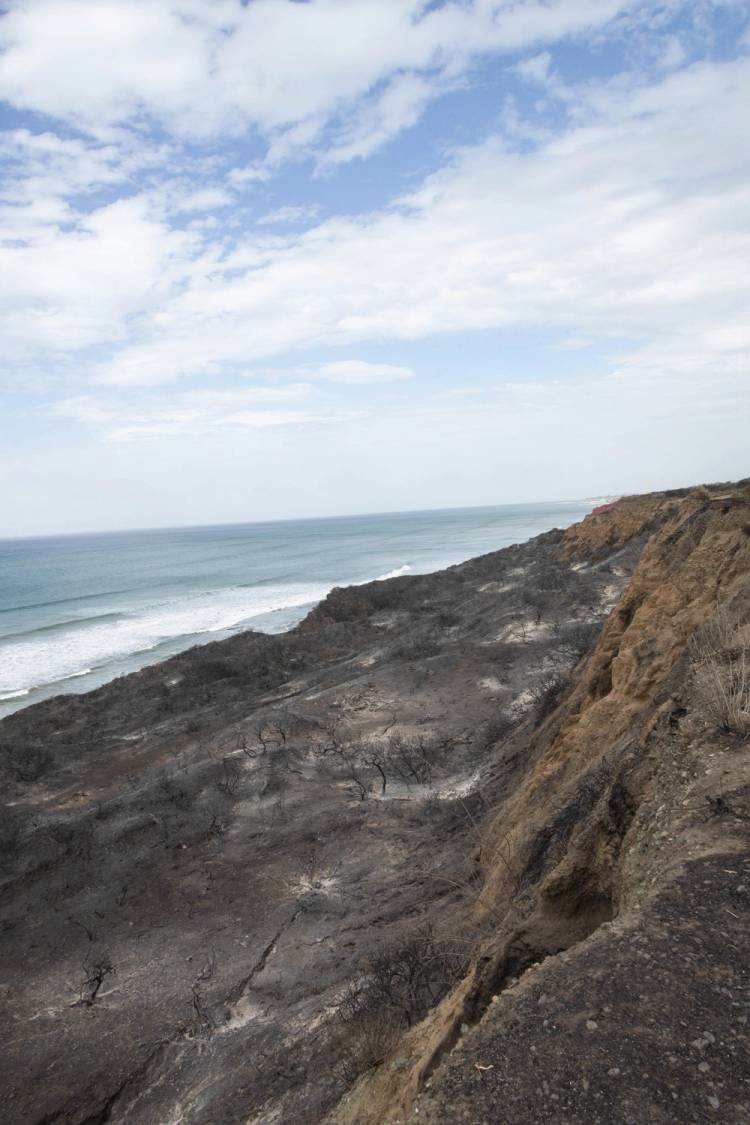
At Camp Pendleton, officials have studied the landscape and have made changes, upgrades and have taken other fire prevention measures to mitigate the potential damage from a blaze. Over the years, some of those changes have included a more accessible road system and pre-established control lines that allow fire crews to use the terrain and the fuel to their advantage.
“Camp Pendleton is an amazing place. It has a large coastline with grass and brush. There’s an inland mountain range, which then goes into a large valley area, and then some higher mountainous terrain that then intersects with the Cleveland National Forest,” Shelton said. “So, from a training perspective, for the Marine Corps, I can’t imagine a better place to be able to evaluate and train your forces in every type of environment there is. The bad thing is from a fire perspective, there is quite a bit of energy in that landscape.”
California’s 2026 wildfire season has been a head-scratcher for researchers and fire officials, with conditions ripe for widespread destruction that hasn’t matched the level of concern. All year, the state was experiencing extreme heat, while its mountains had a minimal 18% snowpack that kept the ground dry, raising fears for an active fire season.
Instead, California’s 2026 wildfire season is tracking below the five-year average. CAL FIRE reports 6,219 wildfires in 2026 as of Oct. 25, with 339,000 acres burned. That compares to 8,232 wildfires in 2025, with 508,000 acres burned.
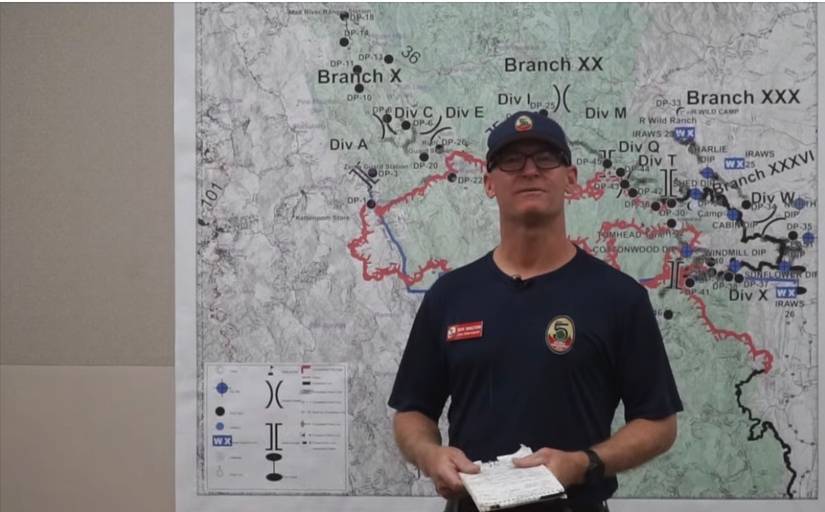
For Shelton, a less destructive wildfire season could simply be the good fortune of one year, versus another.
“In general, wildfires are a natural force, and they just re-occur,” he said. “One of the things that I tell the folks that I’m teaching is that sometimes history teaches us, that history teaches us nothing.”
Read the full article here
36 Comments
Production mix shifting toward USA might help margins if metals stay firm.
Good point. Watching costs and grades closely.
Good point. Watching costs and grades closely.
If AISC keeps dropping, this becomes investable for me.
Exploration results look promising, but permitting will be the key risk.
Good point. Watching costs and grades closely.
Good point. Watching costs and grades closely.
Silver leverage is strong here; beta cuts both ways though.
Good point. Watching costs and grades closely.
Uranium names keep pushing higher—supply still tight into 2026.
Production mix shifting toward USA might help margins if metals stay firm.
Interesting update on Camp Pendleton Henderson Fire Contained After 3,200 Acres. Curious how the grades will trend next quarter.
Good point. Watching costs and grades closely.
Good point. Watching costs and grades closely.
Exploration results look promising, but permitting will be the key risk.
Nice to see insider buying—usually a good signal in this space.
Good point. Watching costs and grades closely.
Interesting update on Camp Pendleton Henderson Fire Contained After 3,200 Acres. Curious how the grades will trend next quarter.
Good point. Watching costs and grades closely.
Silver leverage is strong here; beta cuts both ways though.
Silver leverage is strong here; beta cuts both ways though.
Good point. Watching costs and grades closely.
Good point. Watching costs and grades closely.
Exploration results look promising, but permitting will be the key risk.
Silver leverage is strong here; beta cuts both ways though.
Interesting update on Camp Pendleton Henderson Fire Contained After 3,200 Acres. Curious how the grades will trend next quarter.
Uranium names keep pushing higher—supply still tight into 2026.
I like the balance sheet here—less leverage than peers.
Good point. Watching costs and grades closely.
If AISC keeps dropping, this becomes investable for me.
Good point. Watching costs and grades closely.
Good point. Watching costs and grades closely.
Interesting update on Camp Pendleton Henderson Fire Contained After 3,200 Acres. Curious how the grades will trend next quarter.
Good point. Watching costs and grades closely.
The cost guidance is better than expected. If they deliver, the stock could rerate.
Good point. Watching costs and grades closely.