

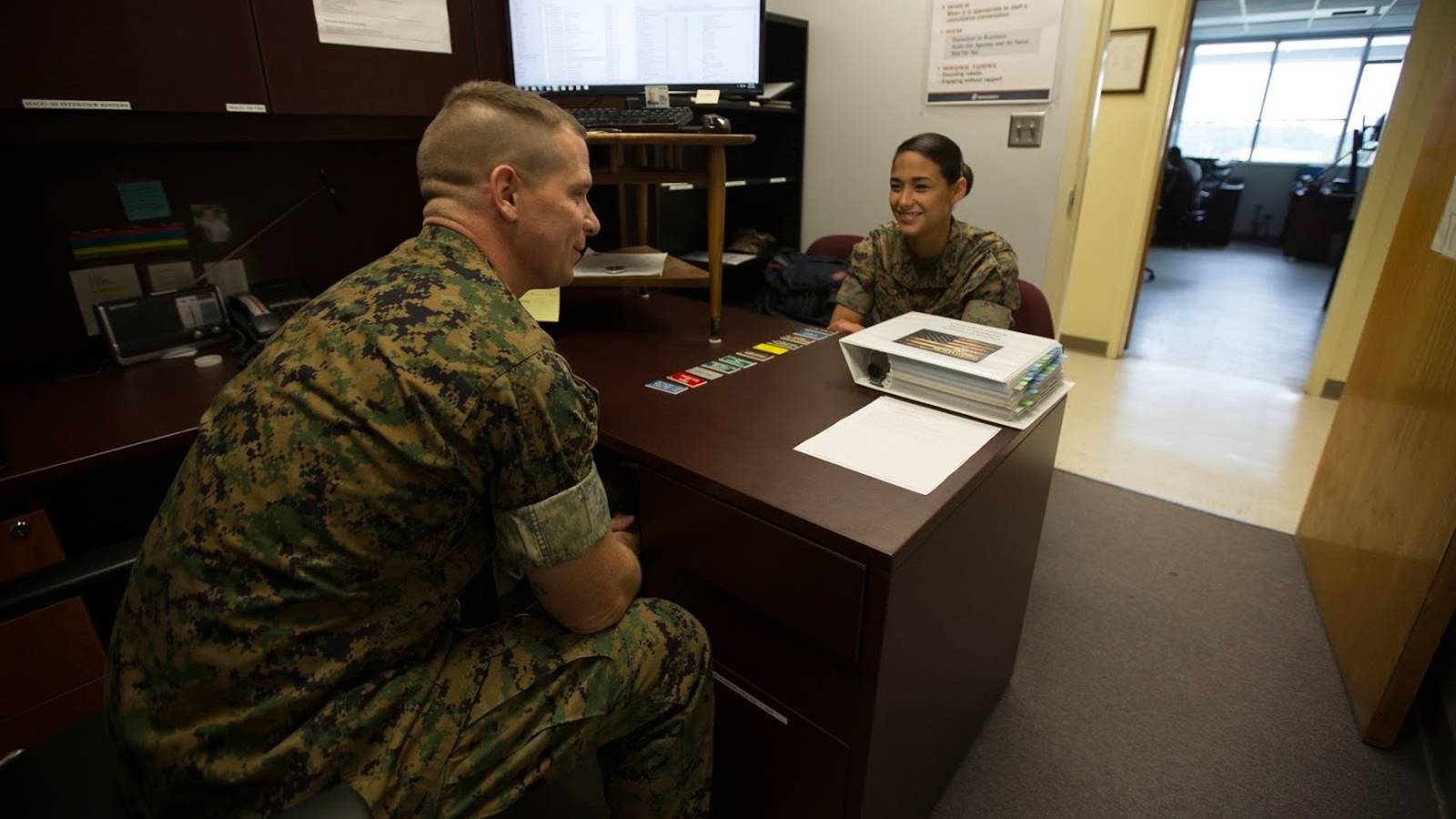
Throughout most of a military career, the services decide what a person does. Transitioning from service puts that decision back in veterans’ hands.
Many veterans start hunting for the civilian version of the job they just left.
The transition is the first chance in years to pick differently.
Military experience can go further than the job title it came packaged in. Several industries value those skills in roles that have little to do with a veteran’s original MOS.
Your MOS is a Starting Point
Every military occupation has skills that are organic to the stated job.
A fuel handler ran safety procedures.
Team leaders plan training, conduct counseling, and manage people daily. An admin specialist kept records straight under pressure during inspections.
Those skills will apply across industries that might not seem to be in your wheelhouse.
Sorting them out takes minutes with this exercise:
- Write down three activities you enjoyed in uniform.
- Add three skills you’ve built and feel confident using.
- Name one kind of work you never want to do again.
Laying out your skills this way can reveal civilian career paths you may not have considered. My Next Move for Veterans, built on the Labor Department’s O*NET database, suggests civilian careers matched to a military job code or title and can sort options by industry or by interests.
Search for employers in your area and talk to someone doing the work to see if it’s the right fit.
Careers Worth a Closer Look
Skilled trades are a natural fit for veterans with mechanical experience. Electricians, HVAC technicians, and welders rely on safety habits and hands-on skills the military builds.
Logistics and supply chain jobs draw on experience moving people, equipment, and supplies. Manufacturing needs people who can operate equipment, spot problems, and keep things running.
Technology offers opportunities for veterans with communications or troubleshooting experience. Planning and leadership skills can also translate into project coordination and business operations.
Some jobs require additional training or certifications. Before committing, check local openings, pay, and qualifications using resources like the Bureau of Labor Statistics’ Occupational Outlook Handbook.
Training and Benefits That Can Help
Before spending time or resources on retraining, pull the real requirements for the job. If changing fields requires additional training, there are resources to help:
- Eligible veterans can apply VA GI Bill benefits to approved vocational programs, industry certifications, and licensing exams.
- Apprenticeships are covered as well, which pay wages while training.
- Veteran Readiness and Employment adds another option for eligible veterans, with career counseling and training support for those with service-connected disabilities.
- Nonprofits can also help with payments when government programs don’t.
Check eligibility and program approval before signing up. Ask what training costs, how long it takes, and whether local employers are hiring graduates.
Seven Years in the Army, Then a New Direction
Luis M. spent seven years in the Army, then several more behind a desk in a civilian job that never quite fit.
At a job fair at Fort Cavazos, Texas, he found NextOp beside ForgeNow, a school offering accelerated electrical training. NextOp is a Houston-based nonprofit that helps veterans translate their military experience, navigate career goals, and pursue training or employment.
NextOp awarded Luis a full student grant to cover the course. Two employment coordinators, Charles and Robert, supported him along the way.
He graduated in February 2026 and, according to the account provided by NextOp, now works as an electrician journeyman at Hard Hat Workforce Solutions.
“NextOp awarded me a full grant, allowing me to enroll and successfully graduate,” Luis said. “Charles and Robert were there every step of the way.”
Your next career doesn’t have to look like your last one. Pick one field outside your MOS. Find out what it takes to get started.
The first step might be a conversation, an application, or a class.
Read the full article here
53 Comments
If AISC keeps dropping, this becomes investable for me.
Good point. Watching costs and grades closely.
If AISC keeps dropping, this becomes investable for me.
Uranium names keep pushing higher—supply still tight into 2026.
Good point. Watching costs and grades closely.
Exploration results look promising, but permitting will be the key risk.
Interesting update on Civilian Careers Veterans May Be Overlooking. Curious how the grades will trend next quarter.
Good point. Watching costs and grades closely.
Interesting update on Civilian Careers Veterans May Be Overlooking. Curious how the grades will trend next quarter.
Good point. Watching costs and grades closely.
Good point. Watching costs and grades closely.
Uranium names keep pushing higher—supply still tight into 2026.
Good point. Watching costs and grades closely.
If AISC keeps dropping, this becomes investable for me.
Good point. Watching costs and grades closely.
Good point. Watching costs and grades closely.
Silver leverage is strong here; beta cuts both ways though.
Good point. Watching costs and grades closely.
Production mix shifting toward USA might help margins if metals stay firm.
Good point. Watching costs and grades closely.
Nice to see insider buying—usually a good signal in this space.
Good point. Watching costs and grades closely.
Good point. Watching costs and grades closely.
Nice to see insider buying—usually a good signal in this space.
Good point. Watching costs and grades closely.
Good point. Watching costs and grades closely.
I like the balance sheet here—less leverage than peers.
Good point. Watching costs and grades closely.
If AISC keeps dropping, this becomes investable for me.
Good point. Watching costs and grades closely.
Good point. Watching costs and grades closely.
I like the balance sheet here—less leverage than peers.
Good point. Watching costs and grades closely.
Production mix shifting toward USA might help margins if metals stay firm.
If AISC keeps dropping, this becomes investable for me.
Good point. Watching costs and grades closely.
Uranium names keep pushing higher—supply still tight into 2026.
Production mix shifting toward USA might help margins if metals stay firm.
Good point. Watching costs and grades closely.
Interesting update on Civilian Careers Veterans May Be Overlooking. Curious how the grades will trend next quarter.
Good point. Watching costs and grades closely.
The cost guidance is better than expected. If they deliver, the stock could rerate.
Good point. Watching costs and grades closely.
Good point. Watching costs and grades closely.
Silver leverage is strong here; beta cuts both ways though.
Good point. Watching costs and grades closely.
I like the balance sheet here—less leverage than peers.
Good point. Watching costs and grades closely.
Good point. Watching costs and grades closely.
Nice to see insider buying—usually a good signal in this space.
Good point. Watching costs and grades closely.
Good point. Watching costs and grades closely.
I like the balance sheet here—less leverage than peers.