

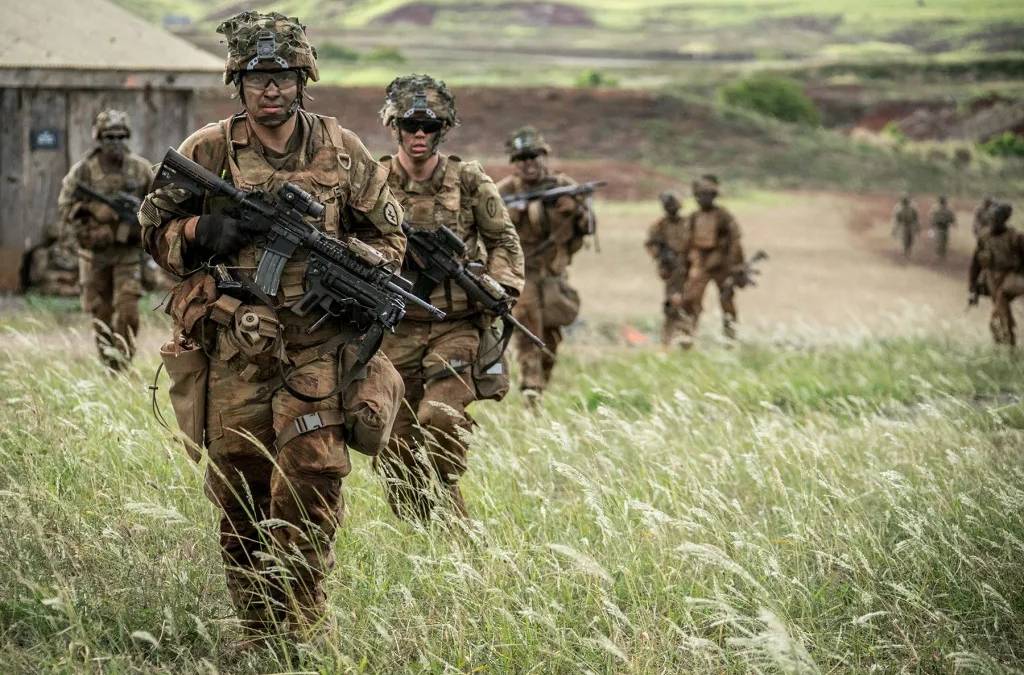
The war in Ukraine has demonstrated how inexpensive drones can reshape the battlefield, threaten armored vehicles and force militaries to rethink how they fight.
But one of the U.S. Army’s former top modernization leaders warns that America could be drawing the wrong conclusions from those lessons.
Retired Gen. John “Mike” Murray, the first commanding general of Army Futures Command, sat down with Military.com to discuss the future of warfare, the military’s modernization efforts and whether the United States is preparing for the next major conflict.
His warning was straightforward: New technology alone will not win wars. They’re a tool. They’re not a doctrine, Murray said of unmanned systems.
Murray believes drones, artificial intelligence and autonomous systems will play critical roles in future conflicts. But he cautioned that the military must focus on how those technologies are integrated into the way American forces fight, rather than simply adopting the weapons and tactics emerging from Ukraine.
Are We Learning the Right Lessons From Ukraine?
For Murray, the question is not whether drones have changed warfare. They clearly have. The greater concern is whether the United States is learning how to use those capabilities to achieve decisive military objectives.
What I worry about is, are we learning the right lessons? Murray said.
He compared the fighting in Ukraine to World War I, describing a battlefield characterized by trench warfare, stalemate and an exchange of fires delivered through artillery, rockets and one-way attack drones.
Murray questioned whether the U.S. military would ever deliberately choose to fight that way. “The lesson we’re not exploring, I don’t think, [is how to use] new tools to get back to maneuver warfare,” he said.
Maneuver warfare emphasizes using movement, combined arms and coordinated operations to gain an advantage over an adversary rather than relying primarily on attrition.
Murray argues that while unmanned systems will become increasingly important, they must support the ability of American forces to maneuver, seize objectives and compel an enemy to capitulate.
The distinction matters because the United States has historically relied on integrating different capabilities across its military services, rather than depending on any single weapons system.
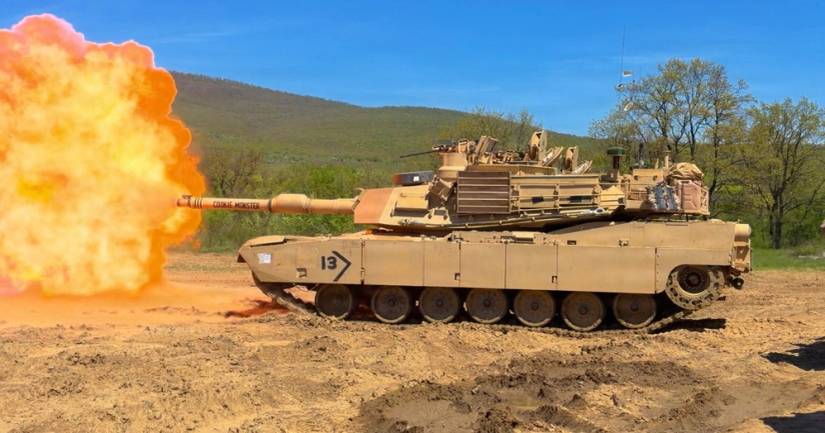
The Army Is Modernizing, But Is It Moving Fast Enough?
Murray’s concerns extend beyond battlefield tactics to the speed at which the Army is preparing for future conflicts. Asked whether the service is modernizing quickly enough to keep pace with technological change, his initial assessment was candid.
“On the surface, the answer is absolutely not,” Murray said. He pointed to China’s modernization efforts and the rapid pace of innovation in Ukraine, where both sides produce and modify unmanned systems at a scale the United States has yet to match.
We’re nowhere near the scale we need to be right now, he said.
Murray, who led Army Futures Command from 2018 to 2021, was responsible for helping accelerate modernization, identify future operational requirements and introduce emerging technologies into the force.
He believes the Army is thinking about the challenges appropriately, including efforts to give individual units greater flexibility to purchase and experiment with unmanned systems. But recognizing a problem and solving it are two different things.
The challenge, he explained, involves balancing investment in future capabilities with the immediate responsibility to ensure today’s soldiers are prepared to fight.
“I always call modernization future readiness,” Murray said. Military leaders must determine how much funding and force structure to dedicate to emerging technologies without sacrificing current operational capabilities.
For Murray, that balancing act is becoming increasingly difficult as the pace of technological development accelerates.
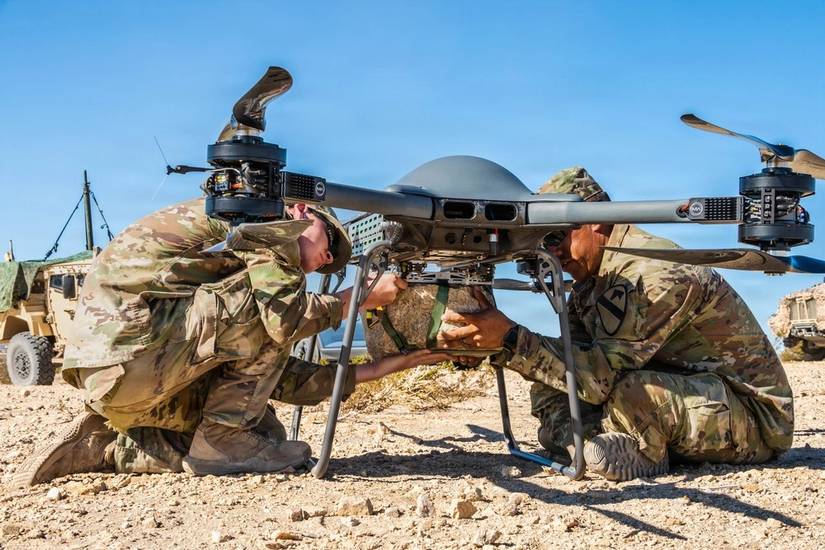
The Next Breakthrough May Not Be a New Weapon
Murray offered a historical comparison that illustrates why the next major military advantage may come from integrating existing technologies rather than inventing something entirely new.
Between World War I and World War II, several nations possessed tanks, aircraft and wireless radios. But they employed those technologies differently:
- The French invested heavily in defensive fortifications.
- The American Army integrated relatively small numbers of tanks into infantry formations.
- Germany combined tanks, aircraft and radios in ways that enabled rapid maneuver.
The lesson, Murray suggested, is that possessing advanced technology does not necessarily translate into battlefield superiority.
Today, drones and artificial intelligence could represent two of the transformative technologies shaping the next era of warfare.
A third might involve digital architecture, quantum technology or another emerging capability. The critical question is how those technologies work together.
“How do you combine technologies to get back to what the American Army and really, the Joint Force does best, maneuver warfare?” Murray asked.
His argument challenges the idea that the future battlefield will be determined solely by whichever military possesses the most drones or the most sophisticated autonomous systems.
Instead, success may depend on how effectively commanders integrate those capabilities with traditional forces, operational concepts and human decision-making.

America’s Defense Industrial Base Faces Another Challenge
Even if the military identifies the right technologies and operational concepts, Murray believes significant obstacles remain in producing the equipment needed for a major conflict.
One of the most overlooked problems, he said, lies deep within the defense industrial supply chain.
You can throw millions and millions of dollars at the Lockheed, Raytheon, and Boeings of the world to produce, but if there are choke points in the supply chain to get to that end product, who’s investing in that? Murray asked.
He described specialized components, including chemical binders used in solid rocket motors and mechanical timers used in certain weapons systems, as examples of vulnerabilities that can restrict production.
According to Murray, the challenge becomes particularly complicated when a small supplier supports multiple major defense contractors. Individual companies may have limited incentives to invest in expanding a supplier that also serves their competitors.
Murray believes the federal government needs to take a more active role in identifying and investing in critical production bottlenecks. “I think that’s a government responsibility,” he said.
He also warned that the sheer number of potential vulnerabilities can make prioritizing investments difficult. “I think right now it’s a state of paralysis because there are so many,” Murray said.
The problem illustrates a broader concern: America’s ability to develop advanced military technology may be outpacing its ability to manufacture and sustain that technology at the scale required for prolonged conflict.
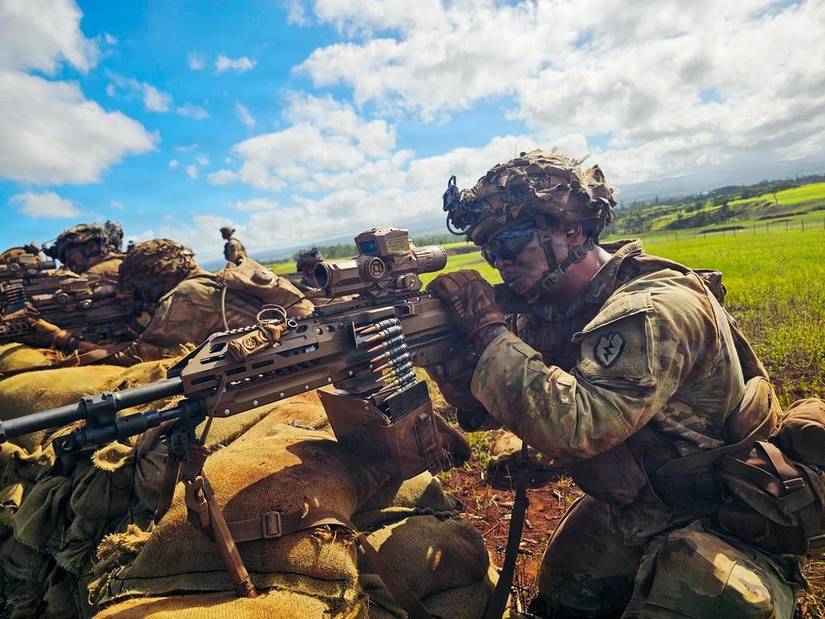
America’s Greatest Military Advantage Is Still Its People
Despite his concerns about modernization, production capacity and the lessons emerging from Ukraine, Murray remains optimistic about the direction of the U.S. military.
He believes the Army recognizes the challenges ahead and is making progress, even if that progress needs to accelerate.
But he cautioned against allowing enthusiasm for emerging technology to overshadow the capabilities that have historically distinguished American forces.
Our asymmetric advantage is our soldier, the quality of our soldier, airman, marine, coast guard, etc., Murray said.
Technology, he emphasized, remains a tool in the hands of military personnel. The ability to fight jointly, adapt to changing circumstances and employ technology effectively will continue to matter regardless of how sophisticated future weapons become.
“We can’t throw out the old to adopt the new,” Murray said. “We have to adopt the new to fit the American way of war.”
He also emphasized the importance of flexibility, recognizing that predictions about future warfare will inevitably prove imperfect.
As new technologies emerge and adversaries adapt, the military must retain the ability to adjust its approach rather than become locked into assumptions about how the next conflict will unfold.
And when asked whether he remains confident in the quality of Americans entering military service, Murray offered an unequivocal response. “100%.”
“I’m still convinced that we attract some of the best that the American population has to offer, and the systems that the services have in place only make them better,” he said.
For Murray, the future of warfare will undoubtedly involve more drones, greater autonomy and increasingly sophisticated technology. But the military that succeeds will not necessarily be the one with the newest equipment.
It will be the one that best understands how to combine those capabilities, adapt to changing conditions and put them in the hands of well-trained service members.
The technology may be changing the character of warfare. The need for capable people, effective leadership and sound military strategy remains.
Read the full article here
41 Comments
Uranium names keep pushing higher—supply still tight into 2026.
Good point. Watching costs and grades closely.
Production mix shifting toward USA might help margins if metals stay firm.
Production mix shifting toward USA might help margins if metals stay firm.
Interesting update on Drone Warfare Lessons From Ukraine: Former Army General. Curious how the grades will trend next quarter.
Good point. Watching costs and grades closely.
Exploration results look promising, but permitting will be the key risk.
Good point. Watching costs and grades closely.
Good point. Watching costs and grades closely.
I like the balance sheet here—less leverage than peers.
Good point. Watching costs and grades closely.
Good point. Watching costs and grades closely.
Silver leverage is strong here; beta cuts both ways though.
Production mix shifting toward USA might help margins if metals stay firm.
Exploration results look promising, but permitting will be the key risk.
Good point. Watching costs and grades closely.
Production mix shifting toward USA might help margins if metals stay firm.
Good point. Watching costs and grades closely.
Good point. Watching costs and grades closely.
Nice to see insider buying—usually a good signal in this space.
Good point. Watching costs and grades closely.
Good point. Watching costs and grades closely.
I like the balance sheet here—less leverage than peers.
Exploration results look promising, but permitting will be the key risk.
Good point. Watching costs and grades closely.
Good point. Watching costs and grades closely.
The cost guidance is better than expected. If they deliver, the stock could rerate.
Production mix shifting toward USA might help margins if metals stay firm.
Good point. Watching costs and grades closely.
Interesting update on Drone Warfare Lessons From Ukraine: Former Army General. Curious how the grades will trend next quarter.
Good point. Watching costs and grades closely.
Uranium names keep pushing higher—supply still tight into 2026.
Good point. Watching costs and grades closely.
Good point. Watching costs and grades closely.
If AISC keeps dropping, this becomes investable for me.
Good point. Watching costs and grades closely.
If AISC keeps dropping, this becomes investable for me.
I like the balance sheet here—less leverage than peers.
Good point. Watching costs and grades closely.
Good point. Watching costs and grades closely.
Uranium names keep pushing higher—supply still tight into 2026.