

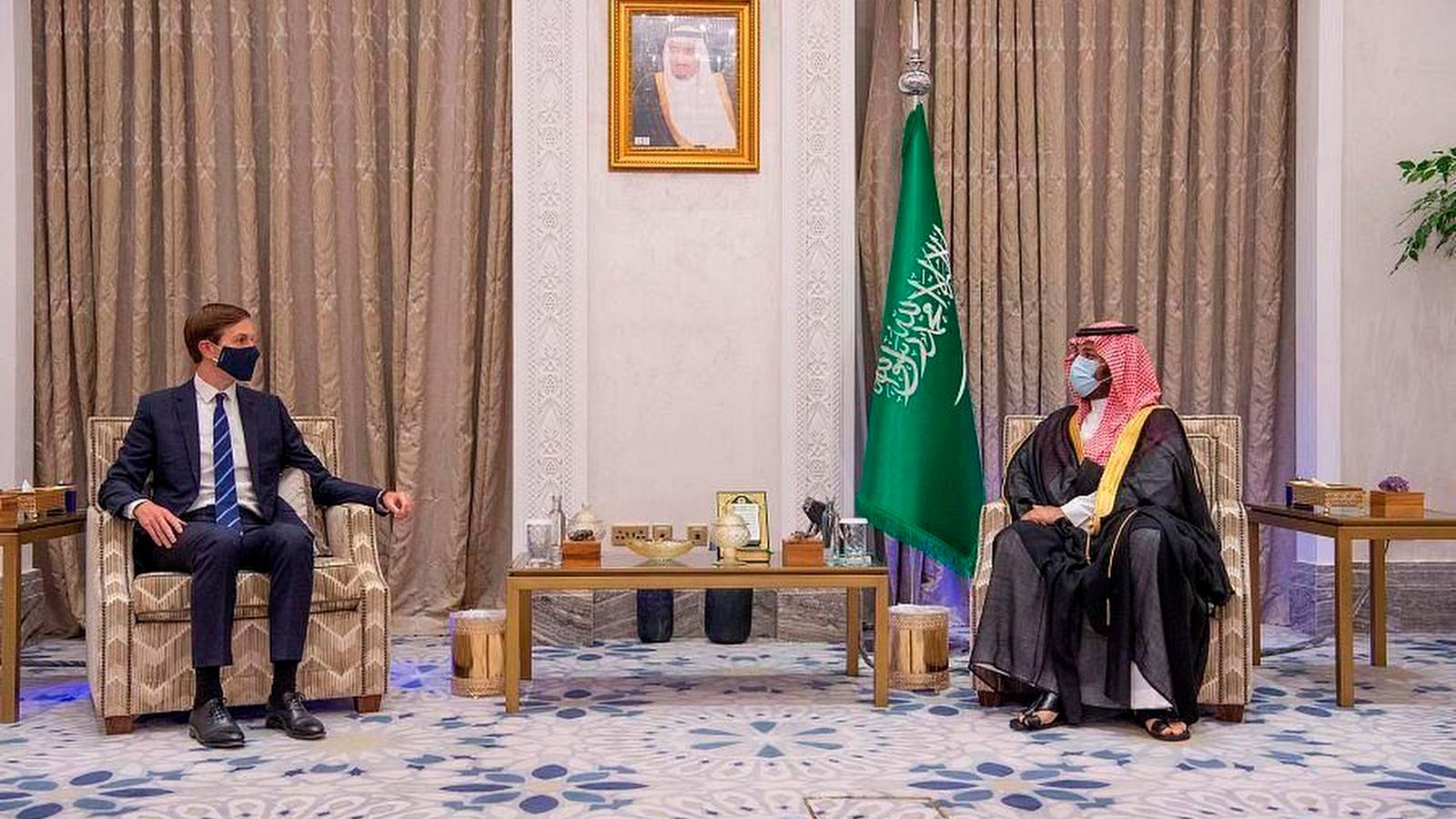
Jared Kushner is helping negotiate American foreign policy— including talks over the wars in Ukraine and Iran and postwar Gaza — as an unpaid informal envoy while facing allegations in journalist Matthew Cole’s new book, “Princes and Thieves,” involving secret foreign accounts, compromised communications and payments to individuals described as a warlord, a mercenary and a former hit man.
President Donald Trump’s son-in-law denied the allegations on X and in letters from his attorneys published on his website, calling the claims “completely insane.” Yet the claims arrive amid congressional investigations into his foreign-financed investment firm and a lawsuit challenging his diplomatic authority.
The disputes raise national security questions about foreign influence, counterintelligence vulnerabilities and oversight of individuals representing the United States without conventional government appointments.
Secret Accounts, Spies and Alleged Payments to a Hit Man
In an Oct. 22 excerpt published by Vanity Fair, Cole alleges that Dutch intelligence discovered screenshots of Kushner’s iPhone on a Russian military intelligence server in 2017, and by early 2018, monitored his screen and observed access to a Dubai bank account.
Cole alleges that Saudi and Emirati leaders arranged approximately $2 billion across accounts accessible to Kushner, including $750 million held at First Abu Dhabi Bank through the Watani Al Emarat Foundation, a United Arab Emirates government-funded charity led by Dherar Belhoul Al Falasi. While the foundation promoted national identity and civic programs, a confidential source cited in Cole’s book alleges it also concealed Emirati weapons purchases and covert military operations.
Cole claims Kushner received signatory authority over the account, designated “Alpha,” allowing him to conduct transactions without owning it. In their published responses to Vanity Fair and Cole’s publisher, Kushner’s attorneys denied he knew of Al Falasi, the foundation or the account, and the foundation has not publicly commented on the allegations.
First Abu Dhabi Bank is chaired by Tahnoon bin Zayed Al Nahyan, the UAE’s national security adviser and brother of its president. Tahnoon also chairs Lunate, an Abu Dhabi investment manager that is one of Affinity Partners’ largest investors, having joined Qatar’s sovereign wealth fund in committing an additional $1.5 billion to Kushner’s firm in December 2004, according to Bloomberg. The investment ties add another dimension to the relationship between Kushner’s business interests and Emirati officials.
Azerbaijan allegedly helped conceal the money’s origins. Cole claims Saudi and Emirati leaders moved funds through Azerbaijani banks, which converted the money into U.S. dollars and sent equivalent amounts abroad from separate accounts, making the payments appear to originate in Azerbaijan. He describes commissions of approximately 6% to 7% for these transactions.
The deposits into the alleged $750 million Alpha account reportedly came from an Azerbaijani bank, while approximately $1 billion was separately transferred through Azerbaijan to Israel in 2018. Neither transaction has been independently verified, and no evidence establishes that the Azerbaijani government authorized the alleged transfers. Israeli news outlet Ynet News, along with CBS News and the New York Times, summarized the purported financial arrangements from Cole’s book.
Cole also alleges that Kushner transferred substantial amounts to a warlord, a mercenary and a former hit man. He identifies alleged payments of $60 million to Erik Prince in 2018, $85 million to Libyan commander Khalifa Haftar in July 2018 and $80 million to Felipe Vidal in 2019, who is described in the book as a former hit man associated with clandestine operations.
Neither Prince, Haftar nor Vidal has publicly responded to the allegations, which Kushner’s attorneys deny.
Four senior officials from Trump’s first administration, including two former national security advisers, a former White House chief of staff and a former CIA director, reportedly told Cole they knew of no presidential authorization for the alleged foreign accounts. In a pre-publication letter to Vanity Fair published on Kushner’s website, Kushner’s attorney, Alejandro Brito maintained that Kushner’s diplomatic activities were conducted at Trump’s direction and with his approval. The alleged payments remain unverified.
The Timing of Jamal Khashoggi’s Murder
The timing of Cole’s allegations overlaps with the October 2018 murder of Jamal Khashoggi, a Saudi journalist and Washington Post columnist who was killed inside the Saudi Consulate in Istanbul.
A 2021 U.S. intelligence assessment concluded that Crown Prince Mohammed bin Salman approved an operation to capture or kill Khashoggi.
The alleged financial arrangements began in 2017, with substantial transfers purportedly occurring before and after the murder. Kushner maintained close relations with Saudi leadership during that period.
During the ensuing controversy, Trump repeatedly emphasized Saudi Arabia’s financial importance. On Oct. 13, 2018, he cited $110 billion in proposed military purchases while resisting calls to restrict arms sales.
His Nov. 20 statement increased the figure to $450 billion in purported Saudi investments and purchases, including the proposed weapons sales, as he defended maintaining the partnership despite the CIA’s assessment implicating the crown prince in Khashoggi’s murder, arguing that Saudi Arabia was essential to American jobs, arms sales and efforts to counter Iran.
Trump later acknowledged protecting the crown prince from congressional consequences in interviews for Bob Woodward’s 2020 book “Rage.”
“I saved his ass. I was able to get Congress to leave him alone,” Trump said.
He also cited approximately $400 billion in Saudi spending while discussing the controversy.
Could Kushner Have Controlled an Israeli Central Bank Account?
Cole separately alleges that approximately $1 billion reached Israel through Azerbaijan in spring 2018. Israeli Prime Minister Benjamin Netanyahu purportedly encouraged Kushner to place the money in what appeared to be a government account at the Bank of Israel.
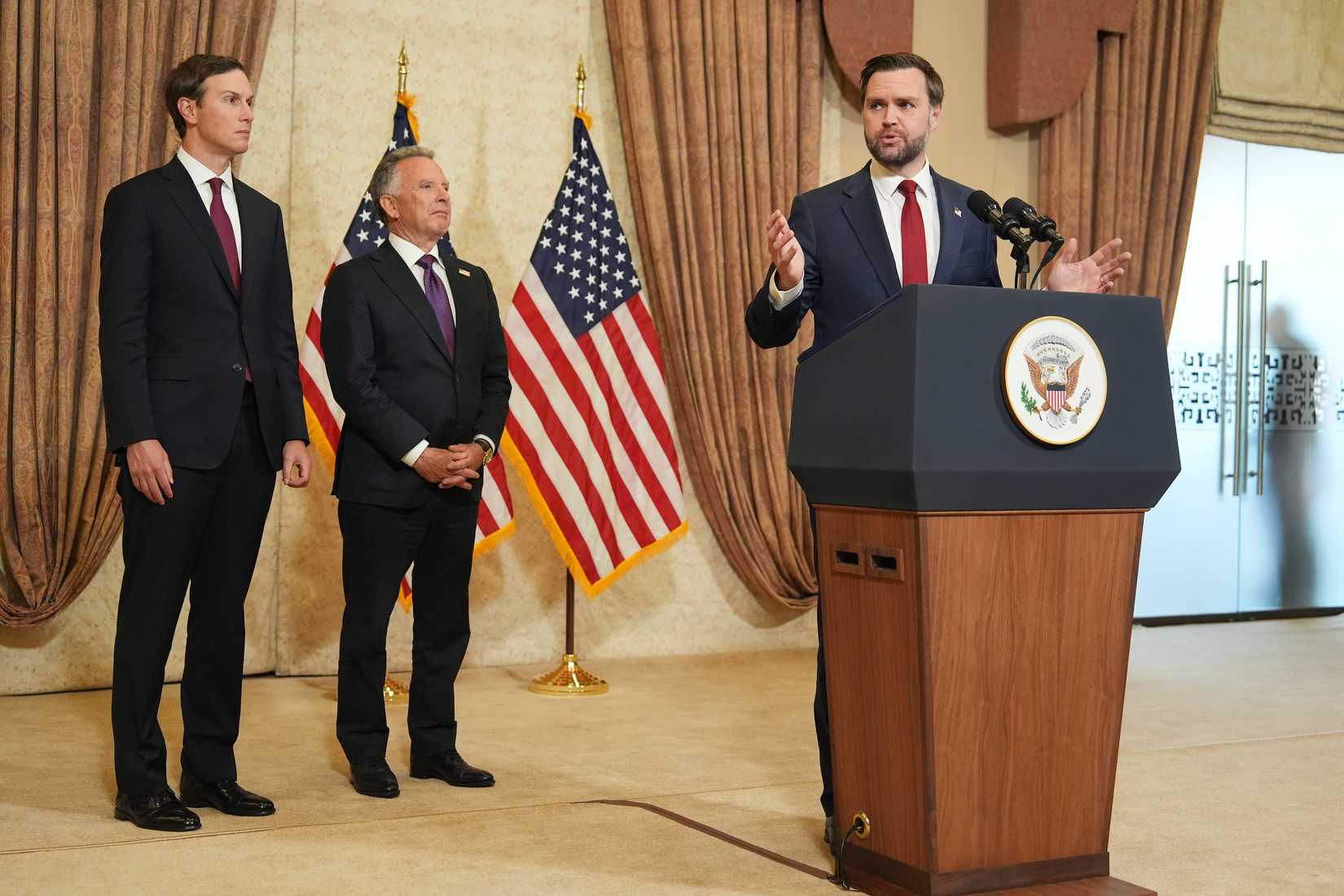
That arrangement raises questions under Israeli banking law: Under Sections 48 and 50 of the Bank of Israel Law, the central bank acts as banker to the Israeli government and maintains accounts for qualifying financial institutions and approved foreign central banks or monetary authorities. It does not provide personal accounts.
Cole alleges that Kushner had access to government-held funds rather than a personal retail account, or that funds moved through an eligible financial institution. Under Bank of Israel account rules, Israeli ministries manage budgetary and extra-budgetary accounts at the central bank, while licensed banking corporations hold settlement accounts to execute institutional payment instructions. Foreign banks and monetary authorities require approval from the bank’s governor and Monetary Committee.
Cole claims Netanyahu required advance notice before transactions and that Kushner communicated through then-U.S. Ambassador to Israel David Friedman. In a response quoted in the Oct. 22 Vanity Fair excerpt, Friedman denied any knowledge or involvement in the alleged arrangement, calling the claims about him “100% false.”
The Bank of Israel has not publicly confirmed any such arrangement, and Kushner’s lawyers similarly denied the account existed in their published responses.
Foreign-Financed Businesses and Military Investments
Unlike the disputed accounts, Kushner’s foreign business relationships are documented.
His investment firm, Affinity Partners, received $2 billion from Saudi Arabia’s sovereign wealth fund after he left office in 2021. A 2024 Senate Finance Committee investigation identified as much as $157 million in foreign management fees, including $87 million from Saudi Arabia.
The findings prompted a separate legal concern. In October 2024, Sen. Ron Wyden, D-Ore., and Rep. Jamie Raskin, D-Md., requested a special counsel investigation into whether Kushner violated the Foreign Agents Registration Act by acting as an unregistered Saudi agent while receiving substantial foreign investment fees.
Under FARA, registration can be required when someone acts at a foreign principal’s direction or request and performs covered political or representational activities. Foreign financing alone does not establish a violation, and the lawmakers’ request was not a finding of wrongdoing.
Affinity also became the largest shareholder in Phoenix Financial, an Israeli company investing in military suppliers. An October 2026 CNN investigation identified more than $456 million in Phoenix holdings across nine suppliers, including Elbit Systems.
Another significant transaction closed in August 2026, when Affinity joined Saudi Arabia’s Public Investment Fund and Silver Lake in completing a $55 billion cquisition of Electronic Arts.
The family’s business history adds context. During Trump’s first term, Kushner Companies faced roughly $1.4 billion in debt on its struggling 666 Fifth Ave. property in Manhattan.
In August 2018, Brookfield Asset Management, a Canadian investment firm with extensive real estate holdings, agreed to a 99-year lease, paying approximately $1.1 billion upfront. Qatar’s sovereign wealth fund was a major investor in the Brookfield subsidiary involved in the deal.
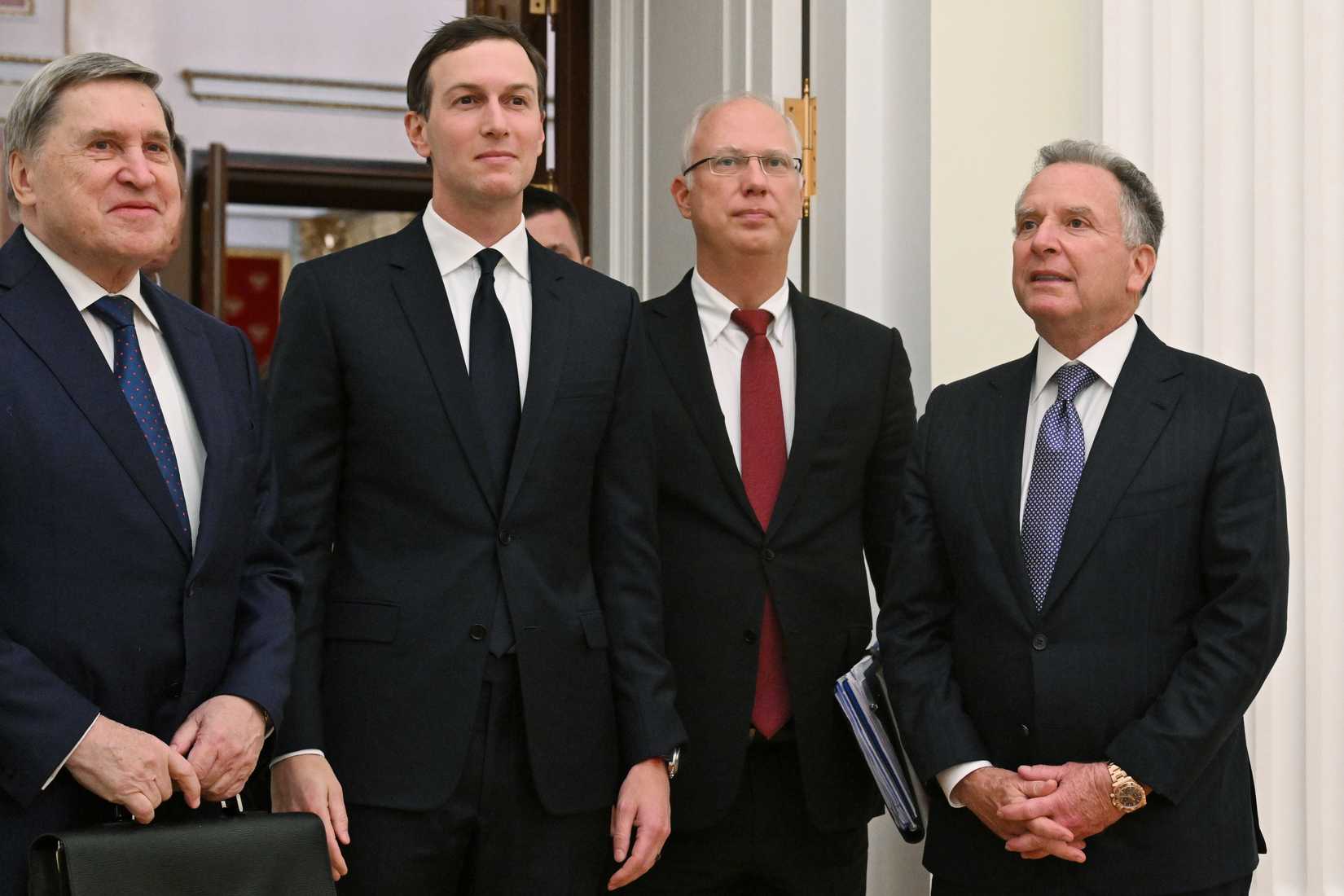
The timing attracted scrutiny because Kushner’s father had sought financing from Qatari officials while Trump supported a Saudi-led blockade of Qatar. The administration subsequently backed efforts to resolve the dispute.
A 2022 Senate Finance Committee investigation uncovered communications showing Charles Kushner had negotiated with Brookfield months before the deal, during a diplomatic dispute involving Qatar, and questioned Brookfield’s earlier assurances that Qatar-linked entities would not participate. An October 2022 committee letter to Brookfield confirms investigators obtained additional records, though the panel did not issue a final public determination resolving potential conflicts of interest.
Kushner’s current government status faces a separate legal challenge. Citizens for Responsibility and Ethics in Washington, or CREW, a government ethics watchdog, filed a fedearl lawsuit Oct. 14, 2026, arguing that his diplomatic responsibilities require formal appointment and federal financial disclosures.
White House spokesperson Anna Kelly said in a statement reported by NBC News that Kushner serves voluntarily as a private citizen at the president’s request while paying his own expenses. The case has not resolved whether those requirements apply to his role.
The National Security Stakes
The allegations raise concerns about whether foreign governments could access sensitive American diplomatic information or pressure a negotiator through financial relationships. In its Mobile Communications Best Practice Guidance, the Cybersecurity and Infrastructure Security Agency warns that nation-state hackers actively target the mobile devices and communications of senior government and political figures. If a negotiator’s phone is compromised, foreign intelligence services could gain insight into U.S. positions or exploit personal vulnerabilities.
Kushner’s investors also have relevant interests. Saudi Arabia seeks American weapons, security guarantees and support against Iran. Qatar hosts Al Udeid Air Base, a critical hub for U.S. military operations, while the UAE maintains extensive defense and intelligence cooperation with Washington.
All three governments have interests in regional conflicts, military assistance and diplomatic agreements Kushner could help shape. Ethics watchdogs and congressional investigators say those investments create potential financial leverage over someone representing the United States, particularly when future funding or investment returns depend on maintaining those relationships.
Kushner denies the allegations involving secret accounts and surveillance, but his foreign financing is documented.
Organizations such as CREW and the project On Government Oversight, along with former White House ethics counsel Norm Eisen, argue the concern goes beyond whether a negotiator might profit from foreign business: governments with billions invested in his firm could seek favorable American military or diplomatic decisions, while U.S. officials and the public lack the disclosures needed to assess whether private financial interests are influencing national security policy.
Read the full article here
34 Comments
If AISC keeps dropping, this becomes investable for me.
If AISC keeps dropping, this becomes investable for me.
Production mix shifting toward USA might help margins if metals stay firm.
Good point. Watching costs and grades closely.
Good point. Watching costs and grades closely.
Interesting update on Kushner’s Alleged Hit Man Payments and Saudi Ties Raise Security Questions. Curious how the grades will trend next quarter.
Good point. Watching costs and grades closely.
Good point. Watching costs and grades closely.
The cost guidance is better than expected. If they deliver, the stock could rerate.
If AISC keeps dropping, this becomes investable for me.
Good point. Watching costs and grades closely.
Nice to see insider buying—usually a good signal in this space.
Good point. Watching costs and grades closely.
Good point. Watching costs and grades closely.
Uranium names keep pushing higher—supply still tight into 2026.
Nice to see insider buying—usually a good signal in this space.
Production mix shifting toward USA might help margins if metals stay firm.
Good point. Watching costs and grades closely.
Silver leverage is strong here; beta cuts both ways though.
Good point. Watching costs and grades closely.
The cost guidance is better than expected. If they deliver, the stock could rerate.
Silver leverage is strong here; beta cuts both ways though.
Interesting update on Kushner’s Alleged Hit Man Payments and Saudi Ties Raise Security Questions. Curious how the grades will trend next quarter.
Exploration results look promising, but permitting will be the key risk.
If AISC keeps dropping, this becomes investable for me.
Good point. Watching costs and grades closely.
Good point. Watching costs and grades closely.
Silver leverage is strong here; beta cuts both ways though.
Good point. Watching costs and grades closely.
Production mix shifting toward USA might help margins if metals stay firm.
Good point. Watching costs and grades closely.
Silver leverage is strong here; beta cuts both ways though.
Exploration results look promising, but permitting will be the key risk.
If AISC keeps dropping, this becomes investable for me.