

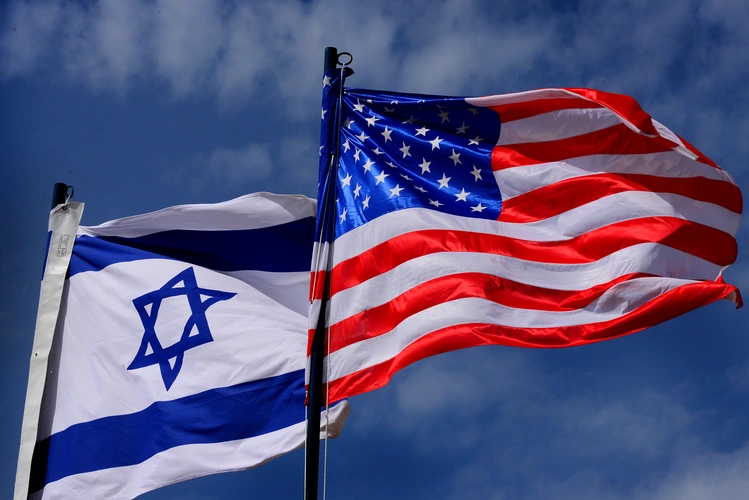
Newly released FBI files describe how investigators traced explosives procurement, shortwave communications, and an Anti-Defamation League (ADL) document channel during Israel’s formative years.
The Institute for Research: Middle Eastern Policy announced the release Oct. 21 after seeking the records through the Freedom of Information Act (FOIA). The records show American territory serving as a base for activities connected to a foreign conflict, while federal officials investigated where political support crossed into covert collection or illegal exports.
The release identifies the material as part of the FBI’s “ISINT” investigation into Israeli intelligence.
Their significance extends beyond individual suspects: The files document investigators examining the relationships among procurement networks, information gathering and organizations operating openly in the United States. The published archive includes material predating Israel’s establishment.
Arming a State Before Washington Authorized the Shipments
The smuggling investigations unfolded as Britain’s rule over Palestine ended. The United Nations’ November 1947 partition proposal envisioned Jewish and Arab states, but fighting between Jewish and Arab groups preceded Israel’s May 1948 declaration of independence and the intervention of neighboring Arab armies.
The Haganah, the Jewish community’s principal underground militia, was among the forces fighting for control of the territory. The war also brought mass displacement and dispossession to Palestinians, remembered as the Nakba, or “catastrophe,” which marked the beginning of decades of statelessness.
Washington supported partition but restricted weapons exports. A State Department memorandum records the suspension of export licenses for arms, ammunition and other war material intended for Palestine or neighboring countries, publicly announced Dec. 5, 1947.
Initial support for Jewish statehood therefore did not authorize private Americans to ship military supplies around federal controls.
The FBI arrested Philip Alper, Moses Wolfson, Jack Dorfman and Joseph Seiger after explosives were discovered at a Jersey City pier in January 1948. They were charged with falsely declaring the shipment’s contents; warrants also named two men believed to have departed for Palestine, according the arrest coverage.
The newly released files revisit that operation. IRmep’s account describes explosives acquired through the War Assets Administration and diverted through mislabeled civilian shipments, connecting American military surplus to efforts to arm Jewish forces in Palestine.
Aircraft smuggling produced convictions. Al Schwimmer, two other defendants and a corporation were each fined $10,000 in 1950 for violating the Neutrality Act by smuggling around 30 aircraft from Florida to Israel in 1947 and 1948.
Schwimmer later founded Israel Aircraft Industries and received a presidential pardon from Bill Clinton in 2001.
The ADL’s Access to Arab League Documents
The files also describe an ADL channel for obtaining documents concerning Arab League activities in New York. Allegedly founded to combat antisemitism and protect equal treatment, the organization describes itself as more of a civil rights mission.
The FBI record reveals another activity: obtaining documents concerning the Arab League’s operations in New York through intermediaries.
An FBI memorandum recounts the ADL’s Herman Edelsberg explaining how the organization obtained documents concerning Arab League activities in New York. According to that account, Wahid Aldali, identified as a nephew of the Arab League’s leader, supplied copies to a newspaperman he believed sympathetic to the league.
The newspaperman passed them to Sanford H. Griffith, described as acting for the ADL. The State Department subsequently supplied the FBI with 76 pages received from Edelsberg, allegedly originating in the league’s offices.
Decades later, ADL surveillance became the subject of litigation. A 1999 settlement with Arab American and other groups required the organization to purge certain information, including arrest records and Social Security numbers, from files on the plaintiffs. The ADL agreed to pay $175,000 in legal fees and contribute $25,000 to a community fund, while denying participation in any illegal activity.
The ADL continues to monitor people it labels extremists. It also trains at least 20,000 law enforcement officers each year.
In January 2026 remarks, ADL CEO Jonathan Greenblatt described 40 analysts tracking digital activity around the clock, including what he called “anti-war crazies” and “pro-Palestine crazies.”
“[N]umber one, we measure and track; number two, we monitor and disrupt. . . . I have 40 analysts working full-time, seven days a week, 24 hours a day, monitoring extremists. We monitor them online, social media, messaging apps, video games, cryptocurrency, podcasts, short-form video, Wikipedia, LLMs,” Greenblatt said.

His definition of extremism includes advocacy organizations. In a 2022 speech, Greenblatt named Students for Justice in Palestine (SJP), Jewish Voice for Peace (JVP) and the Council on American-Islamic Relations (CAIR) as extremist groups and pledged research, litigation and political pressure against them.
The ADL and Brandeis Center subsequently urged nearly 200 universities to investigate SJP chapters for “materially supporting a foreign terrorist organization.” Their October 2023 letter cited rhetoric supporting the attacks while affirming free speech rights.
The American Civil Liberties Union said the demand cited no evidence of material support and echoed the mistakes of McCarthy-era efforts to restrict speech. The Supreme Court’s material-support ruling distinguishes prohibited coordinated assistance from independent advocacy.
Separately, Canary Mission’s profiles of campus activists became a resource for immigration enforcement.
A September 2025 ruling documented investigators’ extensive reliance on the website and found that administration officials deliberately chilled noncitizen academics’ protected speech.
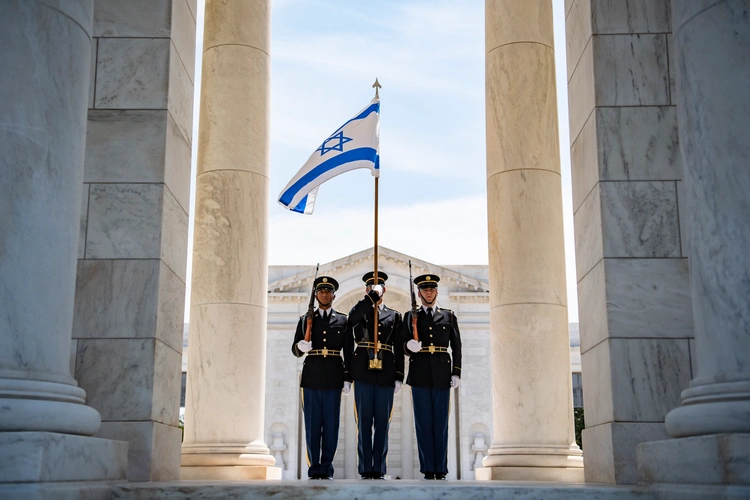
A 1950 report describes a person admitting that he allowed a shortwave receiving set in his home during late 1946 and early 1947. It also describes an individual as a devoted follower of David Ben-Gurion and traces Brooklyn property and business connections.
The chronology places the radio activity before Israeli statehood. Investigators were examining communications and relationships that preceded the formal government, but redactions conceal the messages’ source and participants’ identities. The visible record describes reception; it does not establish what instructions, if any, the messages contained.
From Kenen’s Government Work to AIPAC’s Political Spending
The files also reference Isaiah L. Kenen, who later founded AIPAC, and his connection to Israel’s U.N. delegation.
Separate registration records identify his work for Israel’s information office and his status as a registered foreign agent. The contrast is significant: Kenen disclosed his representation of Israel under FARA, while the lobby he founded operates as a domestic lobbying organization without registering under that law.
A separate January 1951 memorandum supplies a revealing detail: Kenen discussed leaving government work to establish a public relations business and said his first client would probably be Israel’s government. A Justice Department official told him he would need a new foreign-agent registration, which Kenen agreed to file upon beginning that work.
AIPAC says it represents American citizens and is neither funded nor directed by Israel’s government. It does not specify how many of those Americans also hold Israeli citizenship. Under FARA’s requirements, the question is whether covered activities occur at a foreign principal’s order, request, direction or control.

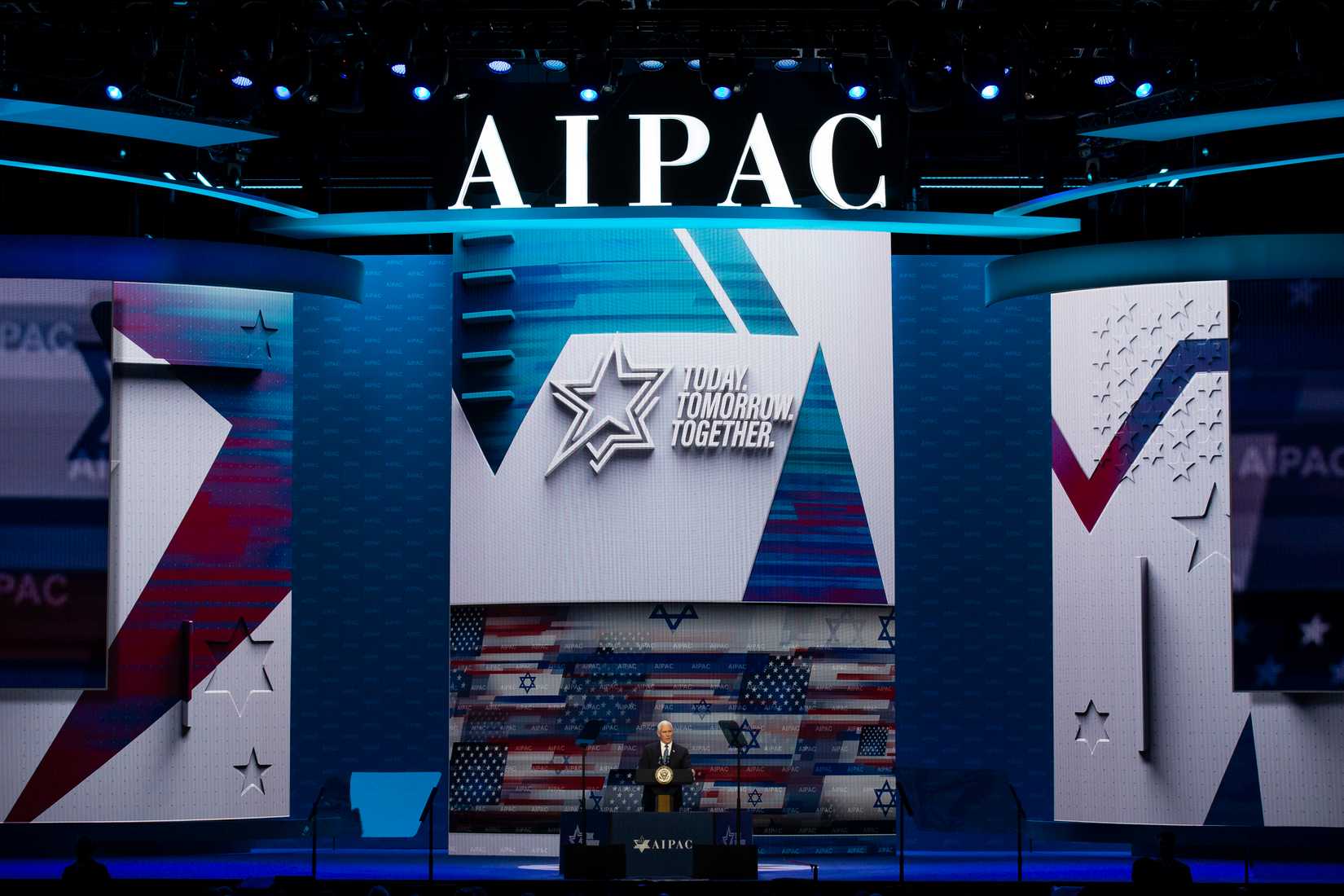
AIPAC’s Oct. 21 announcement ends endorsements, earmarking and contributions made directly through AIPAC, but explicitly promises to expand its fundraising operation.
“We will prioritize increasing direct, organized contributions from individual Americans to candidates” while “maximizing the emerging political fundraising tools,” its leadership wrote.
Its United Democracy Project super PAC will continue operating and raising unlimited sums. Previously, donations through AIPAC’s fundraising portal identified its involvement in campaign disclosures.
Organizing donors to give outside that channel could make AIPAC’s role harder to trace, even when the individual contributions remain disclosed.
Cooperation Does Not Eliminate Counterintelligence Risk
The files document federal scrutiny of Israeli activities in the United States decades before the defense and intelligence integration Congress is now considering.
Today, Section 219 of the House-passed defense authorization bill would expand defense technology cooperation.
A separate Section 622 proposal would expand intelligence sharing while requiring a presidential determination to reduce it, with counterintelligence risks and threats to intelligence sources among the grounds for restrictions.
The files show that federal officials once investigated networks operating in the United States to supply Israel and gather information on its behalf. The contemporary examples raise distinct questions about lobbying transparency, monitoring political opponents and access to American intelligence.
Congress is now considering broader cooperation against that history.
Read the full article here
52 Comments
Nice to see insider buying—usually a good signal in this space.
Good point. Watching costs and grades closely.
Good point. Watching costs and grades closely.
Production mix shifting toward USA might help margins if metals stay firm.
Good point. Watching costs and grades closely.
Good point. Watching costs and grades closely.
I like the balance sheet here—less leverage than peers.
Good point. Watching costs and grades closely.
Production mix shifting toward USA might help margins if metals stay firm.
Good point. Watching costs and grades closely.
Good point. Watching costs and grades closely.
Nice to see insider buying—usually a good signal in this space.
Good point. Watching costs and grades closely.
Good point. Watching costs and grades closely.
I like the balance sheet here—less leverage than peers.
Good point. Watching costs and grades closely.
Nice to see insider buying—usually a good signal in this space.
Good point. Watching costs and grades closely.
Nice to see insider buying—usually a good signal in this space.
If AISC keeps dropping, this becomes investable for me.
Production mix shifting toward USA might help margins if metals stay firm.
Good point. Watching costs and grades closely.
I like the balance sheet here—less leverage than peers.
If AISC keeps dropping, this becomes investable for me.
Good point. Watching costs and grades closely.
Good point. Watching costs and grades closely.
Nice to see insider buying—usually a good signal in this space.
Good point. Watching costs and grades closely.
Good point. Watching costs and grades closely.
If AISC keeps dropping, this becomes investable for me.
The cost guidance is better than expected. If they deliver, the stock could rerate.
Good point. Watching costs and grades closely.
Good point. Watching costs and grades closely.
Interesting update on FBI Files Reveal the History Behind Israel’s US Influence Networks. Curious how the grades will trend next quarter.
Good point. Watching costs and grades closely.
Good point. Watching costs and grades closely.
Interesting update on FBI Files Reveal the History Behind Israel’s US Influence Networks. Curious how the grades will trend next quarter.
I like the balance sheet here—less leverage than peers.
Good point. Watching costs and grades closely.
Good point. Watching costs and grades closely.
Silver leverage is strong here; beta cuts both ways though.
Good point. Watching costs and grades closely.
Good point. Watching costs and grades closely.
Interesting update on FBI Files Reveal the History Behind Israel’s US Influence Networks. Curious how the grades will trend next quarter.
Good point. Watching costs and grades closely.
Good point. Watching costs and grades closely.
Interesting update on FBI Files Reveal the History Behind Israel’s US Influence Networks. Curious how the grades will trend next quarter.
Good point. Watching costs and grades closely.
Nice to see insider buying—usually a good signal in this space.
Good point. Watching costs and grades closely.
Good point. Watching costs and grades closely.
Silver leverage is strong here; beta cuts both ways though.