

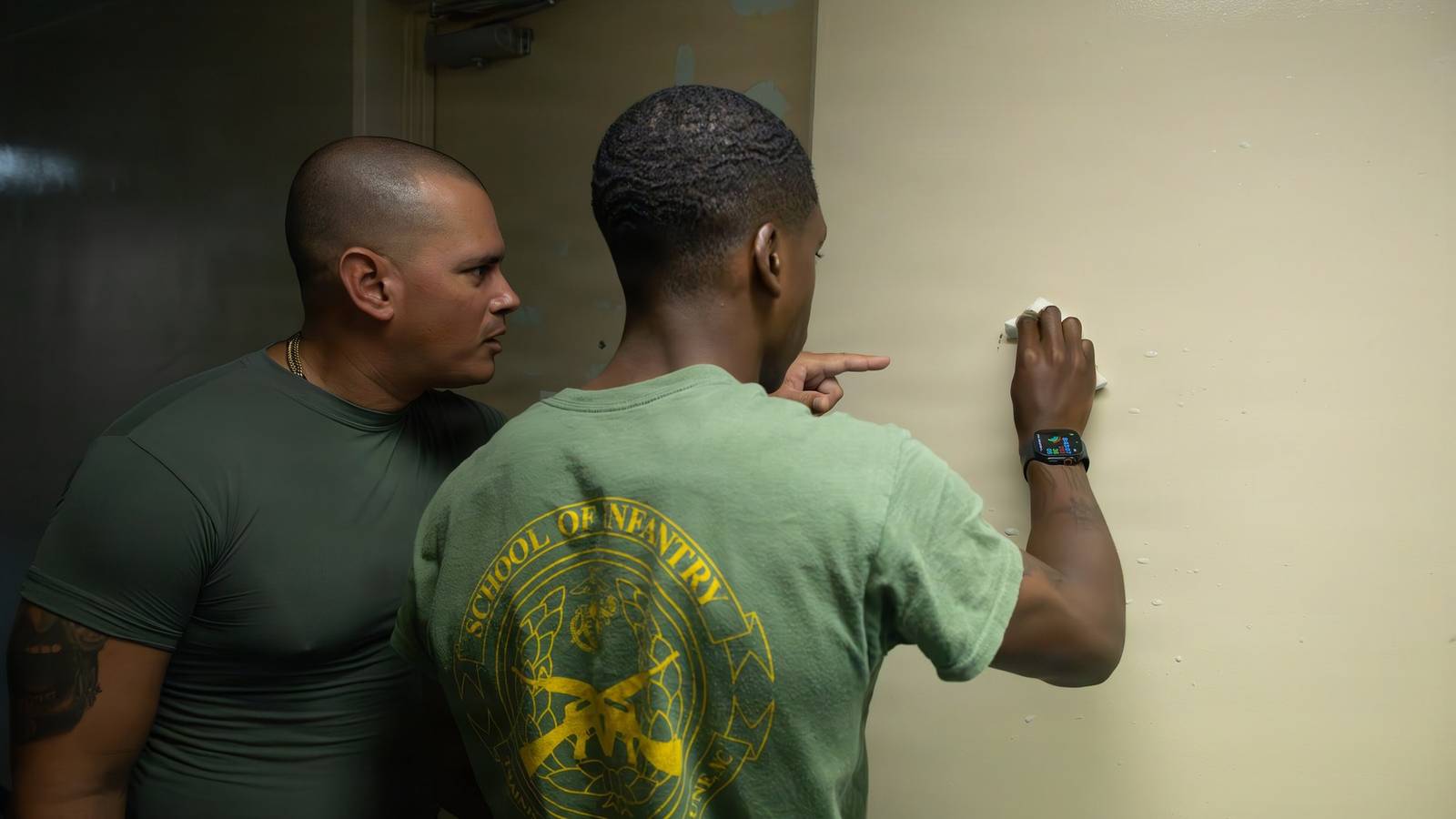
Marines checking into the barracks now have something the Corps never put in writing before: a short list of problems that make a room off-limits.
MARADMIN 546/26, signed Nov. 4, officially sets what the Marine Corps calls non-negotiable quality-of-life standards for unaccompanied housing at every installation.
It took effect immediately. Marines can refuse a room only if it meets the message’s definition of uninhabitable: visible mold or mildew; visible signs of pests; or heating and air conditioning, door or window locks, plumbing and sewage, or hot water that doesn’t work.
A dated paint job or a scuffed floor remains a work order, not grounds to walk away.
Within that scope, a Marine who turns down a room is shielded from reprisal, retaliation, harassment or reduced service, according to the message.
Marines Had the Right Before, But Not the Definition
The Corps first promised the right to refuse in June 2023, when it issued a barracks version of a tenant bill of rights. The Corps left the definition of habitable for later.
Three months later, a Government Accountability Office report described barracks with sewage overflows, mold and bedbugs. The Marine Corps told investigators that about 17,000 Marines were living in substandard barracks as of that March.
The new message rests on an Oct. 6 memo from the Pentagon’s Barracks Task Force. On Nov. 10, Secretary of War Pete Hegseth gave the services five days to validate compliance with that memo, according to the Pentagon.
Dakota Meyer, the Medal of Honor recipient serving as the task force’s senior adviser, put it as follows: “If the room cannot be fixed, move the service member.”
What the Standard Room Looks Like
The baseline is the Corps’ 2+0 module: at least 180 net square feet of living and sleeping space for no more than two Marines, a lockable closet for each, a private bathroom with a shower and a small kitchenette with a sink and counter.
Each Marine gets a bed, desk, chair and nightstand. Each room gets a refrigerator, microwave and blackout blinds. Rooms should hold between 70 and 74 degrees, with hot water of at least 110 degrees at the tap.
Officially, building managers may not check a Marine into a room that misses that baseline or still has an open maintenance work order. That is a tall order for older buildings, which the same message plans to renovate or replace.
Repair Deadlines Now Have Teeth
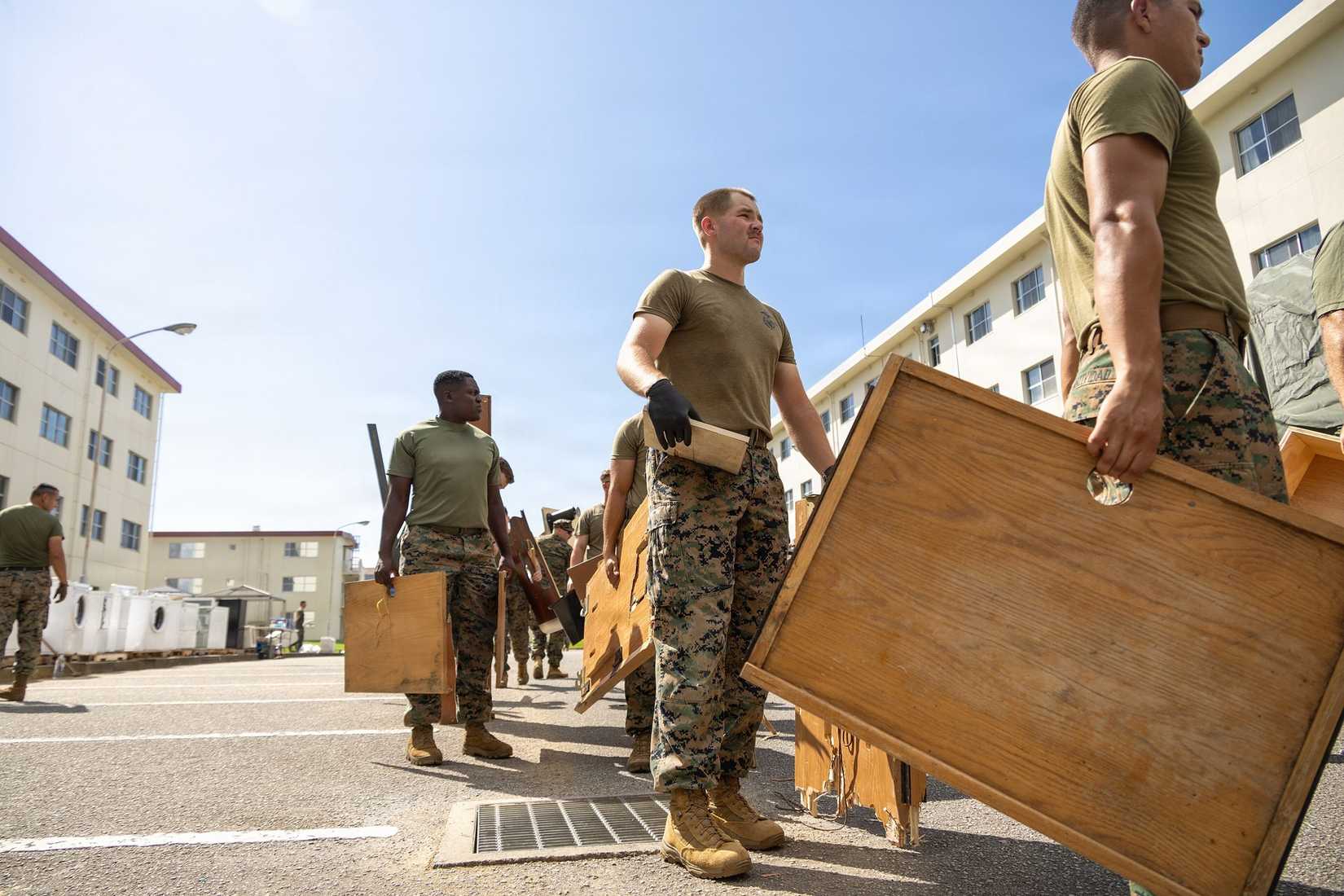
Maintenance requests go through QSRmax, which Marines reach by scanning a QR code that must be posted in barracks lobbies, hallways and on the inside of every room door.
Emergencies, such as a gas leak, 10 square feet or more of mold, no air conditioning when it’s above 85 degrees outside or a venomous animal inside the quarters, require a response within an hour.
The problem must be contained within 24 hours. If it can’t be, the installation moves the Marine to other lodging until it is. Urgent problems, including smaller mold patches and roaches or mice, get eight hours for a response and 72 hours to contain.
Permanent fixes for both are due within 15 business days. A ticket can’t be closed without a physical inspection, and the Marine is asked to confirm the fix worked.
Work orders that run five business days past any deadline go to the installation commander, and a biweekly list of late ones goes to the assistant secretary of the Navy for energy, installations and environment and to the task force.
Civilians Take Over the Front Desk
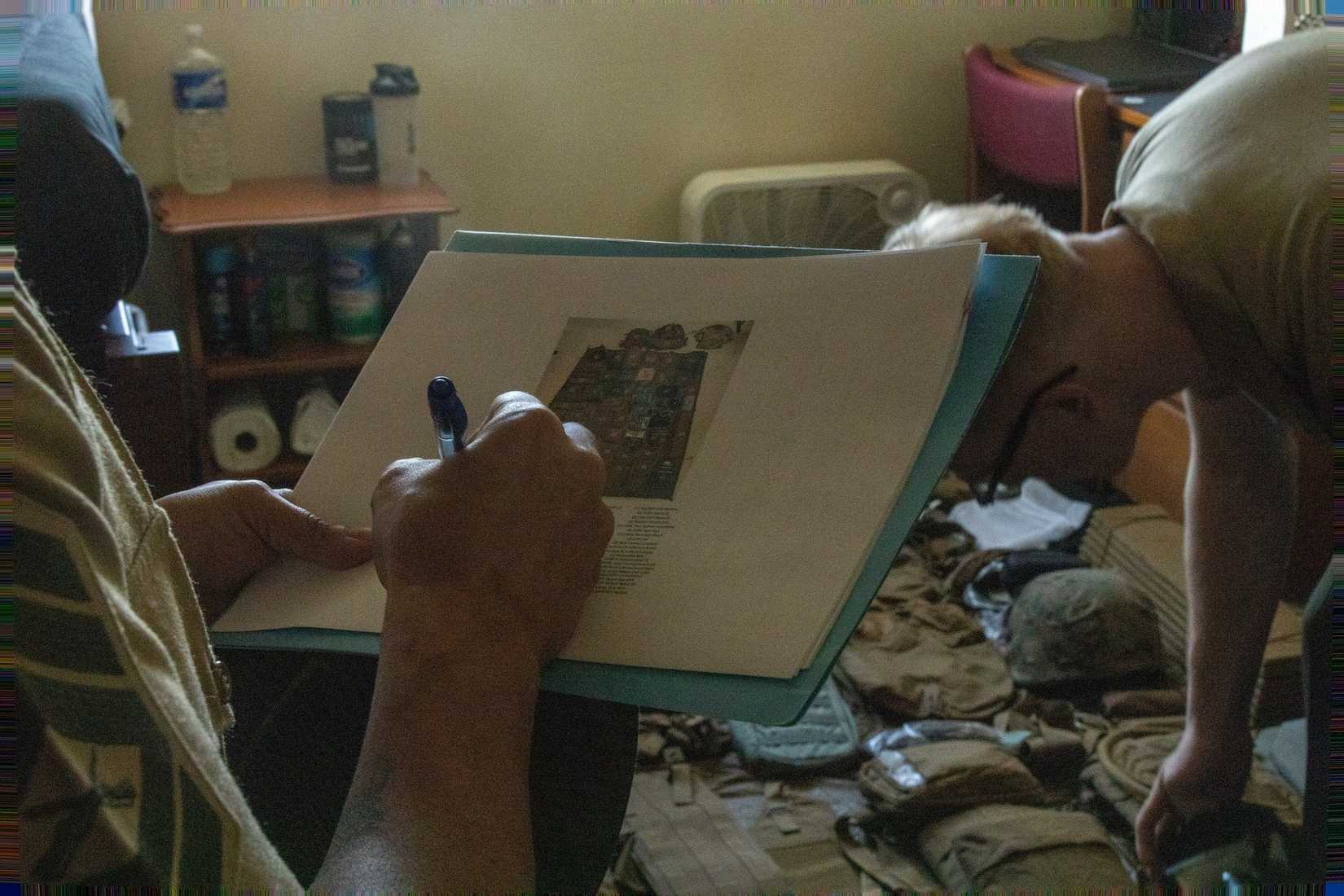
The message puts barracks management under a civilian Military Housing Office director at each installation and sends active-duty barracks managers back to their regular jobs.
Contracted building managers handle check-ins, keys and work orders, overseen by government civilian housing staff. That finishes a shift the Corps began under Barracks 2030.
By spring 2025, the service had hired 347 civilians and freed 532 enlisted Marines from barracks duties. Residents still owe their side of the bargain. Rooms must be kept clean, and damage beyond normal wear can trigger a financial liability investigation.
What To Do On Check-In Day
Before signing the occupancy agreement, walk the room with the building manager, as the message requires. Check the shower and air conditioning unit for mold, run the hot water, test the locks and look for pests.
If the room fails, say so before signing. If a command orders a Marine into a room that fails the standard, or repair requests sit ignored past their deadlines, the Marine can request mast, starting with the company commander and going as high as the general court-martial convening authority.
The message says no leader may impede, discourage or retaliate against a Marine who does. Barracks compliance and work order backlogs are slated to join the Inspector General of the Marine Corps inspection checklists by fiscal 2028.
Read the full article here
41 Comments
I like the balance sheet here—less leverage than peers.
If AISC keeps dropping, this becomes investable for me.
Good point. Watching costs and grades closely.
Good point. Watching costs and grades closely.
Uranium names keep pushing higher—supply still tight into 2026.
Production mix shifting toward USA might help margins if metals stay firm.
Good point. Watching costs and grades closely.
Exploration results look promising, but permitting will be the key risk.
Good point. Watching costs and grades closely.
Exploration results look promising, but permitting will be the key risk.
Good point. Watching costs and grades closely.
If AISC keeps dropping, this becomes investable for me.
Good point. Watching costs and grades closely.
Good point. Watching costs and grades closely.
Nice to see insider buying—usually a good signal in this space.
Good point. Watching costs and grades closely.
Uranium names keep pushing higher—supply still tight into 2026.
Good point. Watching costs and grades closely.
Good point. Watching costs and grades closely.
The cost guidance is better than expected. If they deliver, the stock could rerate.
Good point. Watching costs and grades closely.
Silver leverage is strong here; beta cuts both ways though.
Uranium names keep pushing higher—supply still tight into 2026.
Exploration results look promising, but permitting will be the key risk.
Good point. Watching costs and grades closely.
Good point. Watching costs and grades closely.
Interesting update on When Marines Can Refuse a Room. Curious how the grades will trend next quarter.
Good point. Watching costs and grades closely.
Good point. Watching costs and grades closely.
Nice to see insider buying—usually a good signal in this space.
Good point. Watching costs and grades closely.
I like the balance sheet here—less leverage than peers.
Good point. Watching costs and grades closely.
Good point. Watching costs and grades closely.
I like the balance sheet here—less leverage than peers.
Good point. Watching costs and grades closely.
Good point. Watching costs and grades closely.
Silver leverage is strong here; beta cuts both ways though.
If AISC keeps dropping, this becomes investable for me.
Good point. Watching costs and grades closely.
Production mix shifting toward USA might help margins if metals stay firm.