

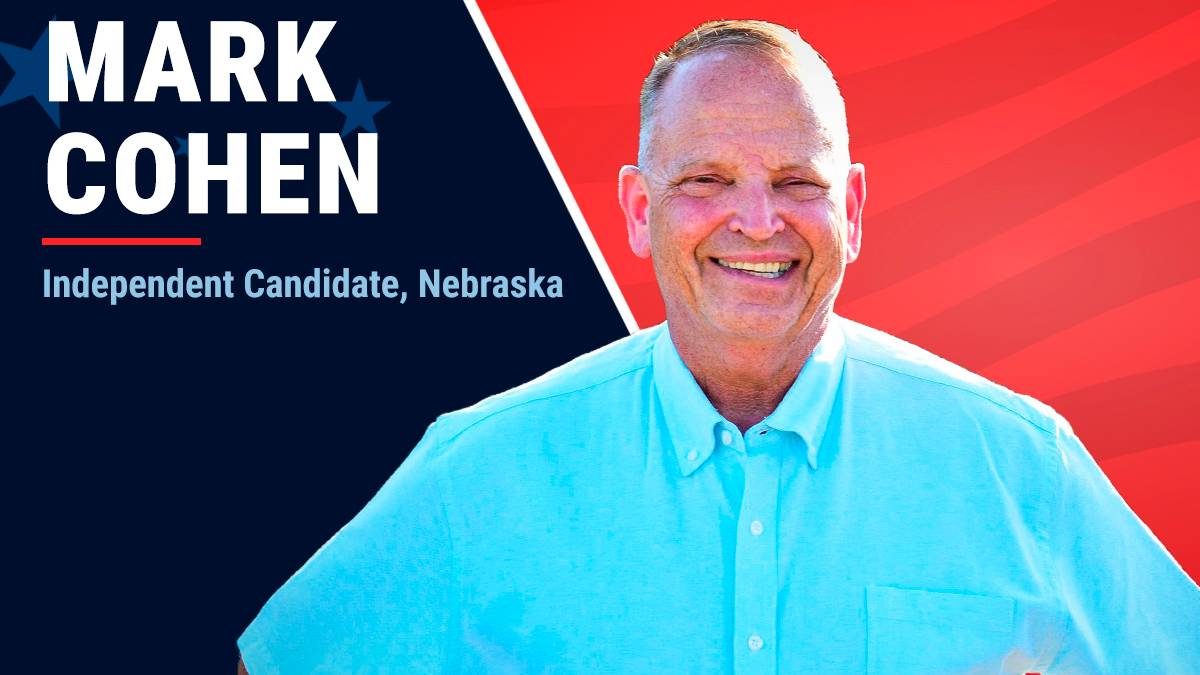
Mark Cohen is a proponent of the Second Amendment and believes billionaires should be taxed more. He is anti-tariff and pro-farmer.
These are just some of the positions helmed by the U.S. Air Force veteran and former Judge Advocate General (JAG) officer as he vies for a victory in Nebraska’s 3rd Congressional District in the Nov. 3 midterm election.
It’s also why he is running as an independent in a year full of them nationwide, finding that both the Democratic and Republican parties haven’t aligned with his value system since he left the ‘blue’ team over four years ago due to policy disagreements and bad politics.
Cohen is wedged between Republican Rep. Adrian Smith, the incumbent since 2007, and Democrat Becky Lynn Stille.
“I felt like there were too many people in the Democratic Party that were more interested in being right than they were in winning an election,” Cohen told Military.com. “This district is a very huge rural district. It includes 80 counties. It borders six different states. It’s essentially the entire state of Nebraska except Omaha, Lincoln, and a little bit of the area surrounding Lincoln.”
Cohen spoke with Military.com in a wide-ranging interview about his military service, the lessons he learned, how the two-party system has failed Americans, and why he thinks he can pull out a victory Tuesday.
Cohen’s Early Life and Ascent Into the US Military
Cohen, the son of two Air Force officers, grew up in Colorado.
When he got out of law school, he decided to go to the Air Force himself “to see the world.”
“They sent me to Omaha, which was not what I was counting on in terms of seeing the world,” he said. “But I ended up staying there for 12 years.”
He described his years in service as “a great experience” during a peacetime era of American national security. He never shot at anybody or had the same happen to him.
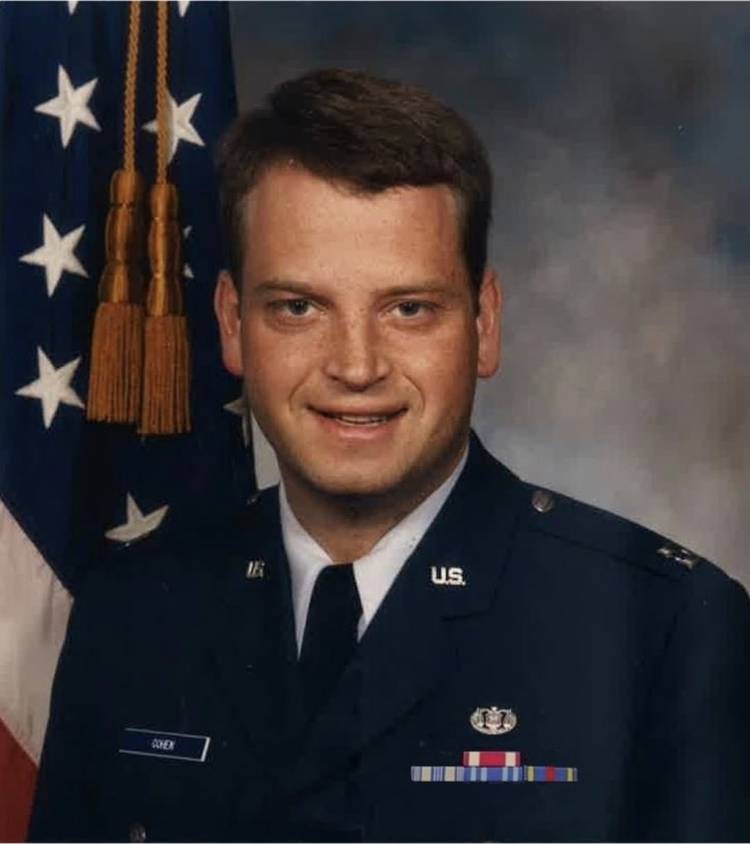
He worked with “fantastic people” at the former Strategic Air Command (SAC) Headquarters located at Offutt Air Force Base in Bellevue, Neb., just south of Omaha. Most of his senior officers were Vietnam veterans.
“My boss actually spent six years in a Hanoi Hilton, and when he got out was no longer able to fly, so they put him in law school,” he recalled. “It was a wonderful opportunity for me to learn from people and learn how to work with people from different perspectives and different backgrounds.
“I think the military has been way ahead of the civilian world on a lot of that. It opened a lot of doors for me, and the way I approach problem-solving is to find people who know what they’re doing, try to brainstorm with them, and see if we have agreement on what the problem is, and see if we can build a consensus on what the possible solutions are. And sometimes there is no consensus, but oftentimes there is.”
He later went back to Colorado and had a family somewhere along the way. After getting an advanced degree in agricultural law, he moved back to Nebraska roughly seven years ago and bought a home in the western portion of the state he describes as “just clean and peaceful.”
Running as an Independent in 2026
Cohen called running as an independent an opportunity to “shine a flashlight on areas where the two parties don’t really want the flashlight to be shown.”
Cohen is one of more than 700 U.S. military veterans running in local, statewide and federal elections this cycle. He formed an exploratory committee in August 2025, then announced his campaign in November.
“It’s a good time to be an independent,” he said. “The number of voters who are identifying as independent is higher than ever, and it’s because they are increasingly dissatisfied with the two-party system and all the vitriol that goes with it.”
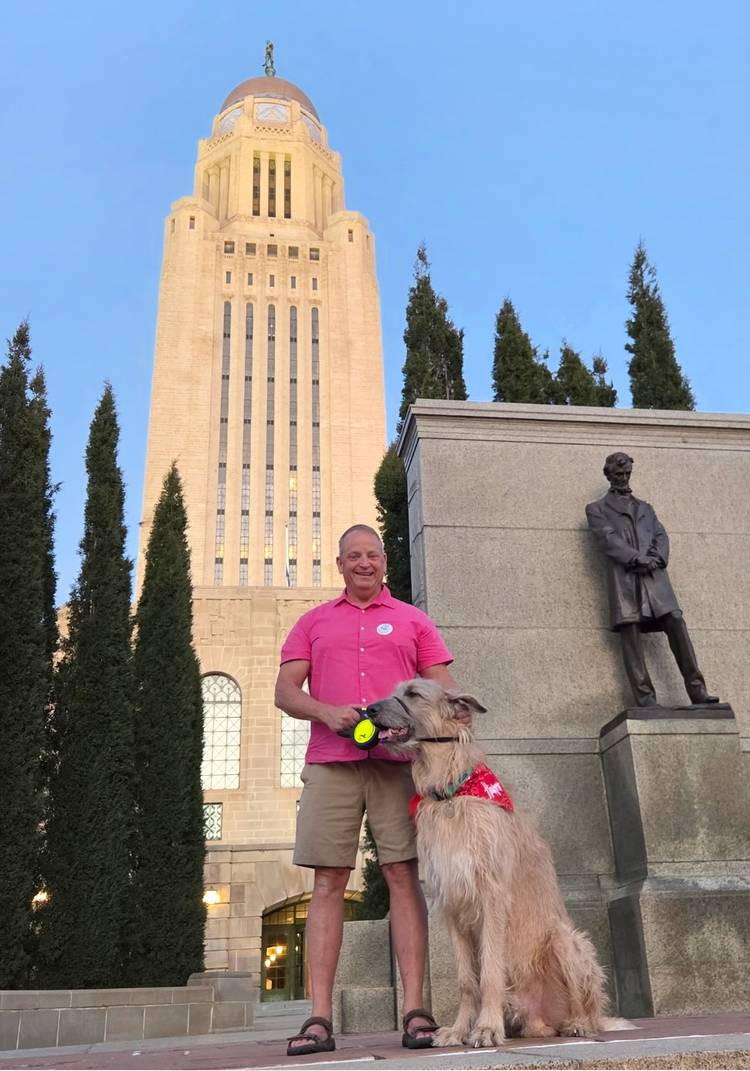
He’s one of an array of veterans running without the backing of either of the major parties, which he said is purposeful.
“I have kind of given up on the two-party system,” he said. “What has changed in my lifetime is the amount of money that both parties are now raising from big donors. Politicians from both sides end up working for their donors and not for the people they’re supposed to represent.”
In the same state, Navy veteran Dan Osborn is running as an independent against incumbent Republican Sen. Pete Ricketts in what has become a close race. Cohen has met Osborn a dozen times, actually, but says both races are different considering that no Democrat is running in the state’s Senate contest.
“[Osborn] has the head of the Democratic Party going around the state backing him. I do have a Democratic opponent, and she’s calling me a Republican in disguise,” Cohen said. “Well, you know, agents, supporters are calling me a Democrat in disguise. So, that’s an interesting dynamic.
Cohen said there’s a palpable feeling of voters looking for change and being more open than ever to leaving their political silos.
“[Voters] ask me, ‘How will we get anything done if you don’t caucus with either party?’ My response is, I will still have a voice if I’m not on a committee that I want to be on,” he said. “I will know the people who are on the committee.”
“We’re not having the right discussions. We’re so focused on this left-right battle that we’re not focused on the top-down economic wealth battle. I think being an independent sort of frees me up to say things that the members of the two parties are not able to say,” he added.
‘A Different Race’
Even with his background and attempt to appeal to all voters rather than just side or the other, Cohen pushed back when asked about the rising tide that often comes with being an independent candidate.
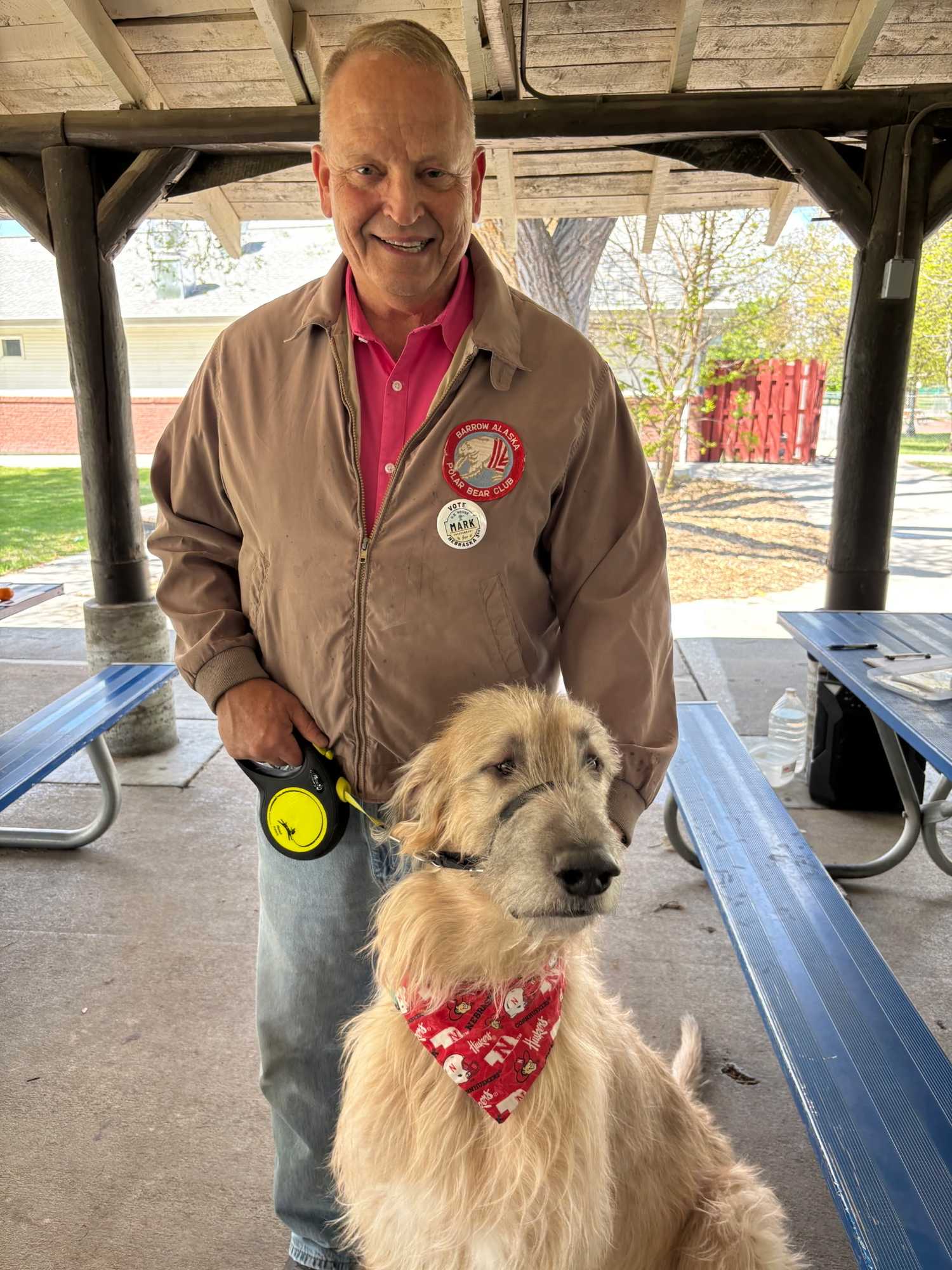
“I don’t think it’s as much of an uphill battle as you think, and there’s basically three reasons for that,” he said. “The first is that those 80% of people who voted [Donald] Trump last cycle, they’re not all the same. It’s not a monolithic group. There are many people who just wanted change, and now they’re not getting the change that they wanted, and so they’re looking for something else.
“No. 2, it’s never been a three-way race before. People were always forced to choose Republican or Democrat, and they don’t trust the Democrats. And to some extent, in a rural area, I understand why. But it’s a different race because they have a third choice this time.”
The third factor, Cohen said, is tariffs. He said farmers in rural pockets of Nebraska are being hit hard, diesel is more than $6.50 per gallon and fertilizer isn’t cheap.
“When we’re out on the road, the response is really good,” he said. “So, somebody is wrong, and it’s either the media or me. And I think it’s the media because I’ve been out there for a year talking to people.
“I’m certainly not going to predict victory, but I think we have a much better chance than people think.”
Read the full article here
40 Comments
Nice to see insider buying—usually a good signal in this space.
Good point. Watching costs and grades closely.
I like the balance sheet here—less leverage than peers.
Good point. Watching costs and grades closely.
Good point. Watching costs and grades closely.
Uranium names keep pushing higher—supply still tight into 2026.
Silver leverage is strong here; beta cuts both ways though.
Uranium names keep pushing higher—supply still tight into 2026.
Good point. Watching costs and grades closely.
Good point. Watching costs and grades closely.
Interesting update on Air Force Veteran, Ex-JAG Eyes Upset in Key Nebraska District in Midterm Election. Curious how the grades will trend next quarter.
Good point. Watching costs and grades closely.
Good point. Watching costs and grades closely.
Uranium names keep pushing higher—supply still tight into 2026.
Good point. Watching costs and grades closely.
The cost guidance is better than expected. If they deliver, the stock could rerate.
Good point. Watching costs and grades closely.
Production mix shifting toward USA might help margins if metals stay firm.
Production mix shifting toward USA might help margins if metals stay firm.
Good point. Watching costs and grades closely.
Good point. Watching costs and grades closely.
Exploration results look promising, but permitting will be the key risk.
Good point. Watching costs and grades closely.
Good point. Watching costs and grades closely.
Exploration results look promising, but permitting will be the key risk.
Good point. Watching costs and grades closely.
Good point. Watching costs and grades closely.
Silver leverage is strong here; beta cuts both ways though.
Exploration results look promising, but permitting will be the key risk.
Good point. Watching costs and grades closely.
Good point. Watching costs and grades closely.
Nice to see insider buying—usually a good signal in this space.
Good point. Watching costs and grades closely.
Good point. Watching costs and grades closely.
Exploration results look promising, but permitting will be the key risk.
Good point. Watching costs and grades closely.
Production mix shifting toward USA might help margins if metals stay firm.
Interesting update on Air Force Veteran, Ex-JAG Eyes Upset in Key Nebraska District in Midterm Election. Curious how the grades will trend next quarter.
Good point. Watching costs and grades closely.
Good point. Watching costs and grades closely.