


Defense Secretary Pete Hegseth’s Thursday termination of Army Lt. Gen. Brett Sylvia, the Pentagon’s top military planner, comes after the secretary was criticized for his own handling of sensitive military plans during the Signal scandal of March 2025.
Sylvia is accused of disclosing classified information to journalists. The Pentagon has referred the matter to the Justice Department for possible legal action.
The allegations involve information about the Iran war, Russia’s war in Ukraine and other subjects, although accounts of the evidence against Sylvia differ.
Chief Pentagon spokesperson Sean Parnell confirmed Sylvia’s firing in an X post on Thursday, writing in part: “The Department of War has zero tolerance for the intentional, unauthorized disclosure of classified information. Anyone who compromises sensitive national security information puts the lives of our Warriors at risk and undermines every military operation that keeps our country safe.”
Parnell also alluded to “an extensive Air Force OSI investigation” that forced the department to take “necessary personnel action to protect sensitive information.”
A DOD spokesperson confirmed to Military.com that Sylvia’s termination was due to “severe misconduct,” adding that “he was not a central planner for the Iran War.” That, per the official, is CENTCOM Adm. Brad Cooper.
“Sylvia is the subject of an investigation for leaking classified information about the Iran War, the war between Russia and Ukraine, and more,” the official said. “Due to the Pentagon’s media policy requiring journalists to have escorts in the building, Sylvia began meeting with journalists outside the Pentagon in order to leak classified information.”
The Allegations Against Sylvia
Sylvia led the Joint Staff’s Directorate for Strategy, Plans and Policy, known as J5, advising Joint Chiefs Chairman Gen. Dan Caine. He previously commanded the 101st Airborne Division and had served for 32 years.
His departure removes an experienced planner while President Donald Trump considers renewed strikes against Iran, rumored to take place after next week’s midterm elections.
An internal investigative report alleges Sylvia admitted disclosures on video, Axios reported Oct. 29.
When asked about Sylvia’s firing on a tarmac, President Trump misidentified the general as a woman, saying, “She’s going to have big problems, long-term problems.”
Hegseth’s Own Signal Findings
Hegseth’s demand for information security follows a documented failure within his own office.
In March 2025, he shared details of impending strikes against Houthi targets in Yemen through Signal on his personal cellphone. The information included aircraft movements and strike times approximately two to four hours before execution.
The chat included Jeffrey Goldberg, editor-in-chief of The Atlantic, whom then-national security adviser Mike Waltz had inadvertently added. Subsequent national security upheaval included Waltz’s removal, while Trump stood by Hegseth despite calls for his dismissal over the disclosures.
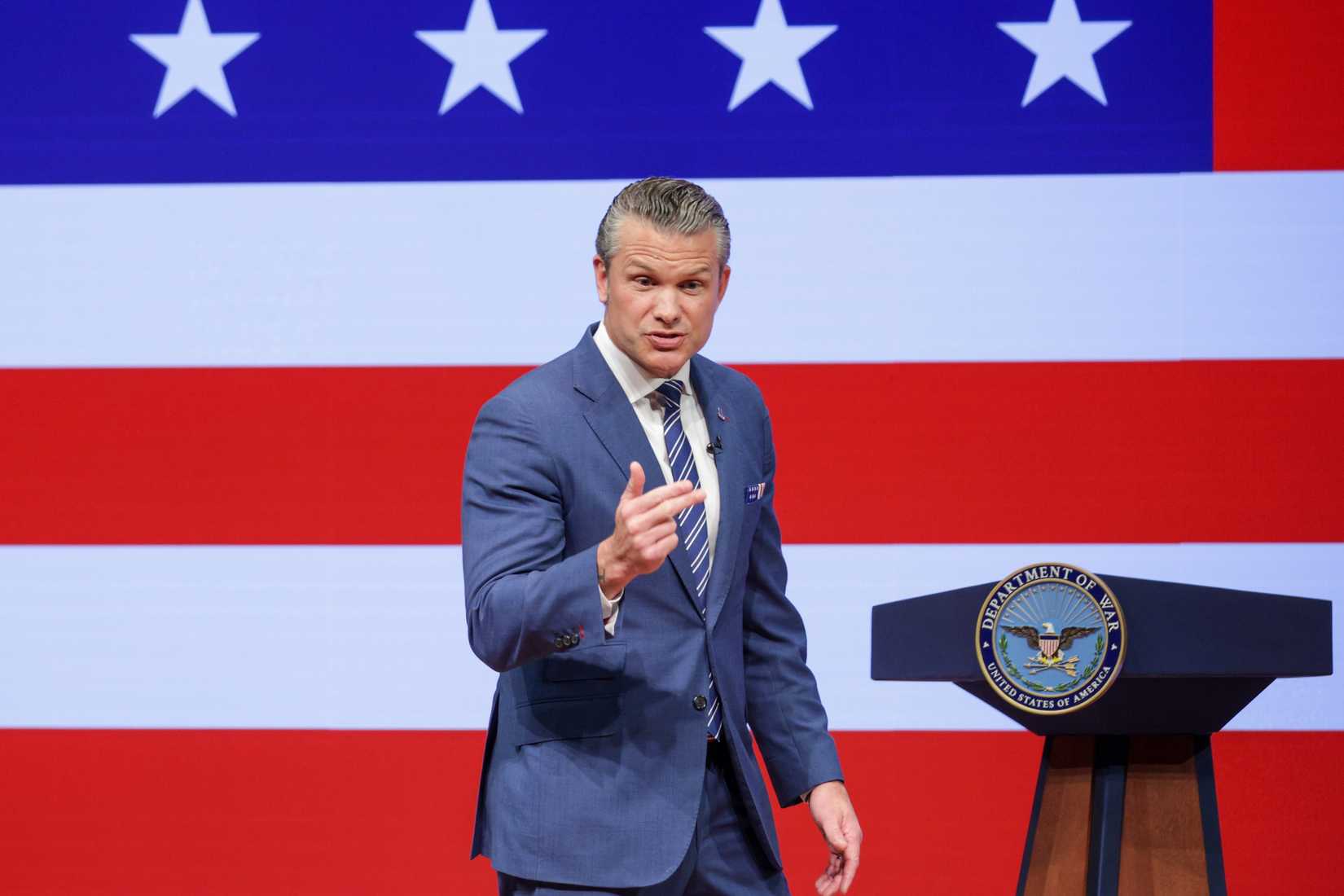
The Pentagon inspector general’s Signal evaluation concluded Hegseth violated department policy by using his personal device and an unapproved messaging application to transmit sensitive, nonpublic operational information. Investigators warned that compromise could have endangered personnel and mission objectives.
Hegseth maintained that he provided an unclassified summary and had authority to determine what required classification. The inspector general acknowledged that authority. Hegseth subsequently characterized the findings as “total exoneration.”
The documented findings nevertheless identified security risks and recordkeeping failures. Investigators concluded adversaries could have used the information to counter American forces or reposition before the strikes, although those outcomes did not occur. Authority to change classification did not eliminate the separate requirements governing communications and records.
What the Law Says
Federal law provides grounds for prosecuting certain unauthorized disclosures.
18 U.S.C. § 793(d) covers willful transmission of national defense documents or qualifying information by someone lawfully possessing it to someone not entitled to receive it. Violations can carry up to 10 years in prison. Whether particular disclosures satisfy those elements requires evidence about the information, recipient and conduct.
Senior rank offers no exemption. Retired Marine Gen. James Cartwright, a former Joint Chiefs vice chair, pleaded guilty in 2016 to lying to FBI investigators about unauthorized classified disclosures to two reporters. His conviction was for false statements, illustrating why the precise offense and supporting evidence must be distinguished from a general allegation of leaking.
Sylvia’s removal also comes amid bipartisan congressional criticism of Hegseth’s senior leadership changes. Republican lawmakers questioned earlier dismissals, including the removal of Army Chief of Staff Gen. Randy George, and demanded explanations for personnel decisions during the ongoing war in the Middle East.
Sylvia’s removal leaves the Joint Staff without a named replacement for its top strategist as Trump weighs renewed strikes against Iran.
The Pentagon has referred the alleged leaks to the Justice Department but has not yet publicly identified the specific information disclosed, or explained how it compromised national security.
Read the full article here
24 Comments
I like the balance sheet here—less leverage than peers.
I like the balance sheet here—less leverage than peers.
Nice to see insider buying—usually a good signal in this space.
Good point. Watching costs and grades closely.
The cost guidance is better than expected. If they deliver, the stock could rerate.
I like the balance sheet here—less leverage than peers.
Good point. Watching costs and grades closely.
Good point. Watching costs and grades closely.
Production mix shifting toward USA might help margins if metals stay firm.
Good point. Watching costs and grades closely.
If AISC keeps dropping, this becomes investable for me.
Good point. Watching costs and grades closely.
Exploration results look promising, but permitting will be the key risk.
Good point. Watching costs and grades closely.
Uranium names keep pushing higher—supply still tight into 2026.
Uranium names keep pushing higher—supply still tight into 2026.
Good point. Watching costs and grades closely.
If AISC keeps dropping, this becomes investable for me.
Good point. Watching costs and grades closely.
Silver leverage is strong here; beta cuts both ways though.
Exploration results look promising, but permitting will be the key risk.
Good point. Watching costs and grades closely.
Exploration results look promising, but permitting will be the key risk.
Good point. Watching costs and grades closely.