


Deborah Oliver was a healthy, active woman who began experiencing myriad medical issues following an approximate two-year tenure of living on a military installation. To this day, those issues persist and she’s warning military families to be aware.
Oliver is currently living in New Braunfels, Texas, roughly 15 minutes from where her family lived on Southwest Road at Randolph Air Force Base between 2017 and 2019. The spouse of a veteran airman, she has experienced severe and continued health damage triggered by recurring mold exposure in that home, with the toxic conditions exacerbated by the presence of rats.
Those contributing factors led to Oliver’s husband, Brad, leaving the military altogether, and the family moving off-base. She recalls being diagnosed with an autoimmune disease on the morning of his retirement, around the fall of 2019.
“I got so sick we just decided we were moving off-base,” Oliver told Military.com. “In my conversational records with my health care professionals, I was like, ‘Man, we’re not even staying in the military. Even if they offered him general, we’re getting out because I’m too sick.’ And if they don’t take care of families like this, it’s just not worth it.”
How the Mold Issue Worsened and Symptoms Began
Oliver told Military.com that upon moving onto the Randolph AFB, she immediately little crawl space access points in a closet.
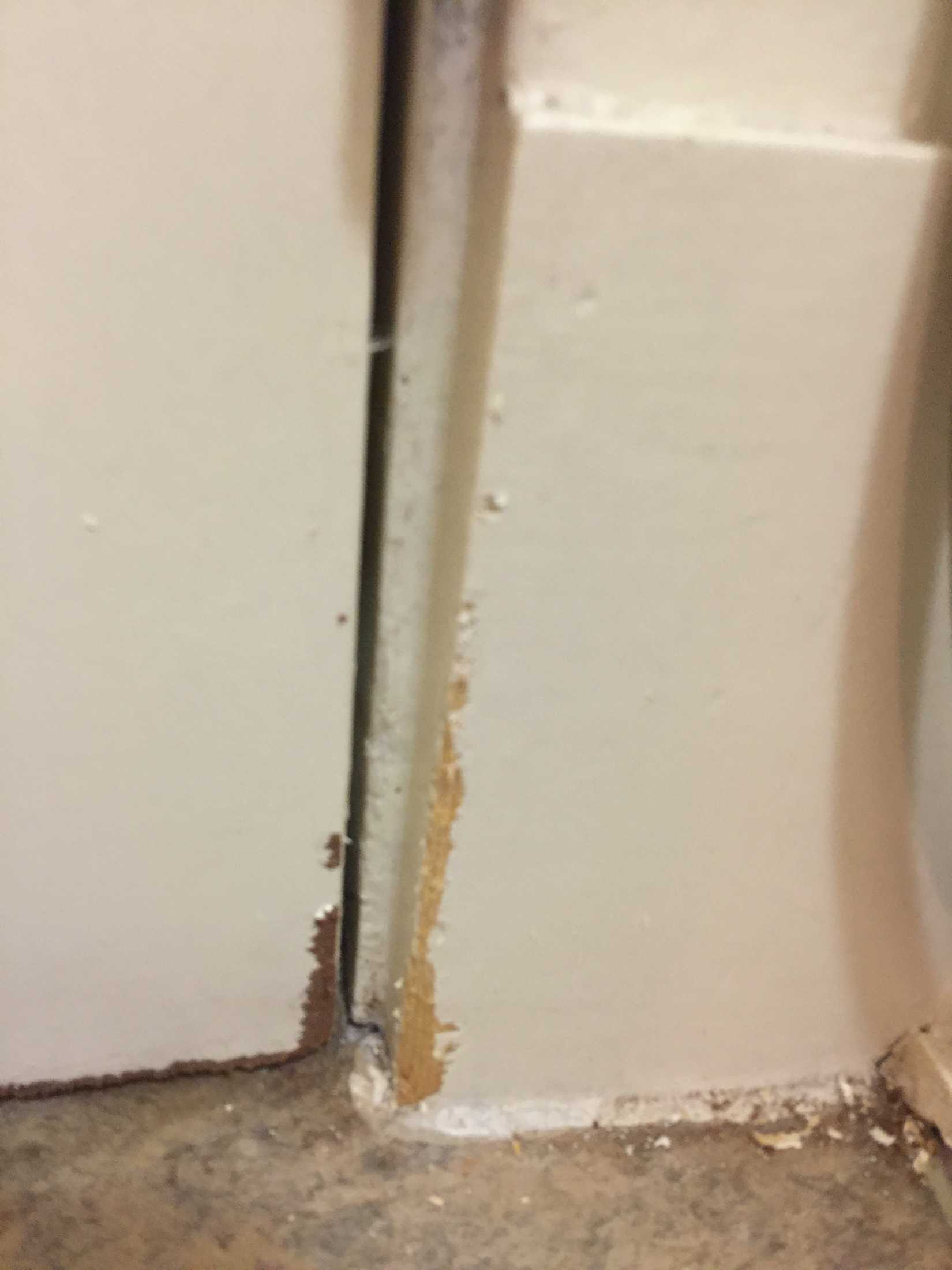
She said one was in a kitchen “where rat chewings are,” and another duct taped down in the master bedroom. She noticed buckets of moisture absorber as well as others that hung on hangers and swiftly filled up.
“And I was like, that’s kind of odd,” Oliver recalled. “Day one, we’re moving in, I’m standing in the kitchen, and this huge rat just prances across the kitchen, like, ‘Hey, no big deal.'”
Soon after, neighbors on the base told Oliver, “You got the mold house.” When she asked what that meant, they told her that the house had been plagued with issues.
So, Oliver “marched down to housing” and requested maintenance records of the home to see if the HVAC system was up to snuff.
“They told me that everything was fine,” she said. “They refused me copies of the maintenance records. So, I wasn’t given anything. … When I started becoming symptomatic, there would just be water rolling down the walls of the house.”
Questions about the water did not lead to the housing complex providing requested dehumidifiers, so she had to buy two dehumidifiers herself, which she emptied twice a day.
Rats continued to also appear in the home, with Oliver saying they entered the vicinity through an access point in the pantry. She began stacking MREs and cases of bottled water over the access point to prevent entry.

“The rats were so big that I had four glue traps, like kind of stuck all together,” she said. “This rat landed on those four glue traps and managed to get off, get away, even though it was on four glue traps, which tells you it was a pretty hardy specimen. I just did everything I could.”
Receiving help was no easy task, either, according to Oliver. She would call for maintenance and described being put in touch with someone from Eastern Europe, even though she was on a U.S. military base.
It was a “really fabulous firewall” between her and her issues, and someone from acknowledging and mitigating them, she added.
Oliver’s Background and Not Wanting to Rock the Boat
The issues Oliver began experiencing were not foreign to her. After all, she previously worked as an environmental scientist for an environmental consulting firm and also taught microbiology labs and human anatomy and physiology labs at the University of Alaska at Anchorage.
“My background lends itself to understanding how these issues should be properly managed to protect the families living in these conditions,” she said.
It also wasn’t lost upon Oliver that speaking up about the conditions could have nefarious effects on her husband’s career. She called it the “rub” that has accelerated her “mission” to publicly speak on physical conditions on military bases.
“Many of us in those situations are reticent to get too loud because it impacts your spouse’s career trajectory because, let’s be honest, it’s like any system: Big Blue exists to protect Big Blue,” she said. “A local IG [inspector general] complaint is not necessarily going to do anything but potentially shoot yourself in your own foot.
“My concern was [my husband] hadn’t pulled a one-year or two-year remote, and I was like, ‘OK, I have to be very careful.’ And when you put in your retirement papers, they can say, ‘Yeah, no, you’re not retiring.’ So I was extremely careful.”
Randolph Officials Say Efforts Put in Place to Lessen Health Risks
Randolph AFB spokesperson Benjamin Raughton told Military.com that while officials recognize that reports of housing condition concerns “can be distressing for residents and families,” they “cannot comment on an individual’s personal health information or determine through a media inquiry whether a medical condition is associated with a particular residence or housing environment.”
“JBSA [Joint Base San Antonio] takes reports of housing condition concerns seriously and addresses them through applicable housing and oversight processes,” Raughton said. “Current or former residents with concerns may contact the Military Housing Office for assistance and information on available review options.
“Since 2019, the Department of the Air Force and Joint Base San Antonio have continued to strengthen oversight, resident support and accountability measures for privatized housing.”
Asked if on-base mold issues persist, he told Military.com that like any residential community, JBSA-Randolph may receive reports of plumbing leaks, condensation, elevated humidity, moisture or visible mold.
Such concerns are addressed through established housing maintenance and oversight processes consistent with applicable Air Force and Department of Defense requirements.
“JBSA-Randolph works with Hunt Military Communities to assess reported water intrusion concerns, identify potential moisture sources, and coordinate appropriate corrective actions,” Raughton said. “Residents should promptly report water leaks, visible mold, pests, or property damage through the housing-maintenance process and may contact the Military Housing Office for assistance.”
In 2019, Oliver joined a lawsuit against Hunt Military Communities that is currently stayed.
My goal is to win enough money to cover long-term skilled care should I need it, and to recoup loss of income.
However, the Federal Enclave statute was upheld at the 5th Circuit Court of Appeals after a successful argument on behalf of Hunt’s lawyers. That ruling basically means that state and local tenant protection laws enacted after the land was acquired by the military do not apply to the on-base homes like the one Oliver inhabited.
Base Conditions Are ‘Scandalous,’ ‘Reprehensible’ and ‘Immoral’
The 55-year-old Oliver has been very sick, saying she once “literally thought I was dying.” She’s been hospitalized three times this past year for pericarditis.
Her initial symptoms were pulmonary, including extreme difficulty breathing and being unable to walk up a flight of stairs because she couldn’t breathe well enough to exert herself. Along with COPD, she’s been diagnosed with mixed connective tissue disease—an overlap autoimmune disease that affects major organs in this order: lungs, heart, and kidneys.
She’s also begun to experience cardiac problems, including atrial fibrillation, which can cause stroke and blood clots.
Some of the medication she has to take include Anakinra, a monoclonal antibody; Methocarbamol; Paxil for depression and anxiety; Buspirone to help control pain; methenamine for chronic urinary tract infections, or UTIs; 600 mg of Motrin twice daily for heart symptoms; and others to prevent pericarditis and stabilize blood pressure.
As her medical issues and legal fight continues, she hopes to inspire others to speak out. She’s described positive movement on the issue as “low-hanging bipartisan fruit” that could possibly be aided by local, state and federal lawmakers.
Above all, she feels that even though her husband served the nation, the family was not fairly treated. And she knows she’s not the only one.
“We know that every day [airmen] step onto the jet, there’s a risk that they might not come home,” Oliver said. “And I get that, and we accept that because we’re an all-volunteer force, and we love our country, and we love our fellow service members, and we love our Air Force.
“What we don’t accept is that while our spouses are away, potentially in harm’s way, we as moms, as dads, who are holding down the fort and making sure the kids are OK and making sure that in their ninth school they’re not falling apart, that we’re going to put ourselves in harm’s way by living on a military base house and using taxpayer-funded dollars and literally paying to make ourselves sick. That to me is it’s scandalous. It is reprehensible, and it’s immoral.”
Read the full article here
25 Comments
I like the balance sheet here—less leverage than peers.
Uranium names keep pushing higher—supply still tight into 2026.
Good point. Watching costs and grades closely.
Good point. Watching costs and grades closely.
The cost guidance is better than expected. If they deliver, the stock could rerate.
Uranium names keep pushing higher—supply still tight into 2026.
I like the balance sheet here—less leverage than peers.
Good point. Watching costs and grades closely.
Good point. Watching costs and grades closely.
Exploration results look promising, but permitting will be the key risk.
Production mix shifting toward USA might help margins if metals stay firm.
Production mix shifting toward USA might help margins if metals stay firm.
Interesting update on Ex-Air Force Colonel’s Wife Details Chronic Illnesses, Ongoing Legal Fight From Base Housing Mold. Curious how the grades will trend next quarter.
Good point. Watching costs and grades closely.
Uranium names keep pushing higher—supply still tight into 2026.
Uranium names keep pushing higher—supply still tight into 2026.
Good point. Watching costs and grades closely.
Good point. Watching costs and grades closely.
The cost guidance is better than expected. If they deliver, the stock could rerate.
Interesting update on Ex-Air Force Colonel’s Wife Details Chronic Illnesses, Ongoing Legal Fight From Base Housing Mold. Curious how the grades will trend next quarter.
Good point. Watching costs and grades closely.
Good point. Watching costs and grades closely.
Uranium names keep pushing higher—supply still tight into 2026.
Good point. Watching costs and grades closely.
Good point. Watching costs and grades closely.